The Burmese frontier of Bengal

I am reading Thant Myint-U’s The Hidden History of Burma: Race, Capitalism, and the Crisis of Democracy in the 21st Century. In it, he mentions the legends and oral history of some Burmese that much of Bengal was once inhabited by people like the modern Burmese: Buddhist, and East Asian in appearance.

I don’t know what to think about these sorts of memories, but after spending a day (for various reasons) looking at mtDNA (direct maternal) and Y (direct paternal) ancestry in various groups: I am more and more convinced it is plausible that much of Bengal was inhabited by a Tibeto-Burman people.

The reason is that in Bangladesh it looks to be that ~10% of the mtDNA and ~10% of the Y chromosomes are East Asian. This is in line with the genome-wide ancestry. To the west and south of Bengal, there are peoples with even more East Asian ancestry, the various Munda tribes. But these groups have a different profile. 30% of their ancestry is East Asian. But 60% of their Y chromosomes are East Asian, while 0% of their mtDNA is East Asian.

One thing we know about the Munda is that they speak Austro-Asiatic languages. Genetically their East Asian component seems to have mixed with people deeply related to the Andaman Islanders, before mixing again with a people with affinities to South Indian tribal people. Additionally, the Munda have almost no “steppe” affinity.  This is curious because this occurs only among some South Indian tribal groups. Even among non-Indo-Aryan South Indian populations, such as the Reddy of Andhara Pradesh, there is some steppe ancestry.

Genetically it seems that the earliest mixing of East Asian and “indigenous” ancestry in the Munda dates to the period between 4,000 and 4,500 years ago. I am now open to the possibility that the Munda arrived in the Indian subcontinent via the Bay of Bengal. And that the northern Munda languages are actually expansions from a southern expanse.

In any case, the situation in Bengal seems to be different. If there were Munda in Bengal, they didn’t leave much of an imprint from what I can tell. The admixture into the Bangladeshi genomes dates to about 1,500 years ago. Rather than an intrusion of Tibeto-Burman people into the plains of Bengal, this may indicate an expansion of Indo-Aryan agriculturalists into the lands of slash and burn Tibeto-Burman agriculturalists.

Afghanistan’s History (a)

Special thanks to Mayuresh Madhav Kelkar for sending this. I would start watching this excellent Dari Farsi documentary 1 minute 19 seconds in. There are many excellent ancient maps of central and south Asia.


I just want to watch this again and again, just to listen to the narrator’s voice. Majestic, wise, soft and sweet. For those so sure Afghanistan will fall; any nation with voices like this is perchance stronger than she appears. This may be where the homo sapien sapien modern civilization was born.

+++++++++++++++++++++++++++++++++++++++++

Afghanistan’s History


Avtar Singh Khalsa: Lion of Afghanistan

Post Modernism (d)

Five thousand years ago the greater Egyptian, Sumerian, Eastern (defined as pan Arya plus China) civilizations were very mathematically oriented.  Many caucasians appear to believe that these ancient civilizations were racist. Possibly because of this many caucasians believe that math is racist.


Another possible reason many caucasians appear to believe that math is racist is because they fear it might unfairly advantages “brown” people (Asians, Arabs, Latinos) and “brown” cultures (eastern philosophy including Toaism and Confucianism, native american religion) at the expense of caucasians in the new global artificial intelligence, neuroscience, genetics economy.


Could part of the anger against math come from fear that mathematics, science, technology, seeking the truth through thought, seeking the truth without thought might be haram or blasphemous? (Obviously most Abrahamics do not believe this and this is not a critique of Abrahamism.)


I believe that mathematics is part of art; and that it derives from beyond normal gross thought. From what in Sanskrit is called Buddhi, Vijnayamaya Kosha, Ananda Maya Kosha, Sukshma Sharira, Kaarana Sharira, the subtle heavens.


Perhaps the anger against mathematics is part of a deeper anger against the subtle heavens? If so, one possible way to look at this is that to transcend the subtle heavens (including mathematics) it might be helpful to love them and love our way through them. Or to love and respect the racist (subtle heavens–including mathematics) until we transcend the various subtleties of thought and feeling.

What are everyone’s thoughts?

+++++++++++++++++++++++++++++++++++++++++++++++++++

Post Modernism (c)

Post Modernism (b)

Post Modernism (a)

Intellectual Dark Web (a)

Intellectual Dark Web

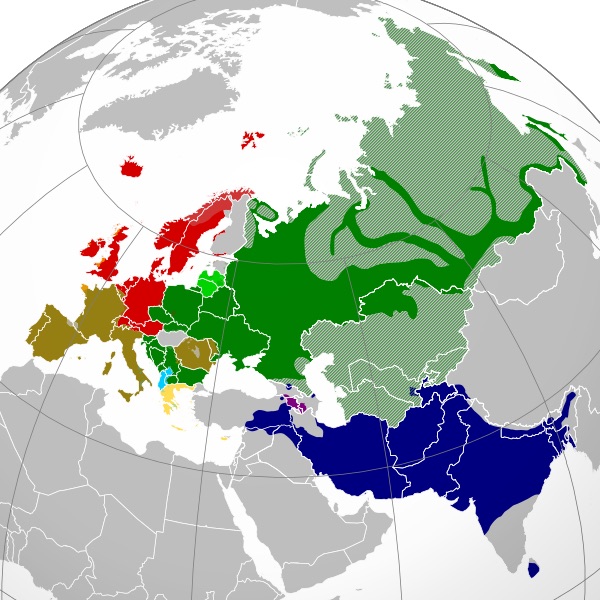
The Indo-Aryan enigma

A friend sent me this piece, Aryan Debate: Do the recent genetic studies validate Aryan invasion theory? The conclusion:

To sum up, how exactly the Indo-Aryanization India happened would remain unclear unless we get more ancient DNA samples, especially that of male individuals, from various Harappan sites and Gangetic regions as well. Until detailed studies are conducted on them, we can only speculate about the ancient events. Thus, far from validating AIT, these two papers, both Narasimhan et al and Shinde et al, leaves out many unresolved issues.

In my opinion, based on the current genetic data we have, we can now safely reject the kulturkugel BMAC proxy theory and the theory of large scale male dominant invasion into Swat valley which were modelled by the Indo-Europeanists and Indologists for Aryan expansions into India. Also since Indus periphery/Harappan ancestry overwhelmingly peaks among ANI group whose closest descendants are North Indian Indo-Aryan speakers, it is likely that the Indus periphery/Harappan ancestry would have represented some early Indo-Aryan or perhaps other related groups.

A common refrain for several years has been “let’s wait for ancient DNA.” Now that it’s here, is there more clarity?

On some questions, yes. On others, no. It seems now that while the Bactria-Margiana Archaeological Complex (BMAC) was influenced culturally and demographically by the Indus Valley Civilization (IVC), the BMAC did not impact South Asia demographically (though perhaps culturally via the Indo-Aryans; e.g., soma). This is definitely something that was learned.

But ancient DNA has not, and may not, solve the “Aryan question” in regards to origins and impact. Ultimately a synoptic take is probably necessary, where many disciplines and regional histories and archaeology are brought to bear. The main critique I have of the “Indian take” is that it is often substituting Indocentrism for Eurocentrism.

The reality is that the categories at issue, European or Indian, didn’t really make sense before the Iron Age, at the earliest (I would argue that a modern European self-identity really comes into being with the rise of Islam and the sundering of the Mediterranean). The early Indo-Europeans helped create the categories of the world around us, they were not of it.

The maritime origins of the Munda

A reader pointing me to a paper whose hypothesis is novel to me. But, I have to say that reading the paper, I am now convinced this is highly likely. The paper is The Munda Maritime Hypothesis:

On the basis of historical linguistic and language geographic evidence, the authors advance the novel hypothesis that the Munda languages originated on the east coast of India after their Austroasiatic precursor arrived via a maritime route from Southeast Asia, 3,500 to 4,000 years ago. Based on the linguistic evidence, we argue that pre-Proto-Munda arose in Mainland Southeast Asia after the spread of rice agriculture in the late Neolithic period, sometime after 4,500 years ago. A small Austroasiatic population then brought pre-Proto-Munda by means of a maritime route across the Bay of Bengal to the Mahanadi Delta region – an important hub location for maritime trade in historic and pre-historic times. The interaction with a local South Asian population gave rise to proto-Munda and the Munda branch of Austroasiatic. The Maritime Hypothesis accounts for the linguistic evidence better than other scenarios such as an Indian origin of Austroasiatic or a migration from Southeast Asia through the Brahmaputra basin. The available evidence from archaeology and genetics further supports the hypothesis of a small founder population of Austroasiatic speakers arriving in Odisha from Southeast Asia before the Aryan conquest in the Iron-Age.

For me, the Brahmaputra migration always implied that Bangladeshis should have lots of Munda ancestry. And yet that is not clear from genetics (though a few individuals are shifted in that direction). In contrast, they do have a strong affinity to the Khasi. This paper proposes that the Khasi are quite distinct from the Munda.

Rather, the Munda are placed further south, and their arrival in South Asia was through maritime means. One of the possibilities suggested is a relation to the Aslian subgroup of Austro-Asiatic languages in central Malaysia. This could actually help explain the enrichment for AASI in the Munda: the indigenous Negritos of Malaysia are similar to the people of the Andaman islands!

Remember, the arrival of Austro-Asiatic farmers in northern Vietnam dates to ~4,000 years ago. The Munda could be relative latecomers to South Asia…

Our history is serious and not a game

Some of you are probably not amused by the jokes I try to make about AIT and Lord Indra. I hope it’s pretty clear I’m not serious about all of this…it’s just that people take these issues so seriously.

I’ve changed my mind on the “peopling of India” question several times since I began to take a genetic interest in the topic around the year 2000. That’s because the genetic and archaeogenetic technology and data has gotten better and better with every passing year. We can answer questions with power and precision that we couldn’t even imagine asking a few years ago.

Some of you are asking questions that are already answered in the supplements of the Narasimhan paper. From page 260:

With respect to South Asia, our key finding is that people with ancestry like the Kushan individuals can be excluded as important sources of the Steppe pastoralist-related ancestry that is widespread in South Asia today. In particular, the East Asian-related admixture (via Steppe_LBA ancestors) that characterized the Kushan individuals is nearly absent in South Asia. We formally confirmed this inference through qpAdm modeling that excludes the Kushan individuals, as well as nearly all the other Iron Age and historical period individuals from other cultural contexts that were published in two recent studies (29, 30) as plausible sources for the Steppe pastoralist-related ancestry in South Asia (Fig S 50).

Though culturally and historically significant, like the Muslims, the earlier steppe people that are prominent in Indian history don’t seem to have made a major genetic impact.

The question has been answered. And that’s good.

In the comments below some readers are asking about whether arguments have been won. Knowledge and science proceed through argument. But let me be clear here: I am not invested in a particular outcome, I am haunted by the possibility that we can know the truth of things. As a child, I was fascinated by history, but I always knew that I was going to go into science, because science progresses, while history circles in argumentation. What ancient DNA has done has been to illuminate the darkness of the demographic past. This is not the totality of human history, but it serves to provide a critical and precise scaffold on the questions we ask and the answers we come to.

The American Academy is so ideologically blinkered and biased that I am not going to throw stones any longer when I see people in other nations engaging in this sort of behavior. This is the world we live in. Knowledge is not furthered through institutions in anything more than a proximal manner. The results, the data, are out there. We need to grasp them and interpret them for ourselves. The truth is ours. If we choose to take it.

This is your independence day!


Twitter tells me that this is India’s independence day. Since I didn’t know that this was the case until this morning, I obviously have nothing deep to say. Except let me enjoin the people of India and its leadership class to one thing: do not be haunted by the past, look to the future.

The 2004 film Troy emerged in the wake of the sword & sandals boomlet triggered by Gladiator. It won’t be remembered for much longer, but there is a speech that Brad Pitt’s Achilles make to his soldiers. He tells them that immortality is there for the taking, but they need to grasp it.

Though there are clearly broad forces of history at work in which individuals, and even nations, swim, there is still agency. The world is what we make of it within the boundaries of reason. We must all grasp our agency, and shake off the dead weight of the past at some point…

They’ll protest more the more they are wrong


A friend seny me the above clip. Some comments:

* The affect, style, and mannerism is very familiar to me. It reminds me of Muslim and Christian Creationist public speakers, who exhibit an air and manner of incredible confidence to audiences who want what they have on offer. Validation. Confirmation.

* The citations of the scholarly literature indicate that the theories of are based on some provisional work…but notice the shift from provisionality to refutation and vindication in the presentation. Just because it is in peer-reviewed journals does not mean it is true.

* Civilization comes from India is the conclusion. The above speaker is sophisticated and intelligent, but the ultimate rub is the same as Indocentric fabulists of the past.

In the past few years, genetic evidence on human differences has become more obvious. The reaction, in the West, is to declare even more strongly that no differences exist, or even could exist. Westerners and Indians are probably very similar, at least the activist sorts that consider these sorts of issues. In the near future, a substantial amount of ancient DNA will be published in India which will resolve current questions to all those approaching it with an open mind. But the ideologues will become even more strident and marshal greater and greater numbers of irrelevant citations.

They believe because it is absurd.

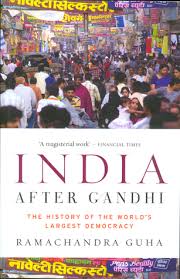
India After Gandhi: $1.99 Kindle Deal

I know many people are critical of Ramachandra Guha’s India After Gandhi: The History of the World’s Largest Democracy (e.g., my friend Reihan Salam is not a big fan), but Amazon is running a Kindle Deal on it (at least in the USA). So it’s $1.99 currently.

The original book was published in the 2000s, but this is a “revised and updated” version. So I assume it has a bit more on the last 20 years. Whatever you think about it, it is probably worth reading at some point.

Genetic change, cultural coherency, and social structure

A stupid commenter (SC) below keeps opining that the high frequency of R1a across South Asia is due to non-paternity events (NPE). I’m not quite sure SC knows what NPE is. It is, “when someone who is presumed to be an individual’s father is not in fact the biological father.” The hypothesis presented seems to be that outside of the Northwest of the subcontinent, the high frequency of R1a among non-Brahmin populations is a function of cuckoldry.

I think this is a stupid hypothesis for several reasons.

  1. Star phylogenies tend to extend outside of their core sociocultural group (e.g., R1b in Basques)
  2. NPE events outside of ethnicity seem rare given how endogamous South Asian jatis are.
  3. NPE in Eurasian societies seem to be 1-3%.
  4. There isn’t autosomal variation in ancestry within South Asia jatis usually. E.g., autosomally Tamil Brahmins or Chamars don’t vary much. This is in contrast with Mexican Americans or African Americans, who show a great deal of biogeographic variation in ancestry because they are a recently admixed population.

But, in the interests of making lemonade out of SC’s lemon, it’s interesting to observe other cases of disjunction between genome-wide ancestry and Y chromosomes. For example, let’s look at the Hui, Chinese-speaking Muslims.

The most likely origin of these Muslims is during the Yuan dynasty. So about 750 years ago. They were probably originally Central Asian, and so a mix of West and East Eurasian. Around 40% West Eurasian Y chromosomes from the beginning is not totally unreasonable if Islamicized Turks were a substantial proportion of the Muslims. If 5% of their total genome is West Eurasian, it’s probably reasonable to assume that 10% of their total genome derives from Muslims, if the original Muslims about half West Eurasian and half East Eurasian in ancestry.

750 years is 30 generations. My back of the envelope calculations suggests that 7.75% exogamy with Han Chinese per generation would result in a 50% West Eurasian population become a 5% West Eurasian population.  Another way to frame this is about ~90% of the ancestry of the original founding group has been replaced. But what about the Y chromosomes? Even assuming 100% West Eurasian Y chromosomes, the decrease has not been of similar magnitude.

The answer is simple: the dilution could have been mostly female-mediated. China is a patrilineal society, and Central Asian Muslims are also patrilineal. Though there are exceptions (there is a Hui branch of the Kong family due to one of the descendants marrying a Muslim woman and converting to Islam), it seems reasonable to infer most of the gene-flow into the Muslim community was through women. And, women do not have Y chromosomes, and so do not replace that lineage, though they do contribute to the total genome.

This is not an isolated case. There are populations around Lake Chad which carry ~1% Eurasian autosomal ancestry, but with Y chromosomal fractions of R1b, which is Eurasian, on the order of ~20%.

The opposite case can also occur. Because of male-biased European gene-flow to Latin America, populations such as in Argentina can have a very high fraction of indigenous mtDNA, passed from mothers to their offspring, despite the total genome being mostly European.

Which brings us back to South Asia. Though R1a is associated with “upper caste” populations, the reality is that it is widely distributed in South Asia. Including tribal groups such as the Chenchus and Bhils.

The Chenchus are an interesting case. The only groups nearby with high frequencies of R1a would be South Indian Brahmins, who are genetically very distinct. In fact, Brahmins from the four southernmost states of the peninsula are very similar in their proportions of distinct biogeographic components. And, there is not much inter-individual variation. The Chenchus, in contrast, seem to be typical ASI-shifted tribal people from South India.

In an NPE model the ~25% R1a ancestry is due the fathering of sons by Brahmin males, who were raised by their Chenchu mothers as Chenchu (and presumably raised by Chenche males as their own sons). The problem is that then ~12.5% of the ancestry of Chenchu should be Brahmin. This introduces a noticeable steppe shift, and though 12.5% is a small fraction, one should be able to detect it. Additionally, if the R1a entered the population through introgression every generation, there should be variation in ancestry among the Chenchus as a function of biogeography.

I simply don’t see this in the data for the Chenchu. What could explain their high fraction of R1a?

There are two things to consider. First, these marginalized groups often have low effective population sizes due to extreme endogamy. This means the power of drift at a single locus, such as the Y, is strong in these groups. It is not unreasonable to posit some groups, such as the Chenchu, would drift to a higher frequency.

The second dynamic is the one alluded to above: the Chenchu descend from a compound of groups, and a core paternal lineage of R1a bearers was assimilated into a larger population. I see the expansion of R1a across South Asia as greatly synchronous with the development of the ethnolinguistic landscape we see around us. Tribal groups such as the Chenchu are not primal, but part of an ethnolinguistic tapestry which crystallized in the period after the fall of the IVC and the reemergence of India into history in the 6th century BCE.

Note: Will delete dumb comments

Brown Pundits