please note I’m loving the representation of black and disabled people but I would also like to see Black Beauty really underscored as well instead of in a tokenistic manner.
Immigrant & white? You're still white. Disabled & white? You're still white. Female & white? You're still white. Queer & white? You're still white. Trans & white? You're still white. Poor & white? You're still white.
Marginalized & white? You will always have white privilege.
On the individual level who you find attractive and what you find attractive is your own deal. I’m not one to go exhorting anyone to anything. To be frank I find “campaigns” to make x more attractive a bit cringe. It’s like the joke about having to explain to someone that actually you are very attractive!
That being said, it’s interesting to observe cultural patterns, differences, and trends. I do not, for example, perceive women with natural epicanthic folds to be less attractive in any deep sense. But the surgery to create folded over eyelids is a “coming of age” practice in much of Northeast Asia, especially South Korea because it is seen as more aesthetically pleasing. This is a new trend triggered by Western norms, as prior to the past century the more common Asian look with epicanthic folds was considered more beautiful.
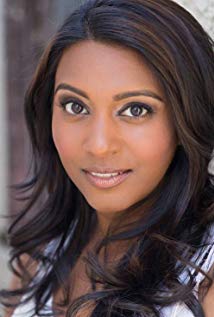
This brings me to South Asians, and beliefs, attitudes, and opinions about skin color. Years ago I read that Indian (Tamil) American actress Sharon Muthu was lost a part where she would be playing an Indian character “because she didn’t look Indian.” The director, in this case, was a white American. He admitted she nailed the audition, but optically he didn’t think she’d be plausible as Indian to the audience.
This goes to show that the Bollywood aesthetic has come to define what “Indian” looks like even in the West! Muthu is on the darker side, but not anymore atypical than may lighter-skinned Bollywood celebs.
Sendhil Ramamurthy
I am very jaundiced about many aspects of South Asian (which means mostly Indian American really) American culture, but one thing that is striking in contrast to the culture of their parents is that there is little attention to skin color. In fact, there are multiple instances where I’ve heard people say that the parents thought someone they were dating was too dark. This is probably a function of the fact that in an environment where all brown people of various shades are bracketed together, it’s a little ridiculous to make the sort of distinctions that are common in the Indian subcontinent.
Speaking as an outsider to brown culture (my wife is white, most of my close friends are not brown, my children are mixed, etc.) and community, so often when I see an Indian or Pakistani actor or actress they look like older versions of Zayn Malik, the half-Pakistani and half-English teen idol, or an Italian actress with a bigger nose. In general, I laugh, and a lot of American-born/raised brown people I know laugh too.
On the other hand, American South Asians are among the most privileged in the world. The people consuming Bollywood, and Tollywood and all the other woods, are the broad middle and lower classes of India, and their choices do shape what gets put on the screen.
When I was visiting Bangladesh in 2004 many of the posters of actresses I saw were notable for two things:
They were fairer than the average young Bangladeshi woman
They were plumper than the average young Bangladeshi woman
My prediction is as Indian audiences get more affluent, and self-confident in themselves, the actors and actressse will start looking more and more like better look versions of the average Indian, rather than cut-rate Jaggus and Jagginas.
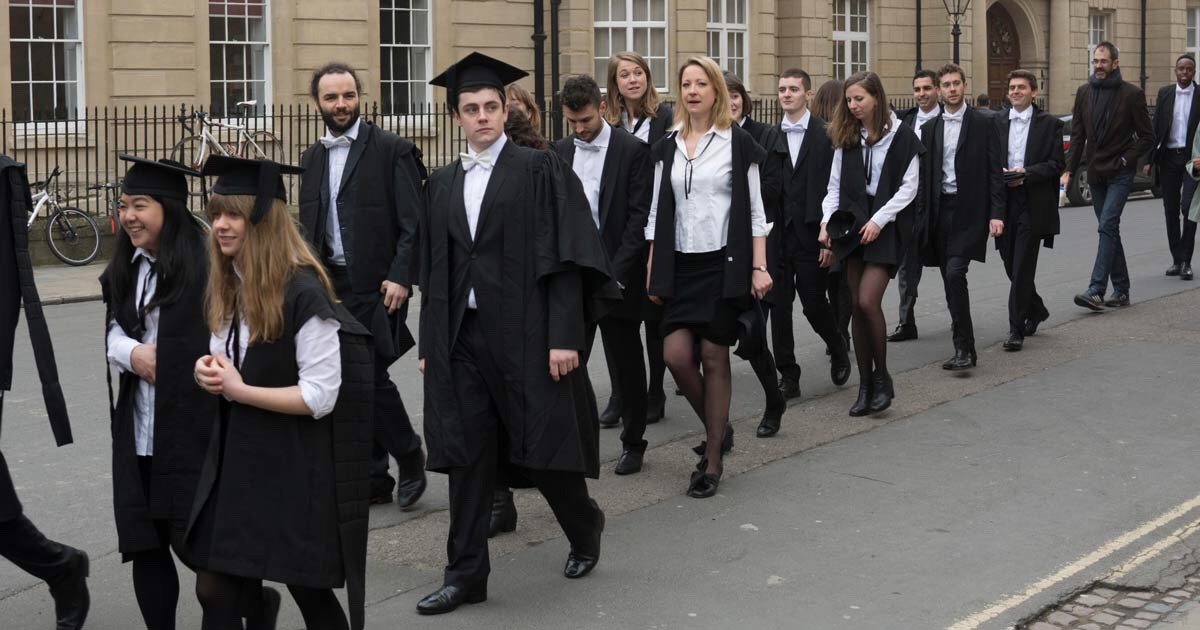
I was rifling through the obit of an Oxbridge Historian. What jumped out at me:
With a good degree in the subject, he embarked on a PhD on the Austro-Hungarian army before 1914, though never completed it, and gained a reputation for brilliance sufficient, along with his linguistic abilities, to obtain a research fellowship at Caius in 1965, and two years later an assistant lectureship in Russian history, moving to Jesus College in 1971 as director of studies in history.
I was shocked at reading this because a PhD is a pre-requisite to any academic research path. I mentioned this to Vidhi and she glibly replied back that when it was all white men, there wasn’t really a need for rule enforcement.
It articulated something that I had felt but not been able to voice heretofore. The role of white people constantly acting as gatekeepers and rule-enforcers in my interactions in Britain.
The sanctimoniousness with which I’ve been lectured, always subtle never overt, is something that I’veinternalised over the years.
The identity crisis in the West is marked by the fact that the older generation is one race while the younger generation is mixed with another (and the generation after that is even more tilted). The reflexive reaction of the Establishment is now to make sure that those who take on the mantle must know the law if they will not imbibe in the customs in their Oriental homes.
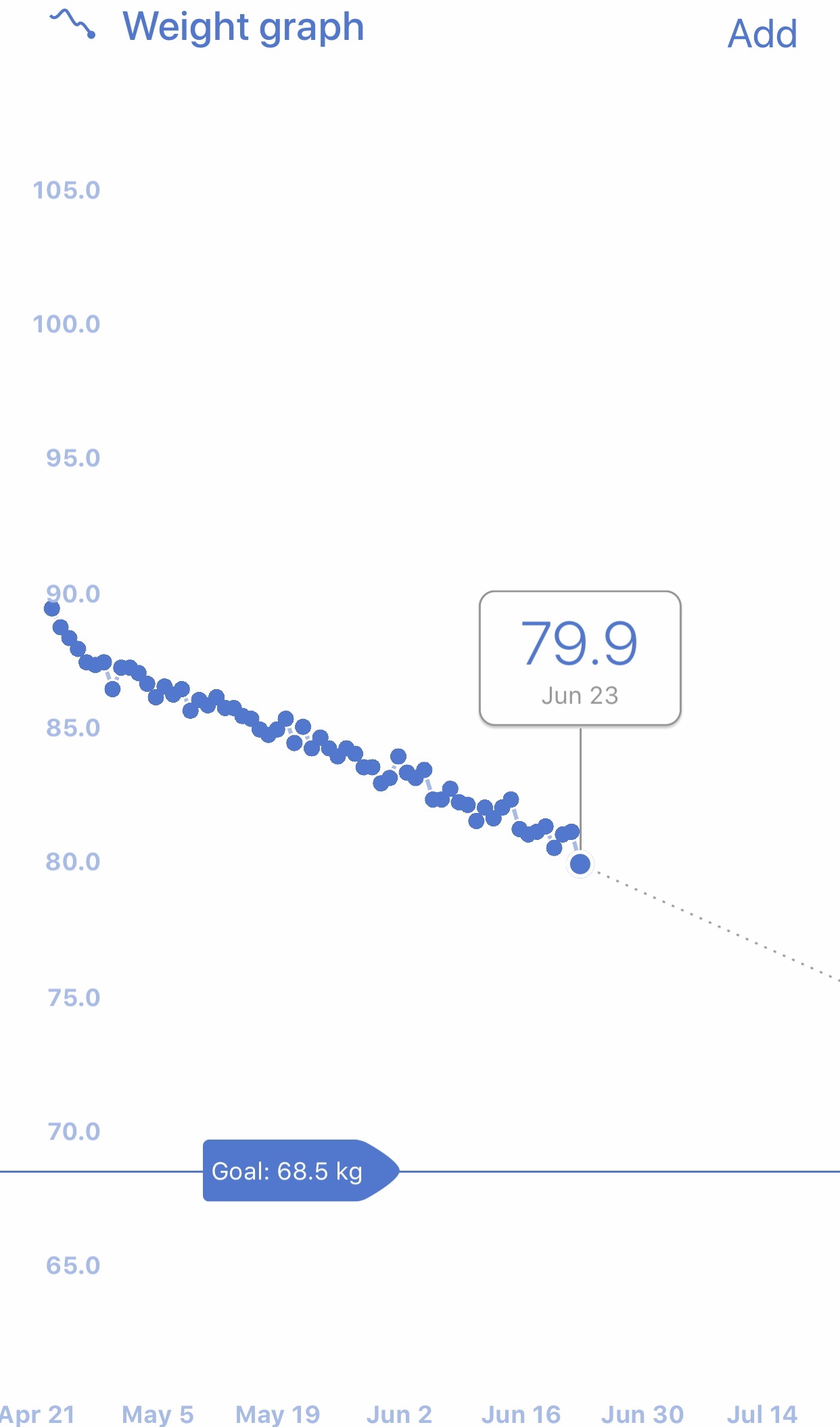
The author went from 87kg to 65kg. Roughly my height and weight but I started with much more muscle (at 89kg I was still a waist size 34).
I plan for 68.5kg to be my “death weight” so the idea is come what may I’ll stick to that.
I am relying on red meat however as I love it so much (it’s my crutch). A George Foreman grill cooks meat in 5 minutes flat and pair it off with a salad. I don’t put any oil on the meat but I probably should.
Apparently Protein is the most satiating nutrient so I tend to front-load my nutrition first thing in the morning.
I will rebalance my diet once I hit my weight metrics for more sustainability but I have the advantage that I have a somewhat “iron constitution” and I am not “taste-sensitive.”
I also use the mental trick of filling up my fridge and freezer with groceries. Since I have a pathological aversion to wasting any food, it stops me from going out to eat.
My problem is that I am a fast eater; I don’t chew as much as I want to so mindfulness is important in that area.
Apps I use:
Noom (Fitness Pal with Psychology)
Fitbod (for weight lifting)
Peak (for brain training)
Things I Do:
OMAD (one meal a day): I try to limit myself to 1.5kg a week of weight loss (so technically on Tuesday the 25th of June I should be 75.9kg instead of 79.9kg according to my timeline) so I use OMAD to nudge myself downward when I need.
IF (intermittent fasting): I used to do this 8/9yrs ago but I’m sort of building this up. I do find not eating does give a rest to the body.
The fear that if one *starves* the body goes into metabolic shutdown/slowdown seems a bit overrated. A Cambridge Prof, who runs some of the nation’s largest diabetes studies, was telling me that there were two Lancet published studies on the utility of a low calorie diet.
The key in an weight loss is long term sustainability.
Watch as Tory MP for Cities of London & Westminster @MarkFieldUK grabs a Greenpeace protester who interrupted a Philip Hammond speech in London tonight https://t.co/wZTzEC8lKFpic.twitter.com/tJuwCZ1P0X
When a black female MP lies about her speeding ticket (which half the country does) she's humiliated and stripped of her seat. When a white male MP assaults a woman in full view; he's defended as a "hero."#MarkFieldAssault
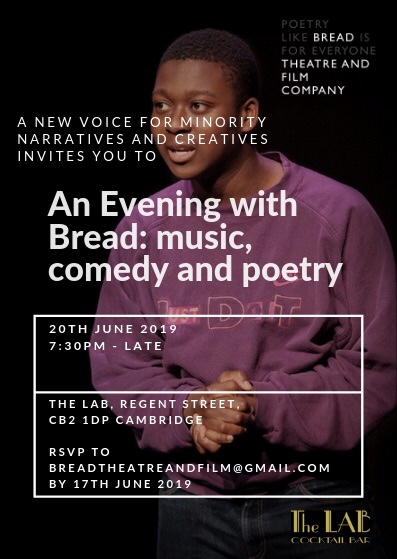
While I’m profoundly conservative I’ve been trying to find a space to channel my Social Justice Ghazi tendencies. I’m technically a co-founding trustee but my role is more administrative / organisational as opposed to creative.
I wanted to go more for “unheard voices” but as agreed it’s for anyone who “self-identifies” as a minority.
Gibran of course was a Maronite and was inspired by his encounters with Abdul Baha. The Belle Époque seemed an especially sensitive time for Oriental spirituality (Grierson and Gandhi were somewhat contemporaneous).
At any rate most Pakistanis would internalise Gibran as one of their own and Tagore as foreign.
I used to be more skeptical about this Arabophilia; like all liberalstanis I used to say Khuda Hafez etc. However I’m of the opinion that pan South Asian nationalism has simply not made enough space for the two competing overarching identities.
In my podcast today with Professor Majeed; we briefly touch on the meta-aspect of Hindi and Urdu. It simply is the dividing civilisational fault lines.
When the Bengalis and Tamils needed to make their choice they were happy to prioritise their meta-identity In 1947 (Bengali were Muslim; Tamils were Hindu). However in 1971 the Bengalis in turn clarified their choice, which culminated in an “Indian-friendly” but distinct nationalism.
Tamil politics on the other hand, interacting and influencing no doubt with Sri Lanka (it’s fascinating that Tamil Muslims politically segregated during the Sri Lankan colonial era culminating in a distinct political identity as opposed to the mainland) is now grappling with the same choice.
It’s absurd to compare modern day India with 1971 Pakistan (the language question has been resolved in the 50’s with the adoption of Bengali so it wasn’t simply a linguistic matter) but the underlying tensions are the same.
Once a side picks their “civilisational” meta-identity then the demand for local identity starts to flourish in the wake of national homogeneisation.
I have begun to become very interested in the Seraiki question. It’s almost the equivalent of Cornwall getting separate constitutional state in the UK (Scotland is a Kingdom, so is NI – the remnants of one, and Wales is a Principality).
The only local or distinct identity Cornwall has in being the Duchy of Cornwall. This is the Prince of Wales’s subsidiary title hence why Camilla is addressed as the HRH the Duchess of Cornwall instead of Lady Diana’s previous and popular title as the Princess of Wales. It is important though since the Duchy Estates are the personal income of the Prince in a way the only other Duchy (of Lancashire) is not.
Interestingly the Duke of Lancaster is HM the Queen (the income from that estate reverts to the Crown, to which she is entitled 15% for the Royal Household’s running costs). The Duke of York is usually given to the monarch’s Spare son; it’s a title Prince Harry will eventually inherit. It’s fascinating to think that one of the oldest and most prestigious titles in the United Kingdom (the Duke of York) will eventually be held by an individual (Archie with Obama as his godfather) who would be considered as black in the United States (and so would his descendants).
But back on topic Lancaster is considered to be a fundamental part of England while Cornwall is an ambiguous territory; close to but not quite Wales.
In much the same way the emerging conversation on Seraikistan will emerge. It’s obviously not as distinct as Sindh but there is a formidable “Seraiki” ethnic identity.
Does that entitle it to a distinct Province? A separate Province would be very good for Pakistan because it would automatically re-jigg the Punjab’s disproportionate role in Pakistan. However as in the case of Andhra & Telangana; there is a fundamental unity to the region inasmuch as there is distinction between them.
It has taken centuries for Britain to express these Constitutional and regional quirks not to everybody’s satisfaction (the Brexit dilemma centres on the NI backstop). How will Pakistan accommodate this?