
Please keep the other posts on topic. Use this for talking about whatever you want to talk about.
Tag: Identity and culture
Indian Female Academics of the Left
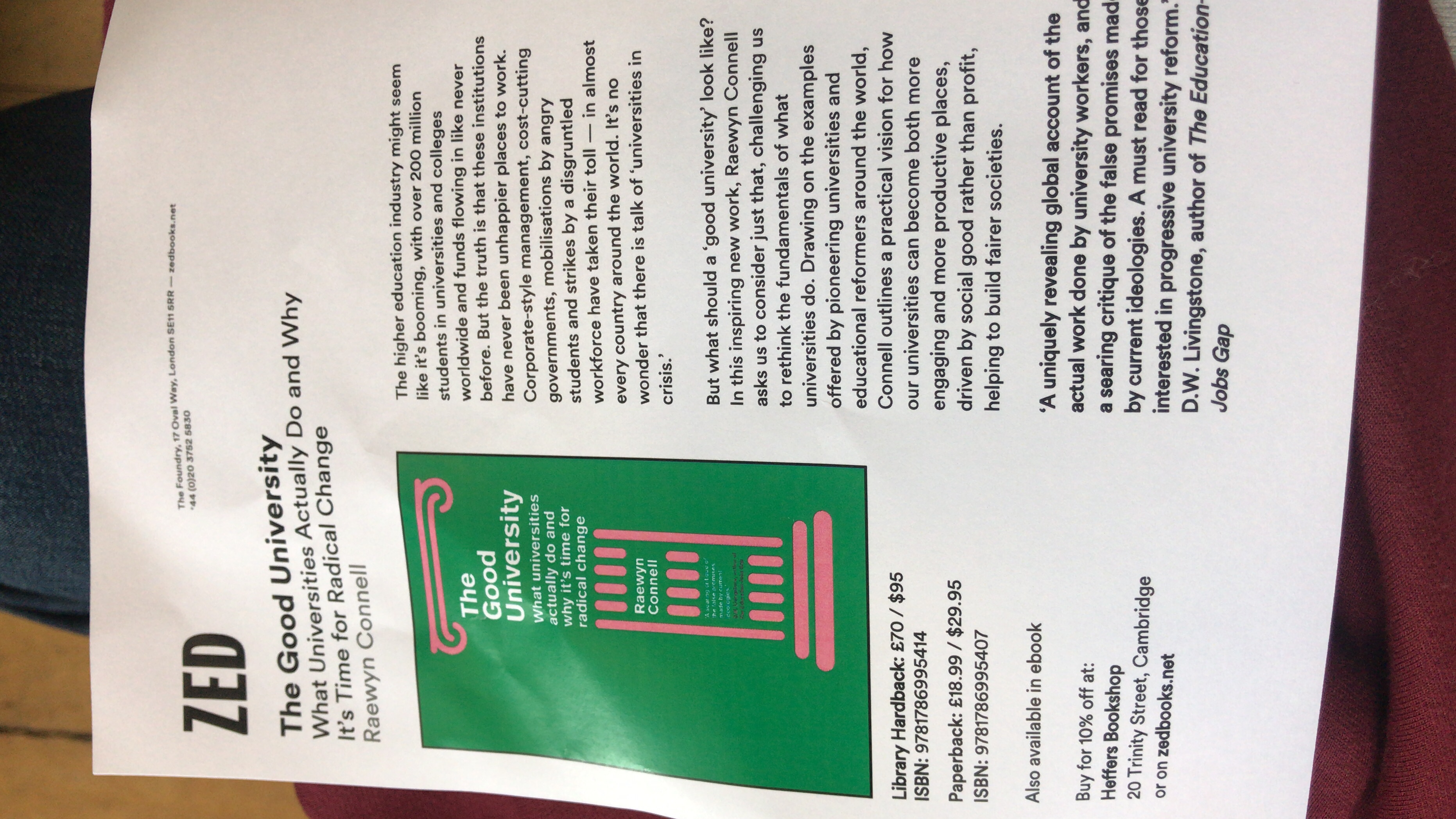
I’m at this talk, which touched on decolonisation and other such left-liberal ideology.
I’m quite privileged to be attending lectures and seminars at one of the best Universities in the world (even if it’s been coasting on its brand name).
The speaker in question is a Professor Emerita. She’s Trans but white. I find the discourse on the left increasingly driven by white LGTB+ activists. She is interviewed by a Indian lady (Reader level So tenure track Prof) and introduced by another Indian Lady Lecturer.
I’m noticing a few trends:
(1.) Indians in postgraduate humanities are acolytes of Arundhati Roy. They’re sort of blending into the global liberal intellectual circles in a way that Muslims don’t.
(2.) Left-liberal Indians have become entirely de-Hindufied in a way that left-liberal Muslims simply haven’t. So while there is an invisible barrier for Muslims to fully embrace the entire ideology (more likely than not they’ll have some sort of belief barrier) there isn’t one for Indians.
(3.) Postgraduate Indian women in the Humanities are at the vanguard of social action and use their ambiguous racial status to float between black & white space.
(5.) Postgraduate Indians in STEM are rightish, which is no really surprise and in line with trends.
(6.) Being vocally right is social suicide in the “coloured circles.” It’s suspected I have profoundHigh Tory views but I downplay it to my Social Justice Ghazi alter ego (I am a Magian after all) and join the activists IRL. My concession is that I try to be intellectually consistent and avoid Munafiqeenism.
(7.) the South Asia centre has only one coloured faculty member (albeit the director) the other 7 are all white. It begs the questions what should (or should there) be a racial balance for ethnic studies?
(8.) People in Humanities love their jargon; maybe it’s because their subjects aren’t as intense as STEM?
The price of Unity for India’s Dravidians
My title is somewhat controversial but it’s based on a passing thought.
I was seeing Drew Binsky’s video on the Afghani diaspora in Hamburg and I found it interesting that Afghanistan’s population is only 35mm (I could have sworn it was 20mm around the turn of the century).
Even though Afghanistan has a relatively tiny population, compared to many Indian states, its influence on world affairs dwarfs them and approaches Indo-Pak.
For the 4 Dravidian states; their sub-nationalism disappears in the global stage in the face of Indian nationalism.
This isn’t to stir discord; it’s a thing of wonder that 90%+ of the world’s Hindu population is in a single state. In fact if 90% of the world’s Muslim population were in a similarly federalised state; it would be so much better (even just the contiguous bits).
However I wonder if the more exotic Indian minorities do not feel that their presence in the global stage is somewhat marred. Sovereignty, while disruptive, has a charm all of its own.
After a people who aren’t used to their nation will see that nation dwindle away due to apathy.
Many will impute that I support independence movements or further political sovereignty; far from it. But I was thinking of the British Lions model and the world of sport.
There are times when Britain competes as one (in the Olympics) and at other times devolves into the Constituent nations. In fact in most sports Ireland competes as an island (Ulster joins Ireland rather than any of the other nations) even though the political atmosphere is so messy.
Aside from IPL (and the huge shadow cricket casts on the subcontinent); it would be nice to have some sort of South Asian game or cultural event where linguistic (sub)nationalism is given priority. It would be perhaps alleviate the intense communalism of South Asia’s political setup and also provide context to the “young states” that there are some very old “nations” in South Asia, which precede them.
Maybe it’ll be a bit tricky with Punjabis, Pathans, Baloch teaming up across their various borders or even Tamils for that matter but it might also help *mature* identities as well.
I’m a trustee of a Theatre company in Cambridge and I really enjoyed the definition of a “minority”; one who self-identifies as such. In many ways that’s how I would categorise a language family/nation. Languages are also a form of subjective identity rather than just objective reality.
A language is a dialect with an army..
Samosas vs. Pakoras
I know the comments about Islamicate Samosas vs. Indigenous Pakoras was made in jest however what is interesting that the “core Desi” food is carbo-hydrate heavy.
At least Samosa has some protein in comparison to the Pakora, which is basically fried batter (delicious as it is).
I tend to prefer Desi Khans above all else however I have actually taken to eating a steak or another grilled meat just to complement my meal.
This isn’t to revisit older tropes about vegetarian Hindus and meat-eating Muslims but the only protein source I can think of is daal and milk products.
A Pakistani on Instagram once remarked that his favourite cuisine is Arabic food. I immediately took offence since Mughlai cuisine is so much more complex. But his reasoning did make sense that in the balance of health and taste Arabic food was a clear winner.
Interestingly one of our young relatives (at the age of 6) has decided to go completely vegetarian. The family are completely Westernised and meat-eating but the young chap refuses to eat any meat (he wants to give up jelly beans because it has animal products).
It’s gotten to the point that he scolded his mum for buying a leather bag because it’s made from animal hide and while on a car journey he started to meditate. He’s naturally very rambunctious and mischievous but it’s just an interesting exercise in “spontaneous vegetarianism” (we were all eating lamb chops and chicken but he was just sticking to daal).
His mother had to pack all these “mithai”, full of ghee, just to make sure that he met his calorific intake. In a way Indian food is catered to meet calorific loads rather than nutritional values. Nomadic food on the other is just an exercise in how to cook different types of meat. Of course these cuisines are pared with occupational types and we aren’t nomads & farmers anymore.
BrownCast Podcast episode 47: Game of Thrones with Jennifer Raff and Patrick Wyman
Another BP Podcast is up. You can listen on Libsyn, iTunes, Spotify, and Stitcher. Probably the easiest way to keep up the podcast since we don’t have a regular schedule is to subscribe at one of the links above.
 You can also support the podcast as a patron (the primary benefit now is that you get the podcasts considerably earlier than everyone else…). Would appreciate more positive reviews.
This week Razib talks the end of Game of Thrones with geneticist and anthropologist Jennifer Raff and historian and podcaster Patrick Wyman.
Open Thread – Brown Pundits
Please keep the other posts on topic. Use this for talking about whatever you want to talk about.
Since 1989
China is an authoritarian, in some ways totalitarian, nation-state. But we need to keep the larger perspective in mind as well.
Judge a society by how the odds are for the least of them.
Live Blogging: Documenting post-war ethno-religious violence in Sri Lanka
Lecture by Dr. Farzana Haniffa; who is Smuts Visiting Fellow.
The Slides are very dense so I’m paraphrasing what I am here. All mistakes mine and not the speaker.
Continue reading Live Blogging: Documenting post-war ethno-religious violence in Sri Lanka
Browncast Ep 45: Jordan Anaya on “data thuggery”
Another BP Podcast is up. You can listen on Libsyn, Apple, Spotify, and Stitcher. Probably the easiest way to keep up the podcast since we don’t have a regular schedule is to subscribe at one of the links above.
You can also support the podcast as a patron (the primary benefit now is that you get the podcasts considerably earlier than everyone else…this podcast was posted a week ago).

If there is one person who combines keen attention to scientific methodology and toxic masculinity, it’s Jordan Anaya, a “data thug.”
A brutal realist who helped destroy the career of Brian Wansink, Anaya revels in is status as a one-man Occam’s Razor.
Hitchhiking through India-
Our commentator Prat suggested I speak to Rajat Ubaykar. He and his colleague, Ozzie, hitchhiked for 6months through India.
We just wrapped up our podcast. I’m shocked by how much I learnt doing it. I feel the urban Hindu hegemonic viewpoint (that feeds on a victim mentality) obscures the profound pluralism that makes up India.