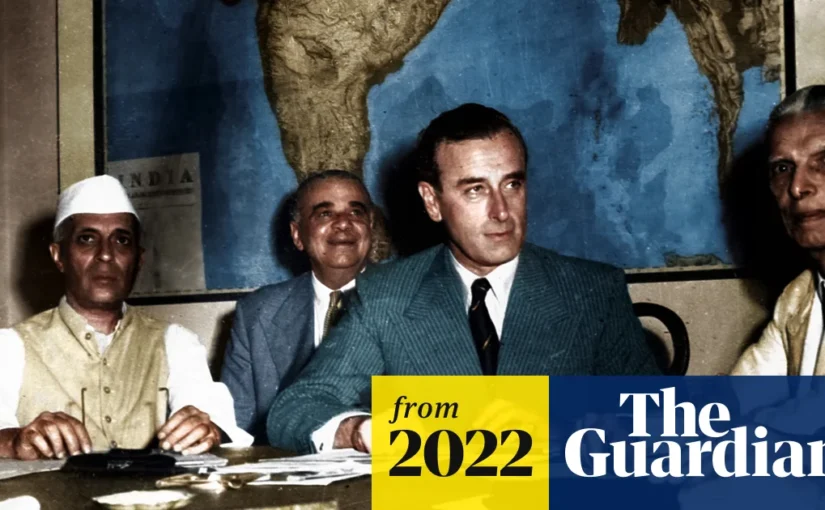
Musings on & Answers to “The Partition of Elites: India, Pakistan, and the Unfinished Trauma of 1947” (Part 3)

Part 2

Continuing on, X.T.M says that ā€œIndia’s post-Independence settlement created structural ambiguityā€ and cites four factors in particular:

  • Upper-caste Hindu political dominance at the center
  • Muslim demographic concentrations with limited elite integration
  • A constitutional secularism that promised equality while leaving communal structures intact
  • No acknowledgment that the Muslim League’s victory posed a legitimacy problem

I think his key insight is this: ā€œThe constitution guaranteed rights. It could not guarantee renewed political consent.ā€

The issue as I see it is that the Indian state took the most half-hearted, wishy-washy approach towards the problem of integration. It allowed Muslims to construct bastions of political power while at the same time dividing Hindus along caste and linguistic lines. It allowed criminal elements, many from a Muslim background, to dominate perhaps its most significant sector — the arts — and spread messages of the innate goodness of Indian Muslims and Pakistanis (which is only being suppressed due to both governments’ actions) and the need for peace between Hindus and Muslims, thereby constructing an illusory palace to beguile secularized urban Hindus, while behind the silver screen they fund terrorist attacks in India. The murder of Gulshan Kumar comes to mind as (seemingly) among the least of these crimes, but that he was killed outside a temple is like having salt poured into the wound and mud slung at one’s face. What to speak of 26/11 which has already been talked about, especially recently.

Again, as I mentioned previously, I don’t think the overwhelming issue is that Muslims were allowed to maintain particular political fiefdoms — it’s that Hindus were stymied from establishing systems of political power based on traditional models. When talking about ā€˜independence’, Moldbug (2008) in chapter 2 of An Open Letter to Open-Minded Progressives suggests that:

ā€œOne test we can apply forĀ independence, which should be pretty conclusive, is that the structures of government in a genuinely independent country should tend to resemble the structures that existed before it was subjugated—rather than the structures of some other country on which it may happen to be, um, dependent.Ā These structures should be especially unlikely to resemble structures in other newly independent countries, with which it presumably has nothing in common.ā€

Continue reading Musings on & Answers to “The Partition of Elites: India, Pakistan, and the Unfinished Trauma of 1947” (Part 3)

Musings on & Answers to “The Partition of Elites: India, Pakistan, and the Unfinished Trauma of 1947” (Part 2)

Part 1

Let’s take a look at the other theses put forth by X.T.M in this piece.

His second thesis is that ā€œThe Muslim League won. Then most Muslims stayed.ā€

How should we understand this? It could be said the sons of Abraham — and perhaps especially those in the line of Ishmael — are meant to stay untethered from bonds to the land upon which they live, seeing as they are (at least supposedly), nomads from the sand? I think the best description of the Islamic invaders of India comes from Deleuze & Guattari’s Anti-Oedipus (1972/1977). Speaking of the ā€˜Barbarian Despotic Machine’ which supplants the ā€˜Primitive Territorial Machine’ (which I take to be synonymous with localized Hindu communities, even if it isn’t a perfect fit):

ā€œThe founding of the despotic machine or the barbarian socius can be summarized in the following way: a new alliance and direct filiation. The despot challenges the lateral alliances and the extended filiations of the old community. He imposes a new alliance system and places himself in direct filiation with the deity: the people must follow. A leap into a new alliance, a break with the ancient filiation—this is expressed in a strange machine, or rather a machine of the strange whose locus is the desertā€¦ā€ (p. 192)

Continue reading Musings on & Answers to “The Partition of Elites: India, Pakistan, and the Unfinished Trauma of 1947” (Part 2)

The Partition of Elites: India, Pakistan, and the Unfinished Trauma of 1947

I was speaking recently with a cousin who grew up in India. Their family has been BahĆ”’Ć­ for generations, but their older relatives once lived as Sunni merchants in Old Delhi. When they visited their grandparents as a child, they noticed something striking: in many lanes of Old Delhi, long after Independence, the sentiment was not Indian nationalism but Pakistan-leaning nostalgia. This was not hidden. It was ambient.

That single observation exposes something almost no one in Indian liberal discourse wants to say aloud: post-Partition India inherited a large Muslim population whose political loyalties were, at best, ambivalent. That is not a moral judgement. It is a historical one.

And once you notice this, a second truth becomes obvious: Kabir’s secularist vision of an emotionally unified India makes sense only in a world where 1947 never happened.

Continue reading The Partition of Elites: India, Pakistan, and the Unfinished Trauma of 1947

Brown Pundits