Pakistan is the Israel of the Subcontinent

A Brown Pundits Precedent Post

I. The Ideology Before the Nation

Pakistan has a birth certificate: a 1933 pamphlet by Choudhry Rahmat Ali. Israel has the Basel Programme of 1897. Both nations emerged not from an ancient territorial consciousness but from an ideological project; one that required, as its sustaining premise, the claim that a religious minority could not coexist within a pluralist polity. This is not a slur; it is the historical record.

What makes both nations structurally similar is that their nationalism is grievance-generative by design. Israel requires the Palestinian question; Pakistan requires Kashmir. Without the wound, the ideology loses its cohering force. This is why, as Kabir inadvertently demonstrates in thread after thread, Kashmir is not merely a territorial dispute for Pakistan; it is an existential necessity. Indian nationalism has no equivalent. India does not need Kashmir to know what it is. Pakistan does.

II. Organic vs. Constructed Nationalism

Omar has made the point that durable nationalism must be organic; rooted in geography, language, ethnicity, or long civilisational memory. Bangladesh is a useful comparison: Bengali Muslim nationalism is at least tethered to a linguistic and territorial reality. The Bengalis of East Pakistan had a mother tongue, a delta, a literary tradition. When Pakistan tried to impose Urdu on them, they revolted; because Bengali identity had roots.

Pakistan’s tragedy is that Urdu itself is borrowed. It is a prestige creole, Persianised, Arabicised North Indian court language, that is the mother tongue of perhaps 7% of Pakistan’s population (the Muhajir elite but Urdu had admittedly very deep roots in Lahore). It was imposed as a national language precisely because it belonged to no one’s soil, and could therefore function as a neutral imperial medium. The irony is that Urdu is a derivative of Persian, and Persian, the language Pakistan’s nationalism effectively displaced, was the actual civilisational glue of the entire region from Kabul to Lucknow. In the Golestan framework, Persian would resume its natural role as the prestige link language. Pakistan’s nationalism requires its absence.

III. A Core-Periphery Imperial Topology Continue reading Pakistan is the Israel of the Subcontinent

The Cantonment and the Clean Street: Why Pakistan’s Punjab Looks More Ordered Than India’s

A dispatch from a quieter Brown Pundits

The Observation

My Urdu teacher said something that lodged itself in my brain. India is vastly richer than Pakistan; and yet Pakistan’s Punjab, in his experience, feels cleaner. More ordered. Less like South Asia. I pushed back. Then I stopped.

The Numbers

In 2024, India’s GDP per capita was $2,695 against Pakistan’s $1,479; roughly 1.8 times higher on a nominal basis, and India’s total economy at $3.9 trillion is approximately ten times Pakistan’s $372 billion. Until 2008, Pakistan was actually richer per person; India led that measure for only 14 of the 60 years after independence. The divergence is real but recent and accelerating.

The sanitation data cuts against the perception: 81% of Indians have access to basic sanitation versus 72% of Pakistanis (WHO/UNICEF, 2024). On paper, India leads. So the paradox isn’t statistical. It is visual. The question isn’t who has more toilets. It is why certain Pakistani streets feel more governed.

The Answer: 41 Cantonments Continue reading The Cantonment and the Clean Street: Why Pakistan’s Punjab Looks More Ordered Than India’s

Not All Our Ancestors Were “Just Hindu”

Pakistanis never Hindu | Islam destroyed everything? |Pakistanis were Hindu

Aslan Pahari’s videos are linked to the top where he essentially argues that the Indus region, before Islam, was a seamless Hindu civilisational block. It makes for neat storytelling. It is also historically careless.

Sun Temple of Multan

The subcontinent before the 8th century was not a flat religious plain. It was layered, regional, and politically fragmented. Yes, there was a broad Brahmanical tradition stretching across north India. Yes, temples like the great Sun temple at Multan testify to the strength of that religious order in what is now South Punjab. But to move from that to “all ancestors were Hindu” is to mistake dominance for uniformity.

Sindh

Take Sindh. When Muhammad bin Qasim entered the region in the early 8th century, he did not conquer a purely Brahmanical kingdom. The ruling Brahmin elite he defeated, had previously overthrown a Buddhist polity, and the religious landscape of Sindh included Buddhists, various Hindu sects, and local traditions. The frontier between Indic religions was not rigid. It was porous, competitive, and regionally specific.

It goes without saying that Buddhists emerged from a broader Brahmanical milieu, but I am referring specifically to the religious landscape immediately preceding the arrival of Islam.

Punjab Continue reading Not All Our Ancestors Were “Just Hindu”

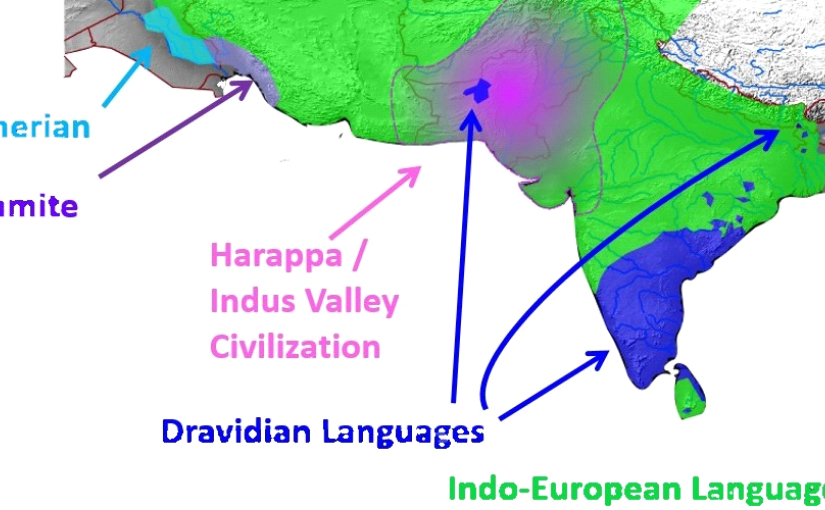
Pan-Sindhi Cross-Border Virality


A Pakistani Sindhi song, Paiso Aa, has crossed the border and gone viral among Indian Sindhis. It is light, playful, and unselfconscious. And it exposes something we repeatedly forget.

Sindh has been Muslim for over thirteen centuries.

The region was conquered in 711 CE by Muhammad bin Qasim, the teenage governor of Fars—thirteen when he entered Sindh, dead by nineteen. Almost an Alexander figure in miniature. Since then, Sindh and Multan have known uninterrupted Muslim rule longer than many parts of the Islamic world itself.

That matters, because it complicates a habit of thought that treats Islam in the Indian Subcontinent as permanently “foreign.”

In Sindh, it is not. Continue reading Pan-Sindhi Cross-Border Virality

Musings on & Answers to “The Partition of Elites: India, Pakistan, and the Unfinished Trauma of 1947” (Part 2)

Part 1

Let’s take a look at the other theses put forth by X.T.M in this piece.

His second thesis is that “The Muslim League won. Then most Muslims stayed.”

How should we understand this? It could be said the sons of Abraham — and perhaps especially those in the line of Ishmael — are meant to stay untethered from bonds to the land upon which they live, seeing as they are (at least supposedly), nomads from the sand? I think the best description of the Islamic invaders of India comes from Deleuze & Guattari’s Anti-Oedipus (1972/1977). Speaking of the ‘Barbarian Despotic Machine’ which supplants the ‘Primitive Territorial Machine’ (which I take to be synonymous with localized Hindu communities, even if it isn’t a perfect fit):

“The founding of the despotic machine or the barbarian socius can be summarized in the following way: a new alliance and direct filiation. The despot challenges the lateral alliances and the extended filiations of the old community. He imposes a new alliance system and places himself in direct filiation with the deity: the people must follow. A leap into a new alliance, a break with the ancient filiation—this is expressed in a strange machine, or rather a machine of the strange whose locus is the desert
” (p. 192)

Continue reading Musings on & Answers to “The Partition of Elites: India, Pakistan, and the Unfinished Trauma of 1947” (Part 2)

Brown Pundits