
Pakistan Is Not About to Break Apart

There is a persistent habit, especially among our soi-disant commentators, of predicting Pakistan’s imminent disintegration. The arguments are familiar: Baloch insurgency, Pashtun irredentism, low Kashmiri fertility, economic weakness, and analogies to 1971. They are also, taken together, wrong.

To begin with, most people discussing Pakistan do not understand its internal sociology. They begin with a conclusion, “Pakistan is artificial and unstable”, and then select facts to confirm it. This is confirmation bias dressed up as analysis.

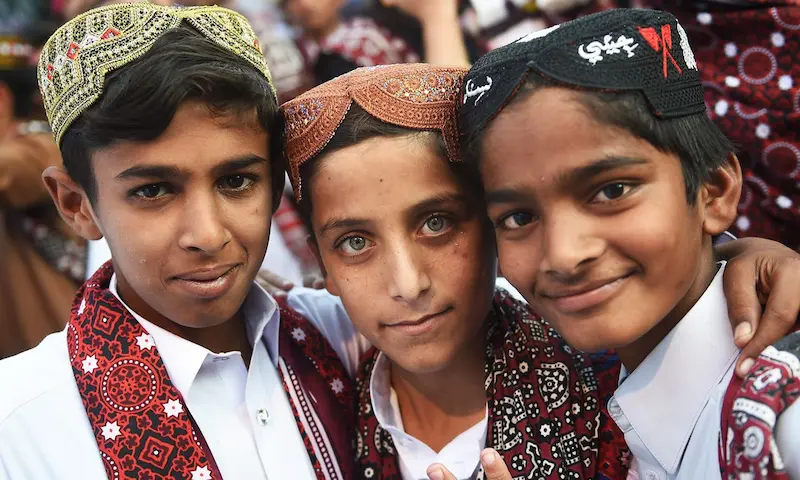
Consider the Pashtuns. The claim that they are natural irredentists misunderstands who they are and how they live. Pashtuns in Pakistan are not a marginal population looking across the border for salvation. They are deeply integrated into the Pakistani state, economy, and military. They dominate transport, logistics, security, and large parts of urban informal commerce. Large numbers have moved permanently into Karachi, Lahore, and Islamabad. Assimilation is not failing; it is proceeding at scale. Continue reading Pakistan Is Not About to Break Apart
What Is Not India Is Pakistan

As Dave mentioned, there is a lively WhatsApp group of BP authors and editors, and it inevitably shapes the comment ecosystem. But one comment on the blog stood out:

“The very foundation of Pakistan is an anti-position. What is not India is Pakistan. So isn’t it obvious?”

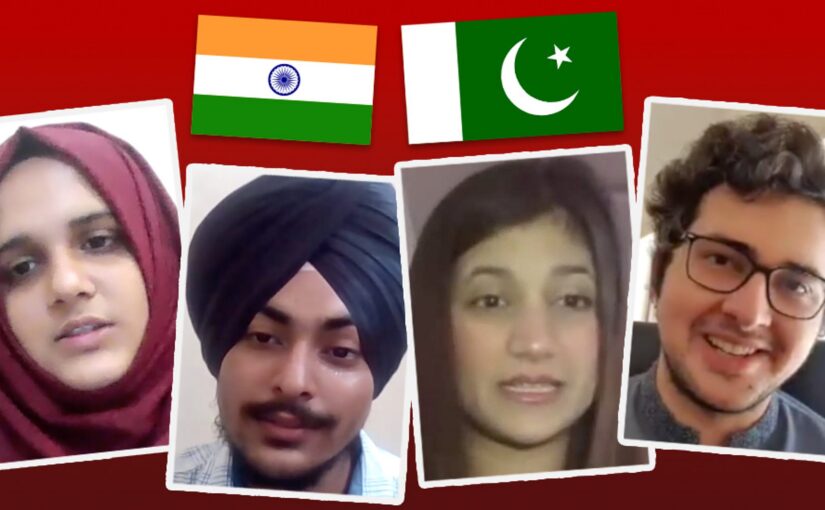
It’s an extraordinarily crisp description of Pakistani identity-building. What is not India is Pakistan. That is not a slur; it is, in many ways, a psychologically accurate frame for how the state narrates itself.

What I increasingly find misplaced on this blog is the recurring assumption that Pakistanis are somehow “Indians-in-waiting,” or that Punjab is “West Punjab,” Pakistan “Northwest India,” or Bangladesh “East Bengal.” These are irredentist projections that simply do not match lived identities. This is not “North Korea” or “East Germany,” where both sides continue to imagine themselves as fragments of one common nation.

Yes, Pakistan consumes Bollywood and Hindi music, which themselves derive from Mughal and Indo-Persian syncretic traditions. Yes, Pakistan is culturally embedded in the greater Indo-Islamic civilizational sphere. But emotionally, Pakistan has severed itself from the Indian Subcontinent as a cohesive landscape. It has constructed a hybrid identity; part Turko-Persian, part Islamic internationalist, part anti-India.

I don’t personally agree with this move, and my own trajectory has been toward a strong Hinducised, Dharmic identification. But my view is irrelevant here. What matters is that Pakistani identity is defined negatively; as the commentator put it, “What is not India is Pakistan.

Whether that is healthy or sustainable is another matter. But identities can persist in unhealthy configurations for a very long time; the stock market can be irrational longer than your liquidity can survive.

Brown Pundits