This is a near zero likelihood of happening but never say never.
This is a near zero likelihood of happening but never say never.
Iran cannot be analysed using the same political categories as Pakistan or most modern states. The difference is not whether a regime is monarchical, clerical, or military. It is the age of the civilisation being governed. Pakistan is a young state. Its borders, institutions, and political language were assembled in the twentieth century. In such states, power fills a vacuum directly.
Power in Young States, Authority in Old Ones
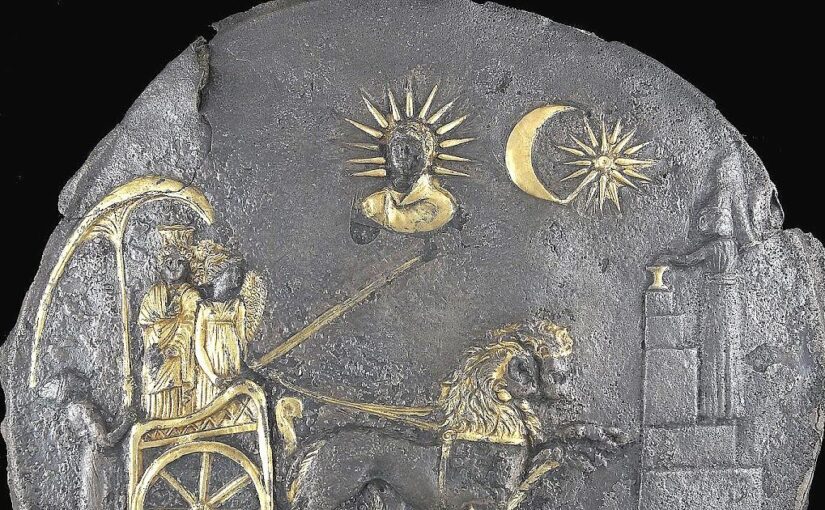
A military dictatorship governs by force, hierarchy, and command. Its legitimacy is procedural and immediate: order, security, survival. This form works where political memory is thin and inherited meaning is limited. Pakistan’s army did not overthrow an old order. It stepped into an empty one. Iran is structured differently. It is a civilisational state that has existed in recognisable form for roughly three thousand years. Power there has never been exercised through force alone. Authority has always been tied to ideas that predate any single regime.
Monarchy as Civilisation, Not Administration Continue reading Iran and Pakistan Are Not the Same Kind of State
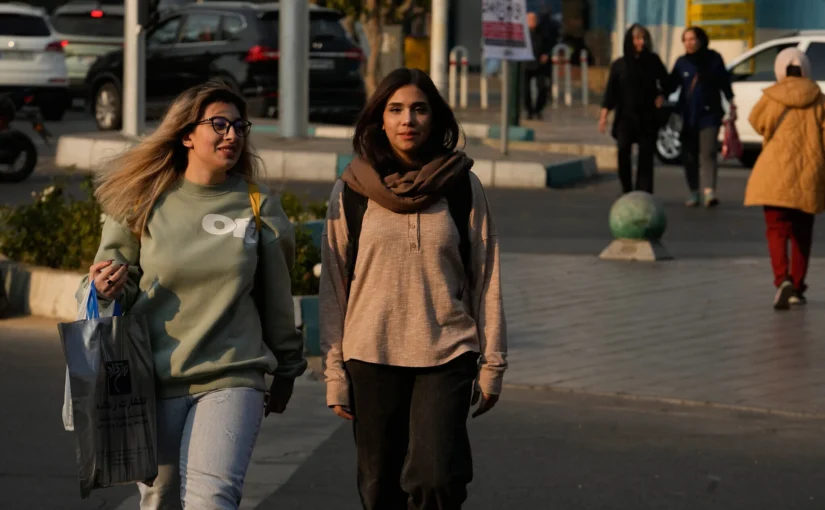
I was not reading reports. I was speaking to Iran. After weeks of silence, the internet briefly opened. Voices percolated through. What they described was not protest energy. It was systemic strain.
The figures circulating privately are severe. Tens of thousands dead, according to some accounts. Whether the numbers are precise is less important than where the pressure is concentrated. This is not confined to Tehran or large cities. It is acute in smaller towns and provincial centres.
The big urban areas remain relatively stable. It often is. But towns in the North and across the interior are absorbing the worst of the economic collapse. Inflation there is not political language. It is daily arithmetic.
This marks a shift. The Islamic Republic rested on a broad social base: provincial populations, lower-income groups, and religious constituencies. That base is now under strain. Discontent is no longer segmented. It is shared. Continue reading Listening to Iran
Pakistan does not announce itself as a great power. That is precisely why it works.
Prussia, built on Position, not Pretension
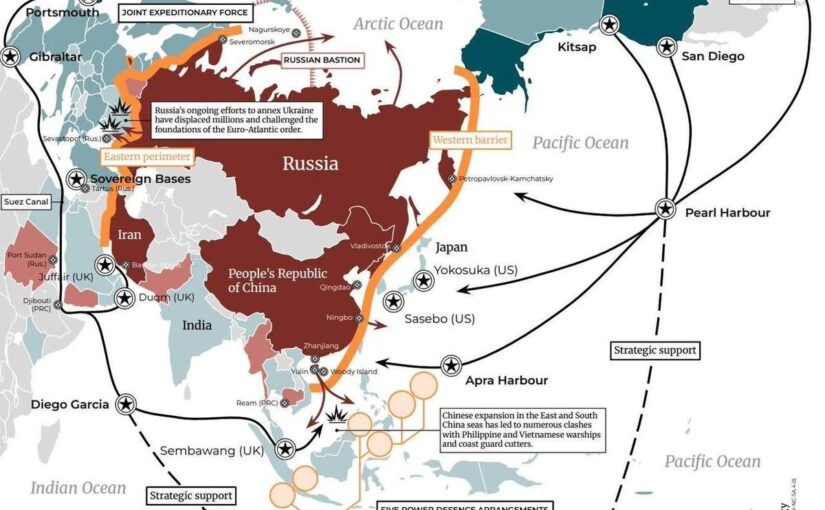
In a world that is reorganising around blocs, chokepoints, and undersea cables, Pakistan has emerged as one of the most dextrous middle powers on the planet. Not because it dominates geography, but because it understands it. Not because it leads alliances, but because it survives them. Most states are trapped by their alignments. Pakistan is not. It sits at the hinge of the Eurasian landmass: between the Gulf and Central Asia, between China and the Muslim world, between the Indo-Pacific and the Middle East. This position is dangerous for weak states. For competent ones, it is leverage. Pakistan has learned how to convert constraint into flexibility.
Dexterity & Diplomacy as Strategy Continue reading Pakistan, the deciding hinge between the West & CRINK
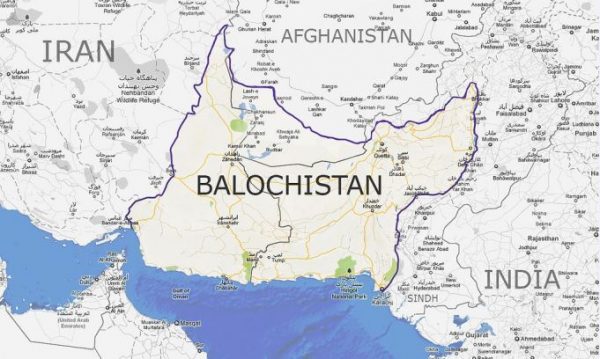
This growing tendency to treat every internal conflict in South Asia as if it were interchangeable with Kashmir (the “Sunni Valley“). This is a mistake, and in the case of Balochistan, a very serious one.
The distinction was once put very clearly to me by Benazir Bhutto herself. In the 1990s, while seeking international advocacy on Kashmir, she was asked by Saddam Hussein a blunt question: If we support Kashmir, why should the world not support Kurdistan? Her reply was immediate and precise. Kashmir, she said, is an international dispute. Kurdistan is not.
That distinction matters, and it still holds.
Kashmir is internationalized by design. It is anchored in UN resolutions, formal bilateral agreements, wars between recognized states, and sustained global diplomatic engagement. It belongs to the same narrow category as Palestine or Cyprus; flashpoints where sovereignty itself is contested between states and therefore cannot be reduced to a domestic matter. Continue reading Why Balochistan Is Not Kashmir
There is a persistent habit, especially among our soi-disant commentators, of predicting Pakistan’s imminent disintegration. The arguments are familiar: Baloch insurgency, Pashtun irredentism, low Kashmiri fertility, economic weakness, and analogies to 1971. They are also, taken together, wrong.
To begin with, most people discussing Pakistan do not understand its internal sociology. They begin with a conclusion, “Pakistan is artificial and unstable”, and then select facts to confirm it. This is confirmation bias dressed up as analysis.
Consider the Pashtuns. The claim that they are natural irredentists misunderstands who they are and how they live. Pashtuns in Pakistan are not a marginal population looking across the border for salvation. They are deeply integrated into the Pakistani state, economy, and military. They dominate transport, logistics, security, and large parts of urban informal commerce. Large numbers have moved permanently into Karachi, Lahore, and Islamabad. Assimilation is not failing; it is proceeding at scale. Continue reading Pakistan Is Not About to Break Apart
Imran Khan’s sons speak out: “Our father’s prison conditions aren’t bad, they’re awful.” Whatever one thinks of Pakistani politics, the treatment of a former prime minister is a measure of a state’s institutional health.
Is the Paknationalism or Indophilia; the strange twist of Pakistan is that both can be true at the same time.
It was my birthday two days ago on the 15th. The official celebration will be later this month in Sri Lanka, but the last few weeks have been unusually hectic with travel and work. Continue reading Open Thread (Birthday)
Let’s take a look at the other theses put forth by X.T.M in this piece.
His second thesis is that “The Muslim League won. Then most Muslims stayed.”
How should we understand this? It could be said the sons of Abraham — and perhaps especially those in the line of Ishmael — are meant to stay untethered from bonds to the land upon which they live, seeing as they are (at least supposedly), nomads from the sand? I think the best description of the Islamic invaders of India comes from Deleuze & Guattari’s Anti-Oedipus (1972/1977). Speaking of the ‘Barbarian Despotic Machine’ which supplants the ‘Primitive Territorial Machine’ (which I take to be synonymous with localized Hindu communities, even if it isn’t a perfect fit):
“The founding of the despotic machine or the barbarian socius can be summarized in the following way: a new alliance and direct filiation. The despot challenges the lateral alliances and the extended filiations of the old community. He imposes a new alliance system and places himself in direct filiation with the deity: the people must follow. A leap into a new alliance, a break with the ancient filiation—this is expressed in a strange machine, or rather a machine of the strange whose locus is the desert…” (p. 192)
We published 76 posts and 1 podcast (Bangladesh) this month.
Traffic fell from ~55–65k (Sept–Oct) to ~33k in November.
However, comment activity remained strong at 819 comments (~27/day).
From the ever wonderful Hasan Mujtaba sahib’s facebook.
When Bhutto founded the People’s Party in Lahore — Hassan Mujtaba

It was Hameed Nizami, the owner of Nawa-i-Waqt, who introduced Zulfikar Ali Bhutto in Lahore to the brother of Dr. Mubashir Hasan. However, Bhutto developed a friendship with Dr. Mubashir himself, and it was at Dr. Mubashir Hasan’s house that he laid the foundation of his then-new party, the Pakistan People’s Party (PPP).
The first Vice President of the Pakistan People’s Party was the former diplomat J.A. Rahim, who wrote the foundational documents (foundation papers) of the party based on socialist principles. It was the same J.A. Rahim who encouraged Bhutto to stay in the country and politically confront the Ayub regime after resigning from the government. Otherwise, Bhutto — intimidated by the terror and intimidation of Malik Amir Mohammad Khan, the then-Governor of West Pakistan (known as Kalabagh) — was spending his time vacationing in Europe.
The party’s famous slogan “Roti, Kapra aur Makaan” (Bread, Clothing, and Shelter) was actually borrowed from Habib Jalib’s famous poem: “Har insaan maang raha hai roti, kapra aur makaan” (Every person is demanding bread, clothing, and shelter).
In those days, among those who used to meet Zulfikar Ali Bhutto — who spent his evenings at Faletti’s Hotel — were Habib Jalib, and left-wing student leaders from Lahore like Zafaryab Ahmed and Hassan Wasti.
Those who attended the founding meeting of the party at Dr. Mubashir’s house are all present in the historic photograph taken that day. In the photo, Sheikh Rashid — unable to find a seat — can be seen sitting in Bhutto’s lap. Others visible in the picture include Meraj Muhammad Khan, J.A. Rahim, Dr. Mubashir Hasan, Mustafa Khar, Hayat Muhammad Sherpao, Syed Saeed Hasan, Abdul Sattar Gabol, Nafis Siddiqui, Qasim Abbas Patel, Kamal Azfar, and possibly Khursheed Hasan Meer as well.
It is also a tragic chapter that shortly after coming to power, Bhutto became displeased with the same J.A. Rahim. He had J.A. Rahim and his sons arrested, and had them subjected to brutal torture at police stations — including sexual violence against his sons. The man who carried out this violence was the notorious Karachi gangster Suleman Brohi. Suleman Brohi was later killed in the 1990s during the government of Jam Sadiq Ali or Muzaffar Hussain Shah.