
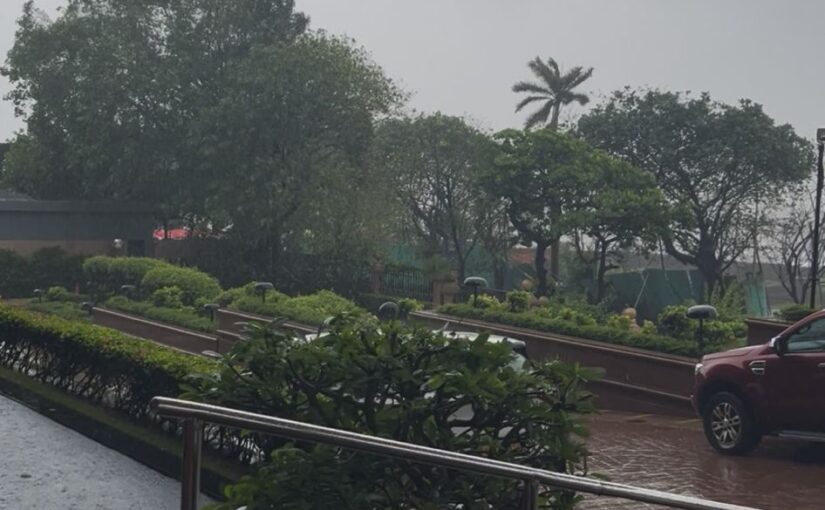
I. Bombay: Between Beauty and Brutality
I’m writing from Bombay, where the monsoon floods are overwhelming; visually and viscerally. The rain hammers the city with a kind of sublime fury. From certain vantage points, it’s breathtaking. But it’s also undeniably brutal for those without scenic surroundings or structural shelter. It’s a reminder that Indian beauty is often doubled with burden.
II. Burden Burst: The Commentariat Awakens
Lately on Brown Pundits, I’ve noticed a revival. Old voices returning, new ones emerging, and many ideas worth engaging. But some themes have worn thin; for instance I’m in broad agreement with Indosaurus & I don’t want to waste too much breath on Audrey Truschke. And frankly, Aurangzeb is not a hill I want to die on. In fact, perhaps one of the key misreadings by Muslims in the subcontinent was turning every ideological disagreement into a hill to die on. Maybe it began with QeA-Jinnah and the Great Allama but it ossified into a pattern. Everything became a matter of principle, rather than pragmatism.
III. Concession Is Not Compromise
Compromise is seen as weakness, but I’m more interested in the capacity to concede especially when history clearly shows you’re wrong. The Mughals installed a two-tier system, subordinating Hindus and even native Muslims. Contrast that with the Suri dynasty, particularly Sher Shah Suri, who in just two decades built the Grand Trunk Road and reshaped governance without the alienation that marked the Mughals. If Hindutva attacked the Suri legacy, I’d call it pure bigotry. Sher Shah ruled with the land, not over it. Continue reading Come Fly with me to Far Bombay