
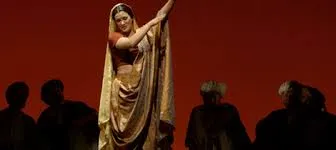
Note: Since we were talking about colonialism , I am sharing this essay I wrote about opera and colonialism. I originally wrote this piece as part of a graduate school application to King’s College London where I was planning to study musicology. I ended up going to SOAS to pursue Ethnomusicology instead. It also makes a change from all the discussion of geopolitics.
During the mid-nineteenth century, European composers experienced a vogue for depicting the Orient on stage. Not only was the Orient an exotic location, but the operas set there spoke to the imperial anxieties of various European nations. In their essay published in Imperialisms: Historical and Literary Investigations, Linda and Michael Hutcheon write: “Opera may not appear at first to be quite the same as these other Western means explored by [Edward] Said of ‘dominating, restructuring, and having authority over the Orient’. But it is important to recall that Opera was a powerful discursive practice in nineteenth century Europe, one that created, by repetition, national stereotypes that, we argue, are used to appropriate culturally what France could not always conquer militarily” (Hutcheon 204).
In this paper, I will analyze two French Grand Operas from this period—George Bizet’s The Pearl Fishers (1863) and Leo Delibes’s Lakme (1883)—in order to determine the stereotype of the “Oriental” that was being presented to French audiences. As a point of contrast, I will also discuss Indrasabha (The Heavenly Court of Indra), an operatic drama written by the Urdu poet Agha Hasan Amanat and produced in 1855 in the palace courtyard of Wajid Ali Shah, the last Nawab of Awadh. This contrast will serve to illuminate how the operatic tradition was adapted by Indians themselves as well as the differences in the narratives about the Orient as conceived by the Occident as opposed to the Orient itself. Continue reading The Depiction of the Indian Subcontinent in 19th Century French Grand Opera