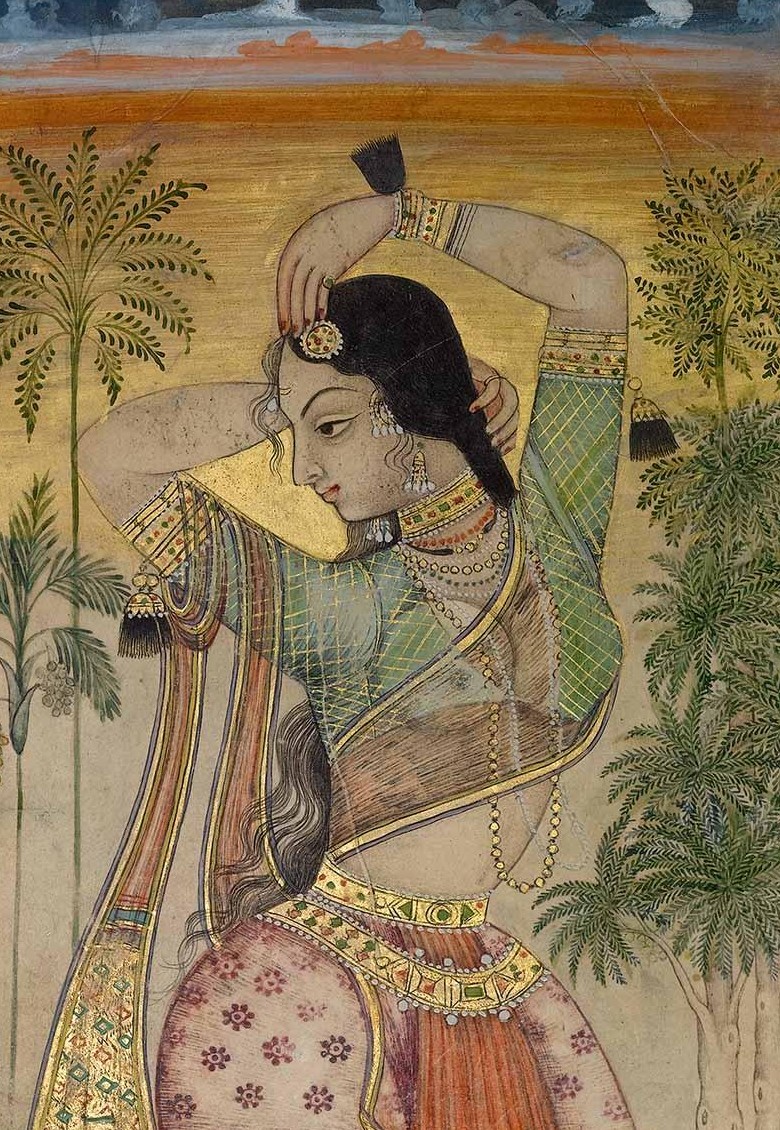
To be or not to be (Capricious)

Posted on Categories Admin, Brown Pundits, Kabir, X.T.MTags , , , , , , , , , , , , , , , , , 33 Comments on To be or not to be (Capricious)

The November circular was emailed earlier to all various stakeholders of BP. This will be sticky for a short period as unfortunately publishing all the drafts has pushed the current posts much further down.

You may also use this thread as an unmoderated Open Threads. Topics of interest include JD Vance’s comments, the stabbing in the UK by asylum seekers (presumably), and any other interest. I would suggest everyone engage with the email, after the jump; if you have been emailed it privately, I do expect private replies as well.

Continue reading To be or not to be (Capricious)

The Earth’s Lost Industrial Heart

Posted on Categories Alternative, Civilisation, Geopolitics, History, India, Iran, Islam & the Middle East, X.T.MTags , , , , , , , , , , , , , , , , , , , , 19 Comments on The Earth’s Lost Industrial Heart

After our discussion on industrialisation in India, I began to wonder: if the Earth were one country, one government, one infrastructure grid, one economy, where would its industrial heart lie?

Geographically, the answer is obvious. The natural centre of the world, for energy, labour, and trade routes, isn’t London, New York, or Beijing. It’s the triangle between the Persian Gulf, the Indo-Gangetic plain, and the Red Sea.

Deserts rich in hydrocarbons. River basins dense with labour, water, and grain. Seas that touch every continent. If the world were united, this belt, Arabia to India to the Nile, would be the Ruhr, the Great Lakes, and the Pearl River Delta combined.

The Natural Order of Geography

Before empire, this region was the planet’s connective tissue. Spices, silk, horses, and steel moved from India to Arabia to Africa. Energy, grain, and knowledge flowed through the Red Sea and the Persian Gulf like the arteries of the Earth. It was not the “Middle East”; it was Middle Earth. Continue reading The Earth’s Lost Industrial Heart

Review: Desertion by Abdulrazak Gurnah

Posted on Categories Book Reviews, ColonialismTags , , , , , , , 1 Comment on Review: Desertion by Abdulrazak Gurnah

From my Substack: 

When Abdulrazak Gurnah won the Nobel Prize for Literature in 2021, he was comparatively little-known. I must confess that I had never heard of him. This is despite the fact that I am an ardent fan of English literature and am also deeply interested in issues of colonialism. I have read most of the fiction concerned with British colonialism in South Asia including Rushdie’s Midnight’s Children, Scott’s The Raj Quartet and Forster’s A Passage to India. Perhaps part of the reason that I was not familiar with Gurnah’s work was that I have not focused much on Africa as a region (except for North Africa, which can be said to be more of an extension of the Arab world than the African continent proper). However, even within the domain of African fiction, Gurnah is an author that is unfamiliar to most readers. For example, school curricula in the US often include Chinua Achebe’s Things Fall Apart and Alan Paton’s Cry, the Beloved Country. I very much doubt that any curricula so far has included Gurnah’s works. Hopefully, that will change now that he has received the Nobel Prize.

Gurnah is a British citizen of Zanzibari origin. He grew up at a time when Zanzibar was a British protectorate separate from the colony of Tanganyika. After both colonies achieved independence, a revolution overthrew the Arab elite in Zanzibar and the region later merged with Tanganyika to form Tanzania. Gurnah had left to study in the UK before this revolution broke out and he describes himself as a refugee. He completed his Phd in Literature and served as a Professor at the University of Kent, from which he recently retired. His academic work deals with postcolonial literature, including that of Rushdie. Continue reading Review: Desertion by Abdulrazak Gurnah

Why Indian English Loves Long Sentences

Posted on Categories Culture, India, Indian Subcontinent, Language, Pakistan, X.T.MTags , , , , , , , , , , , , , , , , , , , , 4 Comments on Why Indian English Loves Long Sentences

If China endured a century of humiliation, India has lived through a thousand years of it. Invasions and exploitation left it poor in wealth but rich in culture; intricate, adaptive, and resilient. That depth shows in Desi English, which often favours long, ornate sentences over plain ones.

This habit echoes Persian’s former role in the subcontinent: a prestige language whose mastery signalled rank. Even Ghalib’s vast Persian verse drew less love than his Urdu. In India, Persian was the colonial language of power; today, English plays that part.

In Iran, Persian changes fast. Slang, borrowed terms, and foreign tones reshape it so quickly that many in their forties struggle with teenage speech. My own Persian, kept alive in Kuwait and India, is closer to Shirazi and Tehrani standards than to the language my ancestors spoke. I’m self-conscious with Iranians, but with diaspora Persians, I speak freely; we share a looser, accented form of speech. Continue reading Why Indian English Loves Long Sentences

Brown Pundits