
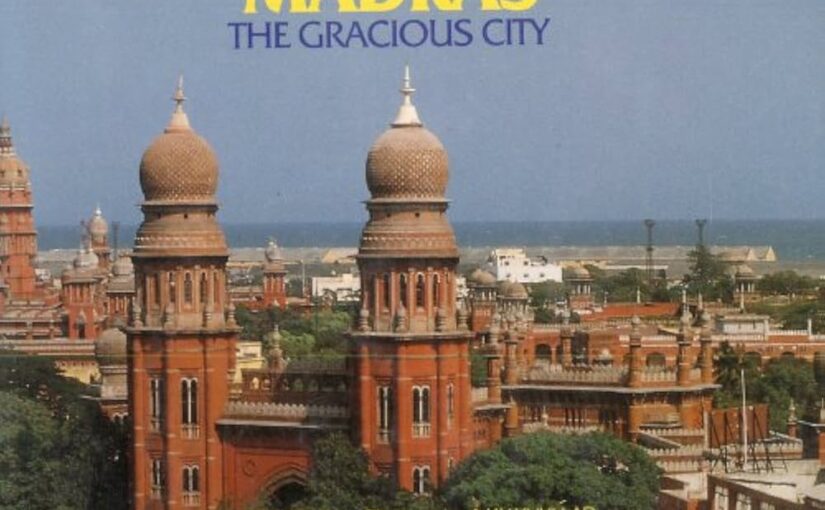
There are places in the world that do not behave the way theory predicts. Chennai is one of them. Tamil Nadu is among India’s richer states. It is urbanised. It is educated. It is globally connected. And yet it retains a form of social cohesion and human reflex that hyper-capitalism usually dissolves.
This is not nostalgia. It is observation.
A Different Social Reflex
In much of the world shaped by late-stage capitalism, interaction is transactional by default. Help is conditional. Suspicion precedes generosity. Risk is individualised. In Chennai, the reflex is still different. People intervene without being asked. Strangers stop when something is wrong. Assistance is offered before motives are assessed. Money is often refused. This is not charity. It is social instinct. That instinct survives even in moments that theory says it should not: late nights, urban settings, infrastructural failure, ambiguity. The absence of alcohol matters. The presence of peer groups matters.
But more than anything, the cultural baseline matters.
Why Tamil Nadu Resists Homogenisation
Tamil Nadu’s resistance is not accidental, and it is not recent.
-
Language as a wall
Tamil is not ornamental. It is enforced socially. This slows cultural flattening. It resists pan-Indian and global monocultures. It keeps local meaning dense.
-
Dravidian political memory
Tamil society internalised an early suspicion of centralisation; religious, linguistic, or political. That suspicion created buffers long before the current political moment.
-
Pluralism without performance
Religious difference is normalised rather than staged. Christianity, Islam, and Hinduism exist as lived traditions, not symbols in a culture war. This reduces siege psychology.
-
Weak penetration of chains
Unlike Mumbai or Bengaluru, Chennai never fully surrendered its retail and social space to global chains. Local commerce still dominates daily life. That preserves face-to-face norms.
-
Family and neighbourhood density
Gated isolation exists, but it is not total. Multi-generational presence and informal accountability remain strong.
Together, these factors produce something rare: modernity without total alienation.
The Dravidian Exception
Across South Asia, regions most exposed to imperial circuits, tourism corridors, financial hubs, Anglophone enclaves, develop a subtle sorting mechanism. Attention becomes differential. Westoxication, proximity to capital, or symbolic globality acquire value. Tamil Nadu largely escapes this logic. The reason is not moral superiority. It is insulation. Empire does not fully enter Chennai’s interior life. Compare this with places overwhelmed by external valuation; where service becomes calibrated, where the gaze changes, where people learn to distinguish between bodies. Tamil Nadu has been spared that training.
For now.
Capitalism Without Total Capture
Tamil Nadu is not anti-capitalist. It is industrial. It exports. It builds. But it has not fully internalised the idea that value must be proven through dominance, speed, or self-assertion. Accommodation still carries status. Adjusting to others is not read as weakness.
This is the opposite of the imperial ethic, where friction is resolved through power.
A Warning, Not a Celebration
None of this is permanent. The post-1990s generation shows strain. Gated living grows. English replaces intimacy. Phones replace neighbourhoods. Hyper-individualism seeps in. Capital does not destroy cultures all at once. It corrodes reflexes. Tamil Nadu’s strength lies in the fact that many people still remember another way of being, and can model it unconsciously. Once that memory fades, no policy can restore it.
Why This Matters Beyond India
What survives in Chennai is not “Indian culture” in the abstract. It is a pre-imperial social grammar: presence, mutual recognition, non-transactional help, emotional attunement. These traits exist wherever Empire has not fully won; whether in parts of the Global South, or in marginal spaces within the West itself. They are not backward. They are not inefficient. They are not sentimental. They are human.
And once lost, they are almost impossible to rebuild.
Tamil society internalised an early suspicion of centralisation; religious, linguistic, or political. That suspicion created buffers long before the current political moment.
Religious difference is normalised rather than staged. Christianity, Islam, and Hinduism exist as lived traditions, not symbols in a culture war. This reduces siege psychology.
Maybe because Brahmanism was not a big thing in Tamil Nadu
Also against Aryan-ism
Probably the only state where there was a BIG anti Brahmin movement
utterly uninformed agenda pushing. If “Brahmanism was not a big thing”, then why is it a state where there was a big “anti-Brahminism movement”.
This kind of biased trolling really diminishes your perspective, seriously. Think about it.
utterly uninformed agenda pushing. If “Brahmanism was not a big thing”
Wrong wording of the sentence
Anti Brahminism was big thing in Tamil Nadu
I guess you would not know, if as you claim were born in the US
This kind of biased trolling really diminishes your perspective, seriously. Think about it.
I get the impression when you visit India you stay in some Star Hotel and ignore the grinding poverty. Child beggars disabled beggars etc
This feels like a very stereotypical comment Sbarr
Visit India and immerse yourself in her unrivalled complexity; no nation on earth is quite like it
This feels like a very stereotypical comment Sbarr
Are you claiming there isnt grinding poverty and child beggars
I would much prefer China or Tibet
you have a bigotry problem.
Maybe Andaman Islands for some scuba diving
more gratuitous needlessly provocative trolling with ‘disabled beggars’ etc. Unseemly. And really reflects some seething prejudice.
Do better.
I was asked visit India
I pointed out why I have no wish to,
Maybe you consider inconvenient facts trolling
As per census data, there has been a decrease in the number of children engaged in begging activity from 1,12,794 in 2001 to 45,296 in 2011
Other estimates from human rights organizations suggest much higher numbers, with some reports citing over 300,000 child beggars across the country.
https://www.pib.gov.in/PressReleaseIframePage.aspx?PRID=1778853®=3&lang=2
this is an unfair provocative analysis.. let’s avoid such superficial observations.
I will write on the difference between SL & India
I think there may be some truth to it; the presence of Brahmins is usually correlated with Saffronism of some sort.
This is a neutral statement
The Brahmin population share in the Deccan and deep South definitely tapers, with each sub region seeing subtle differences in how they participated in the political economy. Unlike the north, the southern brahmins were often segregated in their agraharas, limiting assimilation. The modern dravidianist outgrouping of brahmins ,I feel , has roots in folk memory as opposed to being de novo. Others may challenge that.
I think that’s not a entirely accurate correlation.
“Brahmanism” and Brahmins form a major % of Bengali culture – including Bhadralok culture. Caste segregation and endogamy is lowest in WBengal and even east bengal as Razib has pointed out.
Caste segregation remains as strong in TN – especially in non Brahmin castes.
If you put it another way – TN was under colonial rule for the lowest number of years. under Yoke of Brits for 150 years where there wasnt much pushback ; and hardly a few decades under Madurai sultanate etc.
Though Brahmins were arguably most insular in TN so some truth to that fact