Open Thread: BP Survey

Our 2026 reader survey is open until 7 June – anonymous, roughly five minutes. Please take a moment.

—————————————————————————————————————————–

Update, 1 June 2026 – links from the thread: The Peshawar Review has a new issue out, including Professor Harbans Mukhia’s reminiscences of Kirori Mal College (College Days) and Shan-e-Ahmed reading an Urdu transcreation of T. S. Eliot’s “The Love Song of J. Alfred Prufrock” (Prufrock in Pakistan). On the Tata Sons listing question, Agni flagged a cluster of commentary: the Indian Express “to list or not to list” column, The New Indian Express on the boardroom fight, Soonawala on why an IPO may not appeal to investors, and Business Standard on the 12 June board meeting. Survey responses are at 18 and counting; please add yours if you haven’t.

—————————————————————————————————————————–

Editor’s note, 1 June: This Survey thread will sit on the front page through the week, until Sunday the 7th June, while we are travelling Eastbound, so we have made it an Open Thread. What strikes us, watching the comment threads, is that for all the constant bickering, BP is a community, and a recognisably Desi one.

It has the hue of a Hindu joint family (to be of the Indian subcontinent is, almost by definition, to have Hindu ancestors; “Hindu” is simply what the Persians called the people beyond the Indus) that has built a wall down the middle of the house and still cannot get over each other. The wall is real. So is the fact that nobody moves out.

—————————————————————————————————————————–

Original Post: Every few years BP runs a reader survey. Razib began the tradition in 2019, and the responses then told us things the comments alone never could.

Seven years on, with a substantially different commentariat, we are running the 2026 edition. The prompt to revive it came from Kabir, whose recent post on what BP is and is not raised exactly the kind of question a survey can help answer, and we are grateful for it.

Nineteen questions, anonymous, roughly five minutes. The core spine is demographic in Razib’s tradition: age, sex, country, mother tongue, ethnic background, religion, caste, education, political ideology, and views on Hindu and Pakistani nationalism. A few behavioural questions follow on how often you visit, how long you have been reading, how you first found BP, and which topics you would like to see more of, with optional fields at the end for handle, newsletter signup, and anything else you would like the editors to know.

Please take the time to fill in this survey. Thank you for your engagement.
Postmortem (Translation from the Urdu)

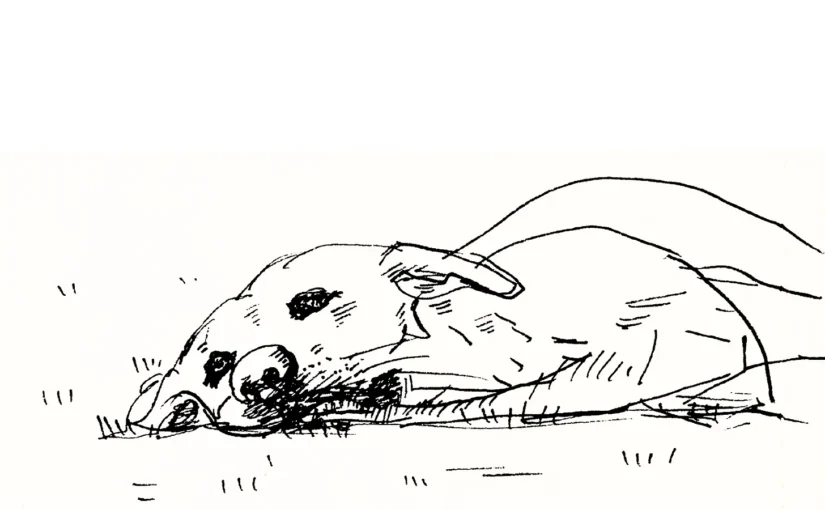
I am sharing an excerpt from my translation of Bilal Hasan Minto’s short story “Postmortem” from his collection “Model Town”.  The story is about the death of a beloved pet dog and a little boy’s desire to give him a proper funeral.  This desire comes into conflict with the norms of Islam which forbids funerals for animals.  The entire story can be read in the June issue of The Peshawar Review

It was a frost-laden evening in December when our Happy stopped eating. Naveed Bhai went into the garden, where Happy was sitting quietly tied to his post, to cover him with a coat. Happy looked at Naveed Bhai with barely opened eyes, and smiled. Then he moved his tail weakly from left to right. That was it. This was unlike him. He didn’t stand up and wag his tail vigorously, or play around with Naveed Bhai. Naveed Bhai was worried.

“Happy, Happy,” he cajoled.

Happy didn’t even open his eyes and just moved his tail from right to left. It was clear even that was not easy for him and he did it only out of love for Naveed Bhai. Naveed Bhai’s eye fell on his bowl. Happy’s afternoon meal was sitting there untouched,flies buzzing around it.

That night at the dining table, Naveed Bhai told Abba about Happy’s condition and said with concern it seemed he was ill because he hadn’t touched his afternoon meal. Abba said maybe he hadn’t liked it.

“But he gets this food every day,” I said, “and he always eats it.”

“Perhaps that’s why. If you got the same thing every day you would get tired one day too, wouldn’t you?” Abba said.

“Oh! So now I have to prepare a new feast for him every day!” Ammi said angrily. She hated Happy.

“Anyway, let’s see if he eats anything tonight,” Abba said, wanting to end the conversation.

“But why didn’t he move? I even had to put on his coat while he was lying down,” Naveed Bhai said anxiously.

“Maybe he has a cold. It’s freezing. If he doesn’t eat at night or is the same tomorrow, take him to Dr Walter,” Abba said. Continue reading Postmortem (Translation from the Urdu)

Why Mohammad Hanif uses satire to write about Pakistan|Scroll Adda (Open Thread)

Based on the 1988 aircraft crash that killed Zia-ul-Haq, the military dictator of Pakistan, A Case of Exploding Mangoes made a big splash in the South Asian literary world when it was released in 2008. Readers loved that a desi writer was nailing political satire. Since then Mohammed Hanif has written three more novels, masterfully blending politics and the absurdities of life. He’s so captured the genre that some say he’s the Pakistani Joseph Heller. Hanif has a new book out, The Rebel English Academy. On Scroll Adda, he talks about why he uses satire, his relationship with three languages – Punjabi, Urdu and English – how Operation Sindoor ended up strengthening army rule in Pakistan as well as describing Imran Khan as a political prisoner.

Incidentally, I keep meaning to review Rebel English Academy.  I have a copy autographed by Hanif.

2) Muhammadi Begum in Oxford 

Although many young women are studying abroad and living alone these days, this wasn’t the case for Indian women in the 1930s. But, as they say, there are always exceptions to a rule, and one of them was Muhammadi Begum, who went to study at Oxford University during the 1930s.

The book under review, Deccan Say Duur, Oxford Ke Roz-o-Shab: Aik Naujawan Taliba Ka 1935 Ka Roznamcha, is a reproduction of the diary entries Muhammadi Begum wrote while at Oxford. She was born in Hyderabad Deccan, and graduated from Osmania University. As she secured the first position there, she was awarded a scholarship by the Government of Hyderabad Deccan to study at the University of Oxford, making her one of the few women to receive such an opportunity.

In 1934, she went to the UK with her husband, who took a year’s leave from his job to accompany her. To prepare for admission to the University of Oxford, she had to pass certain exams, for which she studied for a year. Although she wanted admission in Lady Margaret Hall, she had to settle for Saint Hugh’s College, which offered her a space.

The review goes on to note that Muhammadi Begum was part of the organizing committee for the women’s jalsa that the Quaid-e-Azam attended in 1945. Her family migrated to Pakistan in 1950.

The Pakistani Voice That Isn’t in the Room

BB made a very sharp observation, and we want to put it on the record as a note rather than a finished argument, because it deserves more elaboration than we can give it today.

Who carries the Green Passport

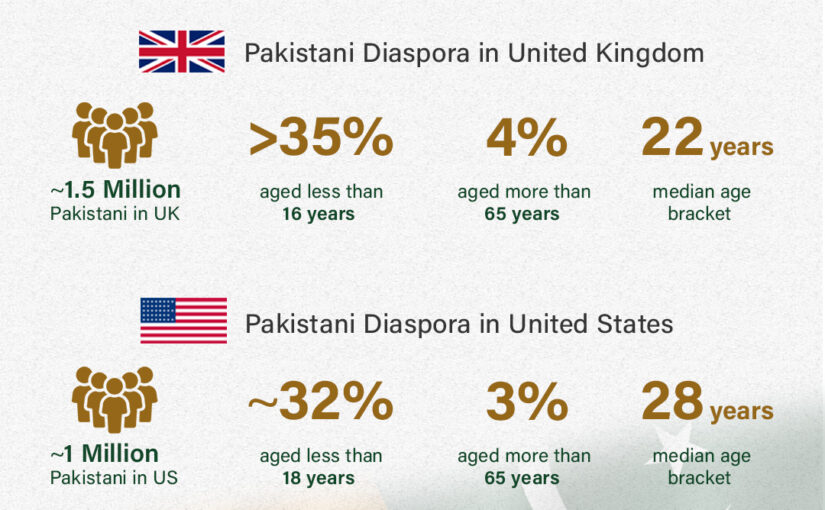
Look at who carries the Pakistani case at BP. Kabir holds a foreign passport. Q and EK write from the diaspora. Every voice that argues the Pakistani perspective here argues it from somewhere else. Not one of them speaks from inside the country: resident, middle or upper-middle class, holding a green passport with everything the green passport actually costs at the visa counter, at the airport, in what can and cannot be said at home. India, by contrast, is argued for in large part by Indians who live in India (BB is one such example). So the table is lopsided in a particular way. One side is represented by people inside the country it speaks for; the other, almost entirely by people outside it.

No photo description available.
The Great Cleft

Diasporas are powerful but deadly

Continue reading The Pakistani Voice That Isn’t in the Room

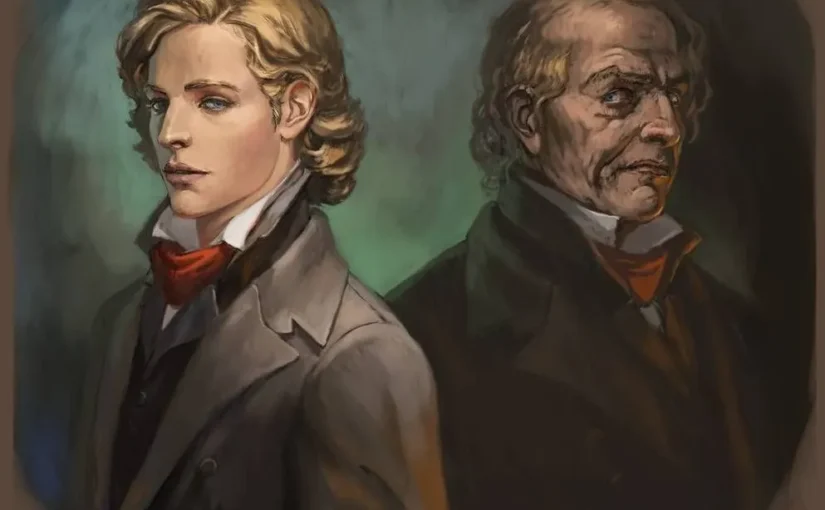
Oscar Wilde’s The Picture of Dorian Gray: The Controversy around the novel’s depiction of homoeroticism

This essay has nothing to do with South Asia but I am sharing it in the interest of mixing up topics and discussing things that don’t have to do with Ind-Pak.  For FlyDie specifically. 

Oscar Wilde’s The Picture of Dorian Gray is a classic work of 19th century gothic horror. Initially published in the July 1890 issue of Lippincott’s Monthly Magazine, the novel became immediately controversial, primarily because of its “immorality”. In his “Introduction” to the annotated, uncensored edition (Belknap 2011)–based on Wilde’s original typescript– editor Nicholas Frankel quotes a contemporary review in the Daily Chronicle:

It is a tale spawned from the leprous literature of the French decadents–a poisonous book, the atmosphere of which is heavy with the mephitic odours of moral and spiritual putrefaction–a gloating study of the mental and physical corruption of a fresh, fair and golden, youth, which might be fascinating but for its effeminate frivolity, its studied insincerity, its theatrical cynicism, its tawdry mysticism, its flippant philosophizing…

Frankel argues that a large part of the reviewers’ outrage arose out of what they perceived to be the novel’s references to homosexuality. He writes:

That outraged British reviews of The Picture of Dorian Gray share the same coded language (unhealthiness, insanity, uncleanliness, and so on), while making allusion to criminal prosecution, shows very clearly that many early British readers were cognizant of the the ways in which the novel challenged conventional Victorian notions of masculine sexuality, particularly through its preoccupation with the homoerotic and emotional relations between the three main male characters (Dorian, Basil, and Lord Henry) and through its complex interest in the potentially corruptive nature of interpersonal influence.

As a response to this criticism, Wilde made substantial changes to the 1891 book-length version, substantially toning down the homoerotic content. However, during his 1895 trials for “gross indecency”, passages from the novel were often introduced into evidence, usually in the more scandalous magazine version. Thus, the controversy around Dorian Gray became inseparable from the scandal around Wilde’s sexual behavior more generally. Continue reading Oscar Wilde’s The Picture of Dorian Gray: The Controversy around the novel’s depiction of homoeroticism

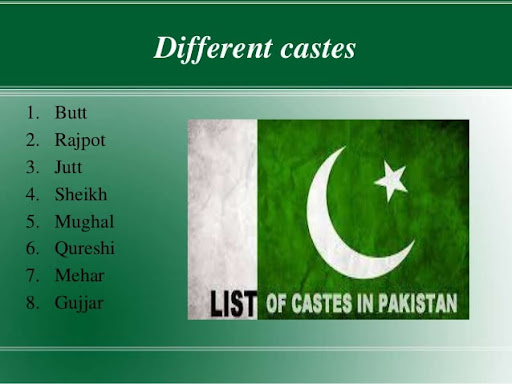
The invisibility of caste in Pakistan

I’ll do a larger post sometime later (maybe tomorrow) but a quick rebuttal of some points raised by Kabir in his latest post regarding caste.

Kabir mentioned this about privilege.

All the Pakistanis on BP are privileged given that we are all English-speaking and all of us have foreign citizenship (I assume).


All the Indians on BP are also privileged in that they are able to converse in English.

Notice the difference. The Pakistanis had to go abroad to live/study. The Indians didn’t. I don’t know about most Indians here (maybe they would like to enlighten) but I have spent my entire life in India. I have only gone abroad on vacation. There is no Pakistani equivalent here.

And that is telling.

India is better than Pakistan on all socioeconomic metrics. And I can link charts, data etc here but real world examples like this are more telling.

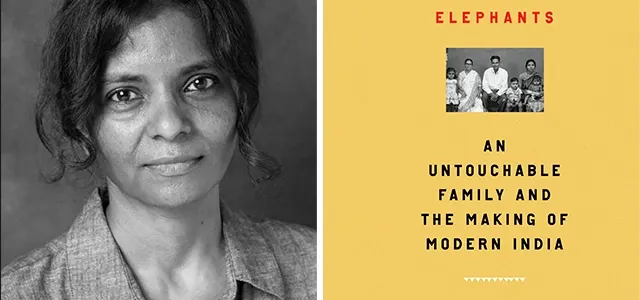
Sujatha Gidla, a Dalit was able to get education in some of India’s best educational institutions and make it to the United States where she could write a book in English. Unlike in Pakistan, one need not be a descendant of “doctors and lawyers” to be able to go down that path.

Again, I am not denying the existence of discrimination against Dalits (or for that matter Muslims) in India.

But the fact that Dalits (and Muslims) have dissenting voices as well as a visible presence in India speaks for India’s relative egalitarianism vis a vis Pakistan.

In fact, I would say caste is even more pervasive in Pakistan than India due to the complete denial by the privileged castes (as we can see here) and the complete invisibility of it. Kabir has multiple times spoken of his Iranian ancestry as well as EK of his Kashmiri Brahmin ancestry so they are very much “Ashrafs” speaking about “Ajlafs” and “Arzals”.

Poetry by Iqbal is fine and dandy but that doesn’t change the reality on the ground.

All those Muslims exist on the Indian side too where they receive affirmative action (as they should). What is called as “biradiri” is basically “caste”.

Kabir did make this comment about “proper Muslims”.

Proper Muslims (Arabs) don’t have caste.

First of all, it is good to see the acceptance by Pakistanis that they are not “proper Muslims”.

Secondly, since they are not “proper Muslims” but “Hindu Muslims” maybe time for them to examine their faults?


Ants Among Elephants: A Portrait of Untouchability in India

Since we have been talking about caste, I am sharing this review of Sujatha Gidla’s Ants Among Elephants: An Untouchable Family and the Making of Modern India.  

Caste has religious sanction in Hinduism while in Islam all believers are (theoretically) considered equal in the eyes of Allah.  This is an important distinction between the two religions. 

One of the frequent topics of debate among those interested in South Asia is the caste system and whether it is unique to Hinduism or features in other South Asian religions as well. Hindu society has traditionally been divided into four castes (or varnas): Brahmins (priests), Kshatriyas (rulers, administrators and warriors), Vaishyas (merchants and tradesmen), and Shudras (artisans, farmers and laboring classes). A fifth group consists of those who do not fit into this hierarchy at all and are considered “untouchable”. What separates caste from other systems of social stratification are the aspects of purity and ascribed status. Upper-castes consider lower castes to be “impure” and have rigid rules about the kind of social interaction they can have with them. For example, upper castes will not accept food from those of a lower caste, while lower castes will accept food from those above them. Caste status is also ascribed at birth and has nothing to do with an individual’s achievements. A Brahmin peasant remains a Brahmin while an “untouchable” engineer is still an “untouchable”. This system persists in India today, though the government does provide affirmative action in order to uplift members of “backward” castes.

Coming from a Pakistani background, I was not familiar with the operation of the caste system in daily life. Though Pakistan is a highly socially stratified society, this system has no religious sanction. In Islam, all believers are considered equal in the eyes of Allah. Unlike in India, where until recently, “untouchables” could not go into several temples, all social classes pray together in the same mosques. This fact is highlighted in one of the famous couplets from Allama Iqbal’s poem “Shikwa” (the complaint) which states: “Ek hi saf mein khare ho gaye Mahmood-o-Ayaz/ Na koi banda raha aur na koi banda nawaz” (Mahmood the king and slave Ayaz, in line as equals stood arrayed/ The lord was no more lord to slave: while both to the One Master prayed). At least in religious terms, one Muslim is not better than any other, no matter what his social status. Of course, this does not mean that social stratification ceases to exist. To this day, rich Pakistani families have separate utensils in their homes which are to be used by the servants. Punjabi Christians who engage in janitorial work are still known as “chuhras”, a derogatory reference to their pre-conversion caste status as “untouchables”. However, unlike the Hindu caste system, social class in Pakistan is not based on ascribed status. If someone from a low socio-economic background attains an education and a well-paying job, he or she will no longer be treated as belonging to their previous socioeconomic group. This is a major difference from India, where one’s caste remains salient, no matter one’s economic status. Continue reading Ants Among Elephants: A Portrait of Untouchability in India

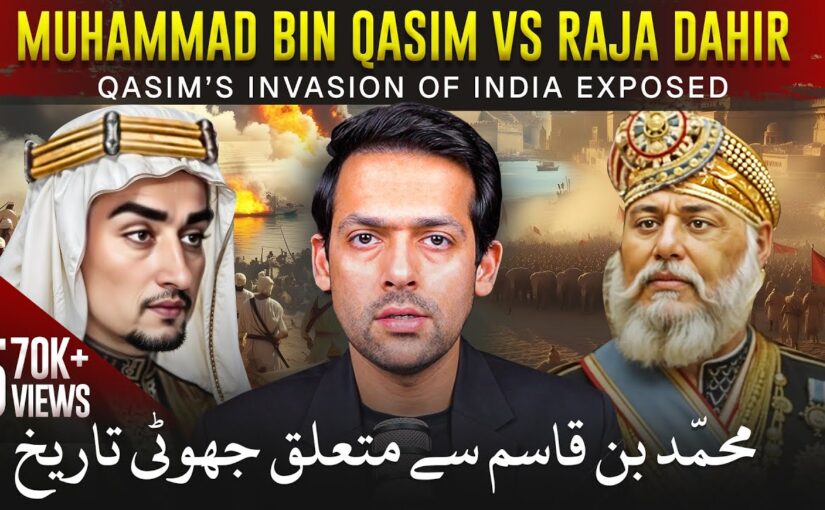
Bin Qasim’s Thousand-Year Wound

There is one fault line under everything that happens here, and it is old. Pakistan stands, whether it wishes to or not, as the proxy for the Muslims of the subcontinent, and India as the proxy for its non-Muslims. This is not a quarrel of the last election or the last war. It is a wound more than a thousand years old, set running when Muhammad bin Qasim landed in Sindh in 711, and it has been arguing with itself in the subcontinental subconscious ever since. Every thread on this site is a small, late episode of that argument.

There is a scene in The Devil Wears Prada, the cerulean one, where a colour chosen by Miranda Priestly (Meryl Streep) at the summit of fashion is followed down the seasons, runway to department store to clearance bin, until Andy (Anne Hathaway), who fishes it out is sure her choice owed nothing to any of it.

Anne Hathaway referencing the ICONIC cerulean sweater scene for her first  day filming The Devil Wears Prada 2 💙 Andy is back! , #AnneHathaway  #TheDevilWearsPrada #TheDevilWearsPrada2 #AndySachs ...

The subcontinent’s argument works the same way. Bin Qasim’s landing in 711 was a decision taken at the top of history, and it has filtered down through thirteen centuries of conquest, doctrine and memory into a comment thread, where two strangers swapping insults are certain the quarrel is about this week. It is not. It was chosen for them a thousand years ago, and they are wearing it without knowing the name of the colour.

What is new is that the argument is going quiet, and quiet is worse than loud. The subcontinent is partitioning itself a second time, in the mind. Indians increasingly talk only to Indians, Pakistanis only to Pakistanis, each inside a feed built to agree with them. The 1947 line cut the map; the algorithm is cutting the conversation. Against that, the value of Brown Pundits is simple and almost embarrassing to state. It is one of the few open places left where the two sides still argue with each other in public and mean it. That is worth defending even when the argument is ugly, because the alternative is not a calmer argument. It is no argument, and two rooms that never open the door.

Is BP sui generis on the Internet?

Continue reading Bin Qasim’s Thousand-Year Wound

On BP: A Diagnosis

First of all, I want to thank X.T.M for enforcing a “ceasefire” between myself, BB and RNJ.  I really do think it is better for the mental health of everyone concerned to not indulge in these “low-signal” exchanges which are mostly just personal acrimony.  Insulting someone’s career as “grift” for example or posting a picture of the Netanyahus at the Taj are not adding anything to the discussion and only serve to trigger the other party.

I would be open to revisiting this “ceasefire” after a certain period (a few weeks or months) provided the people concerned learn how to debate without being disagreeable.  However, for now, it is best to limit interaction.

With that preamble out of the way, I want to turn to the main topic of this post: A diagnosis of what BP is or isn’t.    I am including the (somewhat tongue-in-cheek) song “A Diagnosis” from the TV Show Crazy Ex-Girlfriend to illustrate the importance of obtaining a correct diagnosis.  Before one can prescribe a cure, one has to first understand what the problem is.  This post is my attempt to do so.  It is inherently subjective and of course there is room for respectful disagreement.

Continue reading On BP: A Diagnosis

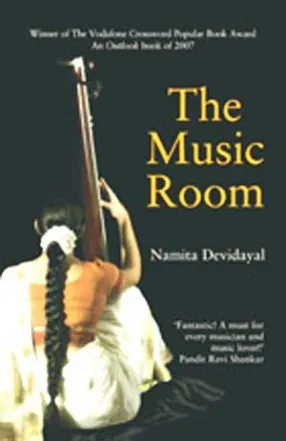
Review: The Music Room by Namita Devidayal

In an attempt to cool the temperature, I am sharing this review of Namita Devidayal’s book The Music Room.  I appreciate that BP is not afraid to tackle controversial and fraught topics relating to India-Pakistan but we need to mix it up with less controversial (but no less important) topics. 

Namita Devidayal’s memoir The Music Room is a chronicle of her relationship with her guru Dhondutai Kulkarni (1927-2014). The book describes Devidayal’s initiation into Hindustani classical music as a reluctant ten-year-old from Bombay’s upper-middle class. Along with describing her growing appreciation for Dhondutai and the music that she imparts to her, the narrative also tells the story of two other important figures in Hindustani music: Ustad Alladiya Khan (1855-1946)–the founder of the Jaipur-Atrauli gharana–and Keserbai Kerkar (1892-1977)–one of the most famous khayal singers of the 20th century. Through telling the stories of these individuals, Devidayal elucidates several important themes such as communalism and “Hinduization” of music as well as the place of women in classical music.

Devidayal describes the process through which Hindustani music became communalized and “Hinduized”. Though Dhondutai is extremely proud of the musical legacy passed on to her by Alladiya Khan Sahib’s family, she still expresses some bigoted views about Muslims. When pressed on this by Devidayal, Dhondutai attempts to square the circle by telling her that Ustad Alladiya Khan was not a real Muslim since he was (allegedly) descended from a Brahmin singer who had been forced to convert to Islam by a Muslim king. She also notes that he always wore the caste thread usually worn by Brahmins. This story allows Dhondutai to hold the belief that Hindustani classical music is essentially Hindu despite the fact that many of the most prominent gharanas had Muslim founders. Dhondutai’s prejudices connect back to the broader process through which–during the colonial period– Hindustani music was “Hinduized” by reformers such as Pandit Bhatkhande and Pandit Paluskar. Bhatkhande wanted to create a “national music” and believed that Hindustani music had been degraded by Muslims and dancing girls and needed to be rescued from both. This process has been extensively discussed by Janaki Bakhle in her book Two Men and Music: Nationalism in the Making of an Indian Classical Tradition. Unfortunately, while most ethnomusicologists agree that Hindustani music is a syncretic tradition, many (on both sides of the India-Pakistan border) persist in claiming it for one or the other religion. Continue reading Review: The Music Room by Namita Devidayal

Brown Pundits