Titaness of Brown Blogosphere, Ruchira Paul, is no more

I had planned to write a nice long post this evening for BP since I felt I had neglected this blog for far too long.

As I was finishing my earlier work, I had to scroll on Facebook, which I rarely do unless it’s for a specific reason. As I scrolled down the feed, my heart shuddered; Sukrita Paul Kumar had posted a notification about her sister-in-law, Ruchira Paul.

I had known Ruchira for so long I cannot place the beginning of our friendship. Many names come to mind when I think of that early period (the late noughties), the Brown Blogging Dynasts. I was always a pretender to that company; Ruchira was among its most gracious members. Sukrita has written a poignant obituary on Facebook, which anyone who wants a proper account of her life should read.

Also worth reading is Namit Arora’s touching note on Ruchira. Judging from the comments on the two Facebook threads; my feelings are shared by hundreds and hundreds of individuals, whose lives Ruchira touched over the years.

This is a smaller thing: an accounting of what she meant to me across nearly two decades of friendship, most of it conducted over email and Facebook, none of it ever in person.

Accidental Blogger was Ruchira’s signature. She started it in 2005 as a solo author. By 2006 she was inviting others in, and by the time she wound it down in early 2013, roughly a dozen writers were contributing under her banner. She told me once, quite matter of fact, that readership had dwindled and she saw no point in continuing an enterprise that took so much of her time and energy. That was Ruchira in miniature. No sentimentality. A thing had run its course. She moved on. I remember leaving a comment on her concluding post in January 2013 to say goodbye. She wrote back a few days later, characteristically, to thank me for taking the trouble.

That was already several years in. We were Facebook friends from April 2011, but we had certainly been in touch before that. Whatever the origin, the friendship settled into a rhythm of quiet, regular contact. She wrote to me on my birthday, year after year. On 16 December 2011, 16 December 2012, 15 December 2013, 15 December 2017. Sometimes she signed with a single line, sometimes only her name. On my 29th she wished me many happy returns and a happy holiday season and added, in her small careful way, Mubarak!

A decade on, she wished me again on my 39th.

Few people ever used Facebook as well as Ruchira did. After a return from a “long” hiatus, I had complained to her that the platform was dull; she was much of the reason it was not always so.

No photo description available.

This past May she posted a cropped photograph of her mother as a student at Dhaka University, standing in the third row behind one of her professors, flanked in the back row by two women who would become lifelong friends, one of them later an aunt by marriage. All graceful, smart and kind women, Ruchira wrote. It was an inheritance that ran through her own life of the mind and runs on today to her daughter, an acclaimed professor.

Some years earlier she had written a piece I have not been able to find yet, about a wedding in her extended family. A cousin brother who had grown up in the same household, though much younger, had put her name on his wedding invitation card, and the gesture moved her so deeply that she couldn’t write about it till the emotion had been processed. She wrote it so well that it moved me deeply too, and I still remember it, years later.

In 2018, when the great Pakistani poet Fahmida Riaz died, Omar Ali’s obituary for Brown Pundits carried Ruchira’s English translation of Aqlima, Fahmida’s furious feminist meditation on the forgotten sister of Cain and Abel. A Bengali woman in Houston, translating a Sindhi feminist’s Urdu poem for a South Asian intellectual blog. That was the reach she carried, and the quiet, unfussy way she offered it.

Continue reading Titaness of Brown Blogosphere, Ruchira Paul, is no more
Why Sri Lanka keeps missing its maritime moment

COLOMBO: Situated at the cusp of the world’s busiest shipping lanes, barely a degree north of the equator, Sri Lanka has a geographical location that port planners pay fortunes for. 

Yet for all the strategic plans drawn up over the past three decades, the island has progressed little beyond its role as a transshipment port –more than 80% of the cargo on ships docked in Sri Lanka is never unloaded here, but transshipped onward. 

Most of this cargo is bound for Indian ports, through terminals run by Sri Lanka’s state-owned Ports Authority, the China Merchants-backed Colombo International Container Terminals, and India’s Adani Group-linked Colombo West International Terminal.

Why Sri Lanka keeps missing its maritime moment

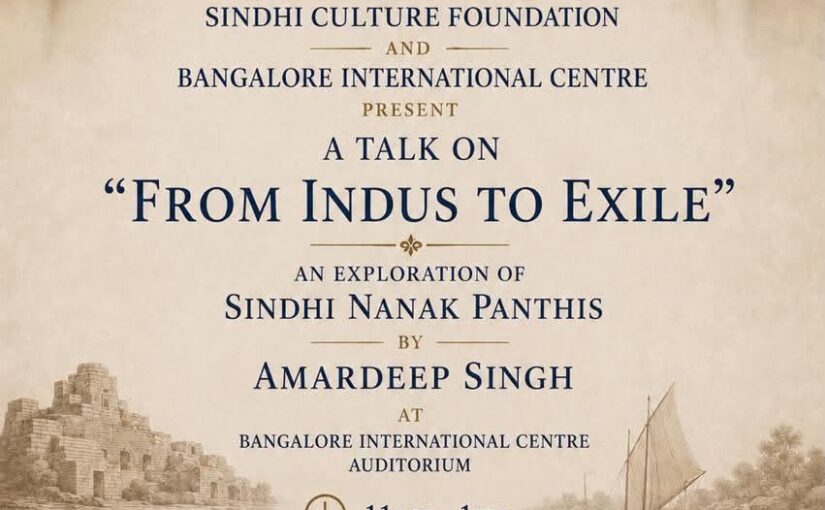
From Indus to Exile: Notes from Delhi

Breakfast in Delhi

There are a lot of things we would say. We are in Delhi, over a good South Indian breakfast, and the first thing we notice is our own silence. We have not been very active on Brown Pundits of late. However we do not have the option of a break or a hiatus; since we have to keep the blog foundationally alive.

We had not been in Asia since January. Six months, and a long six months at that. Ordinarily we would have broken it up with a visit in April, but the gap has made us appreciate India all the more.

One thing we realise in life is that everything is continuity: showing up, and how much work you put into a thing.

The Post-Factional Turn

Continue reading From Indus to Exile: Notes from Delhi

Poison Trees: Mythological Fiction & Hindu Values – 1: Fixing the Bow

Originally published: MAY 28, 2026

This series is a response to this post by the Centre for Studies in Hindu Conservatism (CSHC). I highly recommend reading it to get tapped into what the Indian leftist intelligentsia has been doing. By request from Omar-ji, I am cross-posting it here.

Introduction

I will admit, when I first saw the Substack notification pop up that the Centre for Studies in Hindu Conservatism (CSHC) had posted an essay called “How Mythological Fiction is Quietly Dismantling Hindu Values”, I was greatly looking forward to reading it. I went into it thinking that it would be rip into the works of authors like Amish Tripathi, of the Shiva Trilogy. Instead, I found quite the opposite opinion on his writings.

“A crucial clarification is that this article is not an attack on creative liberty. There are several contemporary works on Hindu theology that engage with these traditions from within the framework of Dharma itself. For instance, Amish Tripathi’s Shiva Trilogy reimagines Shiva as a mortal and writes on his journey of becoming deified. This is imaginative fiction that does not claim to correct theology. Left-Liberal worldview, however, views religion as something evil and interprets it accordingly.”

Before I go any further, let me make a few things clear. I have no enmity with the writers of the essay to which I write this answer. I have never spoken to or met them, nor have I ever read any of their writings before. Any harshness in my words should be taken as naught but a gentle hand suggesting that they take stock of other worthwhile targets.

Continue reading Poison Trees: Mythological Fiction & Hindu Values – 1: Fixing the Bow

A blogging hiatus

As everyone reading knows – i havent posted or commented on BP in a while.

It’s very likely it will stay that way for a few months atleast – unless something provokes me into writing.

desi open thread

1. S. Janaki has passed away. I’m Shanti. She sang more than 48,000 songs. Great artist. She sang in 17 languages.
2. Australia is selling uranium to India, probably freeing Indian stock for other purposes.
3. Looks like modi is not over yet.
4.Rahul Gandhi in forever foreign tour.
5. Hindus are pushing back on ‘sutlej’ , asking not to ignore their loss.
6. Indian cities are flooded. High time the drainage is redesigned.
7. Just as Opinions/demand for freeing Govt. Control of Hindu temples rise, a set of thiefs create a scene in ram temple. Lucky it is getting resolved.

The Crescent and the Trident clash over their women

Two flags fly over the subcontinent’s women. One says cover them. The other says protect them.

We do not think the two are equivalent in cruelty. We think they are equivalent in structure.

No Hindu Equivalent to Zia.

There is no Hindu-nationalist equivalent of Zia ul-Haq’s Hudood Ordinances of 1979, which for decades made a raped woman’s complaint the raw material of a charge against her. There is no Hindu-nationalist equivalent of the Qanun-e-Shahadat of 1984, under which, in certain documentary and financial matters, two women’s testimony is required to equal one man’s. Pakistan partially repaired the first in 2006. The second stands.

That is statutory. It is one-sided. Anyone who tells you the two flags are the same is lying to you, and we are not going to.

What follows is about something else.

I. Two Patriarchies.

Continue reading The Crescent and the Trident clash over their women

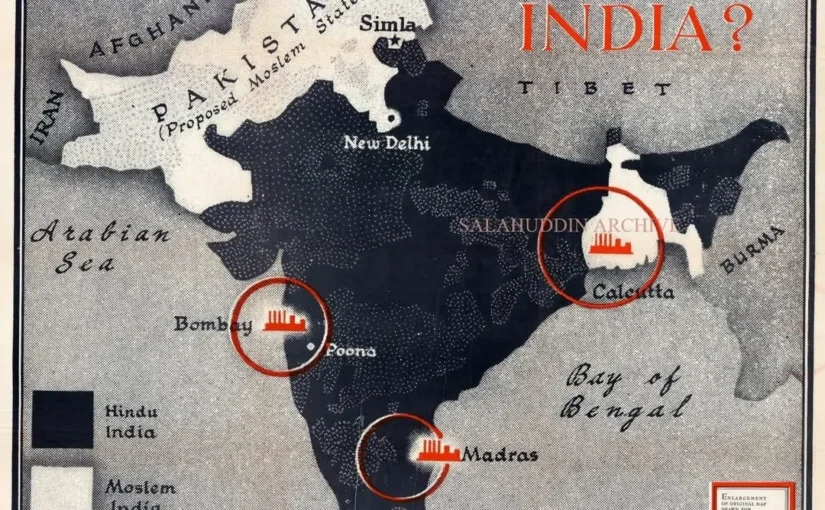
Pakistan & India as Imperial Nation States

The useful conversations at a conference are never in the room. They happen in the corridor, over bad coffee, among the people who did not get a panel.

What we heard there over the weekend was a single proposition, stated with varying degrees of anger. The subcontinent is held down by two post-imperial states, each of which inherited the Raj’s administrative logic and neither of which has any intention of loosening it. The languages, the peoples, the small nations inside the big ones are being quietly extinguished. The activists who said this were Baloch, Sindhi, Kashmiri and Punjabi (as well as Pushtun, Hazara, and Urdu-speaking).

We should also say at the outset that this essay is about Pakistan. The two-hegemon frame is the activists’ frame, and we have not necessarily adopted it.

I. Ethnicity versus the Pakistani state.

Continue reading Pakistan & India as Imperial Nation States

June Readership Numbers

In June 2026 Brown Pundits drew just under fifty-four thousand visits (nearly 2,000 visits a day), down about twelve per cent on the month.

The shape of that traffic is more interesting than its size:

  • Five readers in six arrive on a phone.
  • Close to six in ten come directly, by bookmark, habit or feed: they already meant to be here.
  • Organic search brings a further third.
  • Social accounts for one visit in fifteen, all of it from Quora.
  • Four in a thousand now arrive through the AI answer engines.
  • The typical visit lasts a minute and a half and covers just over two pages.

Our most-visited page in search is our notice on Dhurandhar, which sits on the first page of Google for a term several thousand people look up every month. As well as a 2015 piece on Patricia Crone, an old conversation with Edward Luttwak, a note on Rajaji.

Our geographic breakdown is:

🇨🇦 CANADA ████████████████████████ 42%

🇮🇳 INDIA █████████████ 25%

🇺🇸 UNITED STATES ██████ 11%

🇦🇺 AUSTRALIA ████ 8%

🇬🇧 BRITAIN ███ 6%

🌍 OTHER ██ 8%

The numbers say that reader is loyal, numerous, and scattered across continents, which is no small thing to have built.

Brown Pundits