
Today marks the beginning of Ayyám-i-Há, a time of generosity, renewal, and joy in the Bahá’í calendar. While speaking in Farsi with a local Bahá’í friend in the Boston-Cambridge area, she mentioned she was born in Gonbad-e-Kavus, a town near the Turkmenistan border. I had never heard of it before, but as we spoke, the connections began to form.
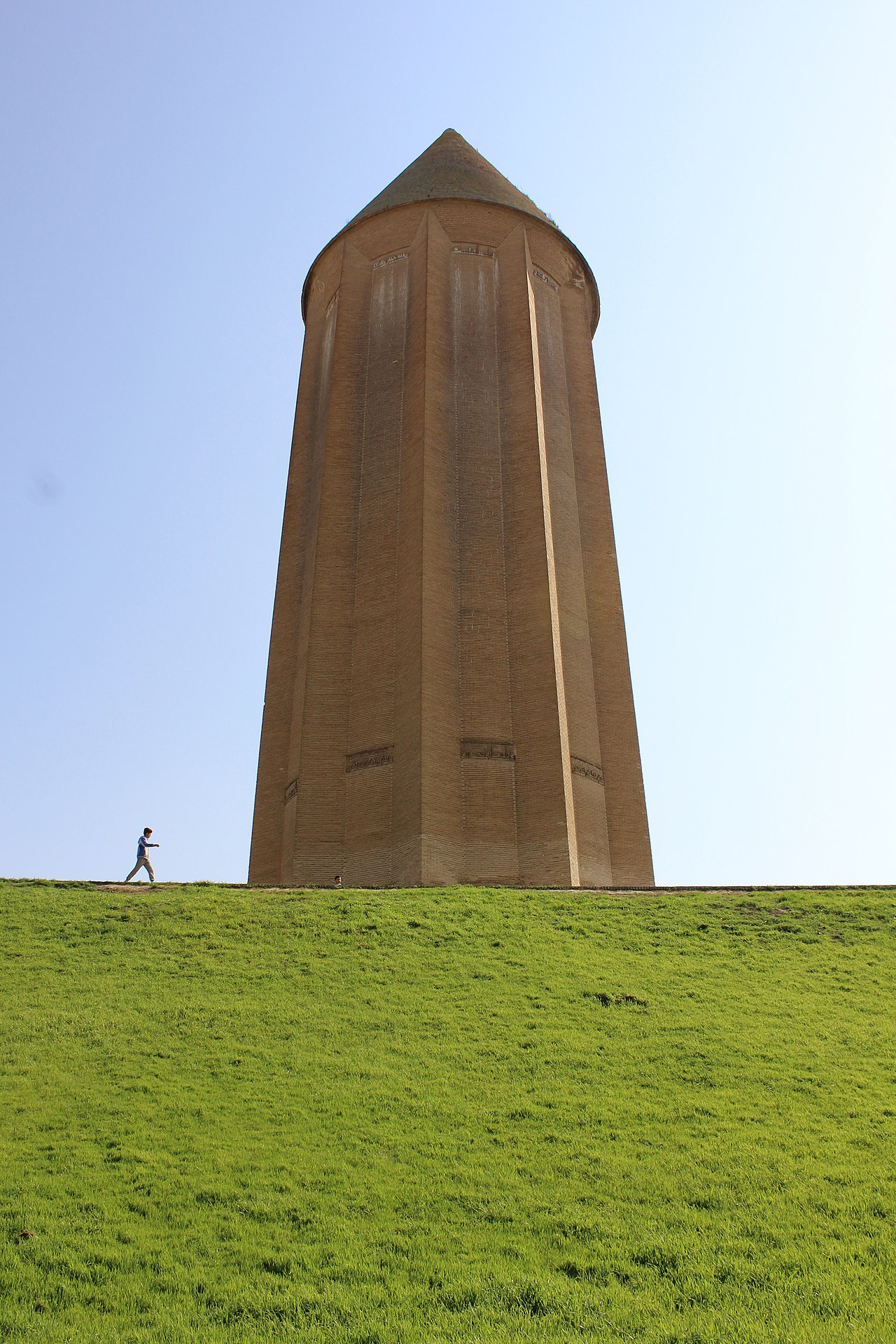
The UNESCO Gonbad-e-Qabus (Tower of Qabus)
A Lost Bahá’í Connection
Just across the border in Turkmenistan (then part of the Russian Empire) lies Ashqabad, one of the earliest Bahá’í settlements—a city where, in the 1920s, Bahá’ís openly practiced their faith, established institutions, and flourished.
But what struck me was that this Bahá’í woman had roots in Semnan Province, a region historically associated with the Faith. How did her family end up in Gonbad, a town that, in my ignorance, had no known Bahá’í presence?
Her answer unveiled a hidden chapter of Bahá’í migration—one that reflected centuries of adaptation, resilience, and survival in the face of persecution.
The Untold Story: How Bahá’ís of Sangesar Created a New Home
Sangesar, now officially renamed Mehdishahr, is a city in Semnan Province that once had a strong Zoroastrian presence. Even after Islam became dominant, many of its traditions, language, and cultural heritage retained Zoroastrian influences for centuries (the Tower above was built around 1000 AD and shows evidence of Zoroastrian-Muslim synthesis).
Before the Islamic Revolution of 1979, Sangesar had a thriving Bahá’í community. However, in the 1960s and 1970s, many Bahá’ís left for Tehran, seeking economic opportunities. This movement caught the attention of Tehran’s Shia clergy, who began seeing the Bahá’í presence as a growing threat.
As hostility escalated, the Mullahs of Tehran—as an aside Sangesar only had mullahs introduced to the city after the Revolution—began labeling Bahá’ís as “najis” (ritually impure). This marginalization pushed Sangesari Bahá’ís to look elsewhere, other than Tehran, for safety.
In the 1960s, a Sangesari Bahá’í discovered Gonbad-e-Kavus, a town populated by Sunni Turkmens. This turned out to be a strategic advantage—unlike Iran’s Twelver Shi‘ite majority, the Sunnis had no entrenched theological hostility toward Bahá’ís. Seeing this as a rare safe haven, many Sangesari Bahá’ís—along with a much smaller number of Yazdi Bahá’ís—migrated to Gonbad and built a flourishing agricultural community.
The Bahá’í presence in Gonbad became so pronounced that local Turkmens began to assume Sangsari was a Bahá’í language, rather than a regional dialect of Semnan Province—bordering Mazandaran, the ancestral Caspian homeland of Bahá’u’lláh’s family, who himself was born in Tehran & loved that city immensely (the land of T´a).
Cultural Divides: The Sangesari-Yazdi Split in Gonbad
As my conversation continued, she described how the Sangesari Bahá’ís and Yazdi Bahá’ís in Gonbad experienced cultural differences that were like night and day.
I struggled to fully follow this part of the discussion because she was speaking rapidly in Farsi—though she was bilingual, she instinctively switched to Persian, making my comprehension weaker. I would need to clarify exactly what the cultural split was, but from what I understood, it seemed to be tied to historical, linguistic, and social differences between the two groups.
One particularly striking paradox she mentioned was language usage at Bahá’í Feasts.
• In nearly every global Bahá’í community, Persian is the default language among Iranian Bahá’ís.
• But in Gonbad, Feasts were conducted in Sangesari—not Persian (which she mentioned was a purer older form of Persian without as many Arabic words).
• The Yazdi Bahá’ís were confused by this dynamic, highlighting how distinct these two groups remained even within a shared Bahá’í setting.
This linguistic divide reflected a deeper cultural separation, hinting at regional identities that persisted even after migration (I suspect the Yazdis were Zoroastrian ancestry Bahá’ís who would have had their own dialect).
Gonbad: A “Hidden Bahá’í City” Under the Shah
Much like Ashqabad in the 1920s, Gonbad-e-Kavus flourished under Bahá’í presence. Known for its strong cooperative ethos and entrepreneurship, the Bahá’í community quietly built schools, businesses, and farms, turning Gonbad into a self-sufficient economic hub.
For much of the late Pahlavi era (1962–1979), Gonbad functioned as a “hidden Bahá’í city”, with the Turkmen population as the only other major group.
But this relative peace did not last.
When the Islamic Revolution of 1979 swept across Iran, everything changed.
• The new Islamic regime seized Bahá’í farms.
• Businesses were dismantled.
• The Bahá’í center was shut down.
Just as had happened in Sangesar and Ashqabad, a once-thriving Bahá’í population was uprooted, erased, and persecuted.
Gonbad: A “Hidden Bahá’í City” Under the Shah
Much like Ashqabad in the 1920s, Gonbad-e-Kavus flourished under Bahá’í presence. The Bahá’í community, known for its strong sense of cooperation and entrepreneurship, became increasingly prosperous.
For much of the late Pahlavi era (1962–1979), Gonbad remained a “hidden Bahá’í city”, with the Turkmen population forming the only other major group. The Bahá’ís quietly built schools, businesses, and agricultural ventures, creating an economically self-sufficient hub where they could live without constant scrutiny.
But this relative peace did not last.
When the Revolution of 1979 swept across Iran, everything changed. The new Islamic regime seized their farms, dismantled their businesses, and shut down the local Bahá’í center. Just as had happened in Sangesar and Ashqabad, a once-thriving Bahá’í population was uprooted, erased, and persecuted.
This revealed a cyclical pattern—Bahá’ís in Iran experienced waves of prosperity, followed by waves of persecution. to this day alot of Bahá’í persecution is intense in Gonbad and Sangsar.
A Lost Golden Age
For many, there are defining years that mark the end of a Golden Age—a period that, in hindsight, feels untouched by the turbulence that followed. For me, that moment was August 1990, when I was five years old, just before Saddam’s invasion of Kuwait shattered the world I knew. For many Iranians in the diaspora, that threshold was 1979, the year of the Islamic Revolution, which upended their lives and the country they once called home.
Interestingly, the woman I was speaking to reflected on this duality. As Bahá’ís, they had long anticipated times of upheaval—seeing it as part of the broader leveling of society, an expected pattern of history. But as Iranians, they mourned—not just the fall of the Shah, but the collapse of an era, a rupture in the fabric of the nation they had known.
She then drew a parallel to contemporary America, suggesting that just as many Americans view the Trump era (especially Trump ii) as a pivotal point of national upheaval, Iranians experienced a similar sense of profound change during the 1979 Revolution.
How Persecuted Minorities Seek Refuge Among Other Minorities
One of the most fascinating historical patterns is how persecuted communities seek refuge among other marginalized groups.
The Bahá’ís of Iran, despite being ethnically Persian, frequently sought out ethnic and religious minorities for safety—whether it was Gonbad’s Sunni Turkmens, isolated Zoroastrians, or Iran’s Jewish communities.
Interestingly, the Bahá’í Faith did not spread widely among mainstream Persian Shi‘ite society but instead attracted converts from marginalized groups—Zoroastrians, Jews, and either extremely devout (clerics were the first Bábis) or extremely peripheral (lax) Muslims like in Mazandaran or Semnan (which had strong pre or rather peri-Islamic identities; the Caspians). This paradox highlights the dynamics of conversion, identity, and resistance in a society where religious authority was deeply entrenched in the clerical establishment.
Sangesar’s Forced Renaming: Erasing a City’s Identity
After the Islamic Revolution, the government renamed Sangesar to Mehdishahr, meaning “City of the Mahdi”, in reference to the Shia hidden Imam, Mehdi. As with other towns in Iran, this renaming was part of a broader effort by the Islamic Republic to erase local heritage and impose a uniform Islamic identity, reinforcing state control over historical and cultural narratives.
This was no coincidence. Since Bahá’ís believe that the Báb—the precursor to Bahá’u’lláh—was the true Mahdi, the renaming was a deliberate attempt to erase the city’s Bahá’í identity and impose a Shia-centric narrative on its history.
Yet, despite these efforts, the people of Sangesar resisted. To this day, they continue calling their city by its original name, speaking their ancient Sangesari language, and taking pride in their post-Shia Persian heritage.
Persecutions of Iranian Bahá’ís
For instance, in August 2022, Iranian authorities demolished six Bahá’í homes and confiscated over 20 hectares of land in the village of Roushankouh, adjoining Mazandaran Province, as part of a broader campaign against the Bahá’í community.
The Bahá’í community has also faced systemic educational discrimination. Bahá’í youth are often barred from higher education, leading to initiatives like the Bahá’í Institute for Higher Education (BIHE), an informal learning platform established to provide educational opportunities to those denied access.
Gonbad-e-Kavus: A Crossroads of History
Historically, Gonbad-e-Kavus was home to various Iranic peoples, including the Hyrcanians, Parthians, and later the Khurasani Persians. Over centuries, it became a mosaic of Turkmens, Iranian Azerbaijanis, Sistanis, Baluch, Semnanis (that means Bahá’ís), and Khorasanis, reflecting a rich history of migration, conquest, and cultural transformation.
The Bahá’í experience in Iran is deeply intertwined with these shifting migrations. Over generations, Bahá’ís moved not out of choice, but necessity, seeking safe havens where they could rebuild their communities, only to be uprooted again.
But even when the farms were confiscated, the Bahá’í centers destroyed, and the cities renamed, one thing remained:
The memory of what was—and the refusal to forget. Now their story gets told again and again but with a global patina.
Interesting article but please verify some of the dates that are not accurate
What is inaccurate?
and also the part about the feasts being conducted in Sangesary language is incorrect
I lived in Gonbad during the 1960s and 1970s and remember that all the feast programs including the consultation and administrative portion were conducted in Persian
Alláh-u-Abhá – thank you for the correction