Sexual selection by Indian Society and its implications

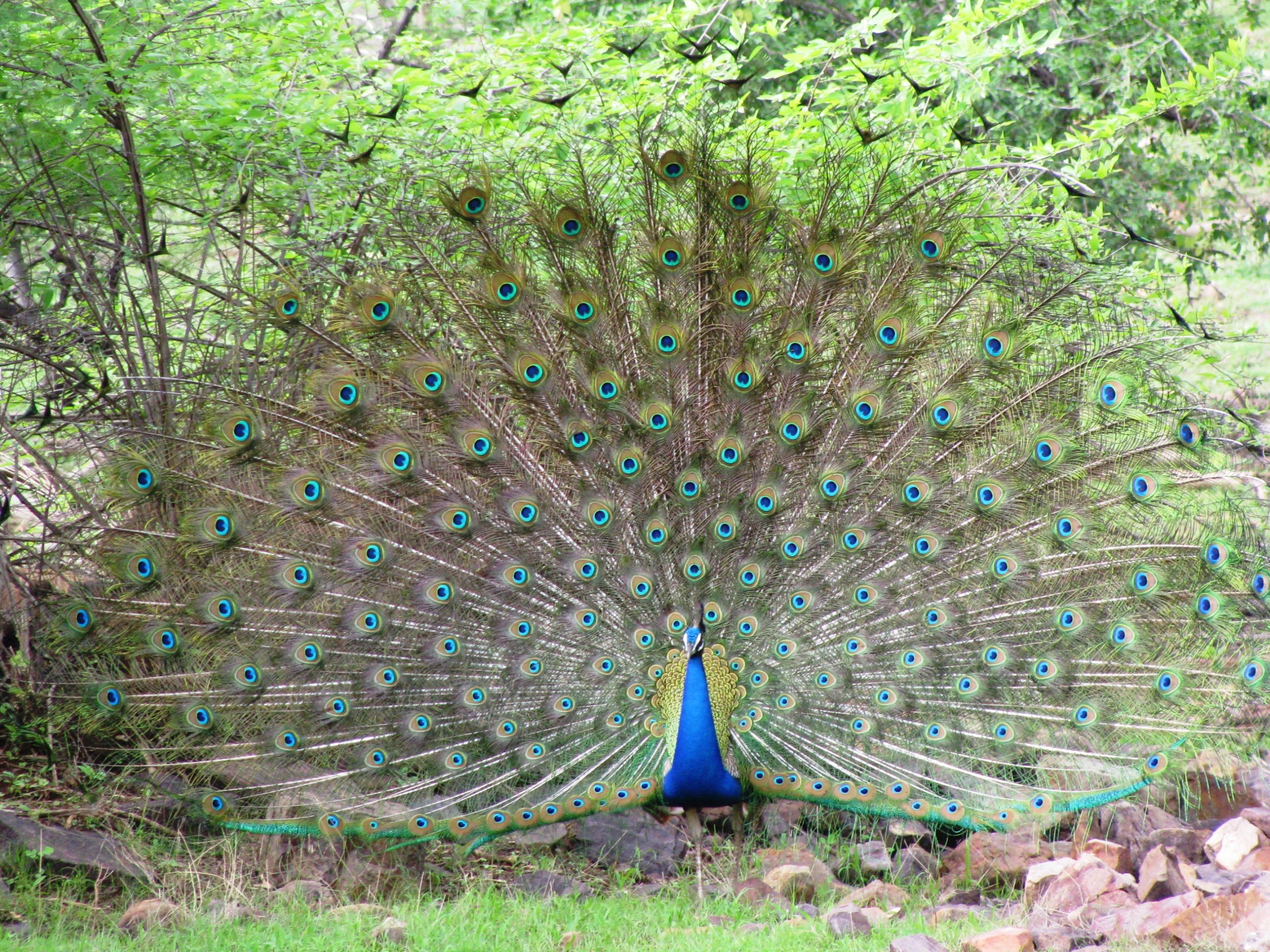
Peacock courtship (A peacock displaying its full-length tail feathers in a courtship dance) © Gaurav Lele

To human eyes, few things in the animal world come close to the splendor of a full-grown peacock in plumage. The iridescent blue and green of a peacock tail can leave even the driest and unpoetic of us spellbound. Such a magnificent fellow seems wasted on the thoroughly mediocre peahen. The peacock’s tail puzzled Charles Darwin, for he could not find any survival value in the flamboyant tail (rather the tail makes escaping predators much more difficult). The driver of this trait was not any direct survival value, but the seemingly partial treatment peacocks with fuller tails received from the peahens (some say the tail is a health indicator). They mated more often, sired more offspring and so their genes flowed and conquered the peacock gene pool, making peacocks with huge tails a norm.

In the 21st century, many evolutionary biologists state that with increasing health care, eradication of many contagious diseases, evolution via natural selection of homo sapiens is no longer shaping our future as a species as it did leading up to the 20th century (Or at least they did in the Pre COVID era ). For generations, preferences and desires of women have helped shape the alpha male- the knight in shining armor, whereas the preferences of men have led to the distinct female characteristics being present in most women. Oddly though, today overwhelmingly humans without means to meet even their basic needs are passing their genes to further generations (breeding like rabbits some call it). To compare humans to other animals may offer a specious argument today as we have left some of our evolutionary habits far behind, leading very different lives than our animal cousins. The Games of Sexes in humans have become incredibly nuanced which has complicated ramifications on every aspect of our society.

This courtship game has taken even weirder morph in the Indian subcontinent. In India, it’s not just the woman whom decides she mates with, but her parents, grandparents, her uncles, and aunts. Sexual selection has become a task for the entire society and feeling incredulous at this tendency is considered suspect. As we depend on middle-men in arranged marriages, single negative feedback from an otherwise unimportant person is enough to cast serious doubt in the proceedings. The growing feminism movement in the world has not yet had a substantial effect on the way marriages work in India. The society (Eg: western Maharashtra ) still dictates that an eligible bachelor

Image for post

  • Is halfway decent looking
  • Earns over 5–15 lacs per annum & Earns at least marginally more than the girl (a lot of Indian mechanical engineers in the US – especially California are facing worse rating in the arranged marriage game as girls tend to take to Software and hence earn a lot more)
  • Owns at least one house (or at least his parents own a Pucca house; The more the merrier — Preferably with low EMI)
  • comes from a well to do family & own’s caste.
  • has a Car (how did I forget about the CAR)                                                                 (Make your own list #####)

Whereas an eligible spinster is:

  • Good looking — Highly comparative
  • Homely ? or Earning …….. (depends on who is looking)
  • Sanskari – (even in families where their daughters are offered considerable freedom expectations from a daughter in law are stricter- though things are rapidly changing)

As one might note, society-created a criterion for eligibility of women are changing as feminism percolates slowly in our deeply patriarchal society. It’s more difficult to have a stereotype of the ideal spinster than that of her counterpart.

Many individuals (especially closeted homosexuals) are forced into an early and unhappy marriage especially when they’re the elder siblings. If and when homosexuality is accepted in our society, the change from that to the current rules of selection will be even more interesting. A flippant joke on the matter

Son: “Mother , I am going to marry Rajesh, I love him and now Gay marriage is legal in India too”.

Mother: “Naa beta … You cant marry him …”

Son : “Why ?”

Mother : “He isnt from our caste son. Find a gay from our caste.”
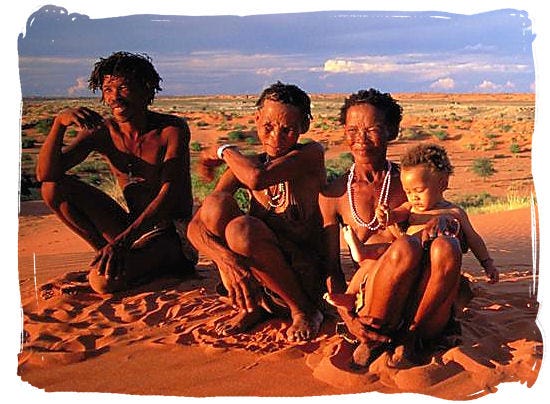
Image for post

Bushmen from Kalahari desert (San people)

But ironically none of the above-stated qualities are essentially needed to pass on the genes as a Kalahari Bushmen would know. These qualities might make the individual a stable and bankable partner but they can’t be assumed as gospel blindly. The men today (even women to a growing extend today) spend their lives being overwhelmingly stressed to meet firstly the needs of their respective spouses in the future, their parents, and on a larger scale, their society. Exposure to such high levels of stress has resulted in low fertility (men and women)and erectile dysfunction in the millennials. One might even relate the above 5 eligibility points to have a linearly negative effect (above a certain threshold) on the overall physical state, thus hampering (re)-productivity. Is the battle for sex leading the individual away from sex?

India has not been the land of true innovation since the colonial experience like some of the western countries. We are good at jugaad and thus produce good engineers shy of true brilliance. Apart from the educational system and other “systems”, considerable blame can be put on the social system. An early marriage not only casts doubts on any aspirations a woman might have but also restrains the man from venturing further in his dreams. If the risk-taking scientist/ innovator is not assured of any respect from society, his task becomes doubly challenging. Not only is he expected to get married at 26–30 but he is also expected to prepare for it since 22. The problem is that families don’t choose risk-takers over boring / stable. Truly passionate people can take such rejections in their stride and move on. But when the whole societies fervently impose judgments and expectations on these to-be-innovators many of these innovators can bundle and pack-up. A man or woman above 30/-35 being single becomes a topic of gossip and doubts. Many times the clutches of sexual policing lead people to marriage where they would’ve otherwise stayed single whilst indulging in sex uninhibited. Deciding to spend your life with someone because you love them is one thing, doing it because you are lonely and needy is another. But being expected to marry someone because your family and society want it to happen is something totally different.

If we take away the societal pressure from the institution of marriage and keep the social networks of marriage active, individuals who wish to settle down will still get access to an efficient system to find mates while. But eccentric geniuses and renegades will not be forced to conform. Incidentally, that seems to be the place where Indian society appears to be heading IMO.

Post Script:

I am a supporter of a liberal Arranged Dating + Marriage which is picking up steam in Liberal India in the 21st century. I would love to see some research done on the stability of arranged marriages (the liberal Arranged Dating + Marriage ones – where individuals have a choice and veto) versus love marriages. I can see As I married quite early (in my peer group) at the age of 27, a lot of this argument might appear hypocritical.

What is “Brahmanical” in Indian Patriarchy ?

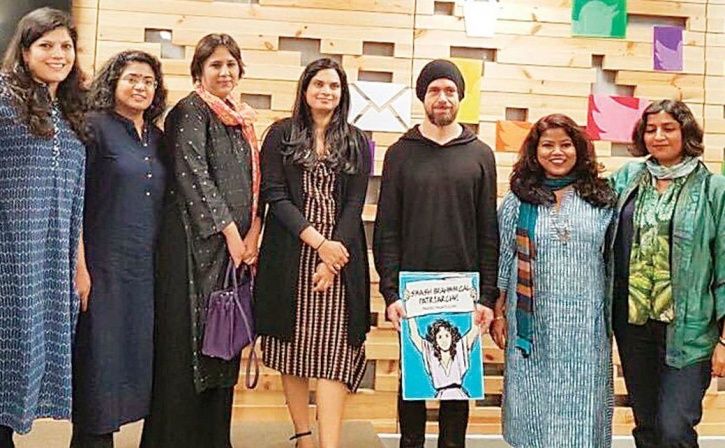
In December 2018, Jack Dorsey had a photo-op with a section Indian feminists (left-leaning) holding a placard that read Smash Brahmanical Patriarchy. Naturally, Hindutva supporters took umbrage to the reduction of Patriarchy in India to Brahmanism & “supposed” targetting of Brahmins. The “Liberals” appeared consistent with their ideological framework, though the framework can be accused of being myopic. Here are some essays from both sides of the ideological spectrum – Wire & Swarajya.

When words become labels, they tend to deviate from their original meaning and end up serving just their political purpose. The word Brahmanical is in danger of becoming a catch-all term on the left to not just to attack Hindutva but also to indulge in some masochism. Like all terms in Hinduism, Brahminism is difficult to define. For the purpose of this essay, I would refer to all Hindu practices & rituals which have a basis in scriptures like the Vedic Canon, Puranas/Itihasa, Sutras/Shastras as Brahmanism. (I would welcome any better definition of Brahmanism. It is often easier to negate a Hindu practice as Non-Brahmanical than the other way around)

Similarly, the word Patriarchy is likewise used loosely as an amalgamation of the words patriarchy, misogyny, sexism, and male chauvinism. Patriarchy is a hallmark of human civilization, especially post the agricultural revolution. Just a handful of cultures have been exceptional. As a result, all strands of patriarchy in a society cannot be blamed on the predominant religious current of the culture unless there is a logical & direct link between the two – correlation is not causation. Coming to India lets focus on the different strands of Patriarchy present in the country and try to entangle each strand and investigate its potential origins in Brahmanism.

MARRIAGE

In Brahmanism, marriage is a sacred bond between man and woman(women) and hence unbreakable. As polygamy is allowed under Brahmanism, Men could move on to newer women without breaking the sacred bond and continue to lead a Dharmic life. Women had a lot of patriarchal restrictions placed on them. It is interesting to note that the Hindu marriage act of 1955 has transformed Hindu marriage customs in Hinduism. Hence wrt Marriage – Smashing Brahmanism would be equal to beating a dead ARYA horse in 21st century India. All these strands of “patriarchy” exist to almost the same extent in other native India “Panthas” in -Buddhism, Jainism, Sikhism. No need to explain how Muslim personal law is way worse wrt marriage today and needs immediate attention from Feminists.

INHERITANCE

Brahmanism did not support the rights of women to inherit property, but the 1956 act meant that equal inheritance rights were awarded. On the other hand, Muslim women don’t get equal rights under Muslim personal law.

WIDOWS

The conditions of widows in Brahmanism was arguably worse than most other cultures. With Remarriage out of question (unlike Islam and Christianity), widows were treated inhumanely in Hinduism – especially in Brahmanical orthodoxy. The Brahmanical obsession with abstract concepts of purity and consequent “bad luck” blamed on the widow meant that widows were sentenced to social boycott in Hindu societies (social murder). The other option – Sati is also uniquely Brahmanical. (though its prevalence in olden times is debated). Even today, widow remarriage is less common than widower remarriage. A lot of regression and inhuman attitude towards widows continue to this day even among elite and liberal Hindus. Hence wrt Widows Brahmanical Patriarchy is still alive and needs SMASHING. 

Eg: Widows are still considered inauspicious. Even today a widow cannot predominantly partake Brahmanical rituals on her own, she always needs a male/couple (pure and auspicious) helping hand/s to carry out rituals. Typically Marriage/Upanayana/other rituals are carried out by the Uncles of her children. Though Hindu society has moved beyond the Social ostracization of earlier times, the position of widows is far from equal. 

Having said that, the overlap of these practices with Varna oppression isn’t wide. These practices are particular to the Dvija Varnas. Conditions of widows in subaltern castes & tribes were historically significantly better – with remarriage/separation allowed in many subaltern/tribal communities.

DOWRY

It is difficult to pin down the custom of Dowry on Brahmanism. By accounts of most experts, it is a sociological custom not unique to India.

FEMALE FOETICIDE

A Direct consequence of Dowry and Two child policy (along with economic hardships and some other factors) Female Foeticide – arguably the worst Anti-Female practice in India is also a deeply sociological practice with very tenuous or no links to “Religions”. (Though Christianity actively condemns all abortions and hence Female Foeticide has no existence in Christians)

RELIGIOUS ROLE OF WOMEN

All religions present in India are deeply sexist and Brahmanism (Hinduism) doesn’t stand out as a particularly bad. However, the impurity attributed to menstruation is directly an outgrowth of the Brahmanical obsession of ritualistic purity. From practices of untouchability for menstruating women to the temple entry conflict, these customs can be attributed to Brahmanism though other faiths aren’t doing a particularly great job. Even Buddha’s teachings and the role of women in Buddhist Sangha are not remotely equal. However, the position of women in a lot of Brahmanical rituals is secondary/inferior to men. One could make a logical argument from Brahmanism to the demoted the role of women in rituals. (same as other faiths)

Sabrimala – though people claim the issue in Sabrimala is due to the Celibacy of Lord Ayyappa & not ritual taboo of menstruation- the priests of Sabrimala carried out a purification ritual after the women visited Sabrimala.

SEXUAL VIOLENCE

No correlation. This problem is worse in India than some regions of the world but no coherent link between this and Brahmanism exists.

CASUAL SEXISM & MISOGYNY

Is a universal societal problem. There is an argument that some aspects this is an overreaction to the overreach of some aspects of feminism (from conservative POV- I don’t hold this view)

ENDOGAMY

While caste endogamy is often blamed on Brahmanical doctrines – and especially the notorious Manusmriti, on a deeper investigation of the texts, the link is found to be not very robust. While the DIKTATS against the mixing of Varnas is a very important part of Manusmriti (and other texts too), the jati endogamy practice in India doesn’t have many sanctions in Brahmanical texts. Getting deep into the nuances around Jati and Varna is beyond the scope of this essay. Given the fact that Varna is a salient feature of Brahmanism and Jati is an outgrowth of Varna in a sense, we can logically argue that the origins of Endogamy are Brahmanical.

However its sustenance in 21st century India is due to tribalism, pressures of families (larger caste groups) and Compatibility correlated with Jati.  

HONOR CULTURE

Honor culture is a salient part of most caste conflicts in the country, but given the preponderance of similar conflicts in other cultures (Islamic), this practice cant be blamed on Brahmanism.

CHILD MARRIAGE

The universal practice in medieval and early modern times. On the contrary Vedic canon advises post-puberty marriage for both sexes. 

EDUCATION AND OTHER FREEDOMS

Like most religions wrt education and other freedoms, Brahmanism was harsh on women. But it doesn’t stand out. Even though subaltern women faced harsh Brahmanical opposition (Like Savitri Phule), the same is true for upper-caste women reformers as well. Sub Altern women faced the double combo of Brahmanical Casteism and Patriarchy, hence the blame of this strand can be put mildly on Brahmanism wrt Christianity but not wrt other faiths.

MODESTY (PURDAH)

Practiced in North Indian Hindu cultures, but most experts believe these practices were imposed on women after Islamic Turko-Afghan invasions of 11th century.

There may be some more strands of “Patriarchy” in India which are not covered here.


Out of the 13 strands identified above a modest 5 practices can be partially blamed on Brahmanism. Even out of these 5, 2 are addressed legally and are inconsequential today with 3/13 Brahmanical strands remaining (though these aren’t the biggest problems for 21st century India). If the aim is to Smash All Patriarchy – smashing Brahmanical Patriarchy which achieves only a fraction of the aim, can’t logically be the primary objective. In other words, wrt Feminism in India there are bigger fish to fry.

Some have argued that “Brahmanical patriarchy is a conceptual framework” that has a wider meaning. But it has been a word (Brahmanism) which means something specific for almost over a century and its definition was never as broad or loose as Hinduism.

Another issue I had with the “Smash Brahmanical Patriarchy” was the lack of understanding in the general population of the term Brahmanism. Any political point being made has value only if it resonates with the masses for whom it is coined. That certainly doesn’t seem to be the case here. As a result, such a sloganeering can be viewed by a considerable population as bigotry against Brahmins (As lots of people pointed out). Having said that, had the slogan been analytically watertight it wouldn’t matter IMO.

Next time there is ideological virtue-signaling – let us hope there is robust elucidation instead of attack with language meant as a catch-all for what one opposes. (Like calling your opponent fascists)


Ironically brahmin communities (mostly due to early exposure to education) are some of the least patriarchal communities of the country. Most women wouldn’t mind freedoms enjoyed by women in these communities (especially MH and WB). Though this would be explained as Brahmanical patriarchy which aims to oppress Bahujan women while emancipating Savarna ones. An incredibly contrived discussion arguing this can be found here with which I profoundly disagree – but that argument is for some other time.

Religious books in Hotel rooms

Going through my photo archives for a photo blog I plan to start, I remembered a thing which had struck me as weird during my travels in Kenya. Being interested in travel and wildlife, I have stayed a lot across hotels and resorts in India. Outside India I have been to Singapore, Bhutan and Kenya. But only in the resorts in Kenya did I find religious books in hotel rooms. I found the Bibles/Quran placed in the top drawers of the bedside table extremely funny, surprising and slightly unpalatable. I did some reading – here here and was surprised to find this being a norm in United states. I still cant understand the reasoning behind placing religious books in hotels – especially wildlife resorts like Serene Lodge in Maasai Mara (which had Quran as well as Bible I guess).

Serena Lodge in Maasai Mara

Funnily the top drawer often reserved for these religious books (based on my experience in Kenya) is the best place for keeping your condoms IMO (next to the books which are clearly anti contraceptive). Apart from that why would holidayers who cant spend a day without their scriptures travel without them? I suppose for people who are this religious, there would also be an emotional connection to one’s one set of scriptures and they wont feel the same way about some other copy (my presumption). In India most you find in Indian resorts are religious symbols like Om and Shree and even they are extremely rare (non existent in nature and wildlife resorts). Finding copies of Vedas or Bhagwat Gita in hotel rooms seems incredibly funny almost unimaginable to me. Even in the pretty catholic goa, none of hotels I have stayed in (even in Portuguese Goa) had bibles in rooms. Why would someone going to the top wildlife destination in the world spend time reading scriptures instead of enjoying the resort is something beyond my humble irreligious (and Indian) mind to fathom. I don’t necessarily put the blame of this practice on the evangelical zeal as many hotels claim to provide most popular religious scriptures.

This brings me to a larger point about lack of understanding of other cultures and histories (which Razib likes to point) in Indians (as well as all other cultures). If understanding of different cultures is so poor even in the internet age, during the age of exploration there would have been a far greater gap which is clearly visible in most colonial literature. This makes the criticism faced today by sincere western scholars like Asko Parpola and Sheldon Pollock (who do have understanding of the Indian culture) inevitable. Example of similar things are even visible when English speaking journalists from India make televised journeys into the hinterlands. Here I come to some questions for the readers.

How should people foreign to cultures they’re studying, view them? and Is the criticism of them as ignorant of culture and hence partial in their scholarship fair? (Despite them being scholars of lets say Sanskrit and History in Indian context)

What could be a logical explanation for the practice of keeping religious books in hotels (apart from evangelical zeal) ? Some people have made argument of loneliness and suicide but I find those extremely tenuous.

What are some of the other practices prevalent in foreign cultures that can be unfathomable to an outsider ?

Troubles and politics of the billionaire author

The current outrage storm over JK Rowling’s latest book – the Troubled Blood is not unexpected given the trans-related controversies that have surrounded JK Rowling since December last year. For more on the issue, these pieces on Quillete are good. Link Link. Unwilling to back down in the face of abuse, threats of canceling, Rowling stood firm and wrote a long essay explaining her position here. (I strongly recommend this essay). As expected after the publication of Troubled blood, there was a social media storm with #RIPJKRowling. trending. Prima Facie I was sure that people who had been trolling and attacking the billionaire author were doing so ad hominem without reading the book. Being a fan of Rowling, I was going to eventually read the book (i have read all the earlier four Strike books) but this whole storm made me buy and read the book before commenting on the issue. When I started reading the 888-page book the Good Reads reviews of the book on the day of its release stood as follows

Troubled blood is a long mystery/romance/drama book that runs considerably longer than the average book. While the book isn’t what I would call flawless, but if you are invested in the primary characters by now – you will love the book. The core of the book is an almost impossible cold case (a 40-year-old case of a missing Feminist General Physician), the detectives – Strike and Robin are trying to solve. The issue the trans activists seem to have taken up is that a serial killer suspect in the book is known to disguise himself as a woman to get close to his targets (who were all women). The character of this serial killer is based on 2 real-life serial killers as posted by Rowling herself on her Robert Galbraith website.

 a sadistic serial killer active in the 60s and 70s, who was loosely based on real-life killers Jerry Brudos and Russell Williams – both master manipulators who took trophies from their victims.

This character is not a Transsexual. Even his cross-dressing is not given as his only tactic for appearing harmless. Aside from this, the serial killer himself is not the primary focus of the book, but a specter who looms behind the narrative due to his psychopathy not his occasional passing off as a woman. There is no trans character in the book – may be in near future even that will be called transphobia. Additionally, the only Trans character in the Strike series was a character named “Pippa” in the second book of the series – The Silkworm. That character has been dealt with very sympathetically on that occasion with her abuse at hands of men not trivialized or brushed aside. How JK Rowling gets to be a Trans-Phobe after this, this points to the deeper problem in the SJW activism – the tendency to self cannibalize. Examples like these (attacks on Steven Pinker, JK Rowling, Green Greenwald) appear eerily similar to what happened in Pakistan these last 70 years (From Hindus to Ahmadis to Shias). If societies are formed on such principles – shifting goalposts appear a natural outcome.

The Strike Series has always had political commentary in the background – but these things hardly got any attention in the first three books. The Second book – The Silkworm is getting panned retrospectively for being Islamophobic after the publication of the 5th book. This seems really funny because Rowling has been fairly active on twitter against what she herself perceives as Islamophobia. Maybe it is her consistent stance when it comes to calling out Corbyn for Labour’s Anti-Semitism that has taken away her brownie points for calling out Anti-Muslim bigotry. Her fourth book of the series was particularly political – as Rowling caricatured both the right and the left equally in the Lethal White. She appeared pretty harsh on Antifa type protestors/activists in the Lethal White. Troubled Blood has certainly got a lot of politics in it. The book references the bloody Partition of India from an Indian POV with references to Suhawarty being complicit in the 1946 carnage. The book also touches Scottish and Welsh nationalism (Rowling a Scot, was a strong Remain in the UK advocate and well as Remain in Europe advocate) and manages to humanize the nationalism of the Scots and the Welsh while critiquing it. However, the strongest political message of this book has to be its argument in favor of the 20th-century Feminism. Both the protagonists are feminist in the older definition of the word, which at times seems to be at odds with the 21st-century feminism. Rowling’s feminism which comes across in the book is much more focused on

  • fighting for female safety from sexual and violent crimes.
  • fighting for female control over reproduction and sex
  • fighting misogyny faced by career-oriented women

Rowling like her protagonist, Robin Ellacott is a survivor for violent and sexual crimes. Her psyche and motivations are mirrored a lot in Robin, which has especially come to the fore in the last three books. Of all the characters Rowling has brought to life, Robin Ellacott is the closest to her- an intelligent and independent feminist who is slightly left of center politically. Rowling like Robin continues to be influenced by the violence faced decades ago. It’s this experience and consequent political priorities that have led Rowling to champion physically safe spaces for women (bathrooms and changing rooms). Western Left must decide which TRENCH they are willing to die in. When most polls show that the overwhelming public is not comfortable with transwomen using women bathrooms, taking a radical stance will be laughable and outright stupid.

From India, at least this debate appears a non-starter in the priorities plaguing India – but that hasn’t prevented Indian Left jumping on the AntiRowling bandwagon on twitter with Varun Grover calling her a Prisoner of Patriarchy. I guess Grover feels he has some stake in the debate after him helping bring Kukoo to life in Sacred Games. Would “Gaitonde being able to transcend Kukoo’s biology for love” be something that’s expected from every heterosexual man or a lesbian woman? According to Rowling and other Gender critical folks, that’s already the case in the west :

However, as Magdalen was a great believer in the importance of biological sex, and didn’t believe lesbians should be called bigots for not dating trans women with penises,

In this woke world view, even a sexual/physical assault survivor is lower down the oppression hierarchy and hence a TERF as they simply can’t put their own priorities above the rapidly changing commandments of the woke mob. All the prior brownie points Rowling had earned on the left due to her politics, philanthropy, and personal story are annulled when Rowling came out as Gender critical. If a person with as liberal credentials as Rowling can be hounded or canceled like this then I shudder to think what conservatives must be thinking in the west.

By virtue of her previous success and fan following, JK Rowling is a type specimen of what one could call Un-cancellable. But by the avalanche of the attacks she has faced (even from people who owe their careers to her), it is fair to say the position of lesser writers would be extremely tenuous if they choose to be non-conformist. Most of the criticism of Rowling is so stupid and spurious it is not even a classic strawman in my view.

All biological interventions like Breast enlargements, Botox, or Transitioning Sex are not interventions anyone should rush into. Isn’t it fair to raise the point that the Ease with which Sex change is offered to impressionable teenagers is risky? Are these activists sure these teenagers won’t regret these changes which in many cases have a long term effect on one’s body? There has been a lot of research that can make a lot of Woke activists uncomfortable. Should we just sweep that under the rug or make it the elephant in the room? There have been dozens of instances of de- transitioning and a lot more where people continue to regret transition. I expect this debate to continue violently as parents will not want to take chances when it comes to their kids – even under the pressure of the woke people.

This discussion comes to something I discussed with Omar and Mukunda when we talked. For long I have loudly wondered whether it’s Islam the Rock that has broken liberalism as our own Dr. Omar as put so eloquently. Now it seems the Trans-debate and other Woke Dogmas have surpassed the challenge to liberalism posed by Islam. It can even be speculated that the liberal order itself without emphasis on its core tenets was never robust internally and was bound to fail especially after the vacuum left by the withdrawal of religion and nationalism.

Post Script:

I have been a huge fan of JK Rowling for 2 decades. It was her writings that introduced a video game & television addicted 11 year old to the pleasures of the written world. It wouldn’t be a stretch to say that Rowling has changed the lives of thousands of other kids like me. 

a few links about detransitioning: Link Link Link


About Brahmin Privilege: Education, Brits and Chitpavans

This post is result of some comments in the Open thread in response to Razib’s piece in Unherd. While i agree with core of Razib’s argument & and some comments, i feel there isnt enough nuance about Brahmin privilege that comes out in discussion these days. Some assertions of comparing Brahmins to White slave-owners  are too simplistic and even terribly wrong. (I dont imply Razib or others on BP made those)

The problem with simplistic narrative of Brahmin “privilege” is that it focuses on caste as a privilege while not focusing on concrete privileges which are often correlated with Varna in India. Following are the salient privileges of Indian public life

  • WEALTH including Lands – Moderately correlated with caste but with some mismatch. Most Brahmins who had lands, lost them in the Land reforms of 20th century though. (even though one supports the land reforms in principle the confiscation of land cannot be brushed aside)
  • EDUCATION – highly correlated with caste ; Brahmins score considerably higher on educational parameters for centuries. This post focuses on Education as a historic and inherited privilege.
  • CONNECTIONS – related to politics – here ordinary Brahmins aren’t necessary up in the top percentile.
  • URBAN BACKGROUND – (more Brahmins/UC are urban dweller though some continue living in rural backgrounds).
  • GENDER.

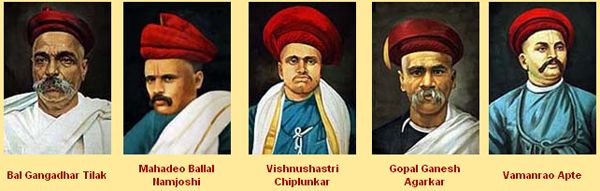
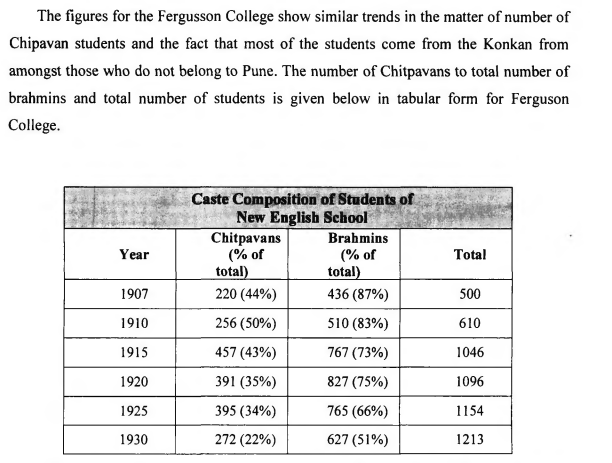
This post focuses on Educational attainments of Brahmins (particularly Chitpavans) in Pune region. The quotes and tables are from a booklet A survey of the Chitpavan Community in the pre colonial state

For the British, Education was an instrument of efficient colonization as seen from the words of Sir Erskine Perry,  the Governor of Bombay Province subsequent to Lord Elphinstone. He maintained

“Only the higher castes should be educated because of the limited facilities, therefore only limited members could be educated. These higher castes through their natural influence would affect an elevation of mental and moral condition of the masses. Four groups were identified under this category of high castes the military and administrative class of Landowners, Jagirdars, Chieftains, petty nobility and feudatories, wealthy traders and other commercial men; government employees; and Brahmins and other
higher writer castes”.’

The Maratha empire employed a number of upper castes (Brahmins, Kayasthas and some Marathas) in positions of administration and accounting. On arrival, the Brits picked these up as administrators, teachers, clerks etc. The literacy of the males of these subcastes in Bombay presidency was extremely high. Chitapavan males in a Pune Taluka are reported to have 90% literacy in late 19th century as compared to 11.9% in average males. This extreme bias cannot be explained without the Peshwai & the privileges the Chitpavans enjoyed because of it. 

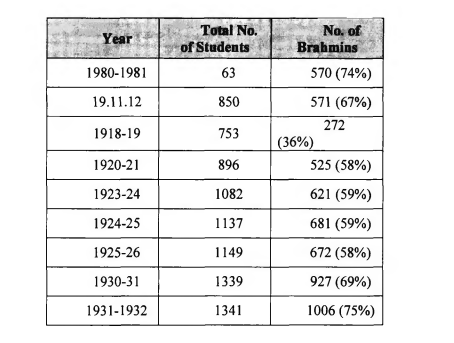
A variety of education institutes like Maharashtra education society, Deccan Education society started in Pune in the 19th century. Brahmins were the prime movers as well as the overwhelming beneficiaries of these institutions. Lets see a few examples:

Reports of the Poona Native Institution published from 1881 to 1933.

The data from Deccan Education society started by Tilak and Agarkar isnt much different. The report quotes

The annual report published in 1883 acknowledges the preponderence of brahmins amongst the students as well. “The characteristic feature of the school is that the largest number of boys belong to the higher and intelligent classes of the community.’When deposing before the Hunter Commission Annual Report of 1883,Deccan Education Society,Poona,1884 on Education, the representative of the society acknowledged that only 17 out of 582
students were nonbrahmin.

Lokmanya Tilak, the freedom fighter and founder of DES had this to say

Englishmen are and were averse to imparting any knowledge of a practical nature to subject races, they found that philosophy and theoretical science were  the safest subjects. It is hopeless to expect the artisan or the agriculturist to evince an interest in a form of education so far removed from his way of life, i.e is profession decided on the basis of caste for thousands of years. It is we think beyond the power of a dozen Educational Directors of the type of Mr. Lee Warner with all the encouragement by way of free studentships and scholarships which they can command, to infuse a love of western learning into the hearts of men who find themselves better off without knowing anything that our schools and colleges teach, than with it. If the brahmin under all kinds of difficulties strives to surpass his brethren of lower castes in intellectual attainments and tries to take up all the advantages and honours and emoluments to which these attainments qualify him, it is owing to the fact that the very traditions and obligations of his caste and the predispositions and capacities of his mind lead him in that direction. The very spirit of the caste system, the precarious conditions of life under a foreign rule, the indolent characteristic of the tropical world and the spirit of contentment infused into the heart of the Hindu by his religious faith all contribute towards the position of the Brahmin

My Two Cents:

Its fair to say that being born a Brahmin in India distinguishes you as a recipient of certain privileges. However we cant firmly gauge today how much those privileges

  • are the indirect result of ChaturVarna
  • are the result of amplification by the British (for their own colonial ends)
  • are direct result of active oppression of the subalterns
  • or something else entirely

While granting that these privileges exist and shape Indian life considerably, one mustn’t fall into the trap of seeing Brahmin privilege as the overwhelming or even the most consequential privilege of Indian society. Instances like the 1948 Anti Brahmin riots – typically underplayed in the Brahmin privilege narratives are still fresh in mind of thousands. Anti Brahmin rhetoric by political parties like NCP, DMK though not as viscous as rhetoric against some other communities is nonetheless non trivial.

There are and have been many other forces of nature and economy at work for centuries though it is fair to assume that these forces interacted with caste & varna.


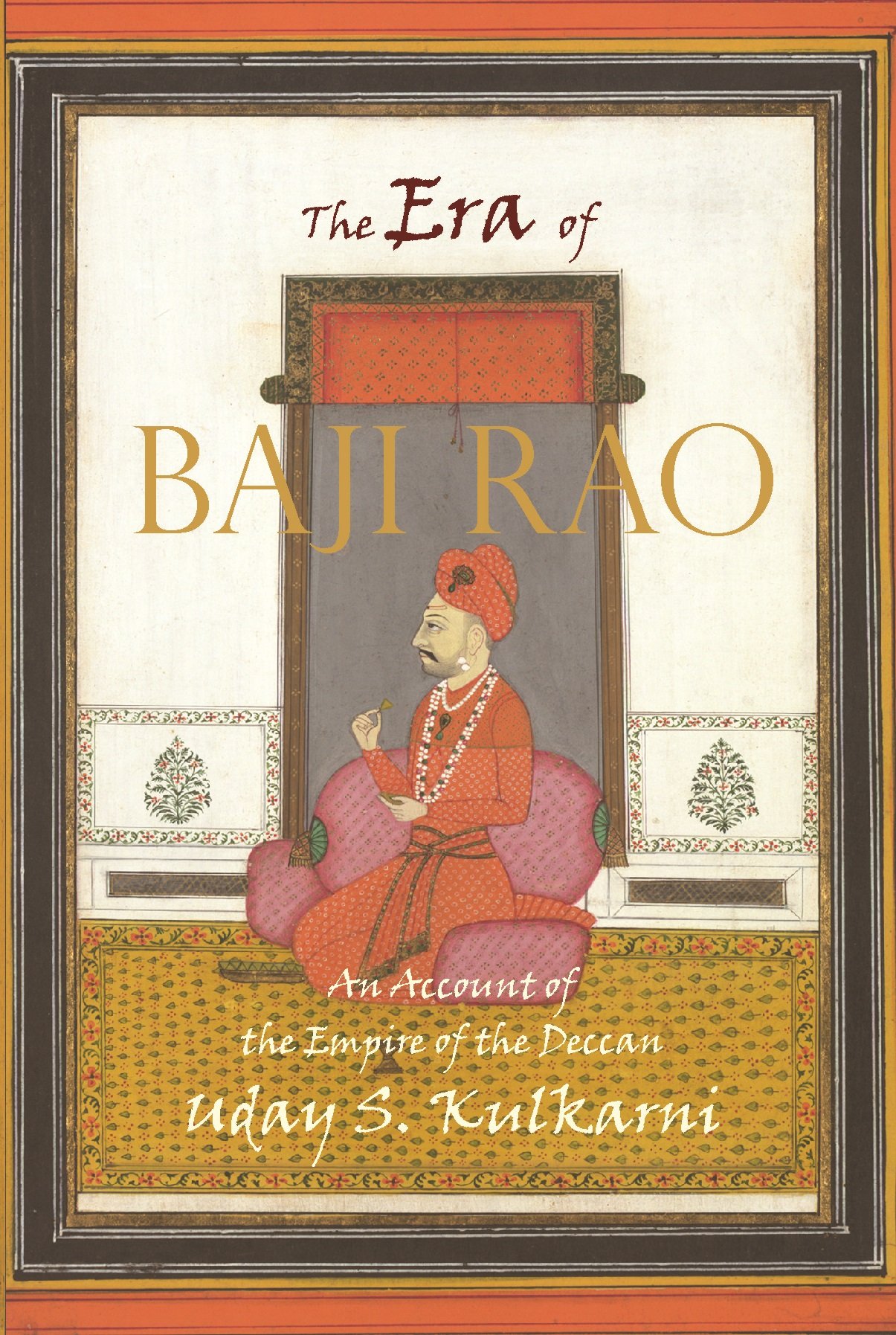
Book Review: The Era of Bajirao

Jadunath Sarkar, the preeminent historian of Maratha history states

The place of Bajirao I in India’s history comes home to us with unmistakable force and vividness when we compare the political situation of this country in the 1740 to that in 1720.

In 1720, Marathas were a small state spread over a few districts in western Maharashtra rife with internal divisions, while by the end of 1740 Marathas were the largest power in the country which covered lands from the Tungabhadra to the Yamuna. This was largely due to the unbeaten generalship of Peshwa Bajirao I. Uday Kulkarni, a Doctor by training, has taken to history writing these last few years and his writing has been a refreshing counter to the narrative-focused history popular in recent times. Dr. Kulkarni goes through the original sources as methodically and systemically as a surgeon would and the result is a crisp, tight book grounded in documents and not a narrative/hagiography held together by the whims of the author.

The tale starts with the Maratha-Mughal war of the late 17th century and ends with the death of Bajirao. The river Narmada or Rewa is the voice of the book as Rewa Uwaach, as Bajirao’s life was witnessed by the river Narmada, from his earliest campaigns to his untimely death. A few relationships and characters from this time period stand out in the book, and I got to know some interesting facets of all these characters and their actions in the book.

The Aurangzeb – Shahu relationship, its genesis, and its implications have been well represented in the book. Whether it was due to remorse, realpolitik, or human nature but Aurangzeb had treated Shahu well in captivity and Shahu’s unwillingness to directly attack the legacy of Emperor Aurangzeb is one of the most under-explored parts of Maratha history. This facet of Shahu can be seen as a constraint on the ambitions of the dynamic Peshwa.

Kulkarni presents the Era of Bajirao as a rivalry between two generals, Nizam-Ul-Mulk – one of the last generals from the time of Aurangzeb &Bajirao. Bajirao’s victories over the Nizam, both military and diplomatic are covered very well in the book.

The author also sheds light on a not very known fact about the life of Bajirao – his troubles with debt. The letters exchanged between Bajirao, Chimaji Appa, Brahmendra Swami, and Shahu Maharaj all point to the constant financial pressure under which the Peshwa operated. The strain between the Emperor and his prime minister over various issues, from financial matters to Bajirao’s conquering zeal are all brought forth.

The Konkan campaigns of the Peshwa, against the Siddis and the Portuguese, take up a considerable amount of the book. Chimaji Appa, the hero of the wars with the Portuguese who has often been ignored by popular imagination gets his due. The episode of Mastani is dealt with without unwarranted speculations or folk gossip. The fascinating character of Brahmendra Swami is always present in the background as Bajirao and co’s spiritual mentor.

Kulkarni also differentiates the ethics & morality of the Marathas – especially under Bajirao and Chimaji from their enemies with examples like Bajirao’s decision of not mauling Delhi and Chimaji’s respectful treatment of the Portuguese (especially women).

Bajirao’s singular quality in Kulkarni’s view is

Flight in the face of a strong enemy was not considered an act of cowardice, it was never the intention of the Maratha troops to give battle in an unfavorable situation. Bajirao’s success lay in his ability to choose when to fight, where to fight (and more importantly) when not to.

The only issue a reader might have with the book is arguably also the book’s strongest quality – the author’s unwillingness to speculate beyond a reasonable point. As a reader, at many places, I felt that I wouldn’t mind going a bit deeper into the motivations and implications of the actions of the book. But all these issues are compensated easily by the treasure trove of letters, accurate maps (with military movements), and illustrations offered in the book. On the whole, I would rate the Era of Bajirao 5/5 and would highly recommend it to anyone interested in Indian history. It is especially a must-read of every Marathi Manoos – given the profound implications, the life of Bajirao had on Maharashtra. It is quite feasible, that without Bajirao’s and Chimaji’s rescue of North Konkan from the Portuguese, we might have even had a Portuguese governed Konkan (like Goa).

Dr. Kulkarni has also written some more books – including the Solstice of Panipat & and a book on James Wales – the Artist & Antiquarian in the time of Peshwa Sawai Madhavrao. His upcoming book – the Incredible Epoch of Nanasaheb Peshwa starts where he left off in the Era of Bajirao. Sadly none of these books are available in digital format and might be difficult to obtain abroad. For those who can’t get their hands on the book, you might be interested in the following for time being.

BAJIRAO PESHWA – THE EMPIRE BUILDER


Are Hindu Atheists more Plural ?

Most Hindu believers don’t have problems with bowing down before the next idol/guru in addition to their existing ones. One only has to visit Goan Churches to see devout and traditional Hindus praying to Jesus with all their devotion without any dichotomy. There appears to be no conflict between going back to their traditional lives while asking favors/ paying respects to the supposed Son of God. The violent history of how Christianity got into Goa has very little bearing on how Hindus interact with Christian pockets of Goa in contrast with the case with Islam. (This may not be the case in other areas where there is more active proselytization). While this pluralism which is a salient part of Hinduism is often traced to the Rgvedic “एकम सत विप्रा बहुधा वदन्ति” form the First Mandala. However, as Michael Witzel points out in his analysis of Rgveda, pluralism can be found even in the Rgvedic family books (mandala 2-7 which is often to be earlier texts, with scholars putting them as at least 1500BCE), especially the 7th Mandala attributed to Vashishta. Thus it’s safe to argue that Plurality is a quintessential attribute of Hinduism.

From ages 22-25 I was hooked with the New Atheism worldview – which rarely had the representation of Ex-Hindus or Hindu-Atheists. Even then I could not fully agree with New Atheist criticism of Eastern Faith systems (I found the chapter in Hitchens book to be a strawman). More reading of history and politics since then has meant that I have come out of what Razib Khan calls the Nerd understanding of Religion. While the number of Ex-Muslims in the New-Atheist movement was low in the early 2010s, by 2020 the Ex-Muslim movement has gained a lot of momentum with many names becoming popular. I had avoided the whole Ex-Muslim internet sphere which seems to have exploded these last few years as I did not want to enforce my own confirmation bias about the ills of Islam. However, this Armin- KaliMaa fracas has meant that I have followed the works of these Ex-Muslims a lot over the last week.

Having read and listened to these guys, I can’t ignore the glaring differences between Hindu Atheists like myself and Ex-Muslim or Ex-Christian atheists. While surveys point to less than 1% of Indians self designating as atheists, I really doubt the number as most Hindu atheists continue to identify as Hindu unlike atheists coming from other faiths. In my experience, Hindu atheists spend less time arguing in the abstract about belief in the supernatural or the validity of scriptures and are more focused on concrete problems – viz rituals/traditions which they find illogical or abhorrent. This may be a function of Hinduism, which is less scriptural and much more ritualistic (at least this is true for the Brahminism which I am most familiar with). Over these particular issues, there is only a minor difference between the positions of the Reformist yet believing Hindus and Hindu Atheists. On the other hand, the New-Atheist position is glaringly similar to the Monotheistic position – with all the certainty and condescension but no coercion and violence.

This difference could be for two reasons:

  • For most Hindus being atheist is not a big deal. There is very little penalty on being non-conformist as long as atheism isn’t confrontational. As a result, Hindu atheists don’t feel like aggravated victims and are reciprocally less confrontational. This neutral feedback cycle keeps most Atheists in the larger Hindu fold.
  • Being exposed to numerous faiths and worship systems since childhood, Hindu atheists like Hindus don’t find it tough to respect the behaviors of other believers (however ridiculous) which New Atheists condescend at much more polemically.

That being said, a lot of unnecessary condescension at Hindu practices does exist in India – particularly on the left. But even that doesn’t necessarily overlap with Atheism but with the Indian “Secular” framework. I don’t mean to imply that all Hindu atheists are plural or even liberal. But for most Hindus, atheism is an epistemological position and not an absolutist belief system. Finding a Hindu atheist being as confrontational as an atheist from Monotheism is rare thought there must be numerically significant exceptions.

I personally would rather spend most of my energies fighting Homeopathy than religion. IMO both are demonstrably false but only one of them pretends to be scientific.

The anxieties behind narrative of “Love Jihad”

I finally completed Dr Ambedkar’s fascinating book on Pakistan after reading it on and off for years. Though he comes across as an essentialist in some of his arguments, many fault-lines Dr. Ambedkar points out hold true even 70 years after the publication of the book.

(I plan to write about that book sometime later – but especially for those who don’t identify with Hindutva I will highly recommend that book)

Dr. Ambedkar says the following in this book PAKISTAN OR THE PARTITION OF INDIA during his polemic against Purdah.

The evil consequences of purdah are not confined to the Muslim community only. It is responsible for the social segregation of Hindus from Muslims which is the bane of public life in India. This argument may appear far fetched and one is inclined to attribute this segregation to the unsociability of the Hindus rather than to purdah among the Muslims. But the Hindus are right when they say that it is not possible to establish social contact between Hindus and Muslims because such contact can only mean contact between women from one side and men from the other

This is the core motivation that has lead to the popularization of term Love-Jihad. The anxieties of Hindus are not motivated largely by the fear that “Muslims will abduct their daughters and sisters and forcibly convert them”. That exists largely in the straw-man.

Their anxieties stem from the following

Continue reading The anxieties behind narrative of “Love Jihad”

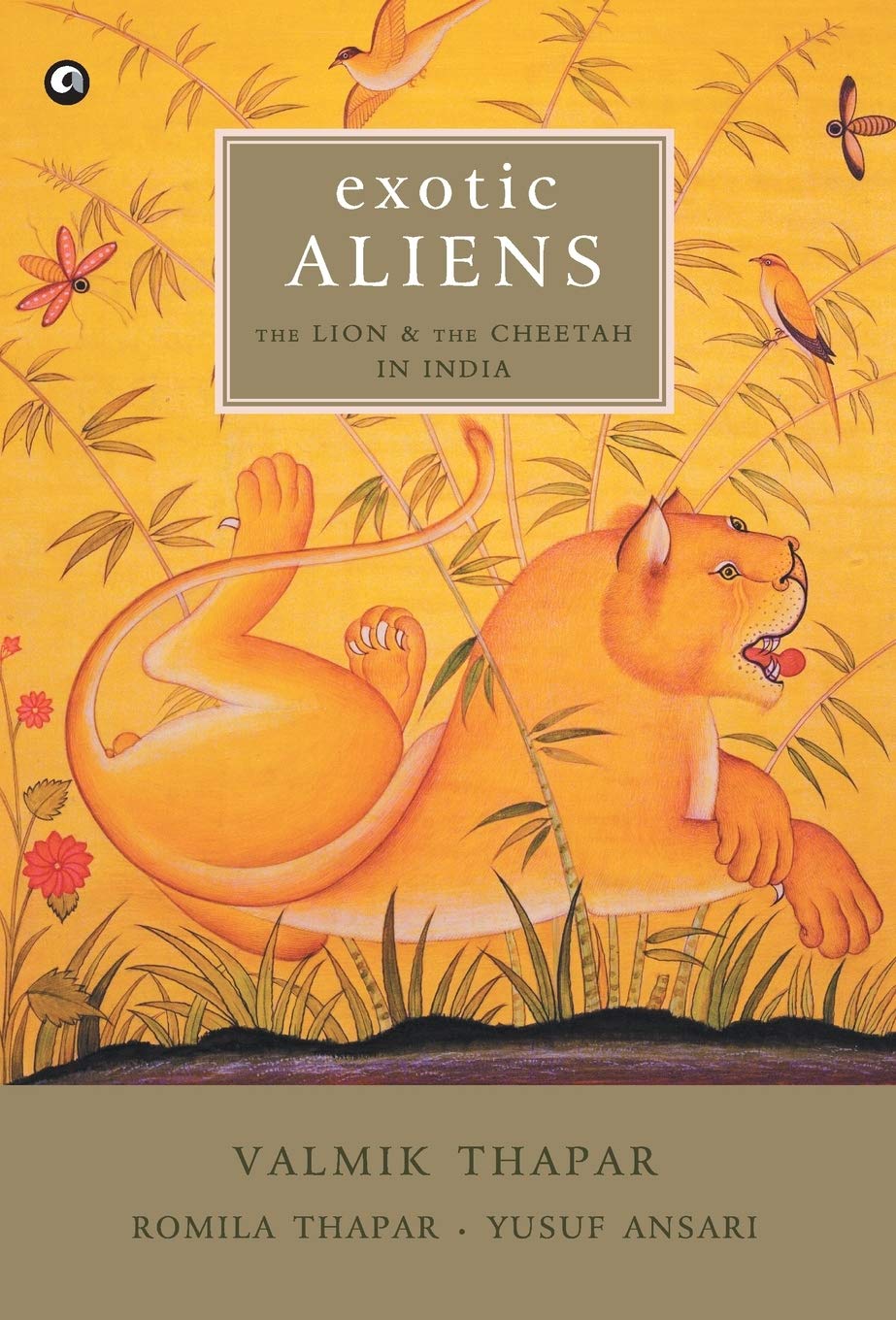
Book Review : Exotic Aliens, The Lion and The Cheetah in India

The core argument of the book is given away on the cover itself

In the sixteenth century, Dutch traveler Jan Linschoten noted the absence of lions throughout the Indian subcontinent. Two hundred years later, echoing similar comments made by various hunters and observers of Indian wildlife, the British shikari, and writer, Captain Thomas Williamson, emphatically declared: There are no lions in Hindustan. Much the same was said about the cheetah in the region.

Romila Thapar’s argument: Lions have been strongly associated with kingship and lions motifs are spread across the world despite those regions (United kingdom, Sri Lanka) having no indigenous lions. Starting with civilizations of the middle east and how these cultures associated kingship, divinity, and morality with lions, Romila Thapar concludes that no imagery of Indus Valley civilization has lions. The contrast between the Western Bronze cultural emphasis on Lions and the total absence of lions in Indus valley seals (unlike Tigers who are ubiquitous) is profound. (Essentially the same argument is made for the HORSE in Indus valley). Thapar then goes on to speculate that the first interactions, the lands of the Indus had with Lions were after Alexander’s conquest and later Indo Greek rulers. She also points to the Rigveda (which she claims at least was partially composed beyond the Indus in the west) mentions lions and not tigers thought the later Vedas (esp Atharvaveda) mention Tigers more than Lions. Another point she makes, is tigers interactions are much more common in Indian literature (from Mahabharata onwards) while lions are often invoked as symbols.

Continue reading Book Review : Exotic Aliens, The Lion and The Cheetah in India

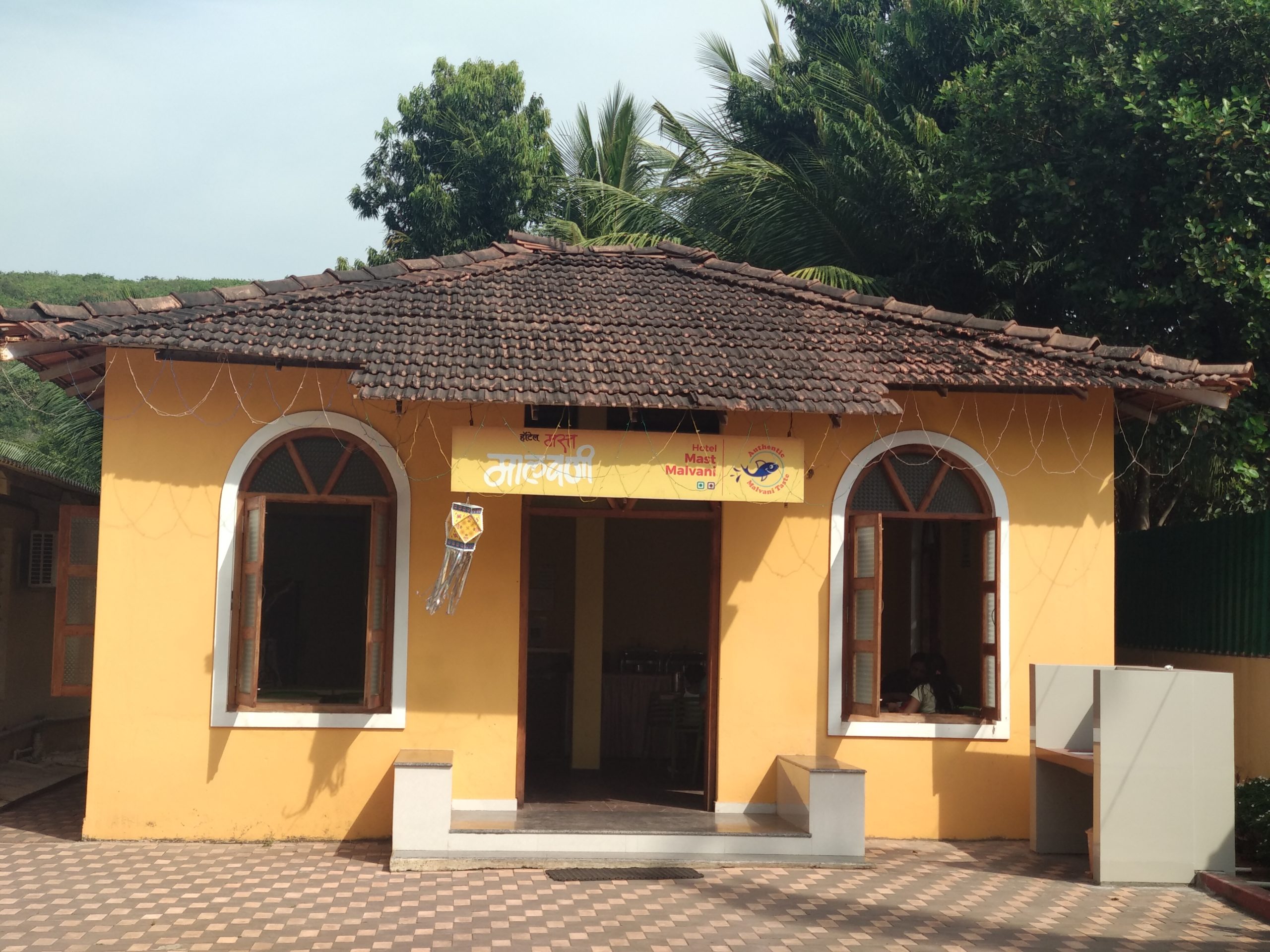
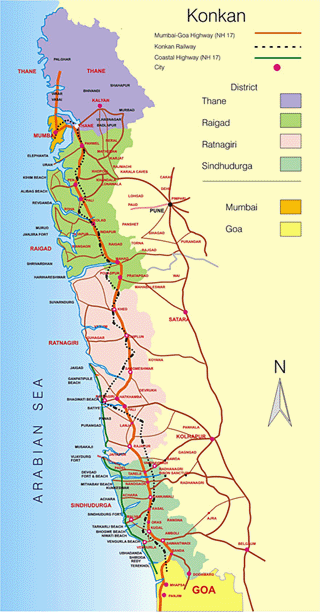
Malvani and other Konkani seafoods – the potential loss of cuisines ?

Malvan is a village located in the Sindhudurg district of Konkan subdivision in Maharashtra. Malvan is famous for Malvani non-veg cuisine (especially seafood) – which is a unique spicy cuisine that has managed to exert its influence well beyond the confines of Malvan or Sindhudurg.

The Malvani Masala is easy enough to make and has the important quality of hiding failures in cooking. As a result, Malvani cuisine’s popularity has grown in leaps and bounds these last few decades. Restaurants across the state & increasingly along the coast have taken up serving Malvani cuisine while serving other cuisines is reducing.

The broader Konkan region from Thane to Goa & Dakshina Kannada has multiple culinary traditions which were very vibrant (heresay :P) until a few decades ago. But increasingly the cuisines from Thane to Ratnagiri are bowing down to the Malvani cuisine. If these continue, one can assume that a lot of delightful and subtle tastes of Konkani seafood may become difficult to find. Even in one of the most famous restaurants in Ratnagiri – Hotel Amantran – the food is more Malvani – probably as that’s what most customers want. Efficiency and markets have that effect on food traditions all over not just in India. All these other cuisines – Saraswat cuisine, CPK cuisine, Cuisines of Diveagar & Ratnagiri, Cuisines of Alibaug are only preserved in families till now but will they be going ahead remains to be seen. After an initial love affair with Malvani food, we (my wife & me) have ventured into trying some of the other dishes to great success.

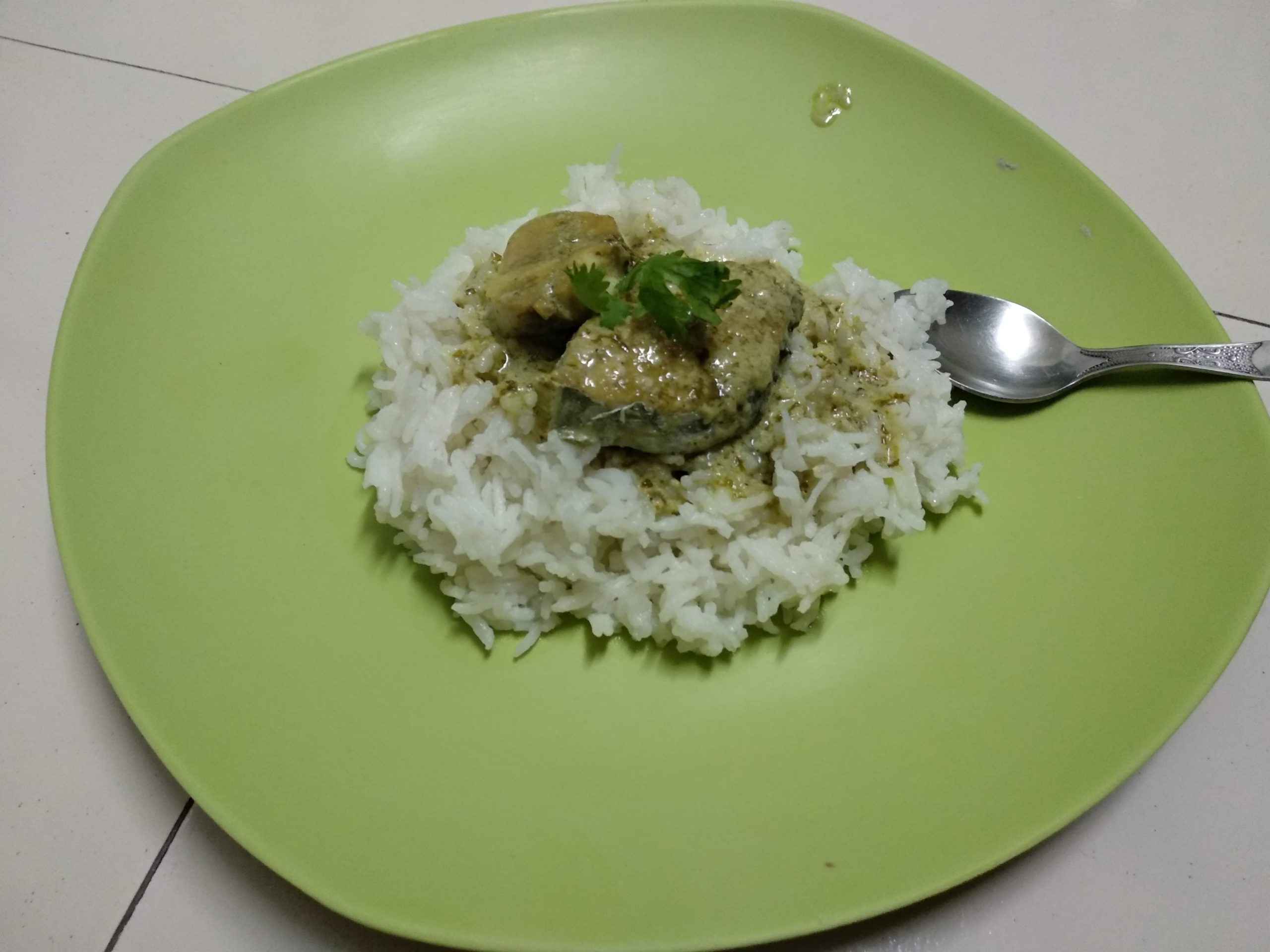
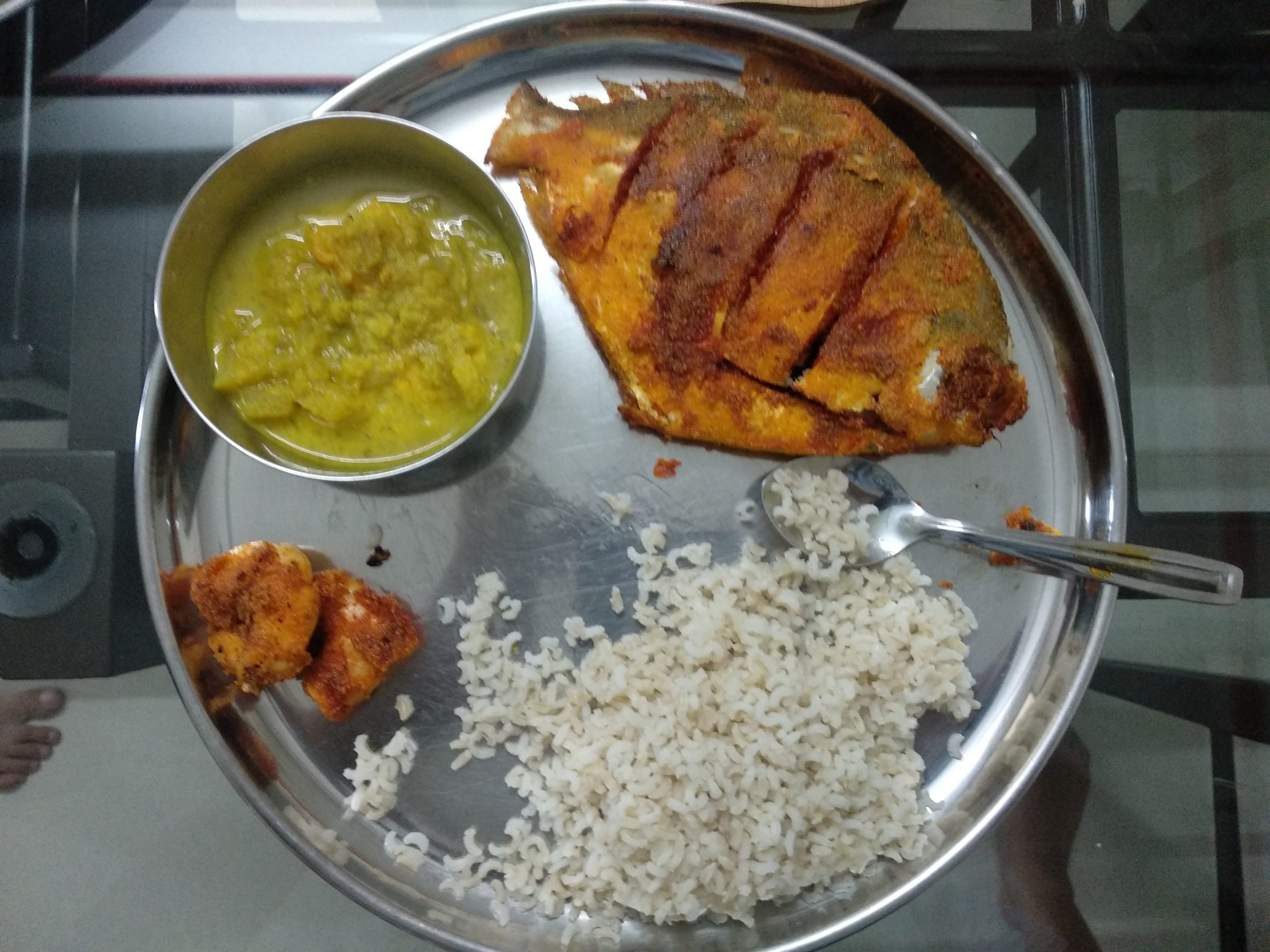
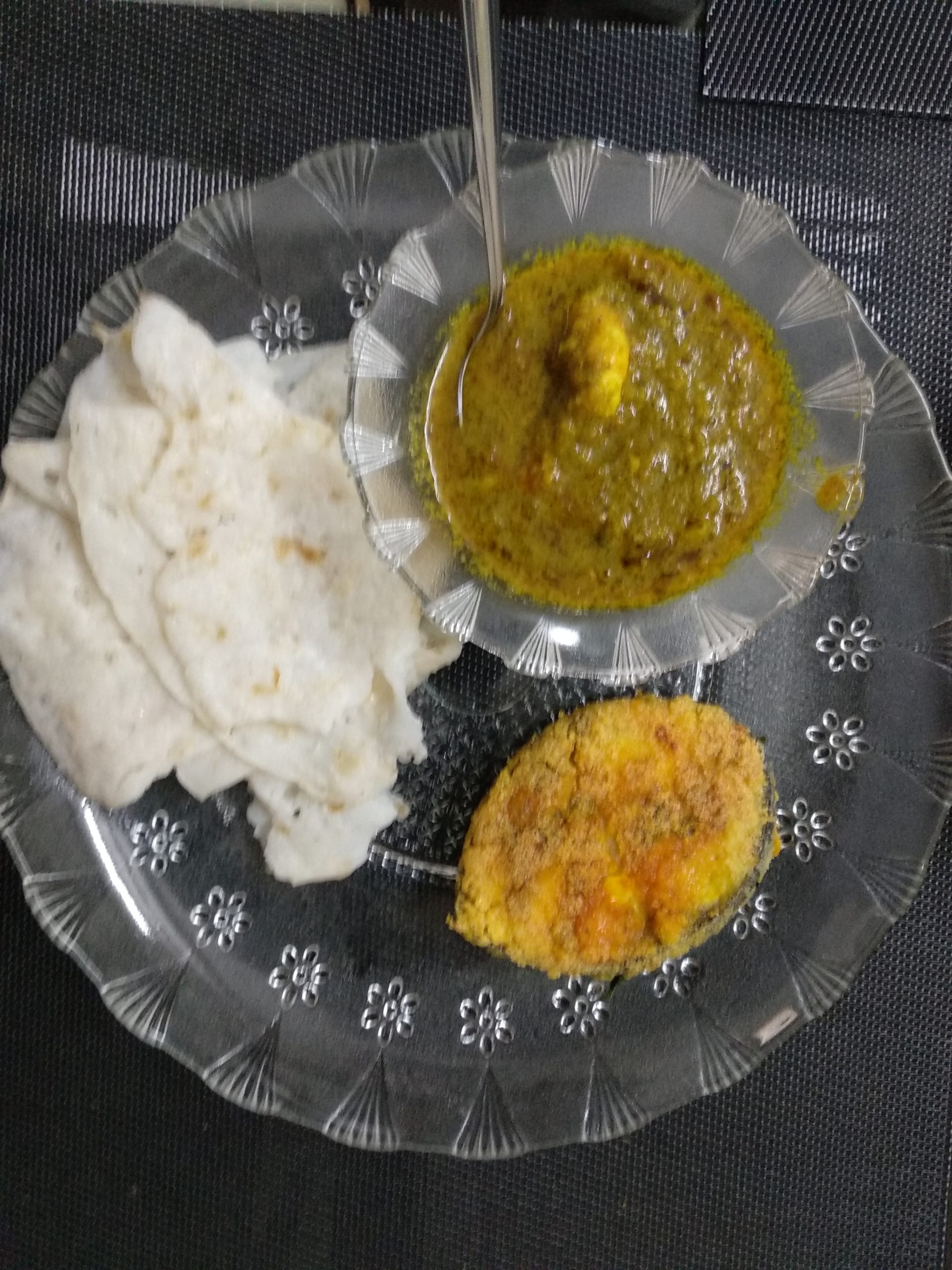
These include

Green chilly Coriander Surmai Curry
Raw Mango Kolambi Curry, Masala Pomfret, Masala Prawn Fry
Tirfhal Coriander based Prawn curry, Surmai Fry and Amboli (Rice Roti)

While a great number of Foodies – bloggers, authors, and chefs are working hard to keep the old cuisines alive – link ; link ; link , there isn’t much to worry about. Given the sheer size of the Indian population, India seems very resistant to such erasures of culture & food which tend to be happening around the world.

Going through old cookbooks one wonders how much culinary customs have changed beyond recognition since independence. The famous Marathi cookbook Ruchira refers to Marathi people as predominantly Jowar, Bajra, and Rice eaters. Wheat has firmly taken over Maharashtra now and Jowar and Bajra are reducing year by year (though Rice manages to hold on). Globalization and even the local spread of easy and efficient foods (pasta, bread, wheat roti) have reduced the diversity of food globally. How much of these traditions will we preserve going forward? This may appear as a trivial thing to many but it bothers me.

My main aim of writing this blogpost is NOT TO MAKE ANY POINT but to find more such stories and more recipes that readers fear might get hard to find in the future or be overwhelmed by some efficient popular foods. Please add links to Food recipes you want to share – especially Sea Food.

Maybe my fear of the erosion of cuisine is exaggerated, but my generation is not that great at conserving food traditions as earlier generations were IMO.

Brown Pundits