Razib Khan · August 4, 2019 · Comments Off on Episode 62: Leighton Woodhouse, the Left, identity, and 2020
Another BP Podcast is up. You can listen on Libsyn, iTunes, Spotify, and Stitcher. Probably the easiest way to keep up the podcast since we don’t have a regular schedule is to subscribe at one of the links above.
You can also support the podcast as a patron. The primary benefit now is that you get the podcasts considerably earlier than everyone else. I am toying with the idea of doing a patron Youtube Livestream chat, if people are interested, in the next few weeks.
Would appreciate more positive reviews!
This episode is a conversation with Leighton Woodhouse of the Extremely Offline podcast. We talked about the Left, identity politics, and the future of American politics and 2020.
Please keep the other posts on topic. Use this for talking about whatever you want to talk about.
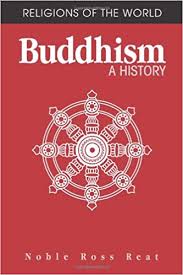
I’m reading Buddhism: A History. That inspired me to write The Invention Of World Religions 2,000 Years Ago. One of the assertions in the book which I would be curious as to reader opinion: Advaita has more in common with classical Indian Buddhism than the Mahayana sects of East Asia.
Another BP Podcast is up. You can listen on Libsyn, iTunes, Spotify, and Stitcher. Probably the easiest way to keep up the podcast since we don’t have a regular schedule is to subscribe at one of the links above.
You can also support the podcast as a patron. The primary benefit now is that you get the podcasts considerably earlier than everyone else. I am toying with the idea of doing a patron Youtube Livestream chat, if people are interested, in the next few weeks.
Would appreciate more positive reviews!
This episode is a conversation with Lisa Mahapatra. We talk about her being a non-woke global human, being an ethnic Oriya, and being a dark-skinned woman. It was a fun conversation because to be frank Lisa is the type of person I’m often friends with. Heterodox, “gives no fucks”, and frank.
I am taking a more front & center role on this weblog proceeding forward. Moderate/inspection of comments will become stricter. I suspect some of you will be banned because you post worthless comments. Also, I am seriously thinking about installing a plugin that caps word-length on comments.
Since this weblog gets about 10 times more traffic than it did a few years ago, it seems the right time to tighten the screws a bit.
Update: Since this post is receiving many-fold more visitors than this blog normally receives in the whole day, here is the TL;DR for those who are too dim to read, or too lazy to do so: Hasan should not engage in guilt-by-association against others when the tactics are so easily turned against himself. That is all.
End update
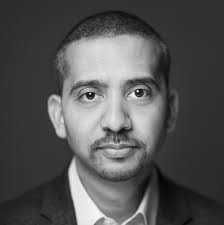
As I am trying to withdraw from Twitter food-fights I did not want to comment on this on that medium. But, since I have a platform of this weblog, I did think it would appropriate to point out a peculiar sort of behavior by Mehdi Hasan, a relatively prominent commentator in the UK who is becoming more well known in the USA.
A few days ago I saw Hasan criticizing Rand Paul on Twitter for the fact that his father was involved in a controversy around racist newsletters in the 1990s. I thought it was strange for Hasan to imply that the guilt of the father should echo down through the generations, The main issue I have with this sort of behavior is that Hasan himself was saying that homosexuals were pedophiles and non-Muslims lived like animals down into the 2000s, far more recently than the Ron Paul Newsletters. Hasan has disavowed these views, and my own view is that unless otherwise shown one can probably accept that he’s changed his positions (he has, for example, denounced the traditional Islamic punishment of death for apostasy in the last decade).
Hasan should probably more careful than most in holding someone’s past against them, let alone the transgressions of someone’s father (no matter the context). The grace that he is given, he should give to others.
His behavior indicates to me that he believes he is prominent and powerful enough that no one will point out the hypocrisy of his behavior in asking forgiveness of his own past while holding the past of the parents of ideological opponents against them.
But the main reason I’m posting now is that today I saw something again where Hasan attempted to play guilt-by-association: this time against Tulsi Gabbard. In particular, he criticized her for appearing on Tucker Carlson’s show, which is bad because Carlson is a bad person (a racist according to Hasan). Of course, some of us are aware that Hasan has a long-time grievance against Gabbard for being Islamophobic. It wasn’t a coincidence that he criticized her.
My problem is that Hasan works for Al Jazeera, which owned by the government of Qatar. Qatar is a repressive, reactionary, and racist state. I say this from personal experience having visited. Of course, I myself had fun in Qatar, because I stayed at a nice hotel, and drank wine and dined at Nobu. But we all know the lives that the Asian and African work-force live to maintain the techno-reactionary utopia (of course Western people are treated well in Qatar).
No one is pure and lives on an island. The United States itself has blood on its hands, and all Americans who are citizens of this democracy have some share of that. I don’t begrudge progressive journalists who work for Al Jazeera English. A job is a job today in journalism, and Al Jazeera is a big organization with diverse views. But, the fact is that within Al Jazeera its non-English arm often trades in racism and religious bigotry, and the ultimate ownership is in the hands of an autocratic monarchy.
To me, this means that employees of Al Jazeera English should show a bit of humility and acceptance of moral complexity when it comes to complicity and associations. As it is, quite often they are among the most woke and self-righteous exemplars of the opinion journalism class. Tucker Carlson and Fox News are perhaps nasty and racist in Hasan’s view, but Al Jazeera is sponsored by an incredibly classist and reactionary government. Should the latter negate our acceptance of Hasan’s assertions that he is a progressive person?
Hasan’s problem with Rand Paul is clearly with the views of Rand Paul. His problem with Tulsi Gabbard is that he believes she is Islamophobic. He should focus on these issues, instead of attempting guilt-by-association, because he and many other self-righteous pompous journalists live in gossamer glass houses.
* The affect, style, and mannerism is very familiar to me. It reminds me of Muslim and Christian Creationist public speakers, who exhibit an air and manner of incredible confidence to audiences who want what they have on offer. Validation. Confirmation.
* The citations of the scholarly literature indicate that the theories of are based on some provisional work…but notice the shift from provisionality to refutation and vindication in the presentation. Just because it is in peer-reviewed journals does not mean it is true.
* Civilization comes from India is the conclusion. The above speaker is sophisticated and intelligent, but the ultimate rub is the same as Indocentric fabulists of the past.
In the past few years, genetic evidence on human differences has become more obvious. The reaction, in the West, is to declare even more strongly that no differences exist, or even could exist. Westerners and Indians are probably very similar, at least the activist sorts that consider these sorts of issues. In the near future, a substantial amount of ancient DNA will be published in India which will resolve current questions to all those approaching it with an open mind. But the ideologues will become even more strident and marshal greater and greater numbers of irrelevant citations.
Another BP Podcast is up. You can listen on Libsyn, iTunes, Spotify, and Stitcher. Probably the easiest way to keep up the podcast since we don’t have a regular schedule is to subscribe at one of the links above.
You can also support the podcast as a patron. The primary benefit now is that you get the podcasts considerably earlier than everyone else. I am toying with the idea of doing a patron Youtube Livestream chat, if people are interested, in the next few weeks.
Would appreciate more positive reviews!
On this episode, I talked to Suhag Shulka. I appreciate the readers who provided questions since honestly, I didn’t have strong priors. Suhag is a good talker, and I don’t have much personal experience with Hinduism (I’ve never been in a Hindu temple, and the only Hindu religious I’ve seen in real life was at the party of a family friend when I was six and a side room was devoted to prayer and such).
I know that some people have strong opinions on the HAF…my own suspicion after talking to Suhag is that it is in some ways a less political Hindu variant of AIPAC. On the American scene, Hindus are firmly within the Democratic party and the center to Left. This is clear in terms of politicians, but also when you look at survey data as well. But in terms of international affairs, these sorts of alignments are not as clear, and that seems to be where HAF gets in trouble with “social justice” types.
I’ll be interviewing Suhag Shukla of the Hindu Amerian Foundation for the BrownCast. I have some questions I’m going to ask, but this is a podcast where I am willing to take suggestions.
So if you have questions, put them in the comments (note that I’m not going to be the only person on the podcast, so I can’t guarantee I’ll be able to get to your question).
One of the strange admissions I will make is that I have not read Hillbilly Elegy: A Memoir of a Family and Culture in Crisis. This is J. D. Vance’s book describing the various social and cultural forces which maintain deep pockets of poverty and dysfunction across much of greater Appalachia. Vance, though a Yale-educated lawyer, is from this region, and of the deprived class.
I say strange because I happen to be cited in the book. Vance has told me that some of my writing on the historical origins of the Scots-Irish made him aware that he was not just a white American, that he had a very particular ethnicity in the broader Anglo-American context. The fact is that Vance’s politics are broadly consonant with mine, and I tend to be wary of reading books where I suspect I will agree with the overall message. I don’t find it useful to simply reiterate my own opinions, as I already hold them.
With all that said, I recently saw on Twitter that a literal Communist academic accused Vance of promoting the white genocide meme because he wrote about replacement level fertility among Americans. Just like an inquisitor sees witches behind every corner, American Leftists see a fascist and a racist everywhere they look. But that’s not the interesting point.
Vance responded that he had a mixed-race son.
I am not a specialist on J. D. Vance, so this was news to me. I didn’t know anything about his personal life. A little Google yielded the fact that Vance is married to an Indian American, a law school classmate. And, a little more research quickly yields the fact that she is from a much more privileged class background than J. D. Vance (most Americans would be!). In fact, judging by the community that she grew up in, it is highly unlikely that her family was not upper-middle-class (OK, it was easy to look up her parents and their professions, they are doing very well).
The question I pose here is that as the children of Mr. and Mrs. Vance grow up, will they perceive that they obtain privilege from their white father? Is J. D. Vance more privileged than his wife? A plain reading would probably result in the admission that this is ludicrous. The Vance children will grow up with a paternal lineage defined by hardscrabble lives, with the squandering of opportunities. In contrast, their maternal family will be descended from successful professionals. Immigrants who sunk roots in San Diego.
There is a lot of talk today about “intersectionality.” Usually, I don’t find that that is in good faith. But let’s take the intersecting parameters of the backgrounds of the Vances into account. Who is more privileged? I suppose it depends on how you define “privilege,” but my own personal take is that in fact, J. D. Vance’s wife is more privileged by background than he is, despite her visible nonwhiteness (which no doubt does result in some discrimination).
In the years before the Civil War, popular racial supremacism arose in the American South to engender solidarity of identity for whites, from the poor masses to the rich planter elite. It was the solidarity of the “aristocracy of the skin.” This explicit racial caste system was such that the poorest white was above the status of the most accomplished black. The way in which we talk about race and class in much of American discourse seems to default back to this idea.
Many of my white academic friends (not all!) from working-class or poor backgrounds believe that because of their class status, they now have the same privilege as other white people. That the past is the past. That is, white people can move up and down the class hierarchy, and yet retain the skin privilege. History does not shadow them in the way that it does the dusky folk.
White people are magic.
As the 21st-century progresses I think some of us, of all races, need to move beyond this way of thinking. Many South Asian academics I know personally who come from privileged backgrounds speak of themselves as a subaltern and marginal people. But there’s nothing subaltern and marginal about their lives. Empirically I think the “white people are magic” thesis is just wrong. They bleed just like the rest of us.

 Another BP Podcast is up. You can listen on Libsyn, iTunes, Spotify, and Stitcher. Probably the easiest way to keep up the podcast since we don’t have a regular schedule is to subscribe at one of the links above.