HINDU-MUSLIM CONFLICT IN INDIA: A “PRE-COLONIAL” VIEW

Ajay Verghese of US Riverside is one of the up and coming political scientists who specialize on South Asia. His earlier book  “The Colonial Origins of Ethnic Violence in India” (Stanford University Press, 2016) argued that the geographic pattern of  mob-violence in India has its root in the Colonial era but in a surprising way. He argued that religious or communal violence (Hindu-Muslim usually) is associated with the former princely states (the Maharaja, Nawab states), while tribal and caste violence is associated with areas under direct British colonial rule.


I have always thought colonial studies infantalizing. Yhe british drew a few lines

They make Nazis look good

People may be aware that there has been a small dustup in US media because the venerable New Yorker magazine invited Steve Banon for a debate and then withdrew invitation in face of mounting outcry. The question was that was it advisable to provide Steve Banon’s controvercial politics a venerable platform such as New Yorker. This is a debatable point. Debating Steve Banon in a celebrety gala that will surely be marked with one-line zingers rather than a substantial tussle of ideas and philosophy, is ofcourse a dabatable point. However, most people objecting were not objecting the platform but the very idea of debating with white ethno-nationalism or western nationalists (one-nation or less respectable) themselves.


Settler Colonialism and Permanent Settlement

I just read a short but very thought provoking article by Will Dalrymple in the Spectator website (https://spectator.us/algeria-current-colonization/). Some people may find the article a bit off-character from Dalrymple because here he provides a critique of all sort of colonialism and imperialism in history, including Muslim. Anyway, there are several interesting points in the article but I found a particular point very fascinating because although the implication seems huge in history of the Sub-continent, I haven’t much thought about it before. Without further ado,

“In the bloody 1954-62 War of Independence which ended French rule in Algeria, perhaps as many as 25,000 French and one million Algerians lost their lives in Franco-Algerian fighting, a terrible tale brilliantly told in Alistair Horne’s classic study A Savage War of Peace. In contrast, despite horrific death tolls in Hindu-Muslim violence at Partition and the creation of Muslim-only Pakistan, only seven Brits lost their lives in 1947 during the British decolonization of South Asia. The man to thank for this, more than anyone, is probably Lord Cornwallis, the British general who received such an unfair caricature in the Mel Gibson movie The Patriot. Having surrendered British forces in America to Washington at Yorktown in 1781, Cornwallis was recruited by the East India Company to make sure the same never happened in British India. He achieved this by enacting one simple law which made it illegal, except in very exceptional cases such as indigo plantations or hill stations, for British individuals ever to own land in India. This meant no settler class developed, as in the 13 American Colonies or French Algeria. As a result, in 1947, the last British officials were able to board their ships in Bombay harbor with little more than a backward glance, a regretful shrug and a rush to buy leafy bungalows in Tunbridge Wells.”


Muslim-American personalities and political polarization – part 1


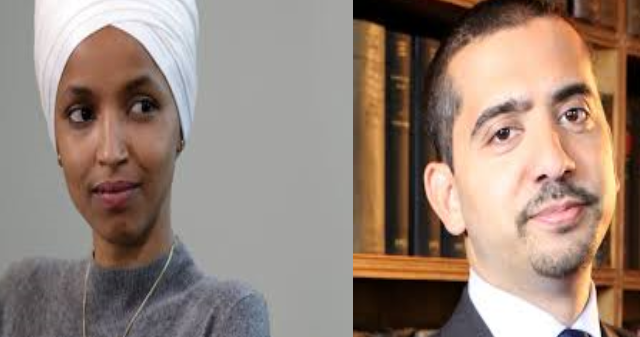
I was meaning to write this for some time now but somehow I kept postponing. Razib’s recent post about Mehdi Hasan inspired me to sit down and finish what I was thinking of writing down (https://www.brownpundits.com/2019/07/31/mehdi-hasans-hypocrisies/). This long post is not about Mehdi Hasan par se, or even Ilhan Omar (sheepishly admitting her clickbait value). This is mainly about prominent Muslims in American public life and public perception of Muslims. In the first part of this post I will discuss direct political aspects of Muslim public representation and in the second I will dive into some of the relevant socio-political and moral issues.

Barack Hossain Obama became the first African-American person to be elected President of United States in 2008. He was reelected in 2012. Now, there are lot of grounds for criticism of Obama’s presidency. His leadership in lot of important matters, particularly in foreign affairs , have come under lot of criticism since the end of his presidency. In domestic matters too, his leadership record has lost lot of luster even among his supporters. However, most Americans agree that Barack and Michelle Obama occupied the White House with exemplary dignity and fulfilled the inspirational role that Americans generally expect the presidential office to provide in this very republican (small R) of countries.

The Obamas were very acutely aware of the huge responsibility they had as the first African-American couple in the White House. They knew personal scandals, failure to control and command, would create huge barriers for the next ethnic minority aspiring to be president. That’s why they were dignified and moderate to a fault in their conduct. In that consideration, the Obama presidency was an unqualified success. Today Barack Obama is the most popular living President to Americans with 60% approval rating (https://today.yougov.com/topics/politics/explore/public_figure/Barack_Obama) and Michelle Obama is frequently polled as the most admired woman in America. The next presidential candidate of African-American descent who will reach the final stages of election, will not face any questions because of his/her ethnic background except from the incorrigible bigots.

John Fitzgerald Kennedy became the first Catholic president in 1960. It’s hard to believe now but prejudice against Catholics was very widespread among mainstream Protestants of America, who were the overwhelming majority, until fifty years ago. When populist nativists of the early 20th century railed against domestic and foreign enemies of the people, ‘Jews, Papists and the N-word’ was the standard phrase used. Kennedy was aware of the great headwind facing him in seeking primary nomination and then eventual victory. He famously said before the election, “I am not the Catholic candidate for president. I am the Democratic party’s candidate for president, who happens also to be a Catholic. I do not speak for my church on public matters, and the church does not speak for me,” (https://www.wbur.org/news/2017/05/25/kennedy-catholicism-presidential-campaign). He kept emphasizing this point before the election and was mindful of his role as the first Catholic president after getting elected. Suffice it to say anti-Catholicism ceased being significant in American political sphere after the Kennedy’s presidency.

Ilhan Omar became the first visibly-Muslim, hijab-clad elected representative at federal level in 2018. Understandably, her ascension to national stage created huge amount of interest, savory and unsavory, in all corners of the politically engaged section of the people. I am not going to mention the long list of accomplishments and  controversies Ilhan Omar has been registering in almost daily basis since her election. It will not be an exaggeration to say that she has become one of the most prominent banner issues that are feeding the frenzy of the two battling political armies in national arena. She is inflaming passion even more than Alexandria Ocasio-Cortez, who may be representing more the economic division than the cultural division represented by Omar.

I personally think that Ilhan Omar is not a very religious Muslim, the identity aspect of the religion is more important to her. Rather than cosmic theology, her religious identity offers her a worldview theology; providing explanation of power relations among communities, groups and institutions of today’s world. Socio-cultural beliefs define the modern political man and Ilhan Omar represents the current cleavages more starkly than almost any other public figures.

However, Ilhan Omar was not lucky enough to get the elite education and varied experience that both Obama and Kennedy had. Experiences greatly influence worldview. A liberal, integrative, long-term worldview that typify Obama, Kennedy, may be too much to ask from her. I personally think she is not very sophisticated but that is not germane to this discussion. However, among her most prominent public defenders there are many who have benefits of background and who are very articulate. That brings me to public personalities like Mehdi Hasan.

In the last couple of years, several Muslim media figures have been regularly invited into mainstream media like CNN, MSNBC, NYTimes, WaPost whenever some events related to Muslims became prominent in the fast churning stream of news and views. Mehdi Hasan, Wajahat Ali probably commanded bulk of those airing of Muslim perspectives. They are among the staunchest defenders of Ilhan Omar (also of other minority social justice public figures) in media. They are also among the most vehement critics and denouncers of Trump, Trump-supporters, the Republican Party and American foreign policy in general. They had been like this since Trump became the Republican nominee. I remember how I first saw Wajahat Ali in CNN before the 2016 election when he repeatedly and day after day described Trump as ‘impotent’. I cringed every time I heard that, but it could have been just me.

Now, people like Ilhan Omar, Mehdi Hasan and Wajahat Ali have lot of justification to go ballistic against Trump and his supporters. I think that Trump is significantly more racist than an average white American septuagenarian, his policies have targeted Muslims discriminatorily, his utterings have stoked outpourings of anti-Muslim hate, Muslims in America may become further victimized if Trump is reelected. However, opportunities of public criticism should not just opportunities for lashing out. We should evaluate effects of these criticisms, whether they are benefitting the country or even Muslims themselves. There is also an ethical aspect of this public criticism, which I will discuss in part II of this blogpost.

Ever since the 9-11 attacks the partisan divide in attitudes towards Muslims and Islam has gradually diverged in America. There are reasons to believe that the divide has become starker in recent years. A recent survey conducted before the 2018 elections show that 71% percent of self-described Republicans agreed they don’t believe Islam is compatible with American values, compared to an overall 42%. 60% of Republicans agreed with the idea that Muslim Americans weren’t as patriotic as non-Muslim Americans, compared to 38% generally (https://www.theguardian.com/world/2018/nov/01/new-america-study-report-republicans-muslims-trump-midterms). The wide difference between the Republican numbers and the average for the population means the difference in attitude between the two parties is very wide. Few wedge issues signal the difference between the two parties more clearly now than their respective attitude towards Muslims in America.

Shadi Hamid has said that he is comforted that at least one of the two political tribes of America is acting as a shelter for American Muslims in these troubled times (https://gen.medium.com/how-donald-trump-made-me-a-muslim-7f28abcfd33a).  Muslim Americans reciprocate the Democratic support faithfully. It is estimated that about 90% of them vote for the Democratic party in national elections now, before 9-11 the figure was more even. As much as 30-40 Muslims voted Republican in the 1990s. Other analysts OTOH have expressed reservation about the state of Muslims in the political polarization. Republican disdain for the Democratic Party and suspicion about Muslims in America may be reinforcing each other, worsening the political divide. Moreover, it’s not that Muslims find a very natural place in Democratic Party that is mainly characterized by secularism and progressivism. Shadi Hamid recounts that a religious Muslim told him, “I can sense the disdain from the Democratic Party towards my faith, even as they don a cape against Islamophobia. The underlying view Democrats have [about] anyone seriously religious is that they’re, at best, silly and gullible, and at worst, dangerous.” (https://www.washingtonpost.com/outlook/for-religious-american-muslims-hostility-from-the-right-and-disdain-from-the-left/2019/07/25/7121e4ce-99e4-11e9-830a-21b9b36b64ad_story.html?utm_term=.f693a53b2fd8 )

For a minority that comprises only 1% of the voters, this kind of polarization should be very alarming. Its true that there are other minorities who also are reliable member of the Democratic clan. Black-Americans generally vote for the Democrats in the 90s while Jewish voters vote in the 70-80% range. However, the socio-political positions of Muslims are not same as Blacks or Jews. Black American voters comprise about 12% of the total voters; they are indispensable core of the Democratic coalition and a un-ignorable part of America for Republics. Moreover, sufficient number of Black Americans take part in Republican politics and intellectual development , making them always cultivable for Republican political leadership.  While Jewish voting population is close to 2% of total, they have very powerful representation within the Republican establishment.

We must consider this context when examining the role of Muslim political and media personalities in the political sphere. It seems to me the most visible Muslim personalities in politics and media, determinedly and gleefully want to exacerbate the partisan divide. Few rational observers would disagree that Donald Trump has been most un-presidential in his public sayings during this political phase of his life. Even labelling those words as juvenile would probably be unjust towards the youth. However, these Muslim public personalities seem to think that going toe to toe and tit for tat with Trump and the Republicans, are the best tactics for Democrats and Muslims. I think, apart for impact on partisanship, there are important ethical aspects in these public exchanges that also have deep and wide consequences, which I intend to discuss in the second part.

These Muslim public personalities want total war against Trump and Republicans where crossing the line or fraternization with the enemy will be unthinkable. A few days ago, a very prominent Muslim religious leader, Hamza Yusuf, got widespread notice among Muslim Americans for joining a multi-religious state department commission on Human Rights (https://www.aljazeera.com/indepth/opinion/time-muslim-americans-condemn-hamza-yusuf-190715130254222.html). Many people would argue this as a very sensible move considering the plight of Muslims in many countries of the world and the very important role that America has in global concerns about those hapless Muslims. However, for political activist Muslim-Americans, Hamza Yusuf joining a Trump presidency commission was an ultimate betrayal, an act of Vichy French ignobility.

A Blitzkrieg style total war wouldn’t be so reckless if the chances of victory were good. However, chances don’t look good at least in the short term. When Trump became presidents, Democrats and liberals were openly speculating how he would be removed from power within one or two years because of all the scandals and malfeasance in the past and before the election. With low presidential approval ratings acting as comfort blanket, few Democrats were thinking Trump would last the full first-term, let alone getting reelected. Now desperation is in the air. Democrats openly speculate that Trump is heading for a second-term and Democrat’s chances are not so good. Betting markets reflect that increasing despair also. This political atmosphere again demand that Muslim Americans take long hard look how their political and media personalities are representing them in the public sphere. I have not read any reports of how Muslim Americans view role of their representatives in the public arena but from my personal interactions I gather that most of them are very uncomfortable being the spearhead of the resistance. Lot of them say that they physically wince whenever Ilhan Omar is in the news and they wish she would be far less prominent.

However, coalition-building, gradual advances may be things of the past and the spirit of the times may demand reckless combativeness. Just as revolutions in military affairs made Blitzkrieg possible, revolutions in socio-political affairs of current era may be favoring bold tactics. After all, Republicans had their May 1940 moment in November, 2016 in a most improbable victory with a most improbable candidate who refused to occupy the center ground. In these kind of historical victories, being the armored spearhead of deep battles brings everlasting glory. Nevertheless, people should also remember that Blitzkrieg grinded to a halt in 1941 in face of obdurate structural conditions and determined resistance. The spearheads were obliterated.

 

Imran Khan in DC

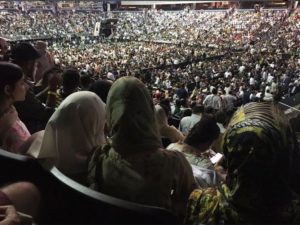
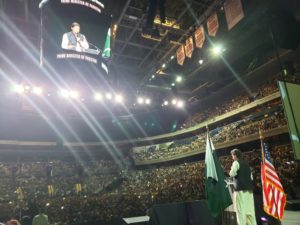
So, thirty thousand Pakistani-Americans gathered in DC to hear PM Imran Khan, billed as the largest gathering of Pakistanis in North America ever. I am seeing that Bangladeshi and Bangladeshi-American social media is somewhat impressed. It is doubtful that any Bangladeshi leader can even pull half that crowd in North America. This is also a little bit puzzling. By most measures and in popular discourse, Bangladesh has been doing far better than Pakistan economy and society-wise in the last ten years. So how come a Pakistani leader, in midst of economic stagnation, fiscal crisis, currency crisis etc etc back at home manage to pull such a crowd? Is Imran Khan really popular among Pakistanis? Is there a home-expatriate divide? I am curious to know from Pakistanis.

Back to Bangladesh after five years- Part 2

In this part I write about some of the interesting changes I saw in the villages of Bangladesh during my stay there. I wrote this as an op-ed in a local daily.

[I am very interested to know from Brown Pundit readers of other South Asian countries about changes in rural society and economy from direct experiences. Particularly interesting would be to know if there are variations among countries]


Earlier this year, I came back to Bangladesh after an absence of more than five years, and stayed for more than a month.

During the stay, I had the opportunity to visit rural and small-town parts of the country in two forays out of Dhaka. A visit to my ancestral home in the northern parts and another to the southwestern parts. These visits were my first into rural Bangladesh after more than a decade. Therefore, they provided very stark experiences of the rapid but gradual change that has been occurring for several decades.

The first thing that caught my eye was how drastically the utilization of resources has increased over the last decade. A decade or so ago, in Northern parts, you would mostly see cultivated fields expanding miles to the distant horizon. Now, people have planted so many trees everywhere that it almost gave me a claustrophobic feel.

Every pond is utilized for fish production and every square metre of the land is cultivated for year-round value addition. Bangladesh is, reputedly, among the leading developing countries with the fastest agricultural productivity growth in the last two decades. The dramatic physical transformation of the village landscape is clearly strong evidence of that growth.

I saw yet another striking change in the transportation scene. A decade ago, manually driven rickshaws and rickshaw-vans were ubiquitous. Now I could mostly see electric and mechanized transports. It seemed to me that people in the village were now looking down upon manual transports as archaic. Also, I rarely saw buffaloes and oxen traditionally used for plowing the fields — tractors and power-tillers had taken over that role.

What are the reasons for such remarkable growth in rural productivity and economy? Undoubtedly government policies and infrastructure development played important roles, but I believe that one of the biggest drivers of this change is unappreciated but right before our eyes. In the villages, I saw everybody with mobile phones and phone-related service shops everywhere.

Economists in the last decade have begun to appreciate the transformative role mobile phones and the internet have been playing in the developing world. Unlike previous models, where heavy government investment in communications infrastructure was critical in economic development, mobile infrastructures grew almost entirely because of the private sector, and brought far greater connectivity with far fewer costs.

Developing countries went from less than 1-2 landlines per hundred people to 70-80 mobile connections per hundred in just 20 years. The poorest people in villages are now able to talk with anybody in the country, but also send and receive payments and access the internet and government services through mobile phones.

People in villages are using phones to be constantly updated about prices of agricultural inputs and outputs and get the best deals possible in the market. The increased competition and undercutting of middlemen have increased efficiency greatly. Coordinating all kinds of complex tasks, like contracting day labourers for planting or harvesting, have become much easier.

But there is a flip side to agricultural productivity growth that has taken place all over the world. Prices of easily tradable products like grains, consumer oil, milk products have been low for more than a decade and that low price has hit small farmers the hardest.

Like everywhere in the world, small farmers of bulk products like rice in Bangladesh can only be economically sustainable by massive government support. However, unlike India and other developing democracies, farmers in Bangladesh have little political power, as there are no competitive elections. I do not think the government in Bangladesh is as sensitive about rural unrest as it is about urban discontent.

Paradoxically, in spite of the economic and productive growth, I found the villages to be much less populated than they were 10 years ago. Like everywhere in the world, I think Bangladesh also is experiencing rural depopulation, and this will only accelerate in the future. I think the main reason is that people are reluctant to live in actual villages. Like everywhere, people aspire to live in more complex societies with more modern services.

Those who are able, move to upazilla towns where there are schools, banks, hospitals, police stations. More better-offs move to zilla cities, and the most propertied go to Dhaka and Chittagong. Village girls probably also think that working in a mind-numbing factory job for subsistence wage in a big city is preferable to the daily monotony of a village household.

Finally, one of the most inspiring sights I saw in villages was young girls riding huge motorbikes as part of their daily commute to work or study, a sight you rarely see even in America. I think that the prospect of Islamization of Bangladesh society is exaggerated. People of Bangladesh are very religious, and religious identity is very important for them. However, they are also very aware that religious and secular activities belong to different spheres, and they are not letting religion dictate their economic life.

The pragmatic and opportunistic nature of Bangladeshi people has been the saving grace of a country facing immense structural hurdles right from its birth. Nowhere is this more evident than its rapidly changing villages.

https://www.dhakatribune.com/opinion/op-ed/2019/06/07/how-the-landscape-has-changed

An apology to Brown Pundits

My quick Election 2019 reaction article “The rock that broke liberalism” in the local English daily Dhaka Tribune seemed to have blown up in social media. As I woke up this morning, the article has nearly 9000 shares and still growing by the hour. Most probably the blow-up happened because some prominent Indian media personality with lot of followers shared the article.

I want to apologize here to BP and also to Omar Ali bhai for not mentioning Brown Pundits or his his name directly. Althought by mentioning the key words in the BP 2016 article and also the thesis question, I made it very easy to find the article with minimum enterprise through Google search (Links at the end). I wrote the article with Bangladeshi audience in mind, I did not expect it to go ‘international’. Thus I unintentionally deprived Brown Pundits from some desereved publicity and Omar Ali bhai from due direct recognition.

The reason why I was shy about mentioning Brown Pundits is that I wanted to keep my column writing profile in Bangladesh and occasional Brown Pundits contributor and commenter seperate. Firstly, I regard BP as a forum where one can freely speak their minds about sensitive issues (very unwise I know. In internet nothing is safely hidden and everything is permanent). Secondly, as a Bangladeshi who wishes to travel to home country regularly, speaking freely about sensitive issue is a very ill-advised for me. Thus my reluctance to let my contributions/ comments in BP be known among home-circles.

This is the dilemmna of the era for us. We want to talk, yes just talk, debate, analyze, about issues that interest us but there are great number of people from all sides for whom talking freely is the biggest existential threat in the world. Of course Razib is a prime example of the reality of the threat. Awarded NYTimes op-ed contributor just for a day because the internet outrage mob mobilized in milliseconds.

https://www.dhakatribune.com/opinion/op-ed/2019/05/25/the-rock-that-broke-liberalism

Is Islam the rock on which the liberal order broke?


A quick reaction to Indian Election

I wrote the following article for one of the English daily newspapers in Bangladesh. The main idea is directly borrowed from a very good post in Brown Pundits (2016) by always superb contributor Omar Ali bhai.  “Is Islam the rock on which the liberal order broke?”  https://www.brownpundits.com/2016/12/05/islam-is-rock-on-which-liberal-order/

Link to my article here.  Text follows. Just as a reminder, newspapers op-eds are not suitable place for good elaboration and defense of ideas. This is not an analysis or theorizing, just a reaction.

The rock that broke liberalism

https://www.dhakatribune.com/opinion/op-ed/2019/05/25/the-rock-that-broke-liberalism?fbclid=IwAR3cQVWjO1PYe6muE33Dijy44kR90fJRH1Iv6UBqS9KYqHr9e7AlTHKjvdo

I was watching live streaming of the India Election 2019 results on the NDTV website. Panelist after panelist was commenting on how significant were Balakot strikes in boosting BJP’s re-election prospects, and how ignorant are the liberal elites of India about the appeal of national identity among the masses.

This was NDTV, as a reminder, one of the citadels of India’s liberal elites. BJP’s triumphant re-election under Narandra Modi underscores the wave of right-wing populist nationalism sweeping across democracies of the world — Europe, Australia, Latin America, the US, Asia, maybe soon in Canada also.

With every election, every referendum taking place in established democracies, it is becoming apparent that this wave may not be just yet another right turn in the cycle of politics soon to be corrected by pivot to the left, but a fundamental shift in the people themselves.

A couple of years ago, in a South Asia focused blog I frequent, a much-admired Pakistani-American writer wrote a post posing a great question: “If and when modern humanism and liberalism crashes and burns, will future historians look back and say that Islam was the rock on which it first and decisively broke?”

His point was not that Islam single-handedly threw a powerful challenge to the liberal order, or “end of history” would have been achieved if Islam didn’t throw a wrench into the gears of civilization.

He argued that by obdurate refusal to accept the fundamental assumptions of post-enlightenment worldview, by obstinate resistance to assimilate with the mainstream when in the minority and by dogged persistence in recreating antediluvian theocracies when in majority, Muslims not only undermined the universal validity of the whole liberal project, but also sowed deep doubts about the liberal project among its previously most faithful adherents.

Muslim recalcitrance has hastened delivery of the contradictions that the liberal project was pregnant with from the beginning.

And the contradictions are huge indeed. The liberal order is prone to breakdown because it doesn’t sufficiently account for the fact that human nature itself is broken. People are not just utility or satisfaction maximizing beings. Enjoyment and suffering are intimately co-mingled.

People do not just want to reach heaven together; they want some, preferably who are somewhat different, to be confined to hell as well. Apart from the contradictions, surely undercurrents of technological and economic change, the shift in global power balance, the inevitable decay of political order, played a far more important role in undermining the liberal dominance than obstinate resistance of the followers of Islam?

However, it’s hard to deny any causative role of Islam. The emergence of right-wing, national identity politics was perhaps inevitable in India, but BJP’s astonishing dominance must be partially attributable to Pakistan’s persistent spoiling and nightmare-neighbour role? Right-wing majoritarians everywhere are scapegoating Muslims as the principal other; morality of their methods can be questioned, but the success cannot.

Moreover, I would argue that Islam has not undermined the liberal order by sowing doubts within liberal ranks or exposing its contradiction, it has weakened liberalism by emboldening and consolidating the enemies of liberalism in established democracies which were scattered and disheartened after the bloodbath of WWII and subsequent emergence of liberal world order.

Stubborn defense of group identity by Muslims of the world has made upholding group identity respectable for all groups, majority or minority, powerful or weak. In the age of mass politics, group identities like religion or nation have more elements in common than in difference. If Muslims can be unabashedly assertive about the sanctity of their religious identity and traditions, other groups can be unapologetic about their respective identities too.

Muslims may be a small minority in most of established democracies, but they comprise nearly one-fourth of humanity, and they have a very emphatic presence in Asia, Africa, and parts of Europe. To people of different faiths, Muslims, regardless of their actual numbers as minority, represent the much talked-about demographic threat from the south.

Muslims, whether in majority or minority, are on the other hand deathly afraid of the political, cultural, and economic threats emanating from the leading political and ethnic groups of the world. It’s a mutual cycle of fear spiraling downwards. Muslims cheering the probable demise of a liberal world order is the height of folly.

As the world’s most powerless and disunited major group, they will continue to pay the major price of breakdown in blood and misery. Uighurs of China portend that bleak future.

In established democracies, Muslims are generally politically allied with liberal progressives, and this alliance has opened liberals up to accusation of double standards in protecting a very illiberal minority identity. Abandoning universalism and embracing identitarianism is hollowing out liberalism from within. Either the principles of liberalism apply for all groups or none at all.

Back to Bangladesh after five years- Part 1

I went to visit Bangladesh from early April to mid-May after more than five years. For five years I have written about Bangladesh from secondary sources and secondary experiences. At long last I can write about my fist-hand experience.

I stayed most of the time in the capital city Dhaka. In recent years South Asian megalopolises like Dhaka, Delhi, Karachi, Mumbai have earned reputations as the cities with worst air pollutions in the world. Living in Dhaka’s unbearable pre-Monsoon heat, humidity, dust and particles thick air, I can well understand what do those pollution measures mean for the people. For the bulk of masses who are not fortunate to live in air-conditioned houses, work in air-conditioned offices and commute in air-conditioned cars, buses, Dhaka is truly an urban hell-scape. There is a popular saying among Dhaka’s suffering commuters stuck for hours in oven hot roads; citizens of Dhaka will be forgiven the dreaded ‘Adhab-al qabr’ or punishment of the grave that is supposed to be fate of all persons from death till Qyiamat, the day of judgement. Dhakaites suffer so much that the Adhab pales in comparison.

Although air pollution has become much worse, city roads and walkways have become cleaner and more well maintained. Parts of the massive revenue collection by both city corporation and government are really being used to maintain the infrastructure. Trash collection has become more organized . Piles of rotting garbage and constant stench are no longer ubiquitous.

Mercifully powercuts in electricity, so common in Bangladesh until 8-10 years ago, seem to be very rare now. Diesel generators reverberating throughout the city, a very common sight and sound of yesteryears, are rarely seen and heard now.  In fact, a recent news report said that Bangladesh installed so much power generation capacity in the recent years that capacity has outstripped demand substantially. Experts are recommending that no new power plants be initiated in the next few years. Uninterrupted power supply has made the industries, particularly Garments industries, very happy.

However, the top 10% Dhakaites are living very differently than the rest. Fantastic high-rise apartments and office buildings have sprouted all over the cities. Glass and steel clad apartments and offices remind people more of the spotless splendor of Singapore than traditional dirt of South Asia. New BMWs, Lexus, Toyota cars and SUVs clog the city streets. However, apart from home, office, cars and eateries, there is very little things to do socially in Dhaka for the upper class. That’s why they escape to foreign spots like Bangkok, Bali, Malayasia, Singapore, Dubai, Sri Lanka, India etc several times a year. Bangladesh is the supplier of highest number of tourists in India. Bangladeshi shoppers are significant boosters of Kolkata economy. Several Bangladeshi tourists were among the dead and wounded in the recent Sri Lanka terrorist attack.

The top businesspeople, professionals and government employees are doing great in Bangladesh. Their income has soared in the last decade. Signs of their affluence is everywhere in the cities. People working in banks and finance, telecommunication sectors are doing OK. The middle class is not doing so great. Shockingly, I found that private sector salaries have barely changed in the last ten years but house rent, essential prices have increased at least 100% in the last ten years. Economists say that a living wage in Dhaka, minimum wage for a two person family to keep their body and soul together under a roof, is 17000 Taka or about 200 dollars per month. Starting salaries for college, university graduates not working in choice sectors like banks or telecom are still below the living wage. Garments workers earn 80 to 150 dollars, from starting to experienced. It’s hard to imagine the life of the lower-middle and working class in Dhaka.

In the second part, I will discuss my very startling experience of change and prosperity in the rural areas. In the third part, I will talk about my impression of the state of economy and politics.

India Election 2019 Thread

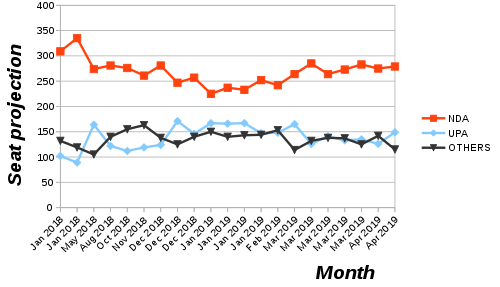
Lately, we have been talking a lot of things about South Asia but not much on what is supposed to be the biggest event in the calendar for 2019, India General Elections 2019 scheduled to start 11th April and continue till May. Looking at the Opinion Polls it seems that BJP’s election fortune has become much brighter since the dustup with Pakistan. Although foreign issues do not dominate Indian elections that much. Domestically, general Indian people still seem to regard Modi as a better steward for the Indian economy than Rahul or any other alternatives. I have no opinion on the probable results as I have little knowledge and expertise. Let those who are more informed opine here freely on the elections. Not just probable outcomes but also about social, economic and political directions that this elections may bring about.


19th March : ” Times Now and VMR survey is back with yet another batch of poll-related data and analysis. In the current survey, the National Democratic Alliance (NDA) is predicted to grab 283 out of 543 Lok Sabha seats, UPA – 135 and Others – 125.

In the last survey, the Times Now-VMR poll had shown that the NDA would have been 21 seats short of the half-way mark had 2019 Lok Sabha Elections been held in January.”

https://www.timesnownews.com/elections/article/opinion-poll-for-lok-sabha-election-2019-live-times-now-vmr-survey-for-bjp-congress-narendra-modi-rahul-gandhi/384850

Brown Pundits