Browncast Ep 35: Tahir Andrabi on Primary Education in Pakistan

Another BP Podcast is up. You can listen on LibsyniTunesSpotify,  and Stitcher. Probably the easiest way to keep up the podcast since we don’t have a regular schedule is to subscribe at one of the links above.

You can also support the podcast as a patron (the primary benefit now is that you get the podcasts considerably earlier than everyone else…).

Tahir Andrabi

This week we have a twofer about education in Pakistan. In part one we talked to Dr Sohail Naqvi about higher education, and in this episode Omar and Zachary talk to Professor Tahir Andrabi. Tahir is the Stedman-Sumner Professor of Economics at Pomona College and is currently working as the founding dean of the school of education at the Lahore University of Management Sciences. He has a professional interest in primary education and public policy and has written extensively on these topics. He shares his views about primary education in Pakistan. I was especially taken by his observation that the 10th grade examination (the “Matriculation” examination) in Pakistan is one of the reasons why primary education in Pakistan is so sub-par. And that the entire colonial era educational system is meant to identify “winners” (the top 1 % of the students) instead of meeting the needs of the majority of students (the modal student in Pakistan is headed for failure). His points about educated girls having sparked a revolution in (private) primary education in the rural areas, and lax enforcement being the reason (onerous and useless) state regulation of education has done relatively little damage in Pakistan, are also spot on. I hope we get Dr Andrabi on again to discuss some of these topics in greater detail.

We would definitely appreciate more positive reviews. Many of you listen to us, but don’t leave any reviews!

Browncast Ep 34: Sohail Naqvi on Higher Education in Pakistan

Another BP Podcast is up. You can listen on LibsyniTunesSpotify,  and Stitcher. Probably the easiest way to keep up the podcast since we don’t have a regular schedule is to subscribe at one of the links above.

You can also support the podcast as a patron (the primary benefit now is that you get the podcasts considerably earlier than everyone else…).

Related imageThis week we have a twofer about education in Pakistan. In this episode Omar and Zachary talk to Dr Syed Sohail Hussain Naqvi. Dr Naqvi is currently the Rector of the University of Central Asia. Prior to that he has been vice chancellor of the Lahore University of Management Sciences, executive director of Pakistan’s Higher Education Commission and Dean of electrical engineering the Ghulam Ishaq Khan institute of technology. He shares his views about higher education in Pakistan and his own experiences in that field. In the next episode, we speak to Dr Andrabi about primary education.

In the next episode, we talk with Professor Tahir Andrabi about primary education.

We would definitely appreciate more positive reviews. Many of you listen to us, but don’t leave any reviews!

Browncast Episode 33: an ethnography of doubting Darwin

Another BP Podcast is up. You can listen on LibsyniTunes, Spotify,  and Stitcher. Probably the easiest way to keep up the podcast since we don’t have a regular schedule is to subscribe at one of the links above.

You can also support the podcast as a patron (the primary benefit now is that you get the podcasts considerably earlier than everyone else…). Would appreciate more positive reviews.
Today I am posting a podcast that I decided to record on a lark. I talked to Benjamin Dierker, the author of Why One-Third Of Biologists Now Question Darwinism. To be frank, this is a case where you need to read beyond the title…

Dierker and I had a lot of common ground and his main project is not a defense of Intelligent Design, as much as an ethnography of it. We hashed out what Neo-Darwinism means, as well as how conservatives should bury the hatchet when it comes to their historical enmity to evolutionary theory. In fact, we discussed extensively how the left’s revolt against human nature in the past generation opens up an avenue for conservatives to be on the side of science.

Browncast Episode 32: Indian Linguistics Podcast

You can listen on LibsyniTunes, Spotify,  and Stitcher. Probably the easiest way to keep up the podcast since we don’t have a regular schedule is to subscribe at one of the links above.

You can also support the podcast as a patron (the primary benefit now is that you get the podcasts considerably earlier than everyone else…).

We had a conversation about Indian linguistics. It was Razib, myself, Avtansa, Indian Linguist and TianChengWen.

I’m quite proud of this podcast since I was able to get some of the linguistic luminaries together. The topic was a broad overview of language in South Asia.

We were able to keep a very strong regional balance since TCW’s specialty is Dravidian. We touched on the role of Sanskrit and its prominence as a literary lingua franca until the late medieval period (until it was supplanted).

Incidentally, we didn’t talk all that much about Indian English instead we delved into the “dialects.” There seems to be a turning point in that the Subcontinent is consolidating linguistically among regional, national and religious lines with English emerging as the great neutral and prestige language.

We touched a fair bit on the specific languages of the Hindi belt but I guess for next time we will have to tackle those that are tangential to the Hindi language sphere like Punjabi, Bengali, and Marathi.

Browncast Episode 31: Jalliawala Bagh Podcast

Another BP Podcast is up. You can listen on LibsyniTunes, Spotify,  and Stitcher. Probably the easiest way to keep up the podcast since we don’t have a regular schedule is to subscribe at one of the links above.

You can also support the podcast as a patron (the primary benefit now is that you get the podcasts considerably earlier than everyone else…).

Now, in Memoriam….

I had been very persistent in wanting to do a podcast to mark 100 years.

In the end I managed to stitch together a rather interesting ensemble.

The talk could be divided into two parts. Initially the four of us (Vidhi, MJ, Subhash and myself) discusses about the shame of Britain not apologising for the massacre.

We managed to find some sort of consensus and agreement among ourselves that as Asians in Britain; it was necessary for Britain to apologise.

As Vidhi left the podcast, Razib joined in shortly thereafter. I had already meandered by then and my own “political awakening” started to stir.

We touched on identity issues, the Hindu Rage (and election) and living in a “white Man’s world.”

As mentioned in the previous post; this is the first time I’ve had “Cambridge Voices” in the podcast and long May it continue.

Vidhi and MJ provide a very strong addition in that she is a Congress-lite supporter and he’s a BJPite so their views are a soft spectrum. Subhash was able to add a gentler British Asian viewpoint (he has extensive India experience as he traversed both North & South for his expat career).

Razib was a bit of shock jock and sort of jolted us from our British centric perspectives. Interestingly though in Britain, the feeling that we are the Greece to America’s Rome is so embedded that the Rest just don’t really factor.

I’m much more confident in my “Britishness” to now challenge it. I vote Tory, support the Monarchy, wish for a return to a Hereditary House of Lord and support the Union. I worry about Brexit but would rather have No-Deal delivered swiftly rather than this lingering wound.

There is an invisible colour line that bars entry to the Aristocracy and Royalty (Meghan, the Duchess of Sussex, is a suitable consort for Prince Harry but not William because her descendants are not in the direct line of succession).

It’s one of the invisible angles that I tack on as I merge my offline Tharoorian stands with my online Turanianism (the Turanian triangle have such fiercely proud cultures).

Finally this was a real collision of my offline and online worlds since each of the podcast participants happen to be very closely connected. I wonder if I’m running foul of Kangana Ranaut and her charge of nepotism but I suspect not..

Browncast Episode 30: Philippe Lemoine on philosophy, politics, French immigration & The European Union

A creature of the night

Another BP Podcast is up. You can listen on LibsyniTunes, Spotify,  and Stitcher. Probably the easiest way to keep up the podcast since we don’t have a regular schedule is to subscribe at one of the links above.

You can also support the podcast as a patron (the primary benefit now is that you get the podcasts considerably earlier than everyone else…).

I’m toying with an “AMA” on a YouTube live stream for “Patrons” only another benefit. Since there aren’t too many Patrons it might be a simple thing to do if no one shows up!

But I would definitely appreciate more positive reviews. Many of you listen to us, but don’t leave any reviews!

Best with Bourdeaux

This week we talked to Phillipe Lemoine, a philosopher, pundit, and data scientist. Phillipe has his own blog, but I would also recommend his pieces in Jacobite magazine

Informally I think of this episode of the BrownCast as “frawg-talk.”. We addressed Phillipe’s intellectual journey, from computer scientist to philosopher of science to data scientist. How he got involved in various assorted issues, and hard-headed analysis of migration into France, as well as sanguine attitude toward the European Union.

Browncast Episode 29: Zaid Jilani on the discourse, the primaries, and culture

Another BP Podcast is up. You can listen on LibsyniTunes, Spotify,  and Stitcher. Probably the easiest way to keep up the podcast since we don’t have a regular schedule is to subscribe at one of the links above.

You can also support the podcast as a patron (the primary benefit now is that you get the podcasts considerably earlier than everyone else…). Would appreciate more positive reviews.

Today I talk to Zaid Jilani, who runs the Extremely Offline podcast, among other things.

We talk about his current project, trying to bring people with different views together, as well as where his own views came from. Zaid also dished a little dirt on Ezra Klein and Matt Yglesias, and talked about growing up in the “Dirty South” (OK, he didn’t say it was the “Dirty South”, but it was the sort of rural South). Finally, we talked a fair amount about Democratic party politics and primaries, a topic which Zaid has a lot of knowledge of.

Browncast Episode 28: Obesity, Lifestyle, Fat and more..

Another BP Podcast is up. You can listen on LibsyniTunesSpotify,  and Stitcher. Probably the easiest way to keep up the podcast since we don’t have a regular schedule is to subscribe at one of the links above.

You can also support the podcast as a patron (the primary benefit now is that you get the podcasts considerably earlier than everyone else…). Would appreciate more positive reviews.

In this episode Razib and Omar move away from politics and culture to talk about the science (and non-science) of nutrition, lifestyle, obesity and fatness, especially as it relates to South Asians.  As some readers may know, I am an endocrinologist with a research interest in obesity and insulin resistance and Razib is a geneticist with a personal interest in health, nutrition and lifestyle, so I hope listeners will find it useful. Comments welcome.

PS: a couple of people have asked what my recommendations are for treating obesity. I hope to do a longer post some day, but here is the brief outline of what I advise my (pediatric) patients:

-Increased physical activity (1 hour of moderate to vigorous daily activity that gets your heart rate up; minimum of 30 minutes per day). This can be as simple as taking a brisk walk or using a treadmill or going up and down the stairs or dancing in front of a video or playing activity games on a game console.
-Try to adopt a lifestyle in which most meals are home-cooked and consist primarily of fresh ingredients rather than processed foods. Try to limit overall caloric intake and I especially recommend limiting the intake of carbs (smaller helpings of pasta, rice, bread, potatoes, more of fresh veggies and meats that are not heavily breaded or fried; for significantly obese patients I recommend limiting carbs to 2 servings per meal (30 grams of carbs) and no carbs in snacks). That said, each person can find a lower calorie, lower sugar diet that they are most comfortable with. As long as it is helping them lose weight, it’s good.
-Eat fruit rather than drink fruit juice. Increase your intake of fresh vegetables and eat whole grains rather than highly refined ones. This may not have much impact on weight per se, but will improve cholesterol, cure constipation and may have other health benefits.
-Avoid all chips, Cheetos and other high-calorie snacks. Stop buying these snacks, stop eating them except on rare occasions. 
-Limit foods made with added sugar (cookies, brownies, donuts, cakes, pastries, candy, etc.) to small helpings on special occasions. Limit fast food intake to occasional outings.
-Stop the regular use of soda, gatorade, powerade, iced tea and juice, try to drink more water at meals.
-Avoid all foods that contain trans fats (read labels).
-Most studies indicate that dairy is good for you and drinking 1-2 cups of milk daily is strongly recommended for all children and adolescents. Yogurt is good for you, and cheese (in moderation) is also beneficial rather than harmful. There is evidence that whole fat dairy products may be healthier than low-fat alternatives for most people.
-Nuts, avocados and lentils appear to be healthier than equivalent amounts of other foods and eating them in moderation may have long term health benefits in addition to helping with weight loss.

-Limit screen time. (the official advice is <2 hours daily, but the fact is that most students spend more than that on just work, but limit as much as possible, set up “phone-free time” for physical activity and other social interactions.  

Finally, do NOT make a constant struggle over dieting and weight control the dominant feature of your child’s life. A healthy lifestyle for the whole family is the aim, rather than obsessive control of one child’s food intake.
-Do not be discouraged if weight loss is slow. Your body will always resist weight loss; the aim is to stick to an overall healthier lifestyle (more exercise, less processed foods, few snack items, more fresh foods)

BrownCast Podcast episode 27: Zach on why he’s an Islamophobe and why he hates PewDiePie

Another BP Podcast is up. You can listen on LibsyniTunes, Spotify,  and Stitcher. Probably the easiest way to keep up the podcast since we don’t have a regular schedule is to subscribe at one of the links above.
You can also support the podcast as a patron (the primary benefit now is that you get the podcasts considerably earlier than everyone else…). Would appreciate more positive reviews.

Today Zach and I talk about his evolution in relation to Islam. In particular, why Zach has become vocally and unapologetically Islamophobic recently, and what the difference between Islamophobia and anti-Muslim prejudice is. I also ask Zach what his problem white people, and in particular PewDiePie, is.

And he will be a wild man; his hand will be against every man, and every man’s hand against him; and he shall dwell in the presence of all his brethren.

– Genesis 16:12

BrownCast Podcast episode 26: Surya Yalamanchili, all-American desi on politics, India, and culture

Another BP Podcast is up. You can listen on LibsyniTunes, Spotify,  and Stitcher. Probably the easiest way to keep up the podcast since we don’t have a regular schedule is to subscribe at one of the links above.

You can also support the podcast as a patron (the primary benefit now is that you get the podcasts considerably earlier than everyone else…). Would appreciate more positive reviews.

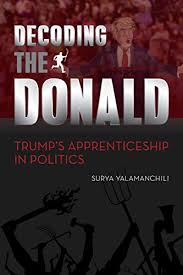
Today we talk to Surya Yalamanchili, the author of Decoding The Donald: Trump’s Apprenticeship in Politics, a contestant on The Apprentice, 2010 Democratic candidate for Congress, and a successful entrepreneur. We talk about Indian politics, American politics, colorism in the South Asian community, as well as growing up in the 70s to 90s as a brown Amerian.

We try to explore in detail the polarized political landscape of the USA today, he from the center-Left, and me from the center-Right.

Brown Pundits