On identifying with the label “Liberal” over “Conservative”

This blog post was triggered by a Twitter exchange with Akshay Alladi where he questioned why I identify with the label liberal. A lot of people have – on this blog as well as on Twitter or in person have labeled me a Hindutva liberal or closet Sanghi (from the left) or a Hindutva rebel, yet I personally don’t feel comfortable with those labels. Maybe it is positive tribalism on the Saffron side or parochial wokism on the left.

Akshay also referred to me in his blogpost about Liberalism vs Conservatism and I promised I would also come up with an elucidation of my position. Before I go into attempts at formulating my position, a fair warning – I am not a particularly deep thinker on matters of philosophy and do not have an intellectual bent. I get bored with long essays and books about philosophy and religion, it’s the interactions of these abstract ideas with politics, people, and histories (as an art/science) that interests me than the ideas themselves.

It is fair to get some personal biases (which may appear contradictory) I hold out of the way

  • I am a staunch Republican and Secularist. In my early twenties years, I was more partial towards the Laicite as I grow old I become more partial towards the British or American style of secularism. (Though the recent events in France have made me reconsider my position).
  • I have had a very low opinion of Religions in the 21st century in general and Monotheisms in particular.
  • I have some sympathies with Savarkarite Hindutva (not RSS) and I have often been accused of being a closet Sanghi by leftists.
  • Though I think of myself as a patriot who is well aware of British exploitation of India, I am an Anglophile. I adore the Brits with their language, literature, culture, models of governance (Westminster model). I don’t have shame in saying “Anglo West is the best”.

I would like to explain my identification with liberalism in three progressive strains.

Roots and Personality:

The TED talk by Jonathan Heidt is also a good watch on this topic. The presentation points to a study about how liberals rate Harm/Fairness higher than Authority/In group loyalty/ Purity. In those 5 fields, I would firmly identify as a liberal. Yet I am partial to a moral relativistic framework for roots of human morality over morality which claims to be self-evident (Maybe with the exception of the Golden Rule).

I don’t hold purity and especially ritual purity as an important virtue. In general more accepting of things that make me uncomfortable. I am less certain and more flexible in my views and positions. Whether or not this is a liberal quality (or just an outcome of uncertainty and skepticism) is debatable, yet it makes me more open to the opinions I don’t hold or find unpalatable. Additionally Atheism, rejection of traditional wisdom when in the conflict in the Zeitgeist puts one on the liberal side in the liberal-conservative divide in many cases.

However, if it’s the uncertainty that makes me liberal, it’s the cynicism that pulls me slightly on the conservative side. I do not believe that the extremes to which liberal democracies have gone in Europe – wrt Capital punishment, Human rights are either pragmatic or even “humane”.

While the above argument is reasonable, I feel it misses the point that the context and the stage of society one find themselves in, as a determinant of one’s position on the Liberal v Conservative scale. Hence I would go supplement the above moorings with the following context.

Indian society:

Even before my engagement with Politics of Liberalism and Conservatism, I have always intuitively associated with liberalism than conservatism. Being a radical atheist, a guilt-ridden savarna and a wannabe feminist has meant that in my family and friend circle I was always the most “Progressive” voice – of course, this is in comparison to more conservative voices.

While there are many things in Indian society worth conserving, it’s the adverse effects of these very things that bother me. The idyllic Indian village is home to both the best and the worst that Indian culture has to offer. One of the good things being the social safety net offered by caste and kin connections and the worst being the rigid institution of caste and sexism which is rampant in such settings. For example – I would not wish to conserve the Indian Joint family – in my worldview that structure has more cons than pros in the 21st-century world we live in. And more importantly, these caste and kin networks are anathema to individual rights and freedoms. If the concepts of personal space and privacy are considered important, one of the ways to achieve this would be loosening the bonds of caste and kin networks.

As Indian society currently stands on balance I would want the society as a whole to progress even if it means sacrificing some things that are good on their own. The conservative position here would be to encourage focusing on conserving traditions while interacting with modernity. The debate between Tilak and Agarkar, Gandhi, and Ambedkar are wonderful examples of such strife in our history, and I would in both cases firmly identify with Agarkar/ Ambedkar’s position. (Though I admire Tilak and Gandhi).

As alluded to in my post on Brahmanical Patriarchy. I personally abhor the traditional treatment of women by religion. In the comment thread, Srikanta K noted the slippery slope that leads from critiques of Brahmanism from Women’s’ rights POV, could lead to the destruction of tradition or demonization of brahmins. My position is exactly the opposite, I focus on the same issue with a different slippery slope, the one which our societies have actually witnessed in history. I can jettison traditions when they conflict with my morality or worldview – even these very traditions may have a net positive impact on society.

However, this position depends vastly on the current state of Indian society I find myself in. From what I know of British and Western societies – I would be markedly less “liberal” if I were in those societies. In other words, I might want to conserve the society the west was a few years ago instead of wanting an identity-focused woke revolution.

Indian Politics and Personalities (Litmus tests):

Complimentary to this would be how one related to national politics, issues, and personalities. A year ago I read the Gita Press and the Making of Hindu India. It is not only a fascinating window into the extraordinary life of Hanuman Prasad Poddar but also a compilation of how Indian leaders responded to the writings, thoughts, and work of Gita Press and Poddar. Gandhi, Rajendra Prasad, Sardar Patel, and even Lal Bahadur Shashtri (along with numerous others) are referenced in the book as having a positive outlook towards the Gita press initiative and reciprocally the Gita press was positive towards these individuals. Conspicuous by their absence are Nehru and Savarkar, while Ambedkar is given somewhat harsh treatment by Gita Press – especially the magazine Kalyan. Incidentally, the three Indian thinkers whose thoughts I relate to most are Nehru, Ambedkar, and Savarkar. While this is a weird group to look up to, but the modernist and rationalist (may I say Liberal ?) zeal in all these individuals that most appeals to me today. The fusion of these thinkers might create a good ideological role model in my thoughts. Personally, I would be most at home with a political outfit that takes Nehru’s liberalism with a pinch of Savarkar’s reformist and nationalist zeal while sticking to the constitutional democracy based on a hotch-potch of western models that Ambedkar held dear and all the while being particularly skeptical of Islam as a religion.

While I don’t deny that India is an ancient civilization (Dharmic for a lack of a better term), in its current Avatar, India is a nation-state of the Westphalian model, and though there may be flaws in this model IMO this model is vastly superior to all previous models known to this land or any land for that matter. Not to go all Niall Ferguson here, but I am partial to the view that the rise of the Western civilization is not just correlated with Western models of governance and economy (classical liberalism) but a consequence of it.

Another way to look at this question could be like a Y/N Test on current issues. Some current polarizing issues and my stance on them as follows:

  1. CAAI don’t support it in its current Avatar
  2. Sabrimala – I hope women enter the shrine and are accepted by society in my lifetime. I am skeptical of SC acting as it did in the issue but don’t empathize with the activism around Sabrimala. I can expect a fair flack on this issue – particularly on this blog – but it is as it is. Though I accept my position as a non-believer doesn’t carry as much weight.
  3. Jallikattu – I find the animal rights activism absurd and in unnecessary conflict with traditions and my position here could be classified as conservative.
  4. Cow slaughter – Would be partial to Cow smuggling being treated as an agricultural issue and not a religious one, even though it’s constitutional. Either way, I am not particularly vocal about it.
  5. 370 – Based on the knowledge I have I welcome the change.
  6. Free speech – Would love American-style free speech in India.
  7. Bhima Koregaon/ JNU Arrests聽 – Find them draconian.
  8. Stricter regulations of crackers – Would welcome.

On balance, based on the above issues, my position would be firmly liberal on the liberal vs conservative scale. This is not an accurate assessment in a broad sense, but a consolidation of the above thoughts in a much-needed context. Without context, these labels are mere abstractions, and hence not very useful and not necessarily transferable in a different context. In a state with a just and efficient rule of law, I would probably not identify with liberalism as much, for, in such a state, the tools and mechanisms for the needed change in society can be achieved more easily. But I am not living in such a state and hence would be firmly a Liberal.

Postscript :

I would not be very liberal with comments that arent constructive and civil.
Open Thread, 11/14/2020 – Brown Pundits

I don’t know anything about Diwali, but Happy Holdidays! (I found out that it was Diwali this weekend from Twitter and the comments here).
A new podcast on the election results with Josiah Neeley and Richard Hanania. We get kind of spicey by the end, as I make fun of Richard making fun of Peter Turchin, and make a huge prediction about Hunter Biden’s future.

Open Thread – 10/31/2020 – Brown Pundits

So I started a Subreddit. You can start your own threads there. Eventually, that might make the “open threads” redundant (they are not scaling well with ~400 comments per week).

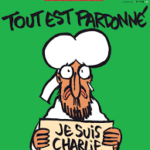
I’ve posted a few podcasts on the Patreon. One is a new podcast from Richard Hanania, where he takes a skeptical stance toward France in relation to the late unpleasantness. But several are from the Substack I’m starting shortly (probably next week). Probably won’t be posting those in the future.

Caste in 2nd Generation American Diaspora

Saw some very interesting conversations on caste in America in the recent Open Thread and wanted to hear more perspectives as well as sharing my own.

Growing up, I wasn’t aware of my caste nor my friends’ caste. I still am unaware of most other Indian-Americans’ castes (besides obvious ones like Sharma and a few Gujarati ones I know) and never thought too much of it. Caste just doesn’t seem to factor into 2nd Gens…except this trio of exceptions:

  1. The SJW Brahmins

  2. The Victim Card Dalits

  3. Poonjabi (NOT INDIAN!!!!) Jatts

Group 1 seems like a case of White Guilt with a few drops of saffron. Read any BuzzFeed-esque article written by this group and you could easily Find & Replace “White” with “Brahmin” (or “Hindu” if they are really deep in the hole) and “Black” with “Dalit.” Simple transpositions on an infinitely more complex topic.

Group 2 is enrolling in the grand Oppression Olympics that is underway in America. While I recognize the dire need to address the discrimination against Dalits in India, I cannot for the life of me understand how any 2nd gen would even be aware enough to discriminate against another 2nd gen based on caste. I can’t memorize that many last names and their associated caste. Maybe it happens amongst immigrants, but I can’t imagine any impact between Indian-Americans born in the US.

Equality Labs is probably the vilest and most prominent example of this new vehicle in action where they even want to make caste an official marker in the USA.

Both Group 1 and 2 label any “Hindu” practice, no matter how inconsequential or innocent (like Holi, vegetarianism, pujas, tilaks, the literal color orange, etc…), as Brahminical Patriarchy, fascism, and/or casteism. The agenda is pretty clear cut. See my “Brahminism” post.聽

Group 3 is honestly a conundrum to me. I just don’t understand the “why” in this group. But the lack of understanding makes it the easiest group to lampoon. Can only listen to music where the word “Jatt” is rammed into the song at least 40x, or else it’s Hindi music. This clique proudly flaunts their caste like they’re back in India (oops, sorry I meant Punjab). They’re in an intermittent digital war with Hindu E-Trads (who are already a shitshow themselves), many times because of some unnecessary and out the way slandering of India/other Indian ethnic groups or E-Trads disgusting edgelording over 1984. There is a heavy pour of Punjabi/Jatt chauvinism (and Scythian???). In the end, it goes back to what I said at the beginning – I don’t get the “WHY” for this group.

When I initially asked my fairly religious Punjabi Sikh friends why the singers keep saying “Jutt” in all the bhangra music I listened to – they rolled their eyes, explained it’s a caste, and then called them dumbasses and we laughed off. They then told me to call anyone who engages in that behavior a “tatti di sabzi.” I think that’s a fair response for all of the above.

Save for these 3, I don’t think caste is that important to most Indian-Americans, including normal Brahmins, Dalits, Jatts (note – I am none of these so it’s just my outside perspective).

Open Thread – 10/24/2020 – Brown Pundits

Going to post some notes on the latest podcast here. I talked to Fred Martin, who is of Haitian origin, but pretty stridently French, and a liberal. We discussed the killing of Samuel Paty, and Islam and Islamism in France. We also mooted the differences in relation to race between the USA and France, and our contrasting experiences. Finally, we talk about the coming winter of coronavirus in Europe.

A lot of the discussion centered around the contrast between France and the USA, which is always interesting to explore.

Thanks to everyone who is a Patron. I’ve started posting podcasts which you can’t find elsewhere yet there…

On Twitter, Suhag Shukla has been pushing back on the “caste is a huge problem for Indian Americans” narrative. I think she’s right on the specific issue. But, I am skeptical when she seems to attribute caste to colonialism, or, that it is not tightly integrated into Hinduism. I think Hinduism has a caste problem like Islam has a religious oppression problem. Religions are made by humans, and how they play out is a human matter. For whatever reason, Islamic societies have not been pluralistic in an egalitarian manner to other religions, while Hinduism in India is hard to disentangle from caste and jati. This doesn’t mean they’re necessary connections. Caste and jati are not major issues in Balinese or Cham Hinduism, though varna does exist.

The major dynamic which needs to be reiterated is that American Hinduism is very distinct from Hinduism in India, just as American Islam is very distinct from Islam in the Near East. I’m 99% sure that the Indian Americans I know (Generation X) would exhibit no caste bias of any note because in the USA it’s just not relevant in any way.

Brown Pundits Subreddit.

Open Thread – 10/17/2020

The thread is open. Three new podcasts this week in case you aren’t subscribed. Sometimes I get overwhelmed with things and I just can’t be bothere with detailed show notes.

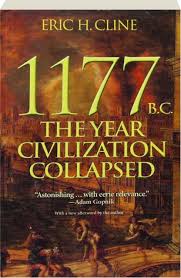
As I mentioned before I’m recording interviews for a new podcast I’m starting up separate from the others I run. I’m just throwing them on Patreon for now. Today I recorded an interview with the author of 1177 B.C.: The Year Civilization Collapsed. Looking at the tracks…he’s a very good talker!

I really recommend the book, it’s pretty well written. He also talks about his follow-up book, in terms of when we can expect and what it’s about.

Also, I may start trashing stupid comments now and then. Just to keep you guys “honest.”

From OIT to AIT

For TL;DR jump to My reasons for this position today are


Yesterday I tweeted about how OIT is becoming an Article of Faith on the Hindutva Wing in a thread related to Ruchir Sharma podcast where he dodged the AIT question. I further tweeted the change in my position of one supporting OIT (till 2018) to AIT by 2018 especially in face of the recent genetic evidence and following the work by Razib Khan. I was contacted by BP regular guest and host of the Carvaka podcast – Kushal Mehra and we had a long (3 hours) chat. His reading of the issue (Archeology and Rgveda) is much more robust than mine and I felt as Hemu’s army would’ve felt battling Babur’s projectiles. (though I am still not convinced by his argument). Hence I write this piece to evaluate my evolution with the Aryan question and also putting my current position & its defense in digital ink.

Like most Indians, I had read about the Aryan invasion theory as a historic fact and only got introduced to the inherent racism in the initial framing of the AIT after my schooling. In 2008 the paper, Reconstructing Indian Population History came out and the terms ANI and ASI got popularized. The media commentary on the paper (as with the Rakhigarhi paper) seemed to suggest the genetic data had refuted the AIT. Influential public figures like Subramanian Swamy (who appeared a lot more respectable to me in 2008-09) and few lesser-known Marathi influencers and others championed the debunking of the AIT myth in the public sphere which was not refuted except well enough except by historians like Romila Thapar (in whom I have low trust around politically charged topics as proven in Babri case). Things started getting heated in Indian Media around 2013-14 with after the publication of Genetic Evidence for Recent Population Mixture in India. But my interest in the Aryan issue came due to this article by scientist and influencer Anand Ranganathan on newslaundry (before then I had been largely ignored the arguments and counterarguments). I had some instinctive unease with these ANI/ASI argument against AIT but chose to ignore my doubts as Geneticists from India & commentators like Anand Ranganathan (who is a scientist), Sanjeev Sanyal, even anti-Hindutva Shashi Tharoor chose to concur with the views refuting the AIT.

In the following year or two, I read the following

  • Romila Thapar on Ancient History (small bands of herders)
  • Upinder Singh (who is non-committal)
  • Michael Daninos Lost River (the most reverent Sarasvati)
  • Free Papers on Academia – especially the Michael Witzel and Shrikant Talegeri debate.
  • Koenraad Elst’s blogs.
  • Edwin Bryant’s Indo Aryan controversy book.
  • Sections of Mallory’s book
  • Ambedkar’s book on Shudras

I particularly saw the linguistic arguments for AIT to be weak largely attributable to my ignorance of the field. I see myself as extremely ignorant about history in general around then, for my interest in non-fiction is very recent (2015 onwards). In some ways, I am still not well-read compared to most authors/commentators here. I聽 haven’t read any history from outside India other than British, American, and WW2.

Hence I was moderately convinced by Danino’s Sarasvati argument back then. Additionally following the Witzel-Talageri debate I found a lot of criticism of Talageri ad-hominem and patronizing. The dismissal of Talageri’s work as a bank clerk’s revisionist Hindutva did not seem scholarly to me (I mean Witzel’s criticism did not appear scholarly but ad-hominem). In my view, Edwin Bryant’s book confuses as it doesn’t take a position after 500+ pages. However in the end the lack of Archeological support for AIT (no significant change in material culture) made me convinced that the AIT was flawed. As I see this as a binary problem i.e聽either AIT or OIT has to be true to explain the spread of Indo-European languages, my position was that of OIT. I also felt AMT is a workaround for the problematic parts and holes in the AIT.

In 2017-18, around the time The Genomic Formation of South and Central Asia hit the biorxiv and created quite a few waves in the Indian media, articles by Tony Joseph, Shoaib Daniyal, and Hartosh Bal made enough noise on my twitter timeline to make me take a renewed interest in the controversy. Around that time David Reich’s book was published and most AIT guys used Reich’s book to bolster their claims. By the time I had completed Reich’s book I was almost convinced of the AIT yet I made an effort to cross-check the counterviews. I reached out to Anand Ranganathan who sort of dodged my cross-questions. I also reached out to Swarajya Magazine (of whom I was a subscriber in 2018/19) and was not at all convinced by the explanation given by them here and here. On reading work by Razib & other genome bloggers who got a shout out in David Reich’s book I was even more convinced by their arguments. I read Tony Joseph’s Early Indians and it does a good job of laying out the data IMO. However one always notices the author’s political biases coming up especially around his handling of Caste( I find it extremely stupid to look back at events that are speculated 2000 years ago with today’s moral compass and use it making political points calling the Brahmins in 100 AD the original Tukde-Tukde gang.)

I have since, also read David Anthony’s book, Narsimhan and Shinde papers, read most BP blogs (including JR’s pieces) and comments on AIT/OIT, followed a small bit of linguistics, and listened to the views of Niraj Rai, Shrikant Talageri (on Carvaka), Koenrad Elst. I still continue to hold the view that AIT probably happened and more importantly OIT seems highly implausible.

My reasons for this position today are:

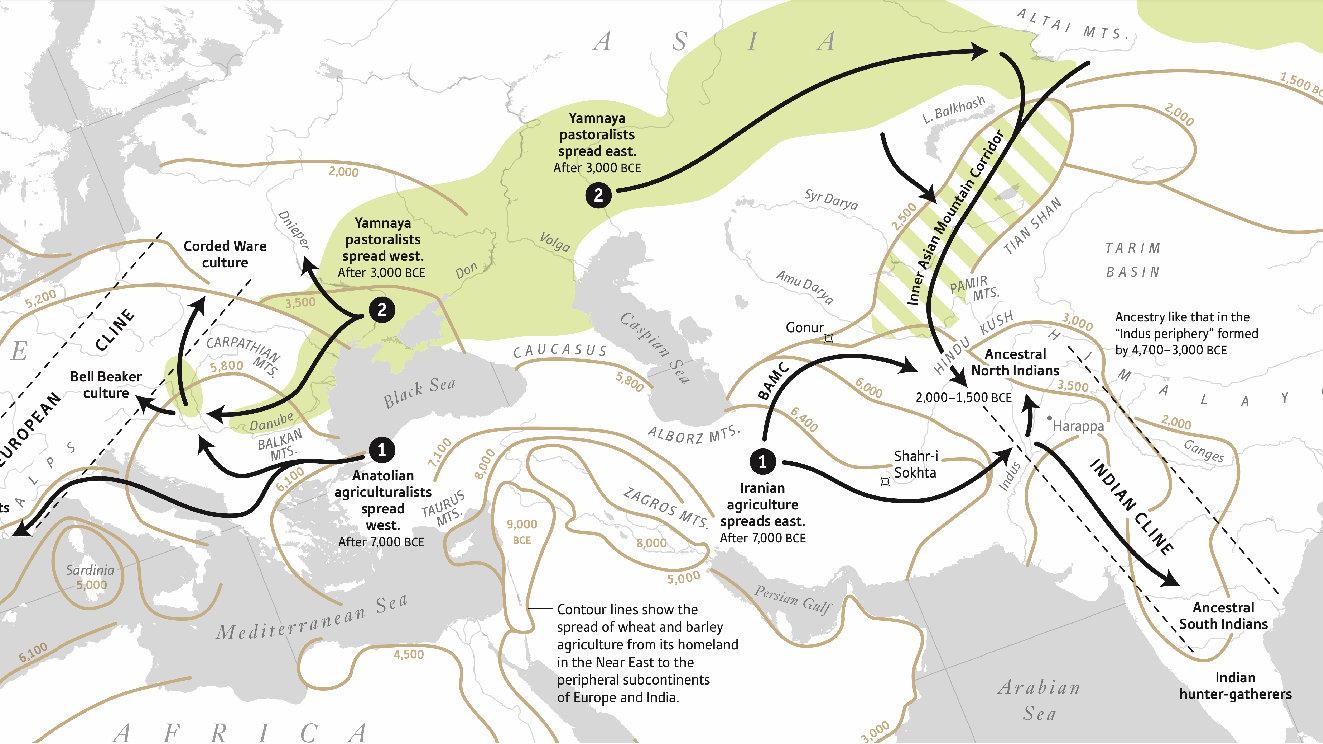
  1. I am partial to the view that Genes and Languages are moderately correlated. There are exceptions as readers of this blog would know, but they are exceptions. As the genetic data points out that 10-20% of Indian ancestry comes from Bronze Age Steppe, I find it highly implausible that such large changes wouldn’t result in some language change – especially given the gradients of Steppe wrt North/South and Caste. Additionally, the complete absence of AASI like genetic ancestry beyond the boundaries of the Mauryan & Mughal empires at their zenith is big deal. If any kind of OIT that doesn’t explain satisfyingly falls short. (Roma Gypsies have AASI)
  2. On the whole, I find the Steppe hypothesis works well linguistically and archaeologically to an exceptional degree in my reading – for Europe. By Occam’s razor, it would be fair to assume India isn’t an outlier among regions speaking Indo-European. Small objections like this don’t debunk the entire Steppe hypothesis IMO.
  3. The lack of material culture change associated with AIT is a problem, but the same objection is also present for OIT. Lack of evidence isn’t the absence of evidence. At best archaeologically the AIT/OIT debate is a Tie.
  4. I find Talageri’s work lays excessive claim on his interpretation of Rgveda and Avesta. I find the Rgveda has no memory of invasion argument weak. What we know of the Rgveda might just the memory preserved post the Bharata victory in the Dasarajna (Victor’s memory). It would be plausible that memories of invasion may be lost by accident of history. I am no expert on either Rgveda or Linguistics (I have read only 4-5% of Ralph T.H. Griffith translation) but I still find the lack of scholarly approval of Talageri’s work a problem from believing his work. However, on Kushal’s advice, I am going to read his entire work – 3 books hopefully by sometime next year.
  5. I take the Horse argument seriously. The paucity of equid bones IVC itself is significant. Especially if you compare them to Steppe sites. (The Botai & other steppe sights are extreme in the sheer quantity of horse bones). On the whole, I find Anthony’s horse hypothesis holds in face of the data we have today.
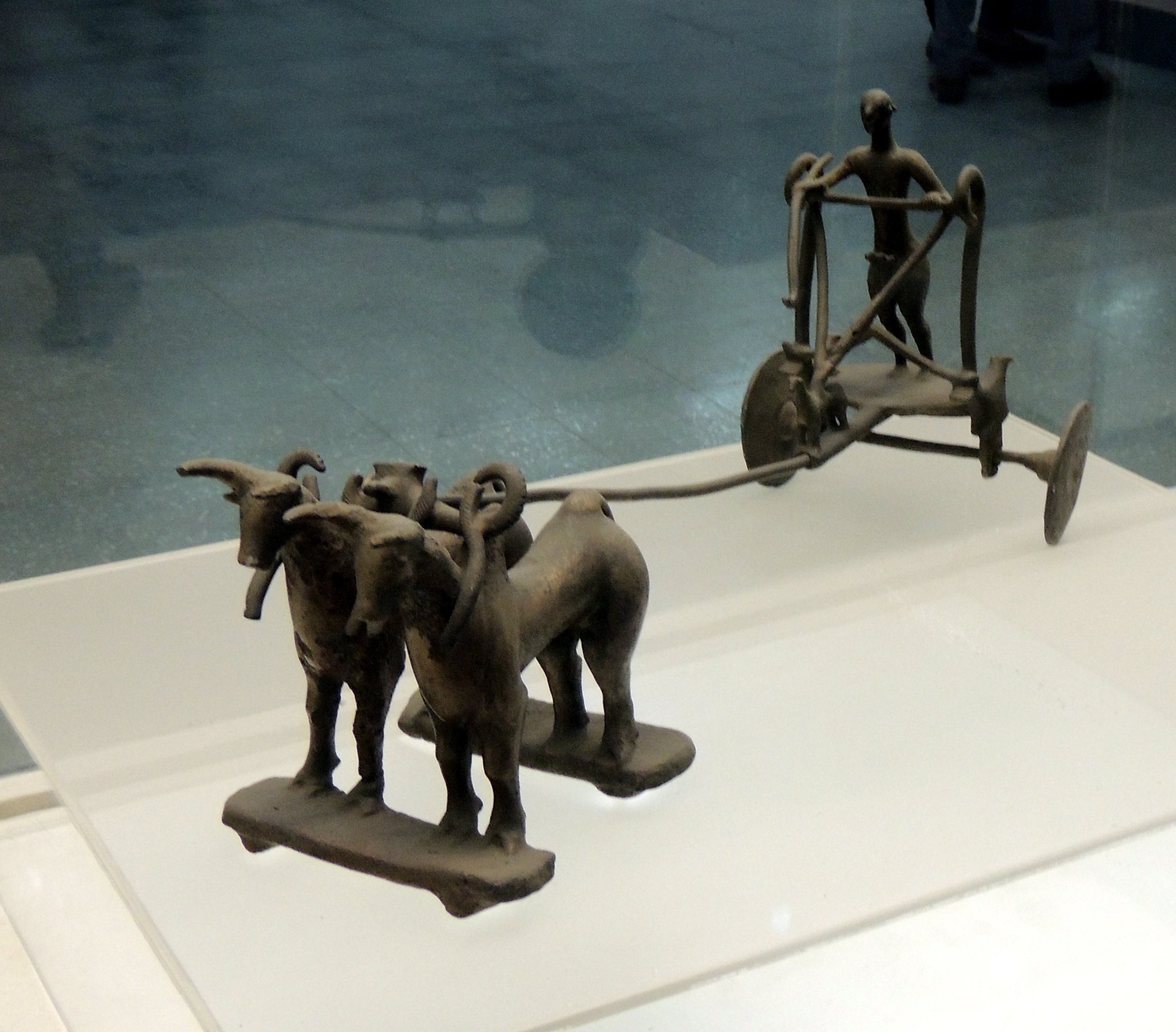
  6. I don’t see the Sanuali find as a game-changer. The Daimabad hoard Bull drawn cart/chariot has been known for decades. I don’t think the argument for Sanauli chariot being Horse-drawn is convincing yet. Also, the lack of spoked wheels would make the chariot less agile which would make it not a War-chariot like Sintasta. Anthony had to fight a lot for years before even his finds (which are far more impressive than Sanauli) at Sintasta were taken seriously as a war chariot by the community. His chariots were disproved by peers for things like width, length, etc. At the least, it’s premature to call the Sanauli chariot as a deal-breaker for AIT. Additionally latest the dating of Sanauli at 1800BCE isn’t far enough from the 1500+-200 date given for AIT. Rather the 1800BCE dating appears consistent with Asko Parpola’s first Pre Rgvedic Arya migration theory.
  7. I have heard Slapstik’s BP podcast, read his comments, and also those of some others who know linguistics along with some light reading of linguistics. The linguistic argument appears robust enough for my non-expert ears.
  8. 聽In historic times, since the Persian invasion during the time of Bimbisara to the invasion of Abdali – the flow of invasions has been Strictly One Way – from the Bolan/Khyber pass to the Subcontinent. (in some cases as speculated with some Hunas – via Kashmir). Examples of these being Persians, Greeks, Sakas, Parthians, Kushanas, Hunas, Arabs, Turko Afghans, Mongols, Mughals, Persians, and Afghans. These invasions have a concrete economy to them – the fertile and prosperous lands of the Indo-Gangetic plains. So it begs the question – why would Indo-Aryans go out if they were indigenous. Many reasons for coming IN & almost no for going out.
  9. I find the arguments over Sarasvati which convinced me once unconvincing today. I think the argument comes from the position of reverence to the holy Sarasvati from the Rgveda & laying excessive emphasis on it. I am convinced by the general argument of the same names being used for rivers by migrating people and we have many examples of that in the country. Additionally, the Shtich that the Yamuna changed course and dried up Sarasvati made famous by Amish’s fiction appears on its face – an extraordinary claim with almost no concrete evidence.

Closing comments:

  1. It’s fair to say both sides in India are fairly motivated by politics. I don’t find the OIT arguments as ridiculous as some AIT supporters find, but one can’t ignore the identity politics and question of Islam being catalytic in the debate. Personally, I don’t think this is a coherent position, I supported the OIT while being a Liberal opponent of Hindutva for almost 2-3 years and even today I am open to change my mind in face of new evidence. However, I think it’s unlikely that I will be easily convinced without some genetic data or more archaeological data (more chariots around 2500 BCE with horses).
  2. A salient point made by Talegiri is worth noticing. He claims that the Indians who continue to support AIT are Brahmins who have not yet given up their supremacist mindset. He also conjectures such support for AIT goes hand in hand with the defense of Varna. Growing up as a Chitpavan Brahmin I know this argument has some truth to it, though Maharashtrian Brahmin communities have given up those supremacist ideas in 2020. In a way, Hindutva has united what Varna/Jati had divided.
  3. A version of OIT seems to be too fantastic to be true but works with genetics and archaeological findings. This theory being Aryas composed the Vedas before 3000 BCE, some of them settled in IVC cities, some went out into the Steppe. And then these Steppe people spread the languages and a pulse came back around 1500 BCE and composed the latter Rgveda. I naturally don’t buy this 馃檪
  4. In the end, the difference is what kind of evidence people are willing to buttress their arguments on. Most of the time such opposing views would talk past each other. I get a feeling no amount of Ancient DNA will convince OIT folks who take the Rgvedic & archeological arguments over Genetics/Linguistics. Personally, I am partial to Genetics\Linguistics as I find it more Sciency than Reconstruction from texts & archaeology (or lack thereof).

Postscript:

I plan to read Talageri’s books, Asko Parpola’s Roots of Hinduism, Mallory’s book again in the coming years as I find the issue fascinating. I guess that Razib, Slapstik, and others who have been at this topic for years on the blog might be finding the topic boring by now. Still, I would urge them to comment and point out any inconsistencies or blindspots I may have had in my summary above. Same for OIT guys – as already mentioned I will be reading Talegiri – is he the main guy you rely on? How many of you are patrons of Kushal’s AIT/OIT work ? which appears to be very extensive.

I said above that Talageri is not Hindutva but have been corrected by Kushal made the change in the blogpost.

Open Thread – 10/10/2020

Some cool podcasts will be posted soon. Already posted two on the Patron page, including a very cool one where Mukunda and Jahanarra talk to Michael Fortner. A professor at CUNY, Fortner is the author of Black Silent Majority: The Rockefeller Drug Laws and the Politics of Punishment.

I’ve also posted a podcast with Devang Mehta on what’s wrong with science, and how to fix it (also, some advice for Indians who might want to get into the world of Western academic science).

Also, I will probably post a few previews of a new podcast I’m starting (solo) for patrons. This is going to be part of my new substack newsletter. This weekend I’ll be talking to an old friend from grad school who snapped and turned against wokism last week (he was involved with BLM since 2015, and I just got off the phone with him and he told me things he’s seen in BLM up until this summer left him very jaded, suspicious, and skeptical).

Brown Pundits