Open Thread – Brown Pundits

The usual. Talk about whatever (that means Pakistan, Islam, and haplogroup H, I guess).

Second, please remember to subscribe to the podcast (see the links for the services). There has been a delay in some episodes for posting show notes.  Also, please post more positive reviews.

Third, this month is a Brown Pundits record for traffic. Indian readers who are new might check out my other blog, Gene Expression. Or, my other podcast, The Insight.

Finally, the comments have been OK despite becoming lively. You don’t have to be inoffensive or polite, but please remember at some point I do intervene.

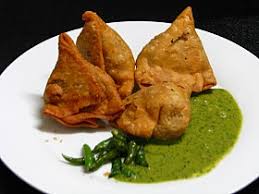
Pass the samosa, spare the postcolonialism

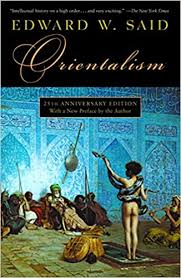
Edward Said’s Orientalism was a work of scholarship. I think it was a very mixed work of scholarship (better as a critique than a plausible interpretation of the facts, in keeping with the author’s expertise as a literary scholar rather than a historian). But it was one of the later 20th century works which ruminated on the impact and power of the colonial experience.

Its influence has echoed down through the past two generations, and not to good effect. One could actually understand the argument of Orientalism. The argument of much of mass-level postcolonialism is inchoate, while its academic variety is insular and unintelligible.

Consider this piece from The Juggernaut, Keeping Up with Cultural Appropriation:

What qualifies as cultural appropriation is complicated — some advocate for cultural sharing, while others call it cultural theft. Cultural appropriation is “taking intellectual property, traditional knowledge, cultural expressions, or artifacts from someone else’s culture without permission,” according to Susan Scafidi, the founder of the Fashion Law Institute at Fordham Law School, in her book Who Owns Culture: Appropriation and Authenticity in American Law. This “taking” can occur in a variety of ways, from creative collaborations to cringe-inducing Halloween costumes.

Taking cultural elements without permission from a less predominant culture in a specific context is at the heart of appropriation. “It involves a culture with relatively more economic, social, or political power taking from a culture with less power, and so it involves an unequal relation,” explained Rina Arya, professor of visual culture and theory at the University of Huddersfield.

First, as an empirical matter, the individuals of a “less predominant culture” who object to cultural appropriation are invariably privileged, deracinated, and Diasporan or Diasporic in their cultural influence. People who reside in Japan, for example, have no problem with white people wearing kimonos. Instead, it is Asian American activists. Therefore, you have the farce a few years ago of an Indian American woman explaining to a Japanese art curator why white people in kimonos is “problematic.”

There are two points of this post:

– Is there anything of value in 2020 in the way postcolonialist academia views the world? I’d stay no. What’s the “postcolonial” angle on Chinese aggression Ladakh? Yes, the British borders matter, but note that the Manchus invaded Nepal without the influence of white people. Academic postcolonialism is sterile, offers no novel insights, and frankly centers white people and Europeans to a degree that is idolatrous.

– Second, mass-postcolonialism with its concepts such as “cultural appropriation” is not fertile toward cultural creativity. Rather, it promotes a vague and unclear essentialist idea of cultures, societies, and presumes a lack of dynamism and a static element of power relations. The Romans conquered Greece, but in their turn, they were conquered by Greek culture. One could say they “appropriated” Greek culture, but the synthetic glories of Greco-Roman art and thought would not be possible without the “appropriation.”

Contrast the above piece with another one from The Juggernaut, “Not Indian Enough”. Yes, it trades in some signaling to woke shibboleth, but it explores an interesting topic that is genuinely novel and not simply a rearrangement of cognitive furniture.

The memes reflected in our genes

One of the major findings from Narasimhan et al. is that when it comes to total ancestry, Brahmin groups are enriched in the groups which have more “steppe” ancestry than you’d expect (West Eurasian ancestry is a function of steppe + IVC). That being said, Narasimhan et al. could not find evidence that Brahmins are a monophyletic clade. What this means is that Brahmins do not descend from a common group of founders, but a heterogeneous ancestral population.

How can we reconcile the consistently higher steppe ancestry with the fact that Brahmins seem to have diverse origins?

I think the answer has to do with the social ecology of India and the Brahmin role within that ecology.

In the period between 2,000 to 3,500 years ago, there was considerable genetic and cultural heterogeneity within India. This heterogeneity and population structure were “broken” and reconfigured through significant admixture. For example, where Brahmins in Uttar Pradesh have 25-30% steppe ancestry, Dalits in Uttar Pradesh are closer to 5-10%. In South India castes such as Reddys also have steppe ancestry, in the range of 5% or so. This is indicative of the spread and admixture of steppe enriched people all across the subcontinent.

But the flip side of the spread of steppe ancestry is that steppe people themselves mixed with local groups. ~25% of the ancestry of Uttar Pradesh Brahmins is from indigenous “Ancient Ancestral South Indians.” This is above and beyond the AASI ancestry from the Indus Valley population (in contrast, the Jat Rors are ~10% AASI, and well above ~30% steppe). Brahmins in Bengal and Tamil Nadu are very distinctive from non-Brahmin populations, and in their overall genome more like Uttar Pradesh Brahmins, but, both populations clearly have ancestry from local groups (~25% of the ancestry).

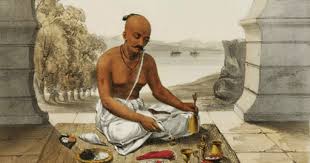
The reasons for why populations lose their distinctiveness are straightforward. Endogamy is not perfect. But, I would hold that the cultural customs of endogamy are going to be more persistent and strict among ritual priestly castes. My hypothesis that the original Indo-Aryan populations were invariant in terms of ancestry fraction (steppe, IVC, AASI). But the non-priestly castes would not enforce endogamy so strongly, because their status was accrued and obtained through other means than ritual purity. For the Kshatriyas, for example, status is obtained through power and domination. For Vaishyas, it is through primary and secondary production. Both these groups intermarried with local people who were militarily and economically of high status. In contrast, there were no equivalents for the Brahmins, who were spreading a particular ideological self-conception.

This is not a universal explanation. That is one reason I allude to Jat Rors. But, I think it gets at why Brahmins stand out as being steppe enriched.

Partition story, part 1

My father, Nadir Ali, writes short stories and poetry in Punjabi. He is in his mid-eighties now and has been writing his autobiography in Punjabi and my sister translated a segment that deals with his memories of partition. He was a little over 11 years old at that time. My grandfather was a lawyer in Gujrat city. There are more stories from that time that I hope we can translate at some point. For example, my grandfather rescued some Hindu/Sikh women who had been kidnapped by the rioters and my father was the go-between who was young enough to go into the women’s quarters during those negotiations; I hope to get that story written down someday.
Anyway, my grandfather never really reconciled with partition. He wrote to his Hindu friend Hari Singh regularly until 1965 and I  remember hearing that he once lamented in a letter to his friend (they both wrote in Urdu) “what a tragedy and a travesty that you, who are more Muslim than me, are in India, and I, who am more Hindu than you, am in Pakistan”. He would also use Indian time (30 minutes ahead of Pakistan standard time) as his own “standard time” for decades after partition.

Memories of Partition. Nadir Ali Continue reading Partition story, part 1

Hindu philosophy was mathematical, but Hindu nationalists are innumerate

In the early 2000s, there was a lot of demographic alarmism about Islam and European societies. Pundits such as Mark Steyn were predicting Islam would take over some European nation-states by 2020 as the majority religion. For a while, I credited that sort of thing. After all, Islam is an assimilation problem in most Western democratic societies.

This is the politically incorrect truth that the Left is even more vigorous in denying to this day than it was in the 2000s.

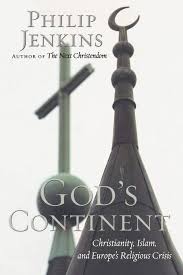
But I happened to change my views to be less pessimistic. One thing is that I read Philip Jenkin’s God’s Continent: Christianity, Islam, and Europe’s Religious Crisis. Jenkins is a thorough and objective scholar. An Episcopalian with moderate views on the whole, he reviewed the evidence of violence in the Koran and the Bible and came away surprised to note that the Bible was far more violent (in large part due to the Hebrew Bible). I recommend all his books but in particular The Lost History of Christianity: The Thousand-Year Golden Age of the Church in the Middle East, Africa, and Asia–and How It Died (Jenkins is neither a fundamentalist nor secular, so he operates in a good middle-ground).

In any case, Jenkins lays out the argument that Christian identity is far stronger in Europe than American skeptics presume. Islam will be a large minority religion in 2100, not the dominant religion. The numbers are with Jenkins here, though the demographics are concerning to me over the long-term.

I bring this up because too often Hindu nationalists and their fellow travelers undermine the credibility of their arguments by forwarding ridiculous numbers. Here is a comment on my other weblog:

Small number converted and demography did the rest.

Conversions really began after Shah Jahan & peaked with Aurangzeb in Panjab.

Christianity in Rome was similar.

You can look at old census of Bengal and Panjab to see the few% increase every decade till partition.

Turks (turkey) had numeric parity and lower tfr than Greek Armenia till ww1. Today 8x more,

http://yugaparivartan.com/2016/02/17/demographic-seize-of-al-hind/

Hindus were there from Indonesia to Armenia.

Probably by 2050ad will just be hated minority in India.

35% of newborns in India already Muslim. More in cities.. Only Hindu migration from countryside has prevented full slide to civil war with outside support by Abrahamic powers.

The comment piqued my interest because of the assertion of conversion in the period between 1650-1700. This seems interesting. I wanted to follow this up. But then the person claims that

1) 35% of newborns in India are Muslim
2) Muses that by 2050 Hindus will be a minority

This makes no sense. First, the TFR for Muslims is 2.6 vs. 2.1 for Hindus across India as of the late 2010s. Assuming that 70% of the reproductively active population are Hindus and 20% Muslims (being generous to the numbers above) I still only get 26% newborns Muslim. The point about this is that lots of people throw numbers around to add firmness and plausibility to their argument, but lying about numbers just makes you seem like a charlatan.

Second, even if 35% of the newborns in 2020 are Muslim, how is it that in 30 years the majority of the population will be Muslim??? It is theoretically possible, but very unlikely. Using current rates of differential fertility Muslims will overtake Hindus in 200 years, not 30 years.

The comment above isn’t actually atypical. Many of the Hindu nationalists on this weblog have left similar comments, while I have Hindu nationalist friends who have suggested to be widespread conversion to crypto-Christianity all across India.

I am very skeptical of this in a broad sense now for a simple reason: Narendra Modi is incredibly popular.  It could be that all of these hidden Christians and Muslims love Modi, but I don’t think that’s the case. I think the reality is Hindus are about ~80% of India’s population, and Hindus on the whole love Modi.

My logic is similar to the argument around Yezidi numbers. For decades there were arguments about Yezidi numbers in Iraq. The answer was clear when they voted en masse for a particular political party. It turns out the Yezidis were right that there were many of them, and the Muslims were wrong.

To be clear, when it comes to the Hindus vs. the Muslims, my own personal bias is probably with the Hindus because I am a murtad. The personal is political to some extent. But that does not mean that I will accept and promote lies, stupidity, and misrepresentations. The truth is strong enough to stand on its own.

Brown Pundits