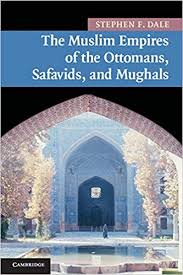
 The Muslim Empires of the Ottomans, Safavids, and Mughal has been in my “stack” for a while. It’s a short and academically-oriented work. What’s great about this book is that it is cross-cultural and comparative. I don’t know about you, but these sorts of narrative frames make recall and retention far easier for me. The integration of facts with other facts means that the sum of the parts is greater than the parts evaluated alone. In this, it has similarities with Strange Parallels: Integration on the Mainland: Southeast Asia in Global Context, c.800–1830.
The title itself is informative. These were Islamic polities in a self-conscious manner. The Ottoman Sultan emerged out of a parvenue lineage on the western Anatolian frontier whose claim to rule was based on their status as ghazis. Warriors of the faith. Their Mandate was confirmed through victory. The Safavids had religious charisma before they were temporally powerful. They were hereditary leaders of a Sufi order (their adoption of Shia Islam was a relatively late event). Finally, the Mughals were arguably the least religiously inflected of the three early modern dynasties, despite their appeal to the ghazi ethos.
Rather, the Mughals were notable because of their lineage, which was the most prestigious of the three. The Timurids descended from Timur, obviously, but more importantly, they descended on their maternal side from Genghis Khan. Though Genghis Khan was a pagan, whose scions destroyed much of the Islamic civilization of the Near East (and killed the last Abbassid Caliphs), the raw power and impact of the conqueror was such that he cast a shadow over the whole Turco-Persian world.
The key issue here is that these were dynasties of the Turco-Persian world, more or less. These were not states of the Islamic Arab world, though the Ottomans eventually absorbed much of that world in their later expansionary phase. Nor were they states of the Far East, or even Inner Asia. Despite all their other antecedents,* these dynasties were of Turkic provenance, and yet their entry into Islam was associated with their entry into Persianate culture.
The Muslim Empires of the Ottomans, Safavids, and Mughal takes a chronological tack in that it explores the origins of the three polities as far back as 1000 A.D., and also addresses thematic elements (e.g., architecture, poetry, and economics). Because of the thematic component it is not a work that needs to be read in sequence chapter by chapter, though perhaps doing so would allow for full appreciation.
One thing that jumps out is that in many ways the Safavid Iranian regime is an outlier in many ways. This is obviously true in regards to religion. The Safavids began as a vaguely Sunni but very Sufi religious order in eastern Anatolia. But by 1500 they were promoting arguably ghulat forms of Shia Islam, before settling down on mainstream Ithna Ashari beliefs. It is to this period that connections between Iran, a term that they resurrected, and the Shia cities of Iraq and the Shia regions of Lebanon, were established. It is during this period that Iran was forcibly converted from a mostly Sunni cultural region with Shia pockets to a Shia domain.
The Safavid domains corresponded roughly to what we now know as the Iranian nation-state (Mesopotamia was part of the Safavid domains for a few decades here and there). Despite early attempts at expansion into their Anatolian homelands, rebuffed by the muscular Ottoman military machine, the Safavids were preoccupied with internal concerns. The religious transformation of a whole region through coercion expended a great deal of capital. The early Ottoman state before 1500, and the Mughal domains for its entirety, was different from the Safavids insofar as the ruling military elite were of a different religious identity from the majority whom they ruled (Christians and Hindus respectively).
In contrast, the Ottomans did not attempt to forcibly reshape the culture of their vast domains. The millet system established subordinate roles for non-Muslims, while Ottoman hegemony over their 16th-century conquests in Arab lands did not disrupt native elites (the Mameluke Sultanate was conquered, but the Mamelukes remained Egypt’s ruling caste for centuries under the Ottomans). Within Anatolia and parts of Rumelia a process of assimilation of Greeks, Macedonians, and Armenians, to a “Turkish” identity occurred organically through conversion to Islam. Over the centuries the cosmopolitan tastes of the early Sultans, who spoke Persian at court and styled themselves, successors of the Roman Emperors, gave way to a classical Ottoman identity as leaders of the Muslim world who nevertheless had their own linguistic identity.
The Mughals, though just to the east of Safavid Iran, were a polity characterized by extremely different concerns and resources. Mughal controlled India was the second most populous polity in the world after Ming China. It dwarfed Safavid Persia, even the Ottoman Empire. The Timurids conquered a civilization, or perhaps more accurately a coalition of civilizations. Unlike the Ottomans and to a lesser extent Safavids the Mughals did not create “slave” armies and “slave” bureaucracies. The native resources of India’s people were such that this was not necessary (the argument in regards to labor also is often used to explain why slavery was never popular in China). Hindu Rajputs served in the Mughals in military roles, while groups such as Kayasthas served them in civilian roles.
But the Mughal story is not simply one of “going native.” The Ottomans and Safavids relied on “slave” armies due to the fact that these were often more loyal to the regime than regional or tribal levies. The Mughals opened up India to vast numbers of Turkic warriors and Persian literati. These two groups were regime loyalists because like slaves they lacked local roots.
As Persia become more Shia, many of these foreigners who arrived in India were Shia, but there were also broader connections to the Hanafi Sunni world, as far afield as the Ottoman domains. For example, the Mughal Emperor Aurangzeb patronized the compilation of a series of religious codes, which apparently became quite well known and popular in Ottoman Anatolia.
It is often said that Indian Islam became rooted in the soil of the subcontinent and took upon syncretistic aspects. This is true as far as it goes, but it seems clear to me that the integration of the Mughal ruling class into Turco-Persian culture served as a major check upon this process. The Mughal Emperor Akbar clearly exhibited a tendency toward synthesis and innovation in his religious thought, but his views did not win the day. Rather, it is notable that The Muslim Empires of the Ottomans, Safavids, and Mughal reinforces the contention that each successive Mughal Emperor from Akbar, to Jahangir, to Shah Jahan, and finally Aurangzeb, adhered more closely to West Asian normative Islam.
A distinctive aspect of the Mughal polity is that it assimilated and promoted individuals who were ethnocultural distinct from the core ruling elite. In fact, arguably very disparate groups were all bound together as part of the core ruling elite. In particular, the Rajput generals who served the Mughals. This is in contrast with the Ottoman and Safavid cases, where conversion of the slave to Islam entailed eventual ethnic assimilation. The problem with Aurangzeb, despite his military victories, is that he began aggressively espousing a more West Asian style of ideological assimilating, coaxing and coercing Hindu military elites into Islam. The Mughal equipoise was broken, and while Safavid Iran gave way to polities which inherited all its major features (the Zand and Qajar regimes), and the Ottomans persisted in their long decline, Mughal India quickly shattered in the 18th-century, to leave behind a broad cultural influence.
 More generally The Muslim Empires of the Ottomans, Safavids, and Mughal illustrates that a ruling elites with a similar ethos can span multiple polities. Despite the religious distinctiveness of the Safavids, which became more clear over time, the three early modern Muslim polities fostered trade and intellectual exchange. Large colonies of Indian merchants were resident in Isfahan (from which they eventually sojourned to Astrakhan and eventually Moscow).
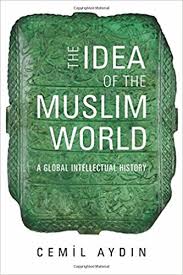
As noted in The Idea of the Muslim World Indian Muslims after the fall of the Mughal Empire had a major influence on Islam in what became Turkey. In Bernard Lewis’ oeuvre there is discussion about the West’s rise and its supremacy over the world of Islam, and the psychological shock that that entailed. But what about the Maratha captivity of the Mughals and how they shaped the confusion of Indian Muslims?
The Muslim Empires of the Ottomans, Safavids, and Mughal illustrates that cross-cultural and cross-national civilizational affinities and ties are quite common. Today many view the West as sui generis. In some ways that are true, in magnitude, and scope. But around the year 1500, a group of Turkic tribesmen had conquered remnants of Byzantium, the Persian Empire, and India. In the ensuing centuries, they transformed these regions, and were themselves transformed. Today to be Persian and to be Shia are almost synonymous (Tajiks tend to be Sunni of course). But this was the consequence of Turkic tribesman. Today Anatolia is mostly Turkish speaking, but that is due to centuries of cultural assimilation. Finally, many elements of Indian culture are hard to imagine without the Mughal period.
* The Safavids had Greek and Kurdish origins as well, though in their early period the Turkic ethnic component was most important. Similarly, the Timurids had recent Mongol ancestry, but their primary identity was with the Turco-Persian world. Finally, the early period of the Ottomans is obscure, but it is hard to imagine that these Anatolian Turks did not absorb some of the “substrate” elements. Mehmet the Conqueror had a Christian, possibly European, mother.

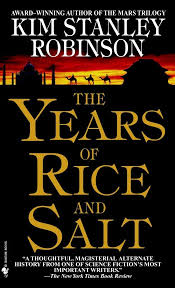 Going back twenty years I have been fascinated by “alternative history” science fiction. This is often termed “Uchronia.” If you want to explore this genre, I suggest the Uchronia website.