The recent news that Imran Khan has been able to prise 6bn USD in aid from a distressed Saudi Arabia reflects many things:
(1.) the Axis is going to be Saudi-Pak-China with Pakistan emerging as a sort of lynchpin. As with any Great Power in decline the US is going to try and throw its weight around.
(2.) while Trump is an astonishingly effective orator; his latest tweet on the bombing scare scandal at once rouses his base and inflames his enemies, it’s hard to see how he can effectively project American influence.
(3.) 9-11 is probably the most successful attack on the US not because of the actual attack but because of the botched response. The conflicts in Iraq and Afghanistan have delegitimised American foreign policy (to some extent) and also show the American reluctance to project troops abroad.
(4.) How does all of this relate to modern South Asia? Well the US-Pakistan relationship simply isn’t what it once was since the US doesn’t have as much use for Pakistan. As a power in general retreat from Asia, the US conceivably has much more in common (and points of vexation especially in relation to H1B1) with India than Pakistan.
(5.) Saudi Arabia and China are counter-cultural power; one espouses hereditary monarchy and the other communism with Confucian characteristics. Like Pakistan they are fundamentally “out of sorts” with the modern world and the ongoing cult (?) of liberal democracies.
(6.) This “Axis of Autocracy” may individually have competing interests (Saudi will ALWAYS maintain a strong relationship with the US, the China has some interest in Iran) but Pakistan binds them as the weakest member (sort of the Italy in the WW2 Axis).
(7.) Pakistan is the most likely stumble from crisis to crisis and especially in the latest “begging bowl incident” Imran was spurned away from both Saudi & China to go to the IMF. Khashoggi’s murder was serendipitous for Pakistan (are we sure it’s not an ISI false flag) as an isolated and under attack Saudi had to immediately shore up its alliance.
(8.) with the renewed impetus from a successful negotiation Imran can now play his hand against the Chinese. Though Pakistan’s foreign policy agenda is destructive (more Habsburg than Prussia); survival can focus the mind.
(9.) The only real way this Axis would be shattered if the “people” rose up and all three nations seem to have inoculated their citizens from the Western winds of liberal democracy. In some ways the Sabrimala Temple incident shows that Modern India is more an enemy of traditional Hinduism than anyone else.
Quiet days on BP as I don’t find much to be riled up about (and even when I do I delete the interesting posts shortly thereafter).
I follow a few members of the Hindu Right on Twitter and their constant mixture of modern alarmism + historical greatness is mildly amusing. One would imagine Hinduism is going extinct any day now judging from their tweets.
Great news for #Tulu! The growth in students choosing to study the lang following its introduction into the education system in 2010-2011 is an encouraging sign. Could be followed by an increased cultivation of the lang as a literary lang in #TuluNad.https://t.co/dJDT4X5eic
— Indian Linguistics | Bhāṣāśāstra (@TianChengWen) October 24, 2018
I was reading up on Tulu Nad and it seems it would centre on Mangalore. In general I prefer territorial organisation but it seems that Tulu Nad has as much validity as Telegana if not more.
I see an analogous situation to the Britain or France and their relationship to their sub-national identities. In general as a good libertarian I distrust centralised states but I don’t know enough about India’s domestic politics to comment.
However in a way much as the US senate disproportionately favours rural whites in the same manner more states will benefit the “Hindu-Brahmin” character of India.
These sick Asian paedophiles are finally facing justice. I want to commend the bravery of the victims. For too long, they were ignored. Not on my watch. There will be no no-go areas https://t.co/cZGqDOxt4u
I’m proud of what Sajid Javid has written and I agree with him.
Speak clearly, speak plainly. The ringleader and one other fellow of this pedophile gang was Sikh (apparently he converted to Sikhism to hide his identity) but the rest were Pakistani. One could have tightened the term to Punjabi rather than Asian as it unfairly castigates “model minorities” such as Gujarati and Hindus (and Bdeshis in this case).
I’m fighting a twitter war backing Sajid; one must clean the Augean stables that is the British Muslim community. Sajid is an “assimilationist” whereas I am an integrationist. However on this issue we find important common ground to battle the BritPak community of the shame it brings on all of us associated with it.
My most popular ever Tweet:
I agree with @sajidjavid ; as a British Pakistani I feel ashamed and it’s better to air it out
Does India’s almost fascistic drive for national purity (the ongoing desecration of Allahabad) stem from the Brahmanical obsession with “pollution?”
ALSO
Why are non-Hindus interfering with Saribmala. I see the petitioners are a Muslim lady (Rehana) and a Christian (Mary).
Women who have attempted to enter #Sabarimala temple- 1. Libi – Xtian, Atheist 2. Suhasini Raj – Atheist, Hindu hater 3. Kavitha Jakkal – Xtian 4. Rehana Fatima – Muslim 5. Mary Sweety – Xtian
The post-modern (to quote Anan Sahib) hyper-liberalism is creating ordinary Hindus to feel threatened thereby pushing them to the right.. it’s the same reaction in Britain where the left claim it’s racist to have “closed borders” making their ordinary vote bank (the white working class) to flee to the Right.
Kerala is sadly becoming a communist state run by urban and academic Naxalites, taking over Hindu temple boards, oppressing Hindu devotees. Time for Kerala to return to its Vedic values and remove them from power.
Kushal Mehra is one of Hinduism’s and atheism’s greatest thought leaders and scholars. Kushal does not identify as Hinduttva and describes himself as non left. However he is deeply respected by Hinduttva people and knows many of her leaders. He is a Hindu Atheist. Of the 10 ancient Darshanas (or sights or views or philosophies) of Hinduism he follows Chaarvaaka. [Other philosophies include Buddhism, Jainism, Samkhya/Yoga, Purva Mimaamsaa/Uttara Mimaamsaa, Nyaaya/Vaisheshika, Ajivika]
Ali and Armin are two heroes of the world’s 1.6 billion muslim heritage global community. I am only 4 minutes into the above video but intend to watch and comment on it.
This is to address some of the comments here about hinduism/vedanta/enlightenment etc made here, twiter and the other article about Hindutava by Annan.
I am frequently surprised by how much difference there is in “web” hindutva/hinduism (including this blog) and on the ground Hinduism/Hindutva. Let us be very very clear the ethnicity and traditions from which on the ground hindutva is driven. It isnt driven by high level intellectualism which has been professed here/ twitter etc. Its driven on the ground by Hindu conformists/ conservatives of North Indian stock. There is nothing problematic about it. But let us be at least honest about it. In India because every “hindu” community is so large that they feel what they profess is real “Hinduism”. I have met Bengali “hindu” and Tam Brahm who possess no electoral power back in their own state go on and on teaching others about Hindutva/Hinduism. The hindutva world does not run for better or for worse on Tukaram/ Adi Shankracharya/ Vivekanda/Charvaka. Had it been then Arya Samaj would have been bigger than RSS. It runs on Ram /Hanuman and for females(Durga). It projects masculinity(again not a value judgement) and not on “enlightenment” values/intellectualism. Its not run by hindu “free thinkers” like the ones we find over the internet. The web space is not projecting the real face (positive or negative) of the movement on how its conducted on the ground. Please lets separate what we want and our own projection over the movement and our analysis on what the movement really is. The day some other “Hindu” movement (led by Slapstick Teasari and Annan) becomes bigger than the current one i will happily accept that.
What is Hinduttva? Is it Hindu + Tattva (Hindu quality)? Or is it something else? I still have no idea. Three of the four panelists in this discussion are widely ridiculed and vilified by self described “liberals”, “secularists” and “progressives” as hard right, bigoted, prejudiced, sectarian, Hindu extremist and Nazi:
Pavan Varma, Former MP Rajya Sabha and Author
Prof. Makarand Paranjape, Professor & Poet at JNU
David Frawley, Vedic Scholar
Sadia Dehlvi, Columnist & Writer
46 minutes 26 seconds in: “the problem in India is that we have thought phobia as Sri Aurobindo said in his letter to barendra in 1920; hundred years later I am at a university and I find that people have an incapacity to think clearly, because they immediately reduce every debate to a political position”
Is this the reason for the cries of “Nazism”, “racism” and so forth? Is this partly a difficult to reconcile debate about freedom of art and thought. If so, how can this issue be resolved? Eastern philosophy (Arya Varsha plus Bon plus Toaism) is based on freedom of art and thought. Without freedom of art and thought, there is no eastern philosophy.
Did the panelists say anything else that is controversial or offensive? Is their Sarva Dharma [all religions are authentically divine and true, all paths lead to the same goal, all is love], their celebration and eulogization of pluralism, diversity and universalism the problem? If that is the problem, what does “secularism” mean? What should “secularism” mean?
For example why do so many self described “liberals”, “secularists”, “progressives” and “leftists” find videos such as this so offensive?
Note, I am not criticizing anyone. I can’t criticizing them because I have no idea what they believe and why. I am thoroughly confused.
Recently there was a world Hindu conference keynoted by the Dalai Lama. It had many Jain, Sikh, Buddhist and Hindu delegations from all around the world and was not an “Indian” or “nationalist” affair. [Does anyone know if Sufi and Shiite delegations participated?] In addition to the Dalai Lama, many other Mahayana Buddhist delegations came. Along with delegations from many different Latin American, European, African and Asian countries. [Lebanon for example has had a Hindu community that is over 3,000 years old. They believe that they date from 4400 years back when they helped construct and operate the Baalbek temple. Similarly, there are ancient Hindu communities throughout the world.]
Note that Tibetan Buddhists (Vajrapani Mahayana Buddhists) in particular have been members of Hindu Akharas for thousands of years and have significant influence on intra-Hindu affairs. Maybe because Tibet was close enough to India for the Tibetan Buddhists to send delegates to meetings. By extension this applies to all Mahayana Buddhists. But the ones in China and Japan were too far to be more than intermittently involved in day to day affairs in India. But they were involved:
https://www.youtube.com/watch?v=mC1UCzIHiXw
Japanese Buddhists were significant stakeholders in the Khmer empire Hindu establishment and Angkor Wat. The beginning of this video on Angkor Wat describes deep continual involvement of Japanese Buddhists in Cambodian, Laotian and Vietnamese Hindu affairs going back to the sixth century AD.
I generally avoid Desi conferences because they usually don’t have a spiritual or religious focus. Many use it for business networking, tech networking and partner networking (“romance” for home-gamers). But I don’t know about the World Hindu Congress this year.
“However, to quote Representative Tulsi Gabbard — the first Hindu elected to U.S. Congress — it was a “partisan Indian political event.” Neither was the WHC merely a benign political event. It was, rather, a platform for modern India’s most extreme sociopolitical figures and organisations to propagate their supremacist ideology, Hindutva, which is a form of religious nationalism.”
Political speakers from the U.S. establishment who were invited to speak at the WHC ran the gamut from left to right. Several progressive Democrats who had been invited to attend the conference eventually backed out after being targeted by an AJA letter-writing campaign.
“Do I think all attendees were Hindu Nationalists?” AJA organizer Ashwin Khobragade asked. “No, I think that many of the attendees are looking to use their faith as a platform to give back to their communities.” There were many community service organization that also attended the gathering.
At the same time, those in AJA believe it is imperative to push back against what it identifies as a move to co-opt well-meaning organizations into a fascist agenda. “We wouldn’t want people with social justice values sitting down with people who are like Richard Spencer,” Khobragade explained.
Among the politicians who declined an invitation was Hawaii Rep. Tulsi Gabbard, an icon of Bernie Sanders Democrats, who cited “ethical” concerns with “partisan Indian politicians” on the speakers list. Gabbard has been known to be an admirer of Indian Prime Minister Narendra Modi, who has been accused of being linked to the Gujarat genocide and Hindu nationalism more broadly. She has also come under scrutiny for other relationships with the far right and her support for the regime of Bashar Assad in Syria.
Congressman Raja Krishnamoorthi, another progressive Democrat, also became the focus of AJA’s accountability letters. Unlike Chicago State Senator-elect Ram Villavam and Alderman Ameya Pawar, Krishnamoorthi has not disavowed the WHC. He has continued to insist that the gathering promotes “acceptance,” despite the links to the far right that protesters have elucidated.
Jaydeepsinh Rathod · October 17, 2018 · 58 comments
THE FOLLOWING IS A DRAFT I HAD PREPARED A FEW MONTHS BACK. IT IS JUST A WORK IN PROGRESS AND FAR FROM DEFINITIVE. THIS IS A VERY LONG POST AND MAY BORE MANY OF YOU FOR WHICH I APOLOGISE. THIS POST IS A FOLLOW-UP FROM MY EARLIER POST WHICH WAS TEMPORALLY & GEOGRAPHICALLY MORE RESTRICTED –
The Last 2 months have produced a flurry of ancient DNA studies that have given us results with enormous implications for the spread of Indo-European languages. Incorporating the results of these studies along with linguistic and archaeological evidence, we can create a model of spread of Indo-European languages from SC Asia to other parts of Eurasia.
LINGUISTIC EVIDENCE
Johanna Nichols had produced, more than 2 decades ago, a wonderful model for the spread of the Indo-European languages from its locus in Central Asia. Her thesis was spread over two articles in two volumes. According to her –
Several kinds of evidence for the PIE locus have been presented here. Ancient loanwords point to a locus along the desert trajectory, not particularly close to Mesopotamia and probably far out in the eastern hinterlands. The structure of the family tree, the accumulation of genetic diversity at the western periphery of the range, the location of Tocharian and its implications for early dialect geography, the early attestation of Anatolian in Asia Minor, and the geography of the centum-satem split all point in the same direction: a locus in western central Asia. Evidence presented in Volume II supports the same conclusion: the long-standing westward trajectories of languages point to an eastward locus, and the spread of IE along all three trajectories points to a locus well to the east of the Caspian Sea. The satem shift also spread from a locus to the south-east of the Caspian, with satem languages showing up as later entrants along all three trajectory terminals. (The satem shift is a post-PIE but very early IE development.) The locus of the IE spread was therefore somewhere in the vicinity of ancient Bactria-Sogdiana. This locus resembles those of the three known post-IE spreads: those of Indo-Iranian (from a locus close to that of PIE), Turkic (from a locus near north-western Mongolia), and Mongolian (from north-eastern Mongolia) as shown in Figure 8.8. Thus in regard to its locus, as in other respects, the PIE spread was no singularity but was absolutely ordinary for its geography and its time-frame.
To summarize the important points of dialect geography in the Eurasian spread zone, the hallmark of a language family that enters a spread zone as an undifferentiated single language and diversifies while spreading is a multiple branching from the root. This is the structure of the IE tree, which has the greatest number of primary branches of any known genetic grouping of comparable age. The hallmark of developments that arise in or near the locus is that they appear along more than one trajectory. This is the distribution of the centum/satem division in IE, and in the later Indo-Iranian spread it is the distribution of the Indo-Aryan/Iranian split (as argued in Nichols, Volume II). The reason that dialect divisions arising in the locus show up along more than one trajectory is that the Caspian Sea divides westward spreads into steppe versus desert trajectories quite close to the locus and hence quite early in the spread. In contrast, developments that occurred farther west, as the split of Slavic from Baltic in the middle Volga may have, continue to spread along only one trajectory.This is why the Pontic steppe is an unlikely locus for the PIE spread. (THE EPICENTRE OF INDO-EUROPEAN LINGUISTIC SPREAD – pgs 137-138)
She further states in her 2nd article,
IE homeland studies so far have had to resolve the dilemma of how to reconcile conflicting lexical evidence about the IE homeland. Were the Indo-Europeans pastoralists or agriculturalists? The lexical evidence can be used to support both viewpoints (for a summary and argument in favour of agriculture see Diebold 1992). If they were a people of the dry grasslands, how do we explain the presence in their language of words for ‘beaver’, ‘birch’, and ‘oak’, the latter with extensive mythic and cultural salience (Friedrich 1970:129ff.)? If they were steppe pastoralists, how do we explain the presence of words for ‘double door’ and ‘enclosed yard or garden’ suggestive of dwellings in the urban Near East (Gamkrelidze and Ivanov [1984:741ff.] 1994:645ff.)? If they were nomadic herders of the plains, how is the presence of a word for ‘pig’ explained? A homeland reconstructed as locus, trajectory and range removes the dilemma: a locus in the vicinity of Bactria-Sogdiana implies a spread beginning at the frontier of ancient Near Eastern civilization and a range throughout the steppe and central Asia, following the east-to-west trajectory, with occasional or periodic spreads into the Danube plain and Anatolia. The PIE ecological and cultural world, then, included the forested mountains southeast of the Kazakh steppe, the dry eastern steppes, the Central Asian deserts, the urbanized oases of southern Turkmenistan and Bactria-Sogdiana, the eastern extension of the urban Near East, the rich grasslands of the Black Sea steppe, the southern edge of the forest-steppe zone and the Siberian taiga, fresh-water lakes, and salt seas (the Aral and Caspian). The economy of the Indo-Europeans included dry-grasslands pastoralism, settled farming, mixed herding and farming, and trade, including not only trade between farmers and herders in central Asia but also, importantly, control of the antecedents to the Silk Route and the trade connections with India to the south. This economic and ecological diversity is reflected in the vocabulary of PIE. (THE EURASIAN SPREAD ZONE & INDO-EUROPEAN DISPERSAL, pg 233)
Nichols dates the breaking of IE languages between 4000 – 3300 BCE. This is contemporary to the Chalcolithic aDNA samples we now have from Central Asia, Iran, the Caucasus, Anatolia and the steppe. But before proceeding with the genetic evidence let us also have a glance at the archaeological evidence.
A powerful imagery of the important (and overdue) #MeToo movement.
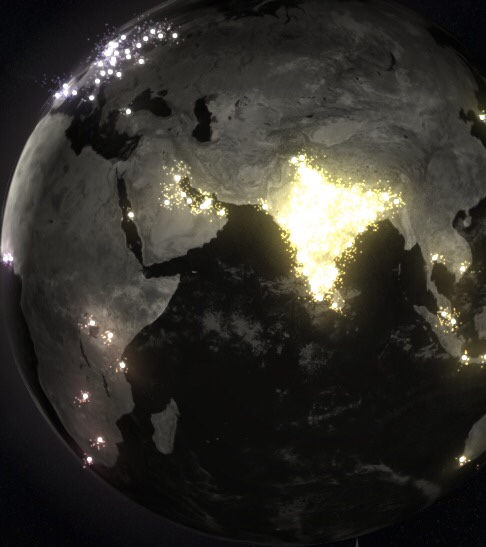
India is bathed in a golden light and the fact that its society is reverberating from #MeToo shows just how far advanced India & Indians are compared to anyone else regionally.
That India is able to acknowledge a universal issue in a far-teaching and comprehensive manner is a vindication of her long & liberal democratic tradition..
This week on The Remnant podcast, Jonah Goldberg, whose wife works for Nikki Haley, expounded at length about her skill as a politician. His point, which is legitimate, is that Haley is well liked by the broad mass of Trump-supporting Republicans (if not elite pro-Trump idealogues), as well as Trump-skeptical conservatives.
I’ve known of Nikki Haley since 2004, a few years after Bobby Jindal came onto to the national scene. Both are conservative Indian American Republicans elected as governors in the South. But there are differences between the two. While Haley can arguably “pass” as white, Jindal cannot (both are of Punjabi ethnicity). But a bigger difference has been their attitude toward religion: Jindal has worn his Christian conversion and faith on his sleeve, while Haley has been much more low-key. Throughout her career, Haley has admitted that the Sikh gurdwara remains a part of her life, despite her conversion to Methodist Christianity. Could you imagine Jindal saying such a thing about a Hindu temple?
The above is a video clip of Haley during a 2014 visit to India, where she visited the Golden Temple with her husband. When asked about her conversion to Christianity, she avers the sincerity of her belief. But Haley also speaks in an ecumenical language and seems to express the view that her choice of religion was in keeping with her culture as an American. Her turn to Christianity was not a denial of Sikhism, which she seems to see as grounded in India.
I can’t look into Haley’s heart, and to be frank her religious faith is not my business. But, I think I can say many people of subcontinental background tend to view converts to American Christianity as opportunists or somehow lacking in cultural pride and internal strength. American evangelical Protestant acquaintances would often mock Hinduism in front of me, despite the fact that I have a Muslim name and have been an atheist since I was a small child. To convert to Christianity is perceived by some to be conceding the point of that mockery.
And yet above Haley seems to be interpreting her conversion to Christianity as an expression of her alignment with the Dharma of the land in which she grew up, the United States. You may agree or disagree with her, but her emotional expression above certainly does make it seem that she retains a deep fondness for her Sikh upbringing.