Intellectual Dark Web (a)

This is the second article in the series of the Intellectual Dark Web, and adds the respected, honorable, wise Russell Brand to the echelons of the Intellectual Dark Web. Please soak in the wisdom of this shared teaching and conversation of Acharya Russell Brand and Acharya Jordan Peterson:

This is their second conversation. Their previous conversation three months ago was equally profound:

Which in turn built upon Russell Brand’s conversation with Sam Harris:

Farhan Quereshi (himself a leader of the Intellectual Dark Web) called this the conversation between the Buddhist Sam Harris and the Hindu Russell Brand. I would suggest that anyone interested in the deeper essences, shared wisdom and subtle nuanced symphony between Sanathana Dharma and stream of Sanathana Dharma called Buddhism watch this conversion. But this article will focus on Jordan Peterson and Russell Brand.

Continue reading Intellectual Dark Web (a)

10 Questions on South Asia

(1.) Raazi question: if India had not gotten involved in 1971, would there still be an East Pakistan?

(2.) the Karnataka question: What would a (Indian) Hindu Republic actually look like? Will Rahul G ever be PM?

(3.) the Muslim question: who will inherit the throne from SRK?

(4.) the Ramazan question: is the Indo-Persian culture dying among British Pakistanis (Sadiq Khan wishes everyone a Happy Ramadan)

(5.) the Western question: when/if will K-Jo come out?

(6.) the Academic question: will global philanthropy ever focus IIT/IIM funding?

(7.) the Vidhi question; will there ever be a Pakistani CEO of a Silicon Valley company (Pakistani not Muslim)?

(7b.) Vidhi bonus question; will Pakistanis be allowed to play in IPL? Will Pakistan win the Cricket World Cup again? Will Fawad Khan be allowed to come back to india? Would Pakistan ever get out of POK (she initially slipped Azad Kashmir but then made me change it to POK 馃檨

(8.) Fun Z question: will Ranbir choose Alia or Mahira?

(9.) the Deadpool question; why do South Asians allow themselves to be demeaned in Hollywood as cab drivers and nerds. Will there ever be an Indian superhero (a Muslim one is coming; Kamala Khan)?

(10.) final question: who will be the next person to publicly resign from BP?

BJPization of Dalits

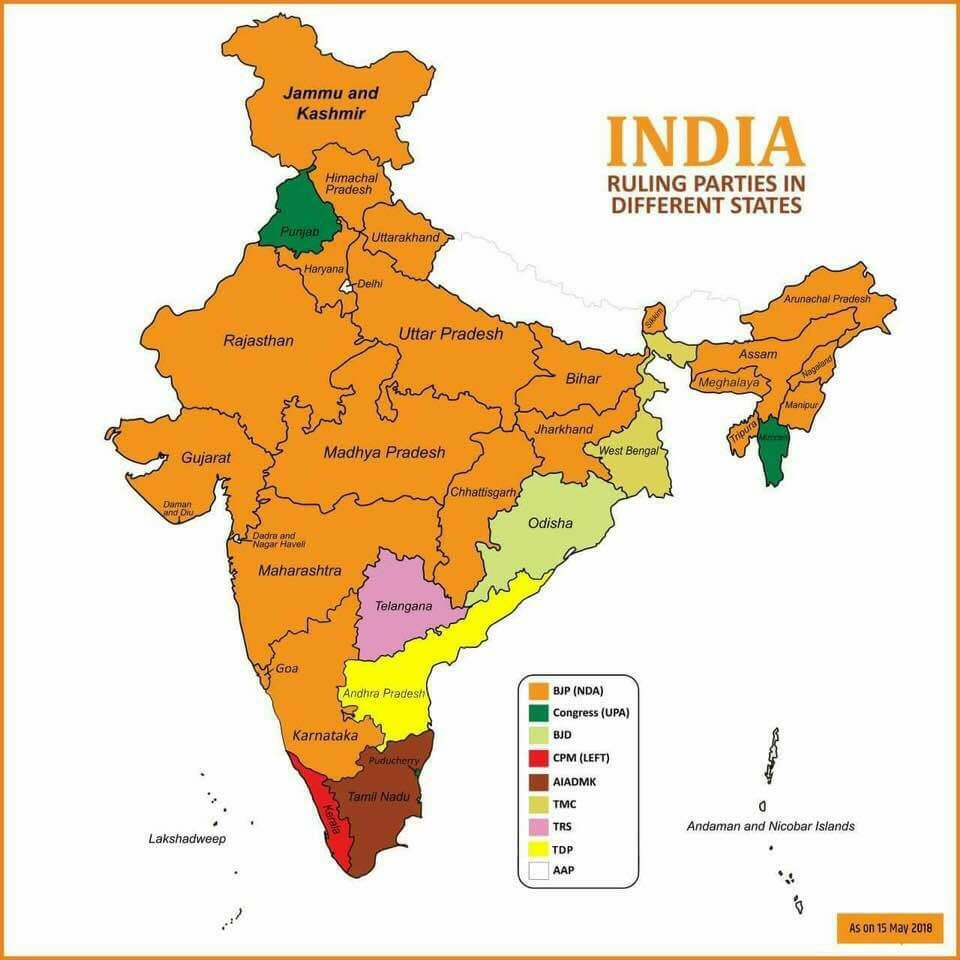
My title is of course provocative but I was reading the results in Karnataka that the Dalit vote bank is now firmly backing the BJP.

If the BJP is able to unite the Hindu bloc (and Modi seems the right leader for it) well then it’s really going to become an unstoppable juggernaut (which I believe is a Sanskrit word).

Bollywood of course remains a bastion of liberalism but I am increasingly sympathetic to the Hindutva view as to why India must bear the costs of secularism.

Firstly the idea of celebrating all holidays is simply ridiculous; why does an 80% Hindu country need days off for Eid or Christmas.

Only the BJP have the willpower to smash the caste system to smithereens, which frankly has been the reason why India has been so divided and vulnerable to invasions the past millennia.

There is no doubt that the biggest influencers on the BJP has been the terrifying cohesiveness of the Muslim community (people rant on about caste in South Asian Muslims but nothing can compare to power of creed) and Pakistan.

If the upshot of Hindutva is to abolish the hierarchy of castes then I guess that can only be a good thing I guess? I’m just speculating out here in an idle academic matter since I’m more upset about the depiction of Desis in Deadpool than Elections in the Old a World.

Intellectual Dark Web

I would define the “intellectual dark web” as the confluence and convergence of leaders from classical European enlightenment, hard sciences, technology (including neuroscience, bio-engineering, genetics, artificial intelligence),聽and east philosophy streams. Among the intellectual dark web’s many members are聽Dr. Richard Haier, Jordan Peterson, Jonathan Haidt, Ben Shapiro, Weinstein brothers, Sam Harris, Glenn Loury, John McWhorter,聽Yuval Noah Harari, Thomas Friedman, Maajid Nawaz, Neil deGrasse Tyson, Michio Kaku聽, Dr. VS Ramachandran, Steven Pinker, Armin Navabi,聽Ali Rizvi, Farhan Qureshi, Peter Beinart, Gad Saad, Nassim Nicholas Taleb, Dave Rubin, Joe Rogan, Russell Brand.聽聽If Steve Jobs were still alive, I would include him among them. They defy easy labels and are high on openness. I hesitate to label others without their permission, but our very own Razib Khan strikes me as a potential leader of the “intellectual dark web”; although I will withdraw this nomination if he wishes. 馃槈

Some see the intellectual dark web as the primary global resistance to post modernism. I don’t agree. Rather I see them as ideation and intuition leaders thinking different:

Continue reading Intellectual Dark Web

Post Modernism in India

I don鈥檛 want to write a post, but your question is a good one, and let me try to express my thoughts about it here. Before that, I am thankful to you (and Zack) for respectfully engaging my bizzare theories: typically Indian liberals refuse to engage fringe ideas like this, and simply brand these views as not worth considering. That you don鈥檛 do so says something about your innate goodness and generosity.

Now as to why the BJP does not do anything about what I claim to be discrimination against Hindus. It is a very good question. For instance, why does a party which supposedly only has to pander to Hindus聽increase聽minority affairs funding by 62%, or start聽free coaching聽for Muslim aspirants of Union Public Services Commission? Why did the BJP Government of the state of Haryana聽decide聽to allocate 13 public spaces for Namaz, instead of asking the rich Wakf board to either allocate space itself or pay up for the purpose? Why is it that the central Government鈥檚 official textbook make聽named criticisms聽of exactly one religion, namely Hinduism (the textbook was introduced by Congress, it is written by heavily anti-BJP people, but why is the Government continuing it)? It looks quite bizzare, when you consider that so few Muslims vote for BJP.

Continue reading Post Modernism in India

When writing about India is actually just writing about America

The web magazine Slate posted a piece, Friends From India which I had initially thought was a parody. Its subtitle is: “I grew up watching the show in Mumbai. I worry about the damage its gender stereotypes still do there.”

It’s really bizarre. The author is Indian, and supposedly is making a comment about India. But the piece isn’t about India at all, but the worries and concerns of a liberal person in the West. Friends isn’t that important in driving social views in India, and gender relations and attitudes toward homosexuality in India have little to do with Friends. But, today Friends seems retrograde to many American liberals, because of its attitude toward gender relations and gayness, which were mainstream in the 1990s.

So it seems here that to get another piece on Friends and social justice into Slate, they just commissioned a piece that was officially about India, but quite obviously wasn’t.

This gets to a major dynamic in American society today which worries me somewhat: foreign affairs being filtered through purely American concerns and perceptions. Americans care so little about the rest of the world that they turn the rest of the world into the United States in substance, if not exterior styles.

The problem is that we are living through a great transition in the world. America is no longer as much the center, and economic, social, and political, power will rebalance toward Asia. In such a multipolar world pandering to purely American preoccupations will lead to gross misunderstandings and likely catastrophe.

Raazi

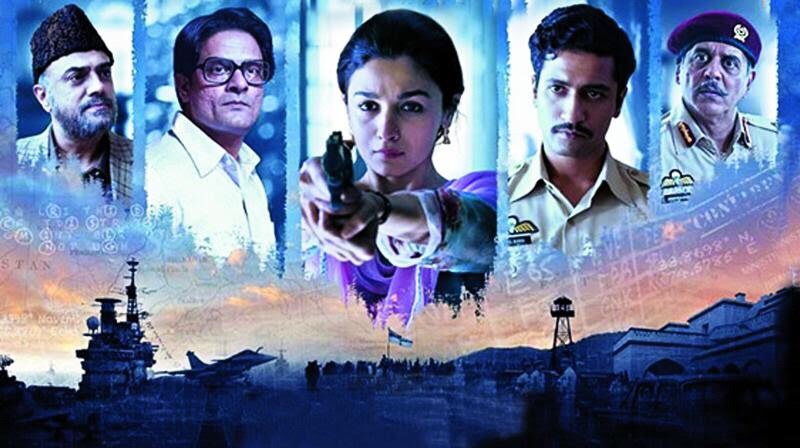
Has anyone seen Raazi or planning to do so? I’ll share my thoughts later on but for now I’m excerpting the Deccan Chronicle.

Does anyone at BP actually watch Bollywood or follow South Asia pop culture?

The two-nation theory has had far too many ramifications than the leaders would ever have imagined. For over 60 years, both India and Pakistan have remained sworn enemies despite them sharing history and having the commonalities that their people would not find anywhere else in the world. Meghna Gulzar鈥檚 Raazi, based on Harinder Sikka鈥檚 book Calling Sehmat, gives us a taut espionage thriller that doesn鈥檛 take sides, although in many ways Pakistan鈥檚 intelligence seems to be failing and the officers made to look gullible. But what Gulzar emphasises most on is citizens of both sides of the border displaying their own brand of patriotism that indicates loyalty to their nation. In turbulent times like the one we are all going through now, when one word (or, a portrait!) of praise of the enemy camp leader could trigger a belligerent reaction from both sides, her standpoint is extremely relevant. She also manages to weave many humane and emotive characteristics of real men and women into the narrative that may border on the unlikelihood of the very premise itself, but never strays into jingoistic flavour.

Welcome back Mahathir Mohamad, Hero of Asia!

Welcome back Mahathir Mohamad, our favorite 92 year old PM of Malaysia! Malaysia was one of the centers of the great Arya civilization for thousands of years; now enriched by Confucianism, Taoism, Chinese Buddhism, Islam, and expats the world over. One of the most diverse and immigration friendly countries in the world. One of the most pro business, pro capitalist, pro globalization, pro neo-liberal, pro enlightenment values, and pro moderate Islam countries in the world. A country that fought against the full might of the Soviet Union, China and the global communist block and won. A shining city on a hill. A self assured, self confident Asian Tiger without inferiority complex. One of last great bastions resisting the global post modernist wave.

Continue reading Welcome back Mahathir Mohamad, Hero of Asia!

India as the hydra against Islam

In some versions of the legend of the Hydra, every time you cut off one of the heads of the monster two more grow in its place.

I have been thinking about why and how India remained predominantly non-Muslim despite most of the subcontinent being under Muslim ruling for 500 years (dating from 1250 to 1750 approximately). The contrast here would be most stark with Iran and Turan. While the zone of the Islamic Empire between Mesopotamia and the Maghreb was dominated by a Christian populace which spoke an Afro-Asiatic language, Iran and Turan retained their language and their cultural distinctiveness, as evidenced in the nationalism clear in the Shahnameh.

There was a comment on this weblog that implied India was unique because of violent resistance to Islamicization. This is patently false. To give a concrete example, the region of Tabaristan in northern Iran was dominated by warlords and dynasties which adhered to the Zoroastrian region until the 9th century, 200 years after the Arab defeat of the Sassanians. Despite the inroads of Islam in the 9th century, after more thorough integration into the Abbassid Caliphate, Tabaristan was still throwing up Zoroastrian anti-Muslim warlords into the 10th century.

But most attempts to infer the religious demographics of Iran, which are to a great extent guesswork, suggest that it was in the 10th century the region became majority Muslim. One indication of this that this is so is that this period correlates with a more muscular and resurgent Iranian high culture and reemergence of political non-Arab political power. As Zoroastrianism was no longer seen as a threat to Islam, Persian cultural identity could reassert itself without a non-Islamic connotation (there is in the 10th century a shift away from ostentatiously Arab names by Persian Muslim elites).

Basically, it seems that it took about 300 years for Iran to become majority Muslim. I’ve seen similar numbers for Egypt and the Maghreb, though in the latter region indigenous Christianity became extinct by the medieval period.

There are two related issues that I want to suggest for South Asia: scale and complexity. Though the Indian subcontinent is geographically smaller than the Arab Caliphates as their height on paper, the reality is much of the Near聽 East and North Africa are empty of people. Islamic rule really consisted of a string of cities and fortifications interlaced over broad swaths of the territory occupied by pastoralists, as well as a few regions of dense cultivation.

Iran, Turkey, and the Arab world consist of between 400 and 500 million people. The Indian subcontinent has 1.7 billion people. The population in the past may have been different, but I think it gives one a rough sense of the differences in magnitude over the long-term.

Second, the social complexity of South Asia is astounding. I say this as a geneticist: the differences between different castes in the same region are hard to believe. Though there is a great deal of ethno-religious diversity in the Middle East, they are not surprising. Arabs engage in a consanguinity. Ethno-religious minorities such as Copts or Assyrians have less cosmopolitan ancestry than their Muslim neighbors. This is all to be expected.

In contrast, any analysis of ethnic “Telugus” has to take into account local structure because it is so extreme. Dalits are different from middle castes are different from Brahmins. Some of this is due to genetic drift, but much of it is due to continental-scale differences in genetic admixture.
The genetic differences tell us something us deep about the nature of South Asian social relations. Defection to Islam occurred on the individual scale, but generally, quantity could only be had by mass conversions. Even when groups of people of the same community are of different religions it was probably through mass conversion of particular subsegments.

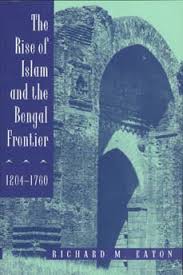
Which brings me to Bengalis. The Rise of Islam and the Bengal Frontier was written many years ago, and I read it long before I ever knew much about the genetics of South Asians. In it the author explains that the dominance of Islam on the eastern march of Bengal was due to the fact that it was a frontier society that emerged during the period of Islamic rule. Meanwhile, western Bengal was a culture which was in a stationary state.

The ability of Islam to penetrate into the Bengali-speaking peasantry was due to its fluid and unordered character. In contrast in western Bengal, a more traditional South Asiab society with well-delineated caste boundaries聽had already crystallized by the time of the Muslim conquest.

So here’s the thing that genetics adds: the topology of genetic variation of Bangladeshis is totally different than what you see in other South Asians. There’s very little structure. Basically aside from a few half-Brahmins and a small community of Dalits, the 1000 Genomes sample from Bangladesh shows none of the genetic variation partitioned by the community you see in most Indian samples. Or, that you see in the Indian Telugus, Gujuratis and Pakistani Punjabis (the Tamils from Sri Lanka are somewhat less structured, but still have more than the Bangladeshis).

To me, this confirms the thesis of聽The Rise of Islam and the Bengal Frontier. As a frontier society, eastern Bengal was mixed in a way where the structure socially and genetically that was the norm in most of South Asia by the time the Muslims arrived simply wasn’t present. Without the powerful collective substructure, Islam was able to swallow up the rural society聽in toto. Perhaps the best analogy might be to Indian communities in Trinidad, where caste has mostly disappeared, and Christianity has made extensive inroads.

So why didn’t India become Muslim? What is this “India”聽of which you speak?

Note: I moderate comments, please don’t stupid spam me.

Katrina Kaif is definitely half-Indian

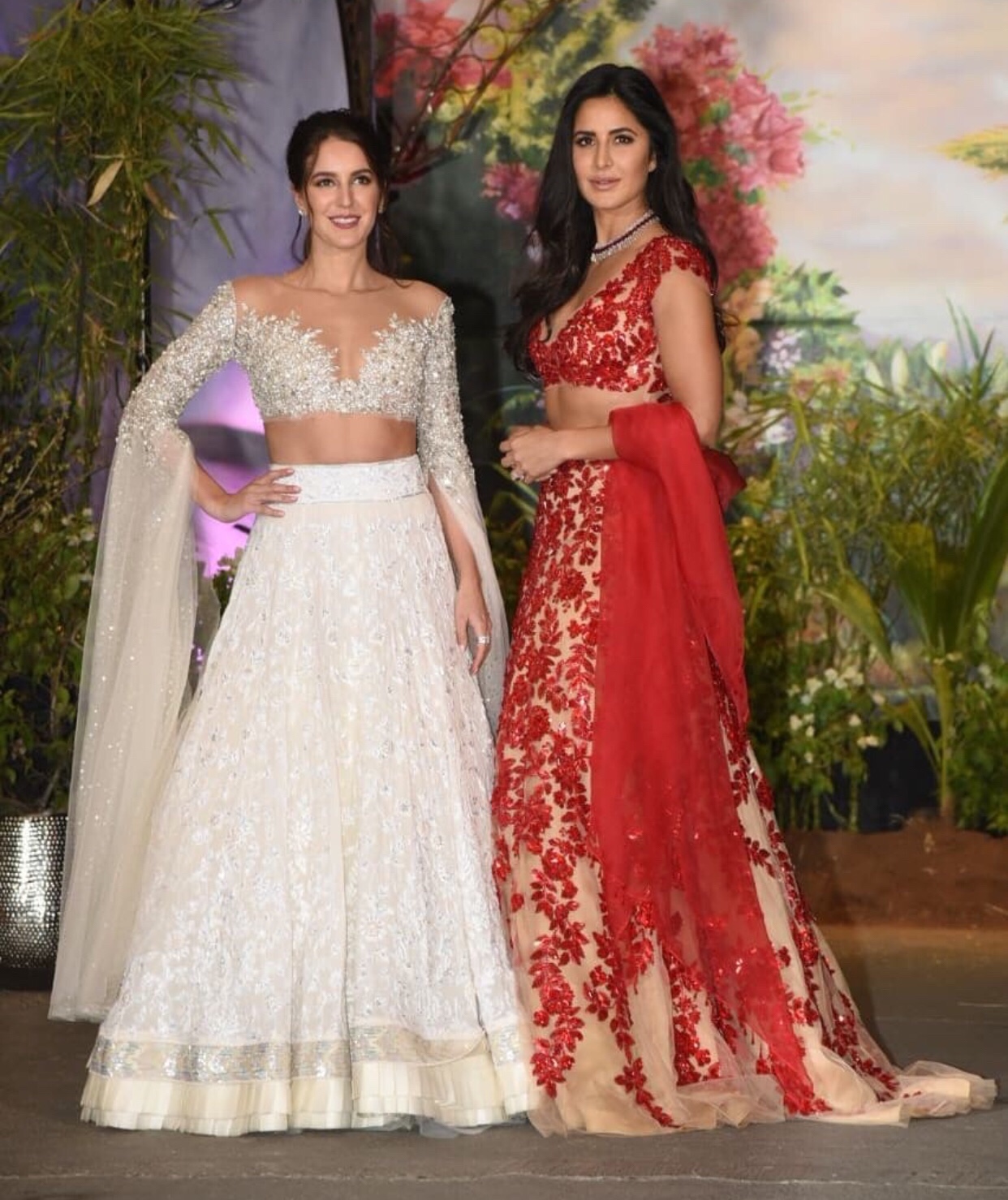
Yeah, yeah, we all recognize the lady on the right. But, while most people would be able to guess that the woman on the left is Isabelle Kaif, if you saw her alone, we bet you wouldn’t have been able to. But right now, we’re going to make sure you never forget her.

There was a rumour spread around that Katrina Kaif was in fact fully English and that Kaif was a made up Kashmiri name.

Katrina is with her half sister Isabelle Turcquotte, who is fully English (they share the same mother). The difference is as clear as between night and day (no pun intended).

Isabelle won’t make it in Bollywood since of course the Desi ideal doesn’t map exactly onto the Western aesthetic. She screams foreigner in a way KK 1, KK 2 (Kalki Koechlin) and Sonia Gandhi do not..

Katrina Kaif has a bit of that Kim Kardashian exotic ness (I can’t believe I just wrote that).

Brown Pundits