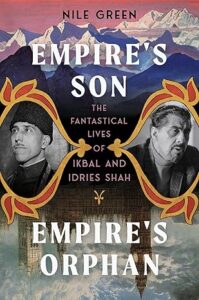
Book Review: Empire’s Son, Empire’s Orphan. Ikbal Shah and Idries Shah (of Sufis fame)


Idries Shah (1924-1996), a British citizen of Afghan and Indian origin, became world famous with his books about Sufi-ism (especially his magnum opus, “The Sufis”), selling over 15 million copies worldwide. In the course of this career, he also hinted (more than hinted, he wrote several books under other names in which he built up these claims about himself) that he was a sufi master himself, descended from an ancient and aristocratic family of Afghan Sufis who trace their descent to the Prophet Mohammed and are now bringing this ancient wisdom to the western public. His father, Syed Ikbal Shah, had settled in England and written several books about the esoteric east, but the careers of both father and son were dogged by accusations of making up stories and exaggerating their depth of knowledge about these matters. Professor Niles Green (who is the Ibn Khaldun Endowed Chair in World History at UCLA) has spent a long time researching both father and son and has now written a biography to settle this controversy and tell us who they really were.

So we learn that Ikbal Shah was a descendant of Jan Fishan Khan (famous indian actor Naseeruddin shah and retired general Zamiruddin Shah are also descended from him), an afghan who had sided with the British expedition to Kabul in the first Afghan war, and who escaped to india with the survivors of that expedition. For his loyalty, he was given a small estate in Sardhana, near Delhi. In 1857 Jan Fishan Khan again proved loyal to the British and was rewarded with the title of Nawab. It is here that Ikbal Shah grew up, and somehow decided to travel to Edinburgh to study medicine just before the first world war.

In Scotland, Ikbal fell in love with a Scotswoman and they married against the wishes of his dad, who therefore cut him off. Ikbal Shah proved to be a capable and energetic person who managed to make a life for himself in England as an expert on Afghanistan (where he had never been) to various branches of British academia and the British govt. Nile leaves us in no doubt that Ikbal Shah was a serial fantasist who made up wild stories about Bolsheviks and their operations in Afghanistan to British officials who sort of knew he was fake, but found him useful. To his credit, he was able to sell enough stories about the exotic east to survive in England and even joined the BBC during WW2 to make propaganda broadcasts for the British empire.

Ikbal Shah had three children (Omar Ali Shah, Idries Shah and Amina Shah) who grew up in the UK and Idries Shah followed in his dad’s footsteps to become an expert on the mysterious east (Omar Ali Shah also sold himself as a sufi teacher). Starting as an expert on “oriental magic”, he soon invented himself as a Sufi master and acquired several high profile fans, including the poet Robert Graves and the writer Doris Lessing. His book on sufism remains a bestseller and he wrote dozens of other books on various aspects of sufi-ism, all of which continue to sell. Nile Green regards this as more or less the result of gullible people being fooled by Shah, but the fact is that if you read the books in question (I have read several of them), they do seem to have genuine insights into human psychology and the various “teaching stories” Idries Shah claimed to have collected do indeed have the capacity to teach useful lessons for life. From within his own world, he can claim that what looks like fakery is just how this esoteric knowledge works in this world. After all, we are talking about sufi-ism and it is by no means clear how one can distinguish a sufi charlatan from a real sufi, since “genuine sufi-ism” itself thrives on mystery and misdirection, almost by design.

The fact that the brothers Idries and Omar Ali Shah falsely claimed at one point to have the oldest manuscript of the rubayat of Omar Khayyam (Professor Green makes a solid case that they made up the whole story) is itself enough to condemn them as charlatans, but as Professor Rawlinson once said ” Shah cannot be taken at face value. His own axioms preclude the very possibility.” If Sufis are enlightened beings who possess some esoteric knowledge that is not available to ordinary mortals, and if they are supposed to help you by telling you what you need, not what is “true” or false, it is by no means clear that this book and its careful examinations are the end of the matter. As Idries Shah’s epitaph states: “Do not look at my outward shape, but take what is in my hand”.  The story continues..

By the way, the title “empire’s son, empire’s orphan” is a good indicator of the fact that the professor also has to labor under the limitations of his own field. Basically, it means nothing, but if you are into postcolonial writing then it is the fashion to connect every biography to “empire” and its discontents. It adds nothing to the story, but luckily it also takes nothing away.

TM Krishna & Harsh Mander on Tamil Nadu’s resistance of the RSS

This podcast is part of Season 2 of “Partitions of the Heart”.  “Saffron Siege” runs from 17 September to 3 December 2025, with a new episode releasing every Wednesday.

In this episode, musician and political commentator T M Krishna speaks to Harsh Mander about Tamil Nadu’s long history of social movements that has led to this resistance. They examine how the state’s linguistic and language-based faith traditions have stood as a bulwark against the RSS’s attempts at homogenisation under a Hindutva umbrella. Krishna points out the multiple streams of religious influence on arts in India, especially in music, and how the RSS has tried to deny this past in service of the ideological project. “Carnatic music is symbolic of something for the RSS. It is symbolic of that puritanical and cultural superiority… Homogenisation, or rather a linearisation, of that is convenient for them.”


The Broken Compact

Why the India, and American, Dream No Longer Holds

It was Dr V’s birthday this weekend, and we found ourselves in the Great English countryside; those great undulating fields and hedgerows that still whisper of an older order. There’s something about England’s pastoral stillness that throws modern anxiety into relief. The calm of inherited hierarchy, the sense that everything has already been decided, makes you think of those of us who were told that nothing was fixed, that we could climb forever if we just kept studying, working and performing.

The Dreams Continue reading The Broken Compact

Mamdani and India — A Strategic Moment

The Desi Mayor and the Mirror of India: What Zohran Mamdani’s Victory in New York Means for a 2050 India

by Amb Manav Sachdeva

When Zohran Mamdani — the 34-year-old Indian-heritage, Muslim-American democratic socialist — clinched the victorius count for the mayoralty of New York City, it was more than an American political event. It was a global inflection point. For the first time in history, the world’s most influential city is poised to be led by a man who not only traces his lineage to India but proudly identifies himself as desi — as an inheritor of South Asian pluralism, Muslim humanism, and diasporic imagination.

For India, Mamdani’s win ought not to be filtered merely through the lenses of political affinity or ideological tension. Nor should it be reduced to whether he has praised or criticized Narendra Modi. It must be read as a civilizational opportunity — a chance to reflect on how India sees itself through the mirror of its far-flung children, and how it chooses to relate to a diaspora that has become not just prosperous, but powerful.

From Symbolism to Strategy Continue reading Mamdani and India — A Strategic Moment

Why Ladakh is angry with the Modi government

On the latest episode of Scroll Adda, Sajjad Kargili–one of Ladakh’s most popular leaders and a part of the delegation that is negotiating with the Modi government–speaks to Shoaib Daniyal to explain why Ladakhis are so angry with Delhi.  Sajjad speaks about the “colonial treatement” that Ladakh is receiving from Delhi.

Sajjad notes that Muslims are 46% of Ladakh’s population while Buddhists are 40%.  Muslims are concentrated in  Kargil district while Buddhists are concentrated in Leh district.

Islam the Religion of Peace part ii

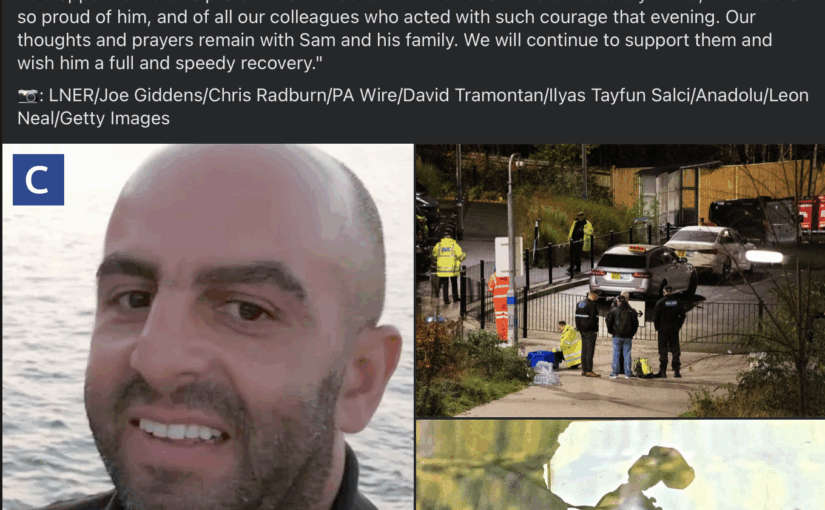
Samir Zitouni, a 48-year-old rail worker, is in critical condition after stepping between a knife-wielding attacker and passengers on a Doncaster–London train. Witnesses say he blocked the assailant from stabbing a girl and was slashed across the head and neck.

He has worked for LNER for more than twenty years. His managers call his actions “nothing short of heroic.” The attacker, Anthony Williams, has been charged with ten counts of attempted murder.

A Muslim man (most likely Algerian origin) from the Midlands saw people in danger and acted without hesitation.


Open Thread

The boycott has made Brown Pundits quieter, almost peaceful. I don’t mind it. Every few years the site reaches this point; it grows, gains noise, and starts to feel less like a hobby and more like an obligation. Then it falls back to something smaller and saner.

I’ve also realised that the Indo-Pak frame doesn’t really fit my life anymore. It was useful once because that’s where the conversation was; it gave the blog an audience. But most of that talk is stale now; the same arguments, just louder.

What interests me instead are the wider patterns: how post-colonial societies move in a world that is no longer unipolar. The Gulf’s rise, Africa’s experiments, China’s reach, India’s own breadth. How old hierarchies break down, and new ones form.

I don’t like following the news. So perhaps BP will drift in that direction. Fewer posts, less noise, more reflection. A space for thinking about what comes after the post-colonial age, when the world starts to finally balance itself again.

The growing Pakistan-Afghan Conflict. What next?

Most of us keeping up with news from the sub-continent are aware by now of the recent escalation in the long-simmering friction between Pakistan and Afghanistan.  The historical ‘divide’ regarding the Durand Line is something that never really went away as much as the Pakistani state attempted to pretend that its a fait accompli.  And now with the Tehreek e Taliban Pakistan managing to to challenge the Pakistani state’s writ, and inflicting ever increasing costs on PakMil, the threats to punish Afghanistan further are flowing thick and fast from Islamabad.

Pakistan, obviously enjoys a military supremacy over Afghanistan in multiple orders of magnitude. But as we have seen in Ukraine, or even in Afghanistan over the last few decades, the underdog can inflict some serious costs. And keep it going.

Question is, where does Pakistan go from here? With the growing reported rapprochement between the Taliban and New Delhi, there’s every chance that the Afghan air defenses may be quickly ramped up from non-existent, to at least some level of deterrent.  Rumors are rife on the internet about Indian supply planes landing at Bagram.  And simply bombing Afghan border posts has diminishing returns.  The Taliban do not appear to be in any conciliatory mood.

In many ways, this has many parallels to India’s experience with Pakistan backed jihadi groups in the 30+ years starting from the late 1980s.  Its almost impossible to deter and defend against insurgency in mountainous terrain.  Especially when the insurgents find succor in the local populace.

So, what next for “Khyber Pakhtunkhwa” and Pakistan? How realistic is the possibility that the Pakistani military will be able to succeed “this time” when it has already ‘failed’ a few times post-9/11, and had to make repeated ‘peace’ deals with the TTP or its predecessors in the past?

The shooting war seems to have gone a bit quiet for now, but the war of words is quickly escalating.  It seems like the Taliban are being ‘good students’ of the ISI and have adopted the tactic of releasing catchy music videos to make propaganda points.

Caste, Civilisation, and the Courage to Own It

Kabir suggested that I apologise but for what, exactly? Why should Saffroniate be considered offensive? Own it. I don’t see anything inherently wrong with the idea of Akhand Bharat; the concept of a broader Dharmic civilisation makes eminent sense to me.

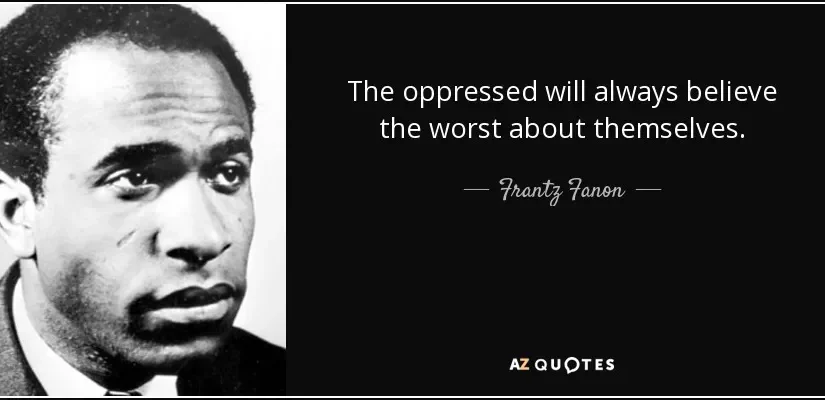
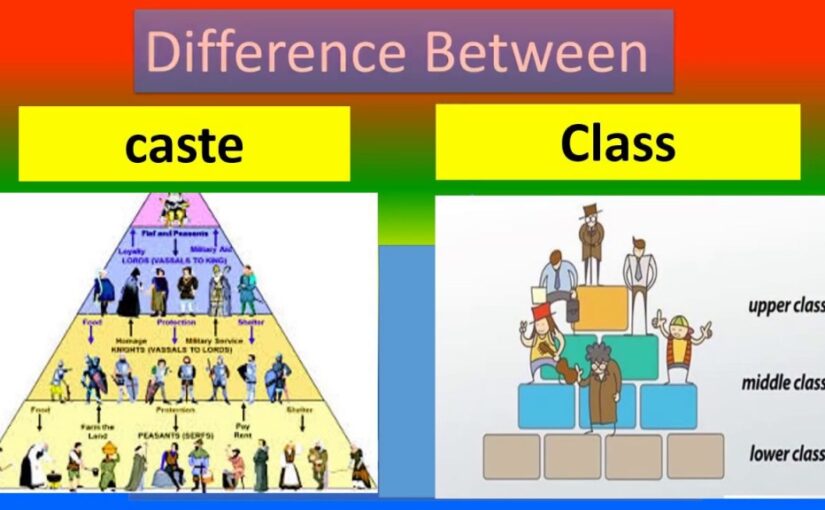
Likewise, I don’t understand why questioning caste identities provokes such sensitivity. Again, own it because the more caste is repressed, the more likely it is to resurface.

At heart, I’m a reformist, not a revolutionary. I believe in improving and refining what exists, not erasing it. Cultural features should only be abolished when they are truly harmful or deleterious, not simply because they make us uncomfortable.

Brown Pundits