
Please keep the other posts on topic. Use this for talking about whatever you want to talk about.
Please note our podcast, Twitter, and RSS feed. Also, our Patreon.
https://www.youtube.com/watch?v=hmz97E0z8Sc&t=785s
Another amazing podcast from Veedu Vidz–heartthrob of England. {Sisters, he is already owned by Mimzy and unavailable. Sorry.}
Start watching from 25 minutes in. Some take-aways:
My questions:
++++++++++++++++++++++++++++++++++++++++++++++++++++++++++++
Update 1:
Maajid Nawaz Gob-smacks Corbyn and says Corbyn beat Corbyn.
https://www.youtube.com/watch?v=eeni-2J_fYs
+++++++++++++++++++
Update 2:
Katie Hopkins is a Member of the Tory party and is trying hard to create an alliance between the UK and India (and presumably the Dharmic world more generally). The alliance would focus on resisting:
To simplify, I think she mostly means post modernism and Islamism. She appears to think the Europe will divide into Islamist hamlets and non Islamist hamlets. And that Europe and the world as a whole needs India’s and America’s help to survive.
Could the UK government pursue an alliance with India focused on post modernism and Islamism? Could this end any remaining Indian sensitivity about being colonized by the UK? Is this being facilitated by Indian Britons and perhaps muslim Indian Britons leaving the Labour party?
Sham Sharma has speculated that Indian Americans could wholesale flip to the Republican Party similar to the flip of Indian Britons between 2017 and 2019? Could this really happen?
+++++++++++++++++++++++++++++++++++++++++++++++++++++++++++++++++
Update 3:
https://www.youtube.com/watch?v=YkpnSU6ceg8
It is possible that British Asian, African, ethnic minority, poor and lower middle class European ancestry voters were scared about anti Jewish bigotry:
https://www.youtube.com/watch?v=ZSmUU7t2zgc
As a side note, the UK has very different issues than the USA. For example UK students perform far better in math than Americans. 13% scored 5 or higher in the 2018 OECD PISA test, compared to 8% of Americans. Immigrants appear to slightly academically underperform non-immigrant Brits across reading, science and math, although mathematical performance was not provided. The definition of “disadvantaged students” in the report was unclear. Between 2009 and 2018 the number of immigrant students has risen from 11% to 20%. One third of immigrant students are “disadvantaged students.” Math results for England have been rising over time and girls sharply outscored boys in mathematics, science and reading.
+++++++++++++++++++
Update 4:
According to Nimco Ali (patriotic Briton who happens to have Somali muslim ancestry) most African Britons vote Tory. She is a leading campaigner against female genetic mutilation and says that Tory leaders, Tory moderate muslims and Tory Indians (Priti Patel ) are backing her. Nimco also fights for muslim woman to have the right not to wear the hijab, and again says that she gets support from many Tory leaders, Tory moderate muslims and Tory Indians (Priti Patel ). She is very aspirational. She says that in Britain the aspirational BAME are African Britons and Indian Britons. Both back the Tories. The less aspirational Britons are Pakistanis and they tend to support Labour and Jeremy Corbyn. I am guessing that Bangladeshis are in the middle.
I wonder why more African Britons don’t vote Liberal Democrat. My main man Maajid Nawaz is Liberal Democrat. I get why African Britons don’t like Jeremy Corbyn.
Nimco Ali says that Briton has recently prosecuted several muslim Britons for female genetic mutilation of children. Until recently no Briton was prosecuted for female genetic mutilation. About a tenth of mothers giving birth to children in many British hospitals have had FGM. Kudos to Boris Johnson, Brown Pundit favorite Sajid Javid, Priti Patel and other Britons for trying to end FGM!
I am an aspiring stand up comic (‘aspiring’ the operative word here). I was attracted to quick-witted, slapstick comedy while I was at an all-male boarding school in Pakistan. Since I was not physically strong enough to compete with the big boys, I had to use my tongue as an asset/weapon. I grew up watching mild-mannered comedies in Urdu on Pakistani television. It wasn’t until the late 2000s that I discovered ‘Seinfeld’ as a syndicated show on an Indian TV Channel. I had started watching ‘The Daily Show ‘ with Jon Stewart almost at the same time, through pirated websites (broadband internet was a late arrival in our household). There was no broader culture of stand up comedy in Pakistan, except a few souls with western education who were briefly on the scene in the early-to-mid 2000s (Sami Shah, Saad Haroon, etc.), mostly clustered in Karachi (which was as culturally far away for me as New York City). I used whatever avenues I could to write humor. I wrote parodies and mockeries in Urdu, first in boarding school, then in med school. Urdu has produced some great humorists (Ibne-Insha, Patras Bokhari, Khalid Akhtar, to name a few), but written humor is different than performative comedy. The only parallel I could find was in stage dramas that were mostly, if not entirely, produced in Punjab and consisted of varying degrees of ‘jugat baazi,’ which is pure slapstick comedy. It can consist of monologues or a back and forth between two men (and it is almost always men) who take turns to insult each other. While it is quite entertaining, it is most often misogynistic and hinges upon common tropes.

The TV show ‘Hasb-e-Haal’ ushered in a new era of political comedy in Pakistan. Before that, there was ‘Hum Sab Umeed Se Hain’ (literal meaning: we are all hopeful; a double entendre since ‘umeed se hain’ can mean hopeful or pregnant), which consisted of parodies of major political figures. Hasb-e-Haal had regular news and humorous analysis of that news by Azizi, a character played by veteran stage actor, Suhail Ahmed. The show was competing against completely serious political shows and shot to popularity in the late 2000s/early 2010s. Soon after that, there was a deluge of TV shows offering political comedy, in varying degrees of success. There was no ‘Saturday Night Live’ analog that poked irreverent fun at every possible institution in the society. Noone could criticize the judiciary, the military (and its proxies), or the ‘Two-Nation Theory’ (TNT). I remember watching a stage show that was quite popular in 2013-14, written by Anwar Maqsood (famous playwright), in Lahore. It was a miniature, middle-class, sanitized version of the nightly news shows. The state of humor in Pakistan was bleak, a nation taking itself too seriously and too afraid to laugh at ourselves. I actually wrote a parody show that was educational at the same time as it was humorous, in 2012, which was filmed by a friend but did not make it to the screen, partially because it was my first experience writing in that format.
Recently, there have been some positive developments like Aurat Naak, an all-female comedy troupe, and satire sections in newspapers (dearly-departed/banned Khabaristan Times and The Dependant, both of which I contributed to). However, satire in English newspapers and blogs has its limitations: Very few people in Pakistan read English papers regularly. A few years ago, Nadeem Farooq Paracha (cultural critic for Dawn and one of my early heroes) wrote a blog for Dawn.com that portrayed Malala Yousafzai as a polish agent planted in Pakistan (there were enough hints in the piece for it being a satire column/blog). The article was soon shared by people who took is as gospel truth, and some local newspapers even published Urdu translation of that piece as evidence that it was proof of Malala being a fake (a common enough conspiracy theory in Pakistan). Dawn had to label the piece as Satire at the front and bottom of the page as a response. A year or two later, when I submitted a satire piece to Dawn, I was told to ‘tone it down a bit’ in light of the Malala story. In Pakistan, there is a very fine line between humor and absurd reality, and as a writer, I was often treading that line, veering from one side to another.
It is not as if Pakistan does not have people who are funny and can poke fun at the ‘holy cows.’ I know dozens of people who do that in private frequently but cannot, for their safety, say those things in public. There is no First Amendment guaranteeing free speech rights in Pakistan. ,’ 19 of the constitution explicitly identifies the holy cows (military, judiciary, TNT) and prohibits speech against that. Adding to this fuel is the firepower possessed by Pakistan’s right-wing media and loudspeaker power wielded by molvis who can commandeer people to form a mob against anyone at the drop of a hat. A few years ago, a fellow journalist and friend wrote an article about the ‘homosexual question’ in Islam on a popular Urdu website. A week later, Orya Maqbool Jan, former civil servant, and lifelong windbag dedicated a whole TV show to that one article and targetted that Urdu website. A case of hate speech was filed against him with Pakistan’s Electronic Media Regulatory Authority (PEMRA). For his hearing, Orya brought a bunch of goon (including lawyers, molvis and other members of a for-hire mob) and disrupted the hearing. Nothing ever came out of that hate speech case.
When I moved to the US in 2017, I had the opportunity to see stand up comedy myself. I went to a place in Miami that had bi-monthly comedy shows and to a place in Fort Lauderdale that had an open-mic. I wrote some material myself, which I performed in front of a group of friends but never on stage. In Houston, I went to an open-mic and was going to perform my set, but I was supposed to be on stage around 11 pm, which is way past my bed time, and I had friends in the audience who had to go to work the next day. In Washington DC, I went to a show titled ‘Black Side of the Moon’ in December 2016. It was a combination of monologues and sketch comedy by an all-black cast. The most memorable moment in the show was when a white volunteer who came on stage was given the ‘Full African American Experience’, including being sold at a slave market, denial of place in a sports team despite his qualifications, and being shot dead by a black policeman. It was probably my first exposure to live, politically conscious comedy. A Pakistani version would have Ahmadis or Baloch people mocking the majority Sunni population or Punjabi elite. That show is not going to happen any time soon.
Sadly, the only Pakistani import to the US in terms of stand up comedy (Kumail Nanjiani) is a good actor but a subpar stand up comic. His film ‘The Big Sick’ was an amalgamation of stereotypes and some mildly emotional scenes. He does quite well in the HBO TV show ‘Silicon Valley’ and was admittedly quite good in the movie ‘Stuber’. Many of his Karachi acquintances are on the record saying how he fabricated things about his life in Pakistan (you can google that). 
I was in Chicago recently and saw a show at the famed Second City theatre titled ‘Do you believe in Madness?’. It was a powerful sketch show with a diverse cast and ranging in topics from Abortion to Impeachment, global warming , Brexit and including a song with names of all the people who have left the current white house (sung to the tune of Billy Joel’s ‘We didn’t start the fire’). It was like watching SNL but better. This is my long-winded way to say that the satte of comedy in the US, is strong, and long may it continue!
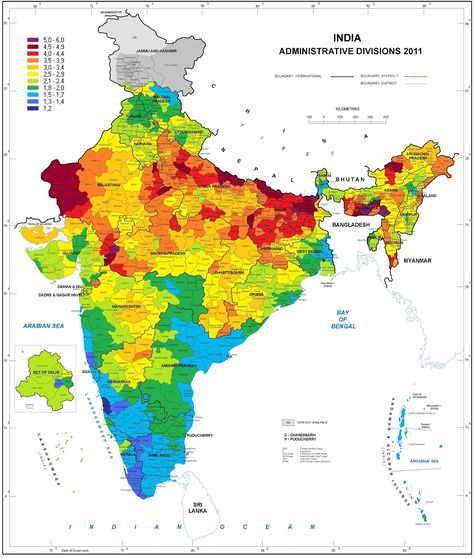
I’m pretty sure I’ve posted this map before. It’s not surprising, as it shows fertility differences across the nation.
But, what I just realized is that the fertility rate gradient between West Bengal and Bihar is one of the largest in the world. Bihar’s TFR is about 3.3, West Bengal’s 1.6. For comparison, Mexico has a TFR of 2.1, and the USA 1.7. Yemen has a TFR of 4.0, and Saudi Arabia 2.5. Perhaps analogous are Iran and Pakistan. TFR’s of 1.7 and 3.5, respectively.
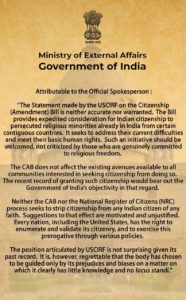
The feverish pitch over the Citizenship Amendment Bill has reached a crescendo. The Indian lower house of parliament has overwhelmingly passed it with it now reaching the upper house. Most likely, it will pass with the support of “neutral” parties pushing the bill over majority.
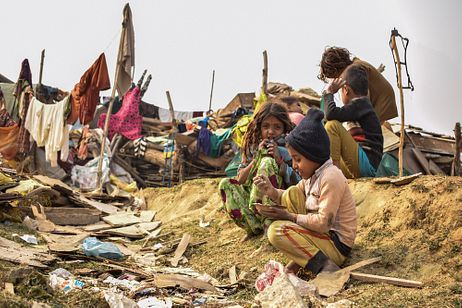
Under the CAB – Hindus, Sikhs, Buddhists, and Christians (basically persecuted communities of Afghanistan, Pakistan, Bangladesh) will receive asylum and an accelerated path to citizenship.
Critics label this bill as anti-Muslim and rhetoric from certain BJP members does not help in the defense against this accusation.
But again consistent with the common theme of international coverage of India, we are missing context (or more accurately, outlets are leaving it out purposefully).
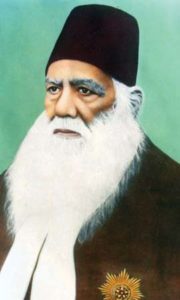
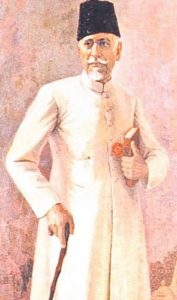
Not the Beyoncé song. If you have an inkling of knowledge about subcontinental history, you know about the partition and the Two Nation Theory (TNT). TNT was proposed by an Islamist ideologue named Syed Ahmed Khan of Aligarh Muslim University in the late 1800s. Muhammed Ali Jinnah ran with the idea and eventually convinced enough Muslims to vote for partition (Hindus, Sikhs, etc… were not polled for their vote). In the midst of continued violence (much of it encouraged by Jinnah’s Muslim League), the Indian National Congress would acquiesce to partition. Massive violence followed with millions of Hindus, Muslims, and Sikhs dead.
However, while Pakistan became an Islamic state, India remained secular (though its minority appeasement down the line really pushes that definition).
India had given up 1/3 of its land to satisfy (separatist) Muslims yet still had 9% of its population as Muslims post-partition. The Muslim population in India would grow to around 15% today while a trident of partition, Pakistani civil war, and persistent persecution would annihilate the Hindu population in Pakistan and Bangladesh (From 1941 to present, the land containing current day Bangladesh’s Hindu population dropped from 28% to 9% while Pakistan’s Hindu population dropped from 14% to 2%.)
It is the shadow of partition that looms large over the CAB.
Defenders of the CAB say it gives refuge to persecuted minorities in true Indian tradition (Baghdadi Jews, Syrian Christians, Persian Zoroastrians, and Tibetan Buddhists have all received refuge in India over thousands of years). However it brings to point the case of Islamic minorities (Shias, Ahmediyas, Ex-Muslims, etc…). Many of these minorities face horrid persecution in the Islamic subcontinental states. Why should India also turn them back?
Now is where the acceptance of partition arrives. CAB critics say by rejecting persecuted Muslims, India validates Jinnah and the TNT. I can honestly understand this perspective. Why should these Muslims pay for the sins and mistakes of their ancestors?
On the flip side, CAB supporters return with saying they are merely accepting realities. Threats of national security, demographic change, as well as a cold hard perspective that India owes nothing to those related to its partition (non-Indian Muslims) are valid reasoning no matter how un-PC they are. In addition, the CAB has no bearing on Indian Muslims.
Even deeper, CAB supporters see this as India fulfilling its duty as a refuge of Dharma in the case of Hindus, Buddhists, and Sikhs. The near complete obliteration of Dharmic religion from these lands is not forgotten and won’t be any time soon.
The legalese with regards to the bill seems iffy on its constitutionality. The Indian constitution bars discrimination based on religion within India. However it doesn’t bar discrimination with regards to non-Indian citizens.
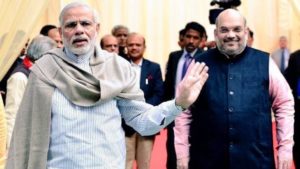
India’s Home Minister Amit Shah (and probably next Prime Minister), has foreseen this. During a firebrand speech recently, Shah pointed out the litany of laws favoring minorities in India thereby showing a mirror to the Indian state’s institutional religious discrimination. This poses a major problem for the opposition. Add to the fact that the BJP has massive political capital after the Kashmir and Ram Mandir episodes, the centre possesses an insurmountable high ground over its opponents.
But what about a moral high ground?
Western media laments at how India has degenerated to fascism these days. Is this perception reality? Probably not in my opinion.
I think what irks many of these outlets is an assertive India that no longer looks for the approval of the West (or a deracinated brown sahib/a in their place).
What has caught my mind recently is how Western coverage of India is affecting perceptions of India abroad. While some saw Modi as an aberration of a “secular, democratic, and liberal” Indian ethos, now they are beginning to realize Modi and Hindutva are here to stay. Does that mean India will slide into fascism?
On the other hand, many domestic Modi supporters would say that Modi is fulfilling a “secular, democratic, and liberal” ethos that India lacked for so long under Congress rule! Of course in both of these scenarios, I am speaking of white collar middle class folks’ perspectives. Other demographics would say Modi is fulfilling his role as a Hindu leader giving refuge to the persecuted Hindus in lost lands (this may honestly be the biggest vote catcher for the CAB and primary driver of the BJP’s push).
Then comes the thought – how will policy towards India be affected? While Western foreign policy hasn’t been egregiously affected by bipartisan slants, we are now entering a highly polarized era. The latest incarnation of Western right wing governments seem to favor India, but future demographics are hilariously skewed in favor of the left wing across a number of Western countries.
As the world becomes more globalized, it will be interesting how influential Western media outlets will be on the increasingly connected youth of developing nations including India (the caveat is India’s youth are more pro BJP than older generations).
Yes, opinions can change as we age but it is fairly apparent that your average millennial takes the word of BBC/NYT/Wash Post as gospel. We will have to see how a Western left wing government reacts to India, especially one whose constituency is in congruence with this “India = Fascist” narrative. Throwing in the wrench of India’s rising economic clout, these parties will have a bit of a conundrum.
Though it must be said, do that many Westerners even really care about India?
Original article by Gen Asad Durrani. Comments in red by Dr Hamid Hussain. Additional comments in blue by Major Amin.
LG Asad Durrani views and my two cents in red.
Regards,
Hamid
The Same Page Saga
Lt Gen ® Asad Durrani
The Chief of Army Staff in Pakistan is not just another head of service, nor is he, strictly speaking, a “chief of staff”; the designation that the late Prime Minister Zulfiqar Ali Bhutto believed would deny the man on the horseback the clout to take over the Country. His assumption went ruefully wrong when Zia-ul-Haq, his handpicked COAS, not only putsched but also hanged him. In ‘Pakistan Adrift’, an account of my journey through the corridors of power, I have tried to assess the military’s role in the Country’s polity and an army chief’s special status in the power matrix – in which he often played the ultimate arbiter. For people like me therefore the commotion over the present incumbent’s service extension in the last week of November came as no surprise. The following chronicle however is not about any technicalities of the issue at hand, but about the algorithm of this game of thrones. Continue reading The “Same Page” saga..
I have little value to add on the many comments around “Modi is bad to the bone” piece in The New Yorker, except that this passage jumped out at me:
Other coverage on Republic TV showed people dancing ecstatically, along with the words “Jubilant Indians celebrate Modi’s Kashmir masterstroke.” A week earlier, Modi’s government had announced that it was suspending Article 370 of the constitution, which grants autonomy to Kashmir, India’s only Muslim-majority state. The provision, written to help preserve the state’s religious and ethnic identity, largely prohibits members of India’s Hindu majority from settling there. Modi, who rose to power trailed by allegations of encouraging anti-Muslim bigotry, said that the decision would help Kashmiris, by spurring development and discouraging a long-standing guerrilla insurgency. To insure a smooth reception, Modi had flooded Kashmir with troops and detained hundreds of prominent Muslims—a move that Republic TV described by saying that “the leaders who would have created trouble” had been placed in “government guesthouses.”
From the broadly Left/liberal internationalist perspective, Hindu nationalists express a majoritarian and ethnoreligious self-consciousness. They don’t want what in India is termed “secularism” to be ascendant. I believe that some Hindu nationalists do want for India what was the original vision of Pakistan, a nation-state that has at its core a particular ethnoreligious identity (I believe this is distinct from a “Islamic fundamentalist” vision properly understood in the modern context).
And yet this passage simply glosses over the fact that legal fiat was preserving a particular sub-national identity, that of Kashmiris, the vast majority of whom are Muslims.
Another BP Podcast is up. You can listen on Libsyn, iTunes, Spotify, and Stitcher. Probably the easiest way to keep up the podcast since we don’t have a regular schedule is to subscribe at one of the links above.
You can also support the podcast as a patron. The primary benefit now is that you get the podcasts considerably earlier than everyone else.
Would appreciate more positive reviews! Alton Brown’s “Browncast” has 30 reviews on Stitcher alone! Help make us the biggest browncast there is!
Today Razib talks to Sagar Dubey about being a cosmopolitan world-traveling brown. Sagar lived in eight countries (North and South America) before finally settling down (for now) in Finland.
Razib also asks about Sagar’s impressions of India, while they also talk about how the online world has evolved over the past generation.
Every commentor on this blog, knows there are family and relatives and who bonk the servants or help in South Asia.
H. M. Brough the Bro probably would say I am talking gibberish, i.e bonk.
Bonk and bonk and parte.
Words are bad not the reality
Many (of my vintage) listen to Santana eg Oye Como Va
How many know the meaning.
http://sbarrkum.blogspot.com/2011/02/celia-cruz-oye-como-va-and-cubanpuerto.html