Open Thread; the endless Argument of the Archives

What We Did

Brown Pundits was founded as a diaspora project. A handful of Brown people thinking out loud about where they came from, what it meant, and whether the subcontinent could be understood in English without either romanticising it or apologising for it.

What happened instead was stranger and more valuable. The site became a place where the subcontinent argues with itself in public, without editorial supervision, without a line to hold, and without the particular kind of cowardice that afflicts publications which need to keep everybody happy.

Over the past week, we forced the archive into coherence. All 3,987 published posts; every Open thread, Genetics argument, Civilisational essay, Partition debate, BrownCast episode, Film review, Obituary, every Moderation notice, are now part of a single navigable structure. For the first time, the site can be read not as a sequence of posts, but as a narration.

What the Archive Revealed

The Partition of India is not a historical event on this site. It is a living emergency. Every argument we have had about Pakistan’s identity, India’s secularism, the Muslim League, Jinnah that is QeA, the two-nation theory, Bangladesh’s founding, the treatment of minorities across all three successor states; all of it is 1947 refusing to close. The wound keeps producing arguments because it was never properly treated. The British left. The questions they left behind did not. Brown Pundits has been, among other things, one of the few places in the English-speaking world where those questions are fought over by people who have actual stakes in the answers, not just professional opinions about them.

Pax Persica

Continue reading Open Thread; the endless Argument of the Archives

The Ukrainian Interlude is over

The Iranian One has just started

Nobody seems to be interested in Pakistan’s diplomatic resurrection. What does it mean that a country written off as failed just a year ago is now the hinge of a regional peace settlement and averting World War Three on the double. This is the actual story of 2026 and it is not on our comment boards.

Pakistan: From Failed State to Diplomatic Champion

A year ago, before Operation Sindor, Pakistan was being written off in every serious strategic publication in the English language. The IMF was reluctant. Every mainstream Indian and Western analyst agreed. Pakistan was finished as a regional actor of any significance.

Today Pakistan is mediating, leading, the Iran crisis. The Hormuz situation, which could have escalated into a catastrophic closure of the world’s most important oil chokepoint, is moving toward resolution largely because Pakistan has positioned itself as the only party credible with Tehran, Riyadh, and Washington simultaneously.

The war that looked civilisational is now looking more like a pivot point. Pakistan is not a failed state. India is not uniquely ascendant under PM Modi. The question of whether the BJP holds power post-Modi is now a live one, not a theoretical one. Iran is not isolated. Israel is not unbreakable. The realignment is happening now, in real time, and almost nobody seems to be writing about it.

Iran Stood Up Continue reading The Ukrainian Interlude is over

The Inward Turn: Muslim Politics in the Indian Subcontinent from the Fall of the Mughals to the Present

A friend from Twitter (@kartheeque) has written a nice detailed post about the inward turn in Muslim politics in India and its various consequences. It is well worth a read. The original is available at Substack as “The Inward turn..” (he goes by Viduracounsel) He has kindly consented to posting the whole thing here as well:

Continue reading The Inward Turn: Muslim Politics in the Indian Subcontinent from the Fall of the Mughals to the Present

Open Thread; The Archive, The Lynching, and Humanity First

Open Thread — The Archive, The Lynching, and Humanity First

A note: we are currently backtagging the entire BP archive — all 3,987 posts. The comment boards may show cross-linked notifications as the system processes older threads. We will update when complete.

Gaurav Lele’s post today asks serious questions about asymmetric condemnation. It is worth reading carefully.

But one comment in the thread deserves to be elevated. Calvin wrote:

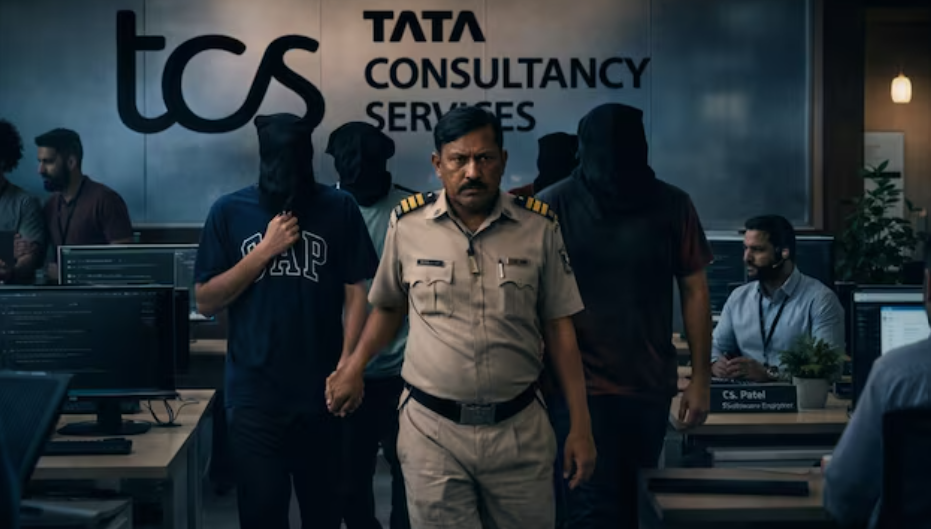
https://article-14.com/post/even-after-their-son-was-lynched-the-khan-family-did-not-leave-the-hindu-village-3-months-later-they-fled-694f49ba99322The fact is that the people caught in TCS case will be tried and spend years in jail. That is where the fundamental difference in response comes from, we know when the perpetrators are muslim not only them but even their family will suffer, this is not guaranteed when the muslim may be the victim.

Calvin is right. And the story he linked proves it.

Continue reading Open Thread; The Archive, The Lynching, and Humanity First

At the Heart of the conflict

Reams of digital pages on this forum have been devoted to India–Pakistan relations and the broader Hindu–Muslim, or Muslim–non-Muslim, conflict. I think most of these discussions miss the crucial issue at the heart of these conflicts.

I will try to navigate to that core. This particular reflection was triggered by a news item that broke recently:

TCS Nashik conversion case widens: Undercover women cops, Malaysia-linked preacher angles surface – India Today

If, twelve years into the Modi government’s Hindutva agenda, a dozen educated Muslim employees can allegedly engineer a conversion racket in TCS—with all its POSH and diversity guidelines—one wonders what Muslim radicals might get away with in majority-Muslim countries.

One doesn’t need to wonder. A Dawn report from 2014 alleged that around 1,000 non-Muslim girls are forcibly converted and married off every year. Even if the number is 100, that is a huge number for 2-3% of population. The demographic change in East Bengal over the last eight decades is a testament to these currents.

Continue reading At the Heart of the conflict

Brown Pandas: Rising Toward a Saffron Crescent.

A meditation on conflict, identity, and the severed wings of Mother India


The Name

A small irony to begin: the blog is Brown Pundits, not Brown Pandas. Though Brown Pandas has a certain charm; large, slow-moving, occasionally comic, surprisingly fierce when cornered. Perhaps not so different.


What Is Happening Here

Look at the comment boards today. We have a serious thread on the Aryan Migration Theory; which needs its own Precedent Post, and will get one. We have Indians and Pakistanis locked in the same mutual obsession that has consumed multiple generations post-Independence, the energy of which, if properly directed, might have built something extraordinary.

Here is the paradox that strikes us: the mutual antipathy between India and Pakistan, Iran and Israel, is not only destructive. It is, in a strange and uncomfortable way, generative. These four states, small by population or GDP relative to the great powers, have nonetheless forced themselves into the front rank of military and strategic relevance. China displaced Japan; the Anglo-French condominium displaced Germany; America and Russia defined the twentieth century. Yet India, Pakistan, Iran, and Israel sit alongside them at the table where it matters. That is not nothing.

Conflict, at a certain calibration, makes nations. The Romans knew it. The Persians knew it. The question is dosage. Too much tension and you get stasis, poverty, the endless self-consumption of the security state. Too little and you get complacency. The great irony is that India and Pakistan have had almost exactly the wrong calibration; enough conflict to militarise, not enough resolution to grow. The long peace that compounds prosperity never arrived.

Qinling panda: The shrunken pandas that diverged 300,000 years ago and sometimes come out brown | Live Science
Perhaps, like the Qinling Panda; brown, shrunken, diverged for three hundred thousand years before anyone thought to ask why. The Brown world is simply waiting to be recognised for what it always was.

The Venal Bargain

When Kabir took issue with the phrase “barely educated country” in reference to Pakistan, it was taken as hostility. It was not hostility. It was a diagnosis. Continue reading Brown Pandas: Rising Toward a Saffron Crescent.

On Censorship

We need to have a honest discussion about censorship on BP. We have a contributing author who demands and exercises the right to “ban” other contributing authors from commenting on ‘his’ threads. This, while continuing to spout distinctly one-eyed perspectives and cherry-picked regurgitated content.

Do we want BP to be a space with ‘dueling’ threads, or actual discourse? If Indians and Pakistanis can’t even manage a written conversation on a blog post via comments, without arbitrary petty ‘bans’ justified in the name of “I simply don’t like you” – this is the sort of thing that ends up having a disproportionate impact on the nature of what this space is.

Brown Pundits: Traffic Report, March 2026

The Dhurandhar effect

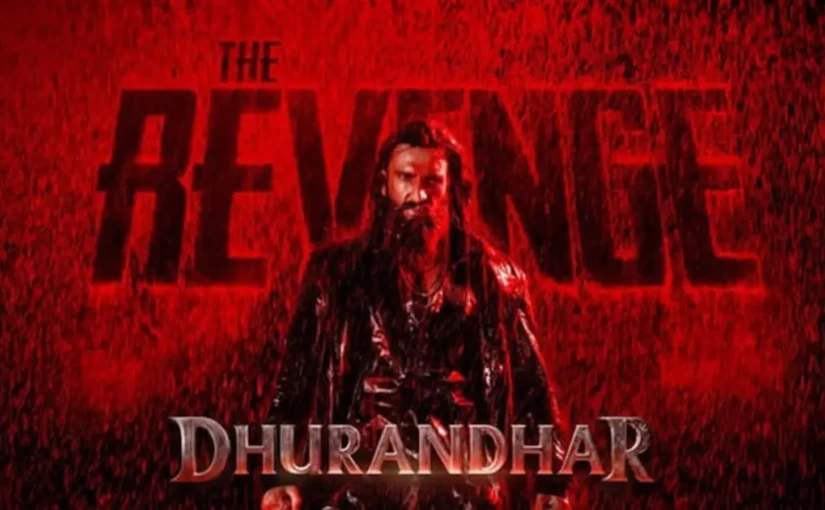
Omar Ali’s Dhurandhar review is our highest-traffic page by a distance followed by BB’s Kohrra season 2 review. It ranks 20th on a keyword with 87,000 monthly searches in India alone. A single film review, by one writer, on one streaming title, is pulling 37% of our traffic. Continue reading Brown Pundits: Traffic Report, March 2026

The Game We Can Smell

Asha Bhosle Deserved the Lead

Asha Bhosle passed away this week.

She was one of the most recorded artists in human history. She worked with Ustad Ali Akbar Khan on Hindustani classical music late in her career. She was, by any measure, a civilisational figure. She deserved the lead.

The Disguise

The language of the liberal left has become the preferred disguise for Hinduphobia and Indophobia. This is not a new observation, but it bears repeating because it keeps working. You dress the hostility in the vocabulary of literacy rates, developmental failure, civilisational backwardness. It sounds like concern. It is not concern. If it were concern, one would ask the same questions about Pakistan. One would not, because the point was never the question. The point was the target.

The Playbook

This is what a significant segment of Muslim liberal discourse does. It has learned the language. The vocabulary is progressive. The instinct beneath it is not. It hides deeply illiberal commitments behind the cover of global left credentials. The irony is that this playbook, run long enough, galvanises exactly the forces it claims to oppose. Jews, Hindus, and other minorities watch institutional Islam operate under liberal cover and draw their own conclusions. They are not wrong to do so.

The Mughal Test

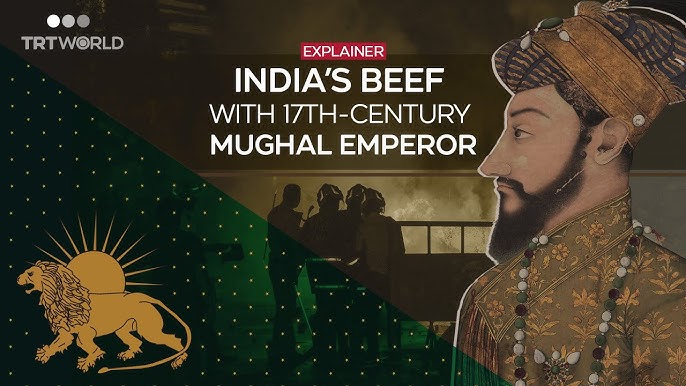
In the discourse of the Western, Muslim & Indian liberal left, a Hindu is only a good human being if they love the Mughals, especially Aurangzeb. Not merely acknowledge them, love them. Never mind that the Mughal period was, for large parts of the subcontinent, a period of genuine civilisational injury. You are not permitted to say that. You are not permitted to have a complex relationship with your own history. You must perform gratitude or be dismissed as a chauvinist.

We say this as people who have integrated Zoroastrian and Islamic history into our own civilisational understanding, not because we were required to, but because our tradition demands synthesis. That is our path. It is not everyone’s path, and Hindus are not obligated to take it. Partition, on QeA & Allama Iqbal’s insistence, largely ended the experiment in synthesised civilisation on the subcontinent anyway. That wound is real and it is not healed by demanding that Hindus perform affection for the dynasty that inflicted much of it.

What Is Changing

Hindus before were easy-going. The hardcore commitment to civilisational identity belonged elsewhere. That is changing, and the people somewhat responsible for that change are the ones who spent two decades weaponising liberal language against a civilisation that mostly wanted to be left alone.

We can smell the game.

We do not like it.

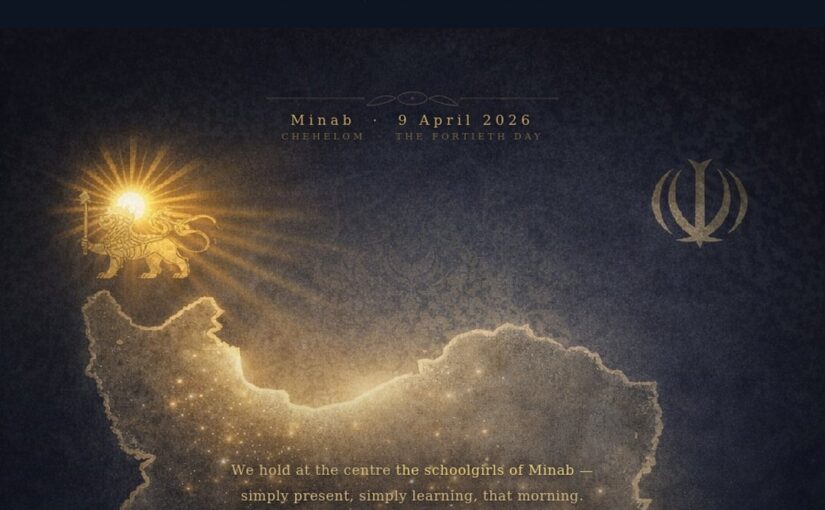
A Minute of Silence for the Schoolgirls of Minab | Chehelom, 9 April 2026

If you would like to receive an invite to the Minab Zoom Memorial; please email the Brown Pundits email address on the left. Thank you.


The Chehelom, چهلم, is the Persian tradition of gathering on the fortieth day after a death to pray, remember, and bear witness. It predates Islam and runs through every strand of Iranian culture. We mark it here not as a political act but as a human one. Set your alarm. One minute. That is all we ask. XTM

At 10:45am on 28 February 2026, 165 human beings, most of them schoolgirls aged 7–12 from the Bandari and Afro-Iranian communities of southern Iran, were killed in the bombing of the Shajareh Tayyebeh school in Minab.

9 April is their Chehelom; the Persian fortieth-day memorial.

Wherever you are in the world, please set an alarm for 10:45am Tehran time on Thursday 9 April and take one minute of silence.

For the girls of Minab. For every innocent life lost in this war. No hierarchy of grief; Jewish or Arab, Muslim or Persian, American or migrant.

We are all One.

🕰 Tehran 10:45 · London 08:15 · New York 03:15 · LA 00:15 · Sydney 17:15

Share as far as you can. 🕊 Continue reading A Minute of Silence for the Schoolgirls of Minab | Chehelom, 9 April 2026

Brown Pundits