
The power of the nameless

From the Wikipedia entry for Angkor Wat

The initial design and construction of the temple took place in the first half of the 12th century, during the reign of Suryavarman II (ruled 1113 – c. 1150). Dedicated to Vishnu, it was built as the king’s state temple and capital city. As neither the foundation stela nor any contemporary inscriptions referring to the temple have been found, its original name is unknown, but it may have been known as “Varah Vishnu-lok” after the presiding deity.

And more:

Cambodia was first influenced by Hinduism during the beginning of the Kingdom of Funan. Hinduism was one of the Khmer Empire‘s official religions. Cambodia is the home of the holy temple of Angkor Wat, the largest Hindu temple in the world. The main religion adhered in Khmer kingdom was Hinduism, followed by Buddhism in popularity. Initially the kingdom revered Hinduism as the main state religion. Vishnu and Shiva were the most revered deities, worshipped in Khmer Hindu temples….

Cham Hindus, an ethnic group in Vietnam influenced by Indic culture 1,000 years ago, are still Hindu to this day. Similarly, the people of the Indonesian island of Bali maintain continuity with the Hindu traditions of Java.

Now, consider this comment from the usual suspect:

Professor Truschke is also correct in stating that “Hinduism” is in many ways a constructed category. It was the British who used it as an umbrella term in the census for anyone who didn’t declare their religion to be something that the colonial power recognized (like Islam). Previously, people may have described themselves as worshipping a particular god.

It is curious that this person who protests for the honor of the Islamic religion casually asserts that the Hindu religion was created as a category by the British! While his religion taps at deep truths and must be respected, he can dismiss the faith of 800 million as a British fiction. The glamor of fashionable nonsense never ceases to attract this one like a moth to the flame.*

In any case, where have I heard this before? From the Wikipedia entry on caste:

There are at least two perspectives for the origins of the caste system in ancient and medieval India, which focus on either ideological factors or on socio-economic factors….

This school has focused on the historical evidence from ancient and medieval society in India, during the Muslim rule between the 12th and 18th centuries, and the policies of colonial British rule from 18th century to the mid-20th century….
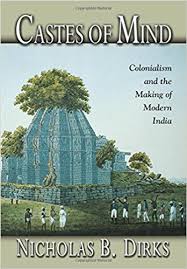
This view, which emphasizes the colonial experience, is encapsulated by Nicholas Dirks’ Castes of Mind. A debased form of this is that “well acktchually…did you know the British invented caste?”

The genetic reality has falsified this. Evidence from places such as Andhra Pradesh indicates that the endogamy which is the hallmark of caste/jati dates back to 1,500 to 2,000 years ago. This is not to deny that the category and its organization was not influenced by the British, and likely earlier the Muslims, but its ultimate basis seems to be one which is deeply rooted in South Asia.

Now consider this map:
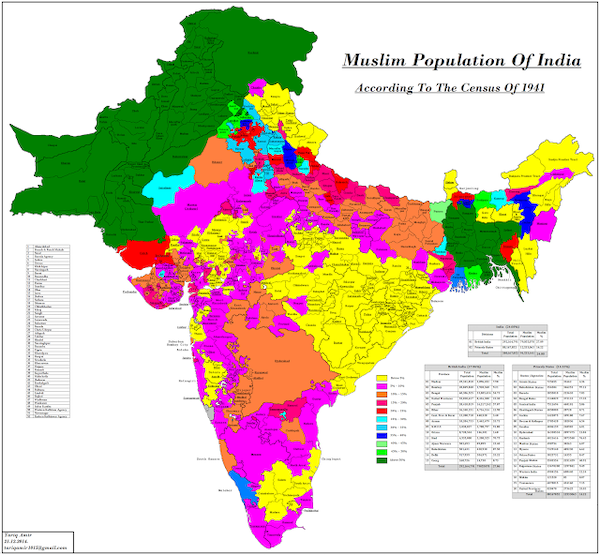
1941 British religious census, 75% of India is non-Muslim

After many centuries of rule by a religiously Muslim elite, the majority of Indians still retained a non-Muslim identity. The legacy and prestige of Islamicate conquest-elites were such that the 1857 rebellion against the British co-opted a Mughal as a figurehead, so persistent was their glamor. And yet the majority of Indians still cohered around an identity that was called “Hindu,” originally a term for Indian.

Without any knowledge of the puranas, or the elaboration of the Vedanta centuries before Islam became a permanent feature of the South Asian landscape, the fact that most Indians remained non-Muslim after centuries of Islamic rule indicates that there was a systematic social-religious system to which they adhered. The fact that they exported this social-religious system in fragments and essentials to Southeast Asia over 1,000 years ago indicates that Hinduism as we understand it was not simply a British reification!

It is sometimes common among people who follow the Abrahamic religions to classify Hinduism as “pagan.” Though theologically there is some justification for this, to be frank, this is more an aspersion than a description, bracketing Indian traditions with small-scale primal religions which were prevalent outside of Eurasian oikoumene.

Ethnographic evidence indicates that much of “Islamic Africa” was minimally Islamicized until the 20th century. Rather, local elites patronized ulema, whose remit was sharply delimited. It was modern transportation and public health that allowed for greater central integration across regions such as the Senegal. Sufi orders, in fact, benefited from European colonization in many regions of Africa because the only “high religion” tradition that was available locally was Islam, and so many heretofore pagan or nominally Muslim tribes were assimilated into the high culture matrix that was nearest to them.

The contrast with Dharmic and Chinese paganism is instructive. Only in areas where the local “high religion” tradition was moribund (e.g., Korea) or nascent (what became the Philippines) did Christianity gain widespread purchase. In the “pagan” hinterlands of the Indonesian archipelago Muslims and Christians, and later a modified form of Hinduism, gained mass conversions from peoples previously untouched by central governance.

Persistence of native Dharmic religious traditions despite Muslim cultural prominence is strong indirect evidence of a resilient high religious tradition despite debates as to its name.

Related post: Hinduism before India.

* The same person dismisses revisionism about 7th century Islam, which he takes to be authoritatively historical, while accepting at face value the idea that Hindus had no self-conception as a coherent identity before 1800.
India never existed

https://twitter.com/AudreyTruschke/status/1075758800525819904
https://twitter.com/AudreyTruschke/status/1075498207008960528
https://twitter.com/AudreyTruschke/status/1075426779878342657

I deleted my post since I’m just going to put these tweets out there; it will make for a good podcast though.

I suspect in a 100 years we will still have Coloniser Experts opining on South Asian Nationhood and then being feted like white deities in the Desh..

Remembering the Birangonas; the female Freedom Fighters/Victims

I thought this was an important post to share and reflect on.

https://www.facebook.com/photo.php?fbid=10159575761895532&set=a.10153345678710532&type=3

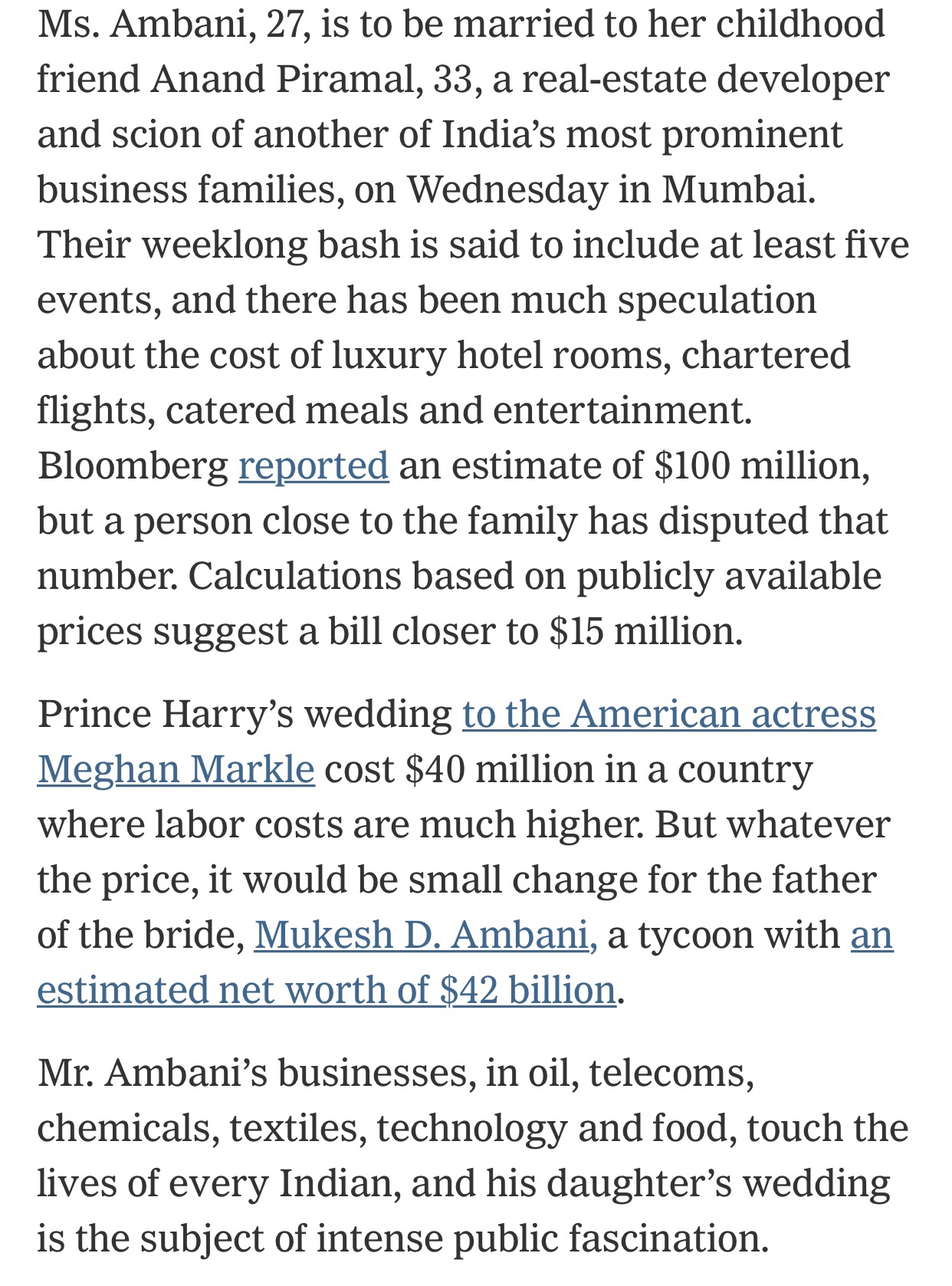
Why is the New York Times so Jealous of India?

I don’t see the point of highlighting India’s “relatively lower wage rate” (a snarky reference to poverty) and a comparison to HRH’s wedding. As though Brown people’s weddings cannot eclipse that of White Royals.

This is the subtle racism when a country leaps out of its stereotypes.

Brown Pundits – Episode 5, reflections on the Chinese age

The latest BP Podcast is up. You can listen on Libsyn, iTunes and Stitcher. Probably the easiest way to keep up the podcast since we don’t have a regular schedule is to subscribe at one of the links above.

Thanks to everyone who reviewed the podcast! Please leave more 5-star reviews. If this podcasts interests enough people I’ll be getting us on other platforms.

One of the most offensive things I have had to personally encounter in my life are people curious that a brown-skinned person would express an interest in China for purely intellectual interests (i.e., my wife is not Chinese, I have no business interests in China, etc.). As this century proceeds I think everyone, whatever one’s background, needs to rebalance their perception of what they need to be interested in, because the simple world of European supremacy between 1850 and 2000 is fading away…

Does Britain need a Trump to handle Brexit

Brexit is such a contentious matter that I don’t know where to start.

My Arch-Tory tribal instincts have overridden my normal active Social Justice Ghazi mode and I don’t like to see Britain humiliated in such a manner.

Theresa needs to channel her Trump and signal a collective fuck off to the EU. The lecherous manner in which Juncker was handling her earlier today was simply shameful:

Dance like a monkey American politicians!


I have no real comment, aside from the fact that when this video started and I realized what it was about, I began to laugh really loudly and without any self-control. Am I the only one?

By coincidence I saw this video right after noting that Parag Khanna has a new book out, The Future Is Asian. Here is the summary from Amazon: “In the 19th century, the world was Europeanized. In the 20th century, it was Americanized. Now, in the 21st century, the world is being Asianized.” It should be re-Asianized (we’re friends on LinkedIn).

Aasia Bibi case comes full circle (part 3)

Shahab Ahmed began the first chapter of his book ‘What is Islam?’ with these words,
” I am seeking to say the word “Islam” in a manner that expresses the historical and human phenomenon that is Islam in its plenitude and complexity of meaning. In conceptualizing Islam as a human and historical phenomenon, I am precisely not seeking to tell the reader what Islam is as a matter of Divine Command, and thus am not seeking to prescribe how Islam should be followed as the means to existential salvation. Rather, I seek to tell the reader what Islam has actually been as a matter of human fact in history, and thus am suggesting how Islam should be conceptualized as a means to a more meaningful understanding both of Islam in the human experience, and thus of the human experience at large.”

The difference between ‘literal’ Islam (something I had been taught all my life-till that point) and ‘human experience’ of Islam (as theorized by Shahab Ahmed in the lines above) became acutely aware to me in the days and months following ST’s assassination. Where did the theory end and practice start? Does believing in something and doing things contrary to those beliefs hypocrisy or just the way things work? Are the five ‘essentials’ (Tauhid, Namaz, Roza, Hajj, Zakat) of Islam necessary to be performed if you just gain brownie points with God by killing infidels/blasphemers? I was also growing up in an environment of Islamist terror. Militants who professed to be better Muslims than us mere mortals (who performed the aforementioned ‘essentials’) were killing innocent people in Lahore, in Karachi, in Swat, in KP. How does a practicing Muslim reconcile his faith with the Islam professed by the militants? How does an ordinary Pakistani Muslim view the history of Islam? (a pol sci-major friend of mine recently said something very interesting on this topic. According to him, “actual” history doesn’t really matter to people. History in the public imagination is whatever the elites/mil-establishment want it to be )

Following my basic introductions to political theory and rudimentary economics(at IPSS and beyond), I began to think about the intersection of religion and politics. I probed some fundamental concepts regarding political Islam and how accurate they were, like the concept of Muslim Ummah and the statement that ‘Islam is a complete code of life’. While I was pondering over these questions, I was still living in the same social milieu that had existed around me.

I remember debating some 9/11 ‘truthers’ among my medical school classmates. They refused to entertain the notion that it could have been an Al-Qaeda operation, done by fellow Muslims. One day, I got into an argument with a burly, 6 ft 4 in guy in m class about the ‘complete code of life’ theory. I had probably mentioned it on my Facebook wall or in some Facebook group that I didn’t believe in the veracity of this claim because it was a newer (19th/20th century) addition to Islamic teachings. That tall, muscular guy approached me in the lecture hall the next day and said that he didn’t like my comment and that he was offended by it. I tried to reason with him but he got agitated and asked me to shut it because I was questioning religion which made him angry. I switched gears and changed the topic to save my skinny ass. A few days later, I was talking to a classmate who was among the very few friends I had and she said, Please do not get killed for your ideals.

For me, the public reaction to ST’s assassination was an eye-opening experience. There was a notion of a ‘silent majority’ in Pakistan, people who didn’t like mixing religion and politics (this theory was bogus and had no basis in fact). Fasi Zaka, a very intelligent commentator and writer on Pakistani society wrote, “After Salmaan Taseer’s death, Pakistan’s ‘silent majority’ finally spoke up. They liked it.”I heard someone in the ‘liberal’ (secular liberal or group B) circle say that ST’s death closed the door on critical discussion of blasphemy laws in the near future. It was a battle that we (secular-liberals) lost. We were grossly outnumbered and there was a very remote chance that we could incrementally chip at the edifice of blasphemy laws, for example by changing/improving the law of evidence or publicizing the historical consensus among Sunni Ulema that blasphemy is not punishable by death.

Instead, we have Khadim Rizvi and Tehreek-e-Labbaik (TLP), a ragtag group that can publicly mock the most powerful people in Pakistan and get away with it. ST’s death and Qadri’s hanging opened an avenue for these peddlers of hate to come out of their cubbyholes and wreak havoc on the “silent majority”(pun intended). Mohammad Hanif wrote about the aftermath of ST’s murder for The Guardian (full piece here), an excerpt of which is relevant to what I’m saying.

“So who are these people who lionize the cold-blooded murderer? Your regular kids, really. Some Pakistani bloggers have tried to get these fan pages banned for inciting hate. But as soon as one shuts down, another five crop up. Those who have trawled the profiles of these supporters have said that they have MBA degrees, they follow Premier League football, they love the Pirates of the Caribbean films. Miley Cyrus figures on lots of these pages.”

Qadri’s name became a brand (see here and here) that became synonymous with love for the prophet and the whole blasphemy debate. One could argue that in a country that was premised on the idea of a separate homeland for a particular religion, that religion would become the yardstick by which you proved your nationalism and patriotism.  As for me, I moved out. It became apparent a few years after the ST murder that things weren’t getting any better in my homeland. I could either suck it up and keep living or leave and start afresh. It was very hard to choose one of the routes but I chose the way out.

What about the few liberal spaces left in Pakistan? They are constantly shrinking. IPSS blew out of steam (and funding), NGO-funded youth groups and ‘Countering Violent Extremism’ (CVE) forums ran out of money after the US decided to decrease its footprint in Af-Pak. I was on an exchange visit (a misnomer, really, since no one ever visited Pakistan in return) to the US in 2012 and everyone at the policy level was talking about a post-2014 withdrawal scenario. There are still some valiant people working on secular ideas in Pakistan. Social media has helped but only a little bit. It has gotten the proverbial 72 seculars in Pakistan together on Facebook but it has also fueled the rise of a neo-Islamist political class that takes part in TLP protests and roadblocks. There are also certain bubbles in which you can dare criticize the state narrative such as LitFests and English newspaper op-eds. I remember talking to a pharmacy student whom I knew from a former workplace at Lahore Literary Festival and asking him what he was doing there since most of the conversation on stage there is in English (by decree or by choice). He replied that he was there just as a spectator to see how the ‘1%’ live in Pakistan and had not understood anything that was being discussed. The most important pockets of secular space consist of indigenous movements and organizations that work with people in their own language. I worked with two such organizations that communicated with people in their languages (Punjabi, Urdu, Sindhi etc).

Social media also helped tremendously in the information warfare raged by Milestablishment, turning former Musharraf-lovers into Pakistan Tehreek-e-Insaaf (PTI) followers. There is a lot of talk about a ‘youth bulge’ in Pakistan but policymakers and commentators rarely talk about the dangers of having a majority of poorly-educated young people who are taught actively and passively that they are victims of some unknown ‘agenda’ and that if they were given the right set of circumstances, they would conquer the world. I used to teach at private medical schools in two different cities of Punjab and I saw the moral and mental confusion that young people had about their lives and their futures. Youth and Naivete go hand in hand, however constant ideological propaganda about Islam’s greatness and Pakistan’s underdog status is a terrible fertilizer for young minds.

ST was not the first victim of this madness. Sabeen Mehmood was killed in cold blood on the streets of Karachi, Raza Rumi was attacked and his driver was killed, Mashal Khan was lynched to death. Each of these individuals tried to talk about secular values in society. What would become of the society? I don’t know. I don’t make predictions. Omar Ali asked me in November 2015 (in Lahore) about my thoughts on Pakistan’s future and I told him that things were doing downhill every passing day. I standby my pessimism.


Hindu genocide ongoing in Pakistan

Since there are some that insist that Hindu nationalists are as bad as Islamists, I want to share this tweet I stole from Omar:

Tiny communities tend to understand powerlessness. So when three dirt poor Hindu families arrived in lower Orakzai nearly two decades ago because they couldn’t make ends meet in Peshawar, the Shias decided to provide some shelter. The custodians of the imambargah in Kalaya Bazaar gave them some space outside to set up their secondhand winter clothing stall and charged them just fifty rupees in rent.

It was outside this very imambargah that a suicide bomber blew himself up on November 23, killing 34 people, mostly Shias, and injuring 56 others. Among the dead were also the heads of the three Hindu families, Mannat Lal, Amrat Lal and Saram Chand, who were selling socks and sweaters at their stall at the time.

Their families are doubly devastated, not just because of the deaths, but because they were all related. Amar Kumar has lost his father Mannat Lal, his paternal grandfather Amrat Lal and maternal grandfather Saram Chand. “What else can we do but leave,” he says. “There’s just my mother and grandmother left.”

I am sharing this important talk by Dr. Jain of Indus University:

The first 10minutes are about the humiliation and destruction of Multan’s Sun Temple, which till the 1000AD was one of the two most important Hindu sites in the Subcontinent.

The idol was covered in meat by the Arab invaders, held as hostage and desecrated (and is now in the British museum).

I relayed to LV the video and told her that she should never forget the Hindu blood spilt in the last millennia. Considering the parlous situation all religious minorities have in Pakistan; India must protect herself at all costs. I hope Congress don’t sell out India’s Hindu majority identity in their quest for power.

Brown Pundits