A Tentative OUT OF INDIA Model To Explain The Origin & Spread Of INDO-EUROPEAN LANGUAGES

THE FOLLOWING IS A DRAFT I HAD PREPARED A FEW MONTHS BACK. IT IS JUST A WORK IN PROGRESS AND FAR FROM DEFINITIVE. THIS IS A VERY LONG POST AND MAY BORE MANY OF YOU FOR WHICH I APOLOGISE. THIS POST IS A FOLLOW-UP FROM MY EARLIER POST WHICH WAS TEMPORALLY & GEOGRAPHICALLY MORE RESTRICTED –

The Roots of Indo-Iranian cultural genesis

—————————————-

The Last 2 months have produced a flurry of ancient DNA studies that have given us results with enormous implications for the spread of Indo-European languages. Incorporating the results of these studies along with linguistic and archaeological evidence, we can create a model of spread of Indo-European languages from SC Asia to other parts of Eurasia.
Image result for The Indo-European languages

LINGUISTIC EVIDENCE

Johanna Nichols had produced, more than 2 decades ago, a wonderful model for the spread of the Indo-European languages from its locus in Central Asia. Her thesis was spread over two articles in two volumes. According to her –

Several kinds of evidence for the PIE locus have been presented here. Ancient loanwords point to a locus along the desert trajectory, not particularly close to Mesopotamia and probably far out in the eastern hinterlands. The structure of the family tree, the accumulation of genetic diversity at the western periphery of the range, the location of Tocharian and its implications for early dialect geography, the early attestation of Anatolian in Asia Minor, and the geography of the centum-satem split all point in the same direction: a locus in western central Asia. Evidence presented in Volume II supports the same conclusion: the long-standing westward trajectories of languages point to an eastward locus, and the spread of IE along all three trajectories points to a locus well to the east of the Caspian Sea. The satem shift also spread from a locus to the south-east of the Caspian, with satem languages showing up as later entrants along all three trajectory terminals. (The satem shift is a post-PIE but very early IE development.) The locus of the IE spread was therefore somewhere in the vicinity of ancient Bactria-Sogdiana. This locus resembles those of the three known post-IE spreads: those of Indo-Iranian (from a locus close to that of PIE), Turkic (from a locus near north-western Mongolia), and Mongolian (from north-eastern Mongolia) as shown in Figure 8.8. Thus in regard to its locus, as in other respects, the PIE spread was no singularity but was absolutely ordinary for its geography and its time-frame.

To summarize the important points of dialect geography in the Eurasian spread zone, the hallmark of a language family that enters a spread zone as an undifferentiated single language and diversifies while spreading is a multiple branching from the root. This is the structure of the IE tree, which has the greatest number of primary branches of any known genetic grouping of comparable age. The hallmark of developments that arise in or near the locus is that they appear along more than one trajectory. This is the distribution of the centum/satem division in IE, and in the later Indo-Iranian spread it is the distribution of the Indo-Aryan/Iranian split (as argued in Nichols, Volume II). The reason that dialect divisions arising in the locus show up along more than one trajectory is that the Caspian Sea divides westward spreads into steppe versus desert trajectories quite close to the locus and hence quite early in the spread. In contrast, developments that occurred farther west, as the split of Slavic from Baltic in the middle Volga may have, continue to spread along only one trajectory.This is why the Pontic steppe is an unlikely locus for the PIE spread. (THE EPICENTRE OF INDO-EUROPEAN LINGUISTIC SPREAD – pgs 137-138)

She further states in her 2nd article,

IE homeland studies so far have had to resolve the dilemma of how to reconcile conflicting lexical evidence about the IE homeland. Were the Indo-Europeans pastoralists or agriculturalists? The lexical evidence can be used to support both viewpoints (for a summary and argument in favour of agriculture see Diebold 1992). If they were a people of the dry grasslands, how do we explain the presence in their language of words for ‘beaver’, ‘birch’, and ‘oak’, the latter with extensive mythic and cultural salience (Friedrich 1970:129ff.)? If they were steppe pastoralists, how do we explain the presence of words for ‘double door’ and ‘enclosed yard or garden’ suggestive of dwellings in the urban Near East (Gamkrelidze and Ivanov [1984:741ff.] 1994:645ff.)? If they were nomadic herders of the plains, how is the presence of a word for ‘pig’ explained? A homeland reconstructed as locus, trajectory and range removes the dilemma: a locus in the vicinity of Bactria-Sogdiana implies a spread beginning at the frontier of ancient Near Eastern civilization and a range throughout the steppe and central Asia, following the east-to-west trajectory, with occasional or periodic spreads into the Danube plain and Anatolia. The PIE ecological and cultural world, then, included the forested mountains southeast of the Kazakh steppe, the dry eastern steppes, the Central Asian deserts, the urbanized oases of southern Turkmenistan and Bactria-Sogdiana, the eastern extension of the urban Near East, the rich grasslands of the Black Sea steppe, the southern edge of the forest-steppe zone and the Siberian taiga, fresh-water lakes, and salt seas (the Aral and Caspian). The economy of the Indo-Europeans included dry-grasslands pastoralism, settled farming, mixed herding and farming, and trade, including not only trade between farmers and herders in central Asia but also, importantly, control of the antecedents to the Silk Route and the trade connections with India to the south. This economic and ecological diversity is reflected in the vocabulary of PIE. (THE EURASIAN SPREAD ZONE & INDO-EUROPEAN DISPERSAL, pg 233)

Nichols dates the breaking of IE languages between 4000 – 3300 BCE. This is contemporary to the Chalcolithic aDNA samples we now have from Central Asia, Iran, the Caucasus, Anatolia and the steppe. But before proceeding with the genetic evidence let us also have a glance at the archaeological evidence.

Image result for hittites

ARCHAEOLOGICAL EVIDENCE

Continue reading A Tentative OUT OF INDIA Model To Explain The Origin & Spread Of INDO-EUROPEAN LANGUAGES

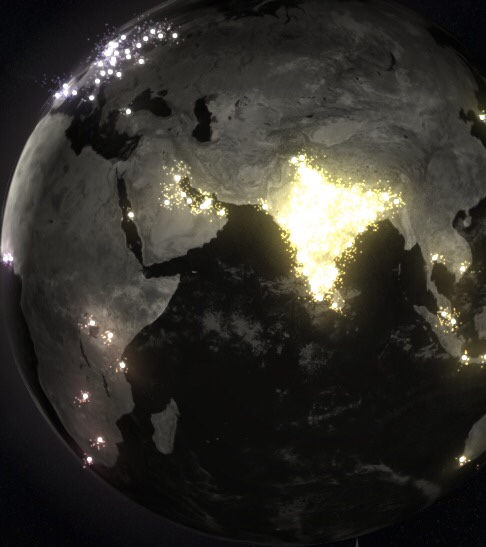
A Golden Land of Fire

A powerful imagery of the important (and overdue) #MeToo movement.

India is bathed in a golden light and the fact that its society is reverberating from #MeToo shows just how far advanced India & Indians are compared to anyone else regionally.

That India is able to acknowledge a universal issue in a far-teaching and comprehensive manner is a vindication of her long & liberal democratic tradition..

Nikki Haley shows she’s a good politician in regards to religion too


This week on The Remnant podcast, Jonah Goldberg, whose wife works for Nikki Haley, expounded at length about her skill as a politician. His point, which is legitimate, is that Haley is well liked by the broad mass of Trump-supporting Republicans (if not elite pro-Trump idealogues), as well as Trump-skeptical conservatives.

I’ve known of Nikki Haley since 2004, a few years after Bobby Jindal came onto to the national scene. Both are conservative Indian American Republicans elected as governors in the South. But there are differences between the two. While Haley can arguably “pass” as white, Jindal cannot (both are of Punjabi ethnicity). But a bigger difference has been their attitude toward religion: Jindal has worn his Christian conversion and faith on his sleeve, while Haley has been much more low-key. Throughout her career, Haley has admitted that the Sikh gurdwara remains a part of her life, despite her conversion to Methodist Christianity. Could you imagine Jindal saying such a thing about a Hindu temple?

The above is a video clip of Haley during a 2014 visit to India, where she visited the Golden Temple with her husband. When asked about her conversion to Christianity, she avers the sincerity of her belief. But Haley also speaks in an ecumenical language and seems to express the view that her choice of religion was in keeping with her culture as an American. Her turn to Christianity was not a denial of Sikhism, which she seems to see as grounded in India.

I can’t look into Haley’s heart, and to be frank her religious faith is not my business. But, I think I can say many people of subcontinental background tend to view converts to American Christianity as opportunists or somehow lacking in cultural pride and internal strength. American evangelical Protestant acquaintances would often mock Hinduism in front of me, despite the fact that I have a Muslim name and have been an atheist since I was a small child. To convert to Christianity is perceived by some to be conceding the point of that mockery.

And yet above Haley seems to be interpreting her conversion to Christianity as an expression of her alignment with the Dharma of the land in which she grew up, the United States. You may agree or disagree with her, but her emotional expression above certainly does make it seem that she retains a deep fondness for her Sikh upbringing.

Saturday South Asian Questions

  • Is there such a thing about a Deccan Culture? I don’t necessarily mean the “Dakhini” culture but an intermediate geo-cultural zone between North & South India.
  • As a corollary it’s a bit interesting that the “Dakhini” culture didn’t emerge as a binding agent quite in the same way as the Delhite-Hindustani one.
  • In the spirit of this thread about differences between North & South Karnataka; I was looking at the 50 state proposal in India. Does India need more states?
  • I was shocked to learn about “Gandhinagar“, which is the new capital of Gujarat. I do remember there was controversy to change the name of Ahmedabad but it seemed done and dusted.
  • My personal view is that it seems churlish and rather offensive to make a “Saffron” sister city to Ahmedabad but my view is that once again we must be grateful to QeA for avoiding cultural (if not physical) extinction.

Tweet of the Day

I should have added “woke white friend” but I found this to be so hilarious. I mentioned that he should just say “Indo-Mughlai” or “Indo-Pakistani” though from my understanding Nihari, Aloo Ghosht and Falood have definite Turanian influences. Daal of course is a staple food but depends on what type of Daal; Haleem is certainly ours.

Much as I love my woke white friends (they find my persistent Toryism to be hilarious) I don’t approve of their use of the term desi as in this recent tweet:

Continue reading Tweet of the Day

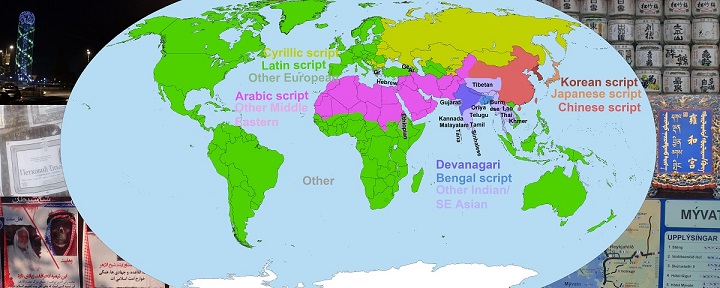
Map of Civilizations

Since the above map is only really visible on clicking I thought I would share another map that was better colour-coded.

World scripts map
Turan & Turkey needs to go Purple asap..

A book that deeply influenced me as a child was the Clash of Civilisations. I thought Samuel Huntington’s contention that Civilisations correlate to religions was a bit too blunt. However what also influenced me was the first chaptre of Ludwig Von Mises’s book, “Nation, State & Economy.”

Continue reading Map of Civilizations

The ineffectual British Monarchy and why one shouldn’t Diss Chris

I’ve started to use Twitter alot more as I’ve was rather tied up (to my loss I still haven’t been able to meet Kabir Sahib in person). I have begun to prepare for a national franchising of one of my brand’s Bubble Tap.

Incidentally my life comes to full circle as I mirror what my Irani great grandfather did in Kohlapur upon pioneering there*; he opened an ice-cream shop I opened a Dessert shop upon moving to Cambridge.

At any rate as is pretty evident my political instincts are quite High Tory. I only assume the SJW mantle to fight back against White Liberals since I dislike Munfaqeenism (to thine ownself be true). A classic example.

https://www.facebook.com/truTVAdamRuinsEverything/videos/2020104111613510/?__xts__[0]=68.ARATOlpD_OitUxNp3_xx-dkDYOxJEpGqcDfmzKgmulIhzwgsFMyidIjMci_BFhtSevClGv08vS-8qI-BfHhuReh4qqWm972GLCrQttP9nt9mNYEBxADKutEhRzCtsqaLZ6kzl-rx0lXSNz1R2NsW8C6oNI-TGtBKYUJVcQseSc65JwjNgu_kzw&__tn__=-R

Continue reading The ineffectual British Monarchy and why one shouldn’t Diss Chris

Brown Pundits