Hinduism will die, and Hinduism will live

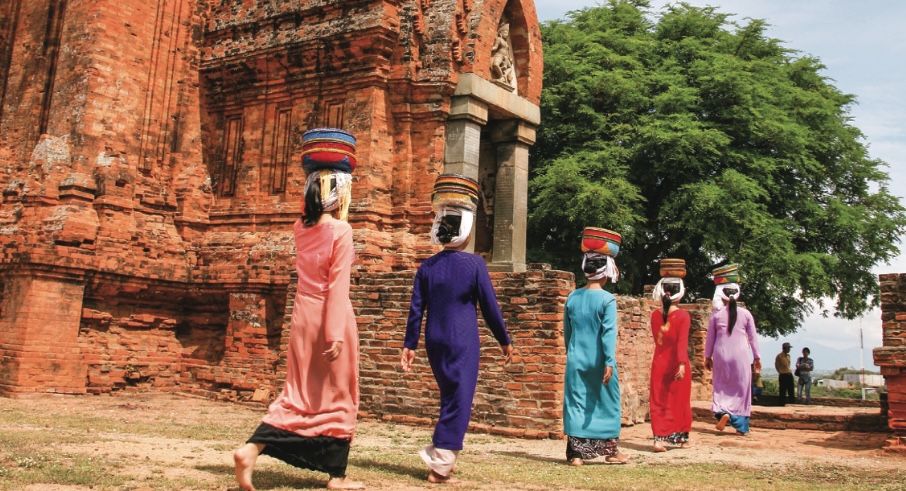
Cham Hindus

Sometimes in these comments or on social media, I see Hindus bemoan the passivity and weakness of their religion in the face of faiths with greater vigor and asabiyyah. This is such a common occurrence that I don’t often comment on it. But I have to say ironically that these sorts of comments exhibit a narrowness of perception, and a broader cultural involution, that typifies so many Hindus and is why they are often caught flatfooted against the partisans of other religions, usually Christianity and Islam.

First, there are 1.2 billion Hindus in the world. There is no near-term future where Hinduism will go extinct. And this number of Hindus is the very source of the religion’s likely rebirth: evolution operates upon heritable variation to drive adaptation and change. In a cultural sense, Hinduism has a great deal of variation, whether it be obscure ethnicities like the Cham Hindus of Vietnam, or the expansion of ISKCON around the world.

ISKCON itself is interesting because its reactions illustrate the weakness and likely end of some forms of Hinduism in the Diaspora, and likely ultimately in India itself. Though from what I can tell ISKCON does exhibit a level of unpalatable cultishness, some of its orthodox Indian Hindu critics exhibit a literal reactionary mindset that illustrates why many forms of this religion are not long for this world. After the hammer blow of Islam in the Indian subcontinent around 1200 AD Indian religious traditions, what we call Hinduism, nevertheless preserved and survived. This very fact illustrates a robustness that was lacking in Near Eastern Christianity and Zoroastrianism. But that survival likely depended upon particular Indian institutions, like jati-varna, that were decentralized and flexible in a manner that allowed Hinduism not to be decapitated in the same manner that Persian Christianity and Zoroastrianism were in the centuries after the Islamic conquest.

The centuries of dhimmitude transformed Hinduism into a far more Indian religion than it was in 500 AD. This may sound strange, but the genetic and cultural evidence are clear that a massive cultural extension of Hindu Indian civilization existed in Southeast Asia during this period. If Islam had not interposed itself, and India itself become part of the Dar-ul-Islam during the medieval period, it is quite plausible that a Hindu-Buddhism dharmic condominium may have emerged from the Indus to the Gulf of Tonkin over the last few thousand years.

But that is not what happened. At the same time as the Turco-Muslims invaded India maritime Southeast Asia began to realign itself with the Islamic international, a trade network that was beginning to dominate the Indian ocean. After 1500 most of the Hindu kingdoms collapsed and turned to Islam (with Bali and Champa being the exceptions). The geographic purview of the religions that ultimately drew from the Vedic traditions became constrained, and within India cultural adaptations emerged that allowed the religion to resist the stress tests of Islam.

The centuries after the fall of the Mughals the rise of the British, and now the rise to political domination by Hindutva, are creating new cultural configurations. Many Hindus retain the cultural mindset of the past, denying that Hinduism proselytizes when the very faces of the Balinese illustrate that this was not so in the past. These traditionalists assert jati-varna in a time when even within India inter-caste marriage is eroding the power of this communalism gradually but inevitably. They also deny that non-Indians can ever be genuinely authentically Hindu, even when those non-Indians oftentimes show a vigor of belief and practice that put Indians to the same.

Those who value purity above all else will slowly fade and diminish as they look back to the past. A new future comes, and we don’t know what it will be, but cultures are resilient.
What is Islamophobia?


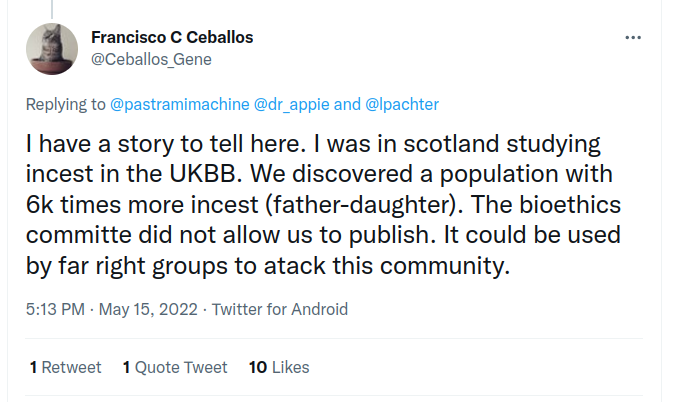
One of the problems with “traditional” familial and cultural systems is the level of depravity they can mask. This is not a “slam dunk” argument against them, but it is a real thing. The suppression of the evidence of clear sexual abuse in a certain community in the UK in the service of preventing negative stereotypes seems to be a case where the lives and misery of young girls in these communities are not accounted for in the same way as those from more mainstream subcultures. You can see exactly how Rotherham happened, though in that case, the girls targeted were explicit outgroups.

(this not even an explicitly communal point, as Hindu women have routinely complained about the “perverted uncle” problem in joint-families)

Pakistan 2022; Things fall apart?


Another BP Podcast is up. You can listen onĀ Libsyn,Ā Apple,Ā Spotify, andĀ StitcherĀ (and a variety of other platforms). Probably the easiest way to keep up the podcast since we don’t have a regular schedule is toĀ subscribeĀ to one of the links above!

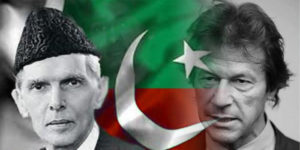
In this episode, Omar talks to Ambassador Kamran Shafi and Columnist Dr Mohammed Taqi about the current political crisis in Pakistan. We take our best guess on whether the army is falling apart or just having a hiccup.

Some background:

  1. NFP (nationalist-leftist columnist from Karachi) writes a pretty good summary of the Imran Khan experiment and how it fell apart. https://www.dawn.com/news/1719266/smokers-corner-the-self-destruction-of-imran-khan
  2. Former ISI chief Asad Durrani writes about the failure of Project Imran: https://timesofindia.indiatimes.com/world/pakistan/the-army-took-a-back-seat-because-its-project-imran-khan-bombed-says-former-isi-chief-asad-durrani/articleshow/95305574.cms
  3. Mainstream Pakistani nationalist Mosharref Zaidi writes on this topic: https://www.thenews.com.pk/print/1007665-november-29-and-pakistan-s-polycrisis

it is worth noting that I could not find a single recent good article by a pro-khan columnist. That is not his style. He has a simple message, and no details and no plan.

Abhijit Iyer Mitra on The Socio-Cultural Impact of 3D Printing Technology

On the 8th Episode of my weekly podcast The Indic Paradigm on The Indic Explorer YouTube channel, I chat with Abhijit Iyer Mitra on the socio-cultural impact of 3D Printing Manufacturing Technology in the future.

The Indic Explorer YouTube channel focusses on the interplay of Indic culture with modernity explored through different facets in the socio-cultural sphere.

Do subscribe to the channel at https://www.youtube.com/theindicexplorer

and follow me here

Twitter- https://twitter.com/theindicexplor1

Instagram- https://www.instagram.com/theindicexplorer/

Substack-https://digitaldharma.substack.com/

Evolution of Hindu Temple Architecture & Analysis of Prominent Temples

Professor of Tourism Ramakrishna Kongalla speaks to me on the weekly podcast The Indic Underground about the various stages of evolution of Hindu Temple Architecture.

We also analyze the architecture of prominent Hindu temples. This is a deeply informative episode one that should not be missed out.

The Indic Explorer channel is a platform to explore different facets of Indic Culture and its relationship with modernity. On our show ā€˜The Indic Underground’ we speak to newer & younger people from different spheres of cultural life that represent less known aspects of Indic culture. If you are tired of the same folks & are looking for fresh voices, then this is the place for it.

Our endeavor is to reach out to culturally conscious younger people who are deeply tied to the values of Indian culture while still embracing modernity. We will soon be bringing interesting discussions on different topics ranging from culture, civilizational issues, history, geopolitics, philosophy, music, literature dance, art and architecture.

Do subscribe to the channel at https://www.youtube.com/theindicexplorer

and follow me here

Twitter- https://twitter.com/theindicexplor1

Instagram- https://www.instagram.com/theindicexplorer/

Substack-https://digitaldharma.substack.com/

Bangladesh and West Bengal genetics

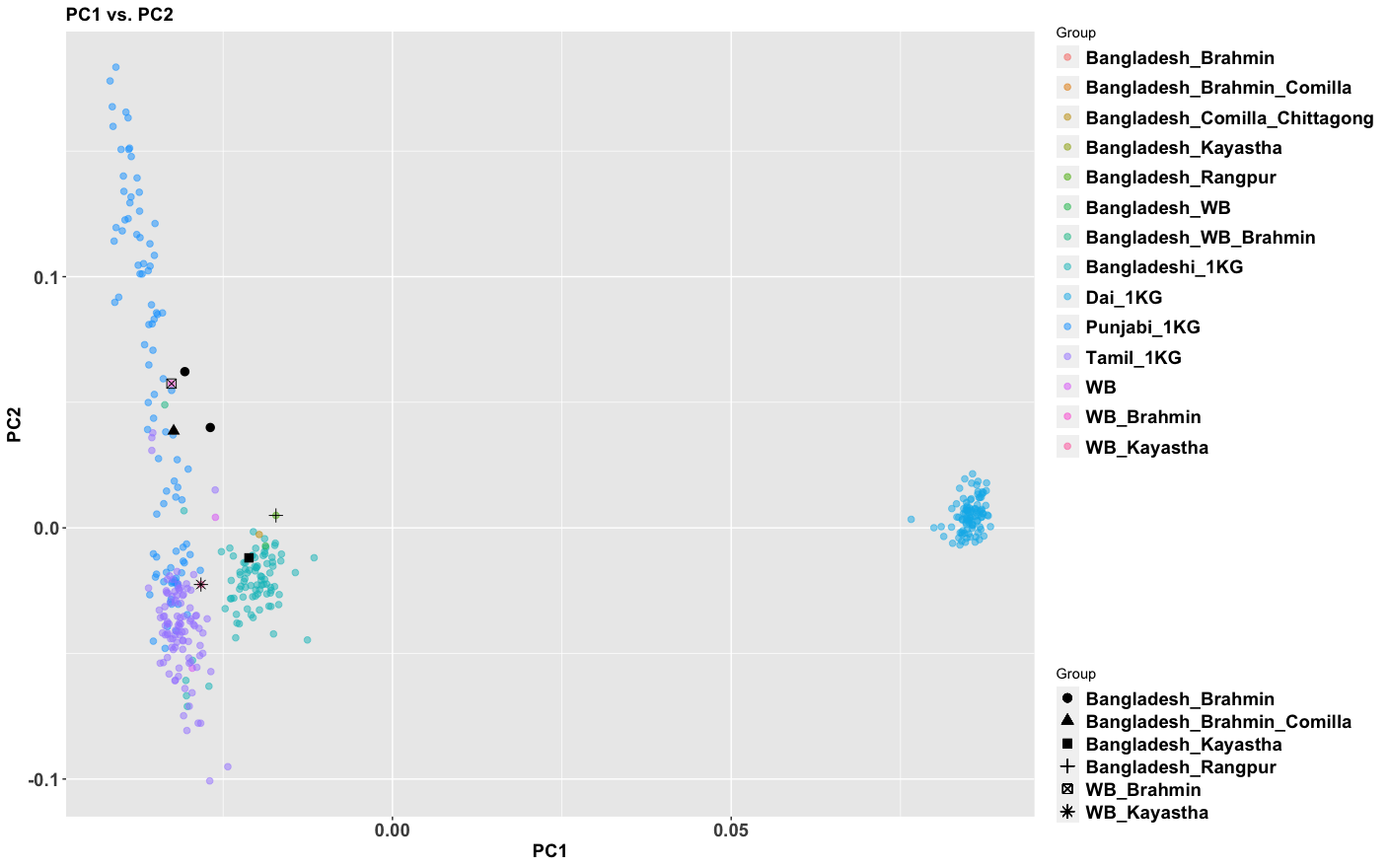
I got a few more samples with provenance. The Bengali Brahmins are shifte the way you would expect. The Bangladesh Kayastha (someone from a Hindu background) is in the cluster with generic Bangladeshis from Dhaka. The West Bengali Kayastha is far less East Asian. My current model right now is that the Kayasthas are basically peasants that engaged in uplift, as in general they don’t seem so genetically distinct from other Bengalis, in contrast with Brahmmins. Though Bengali Brahmins do exhibit admixture with Bengalis with East Asian ancestry, they are very different overall.

Usha Vance “hit piece”


The New York Times has a quasi-hit piece out on Usha Vance, From Yale to Newsmax, Usha Vance Has Helped J.D. Vance Chart His Path – The Ohio Senate candidate’s wife, an accomplished lawyer, remains ensconced in the milieu he now rails against. I say quasi because there’s nothing bad they could really find except that she’s helped her husband along on his political career, and seems to have tacitly shifted her own views.

This part about untouchability was pretty amusing:

That world has, in turn, started to reject Mr. Vance. Ahead of the September 2021 wedding of Sophia Chua-Rubenfeld — a daughter of Ms. Chua — multiple guests requested not to be seated next to the Vances, according to two people who attended the wedding. (The couple did not attend, in the end, because their children had the flu and Ms. Vance was soon to deliver their third child, according to two people close to the Vance family.)

I guess they were worried about losing caste!

Omer Ghazi-An Advaitin Drummer talks about Adi Shankara & Rendering his Shlokas to Modern Beats

Omer Ghazi an expert drummer and exponent of multiple percussion instruments across the world, talks about his exploration of the Advaita Philosophy of Adi Shankaracharya.

He also talks about how he overcame mainstream cultural conditioning, to eventually discover his Indic cultural roots. He had a lot to say about Science and its compatibility with Indic Philosophy.

The highlight of the discussion was in the beginning, where we open the show with Omer playing the drums on the Nirvana Shatakam Shloka written by Adi Shankara. He talks extensively during the show about rendering Ancient Sanskrit Shlokas to a modern beat and the challenges in executing them without affecting their original intention and flow.

The Indic Explorer channel is a platform to explore different facets of Indic Culture and its relationship with modernity. On our show ā€˜The Indic Underground’ we speak to newer & younger people from different spheres of cultural life that represent less known aspects of Indic culture. If you are tired of the same folks & are looking for fresh voices, then this is the place for it.

Our endeavor is to reach out to culturally conscious younger people who are deeply tied to the values of Indian culture while still embracing modernity. We will soon be bringing interesting discussions on different topics ranging from culture, civilizational issues, history, geopolitics, philosophy, music, literature dance, art and architecture.

Do subscribe to the channel at https://www.youtube.com/theindicexplorer

and follow me here

Twitter- https://twitter.com/theindicexplor1

Instagram- https://www.instagram.com/theindicexplorer/

Substack-https://digitaldharma.substack.com/

Suneet Kumbhat on doing Mahabharata Recitals in Cafes for the Youth

Suneet Kumbhat talks about doing Mahabharata discussions and recitals in chic cafes and eateries in Urban India focusing on bringing the great epic to a newer generation in a fun and casual environment filled with great values and learnings.

The Indic Explorer channel is a platform to explore different facets of Indic Culture and its relationship with modernity. On our show ā€˜The Indic Underground’ we speak to newer & younger people from different spheres of cultural life that represent less known aspects of Indic culture. If you are tired of the same folks & are looking for fresh voices, then this is the place for it.

Our endeavor is to reach out to culturally conscious younger people who are deeply tied to the values of Indian culture while still embracing modernity. We will soon be bringing interesting discussions on different topics ranging from culture, civilizational issues, history, geopolitics, philosophy, music, literature dance, art and architecture.

Do subscribe to the channel at https://www.youtube.com/theindicexplorer

and follow me here

Twitter- https://twitter.com/theindicexplor1

Instagram- https://www.instagram.com/theindicexplorer/

Substack-https://digitaldharma.substack.com/

Udaya Shreyas of The Sanskrit Channel talks about the Challenges with Learning the Language in India

Udaya Shreyas of The Sanskrit Channel talks about his journey into the beautiful world of the Sanskrit language, his transition from being an atheist into spirituality.

We also talk about

1 Difference between Vedic Sanskrit, Panninian Sanskrit and conversational Sanskrit

2 Learning language through speech or grammar? Initiatives taken by Samskruta Bharati

3 How Sanskrit can be revived on a mass scale via both govt and private initiatives

4 Qualities of Sanskrit as a scientifically suitable language for computer programming

5 The poetic qualities of Sanskrit, the different poetic meters, same words having different meanings

6 Future outlook of Sanskrit

7 Future goals for The Sanskrit Channel

The Indic Explorer channel is a platform to explore different facets of Indic Culture and its relationship with modernity. On our show ā€˜The Indic Underground’ we speak to newer & younger people from different spheres of cultural life that represent less known aspects of Indic culture. If you are tired of the same folks & are looking for fresh voices, then this is the place for it.

Our endeavor is to reach out to culturally conscious younger people who are deeply tied to the values of Indian culture while still embracing modernity. We will soon be bringing interesting discussions on different topics ranging from culture, civilizational issues, history, geopolitics, philosophy, music, literature dance, art and architecture.

Do subscribe to the channel at https://www.youtube.com/theindicexplorer

and follow me here

Twitter- https://twitter.com/theindicexplor1

Instagram- https://www.instagram.com/theindicexplorer/

Substack-https://digitaldharma.substack.com/

Brown Pundits