Book Review: Saartha – 8th Century India recreated

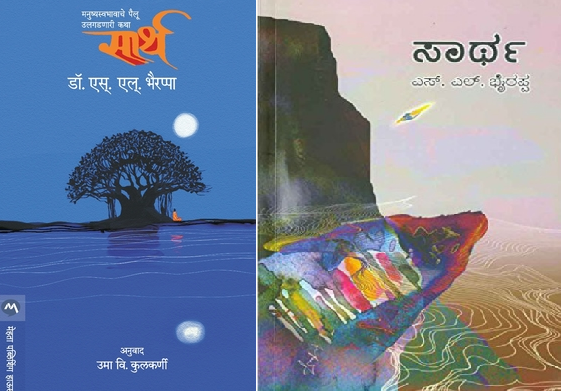
After reading SL Bhyrappa’s Parva I wanted to read more from the man. I started with Saartha after a friend recommended it. Review of Parva.


the Tale:

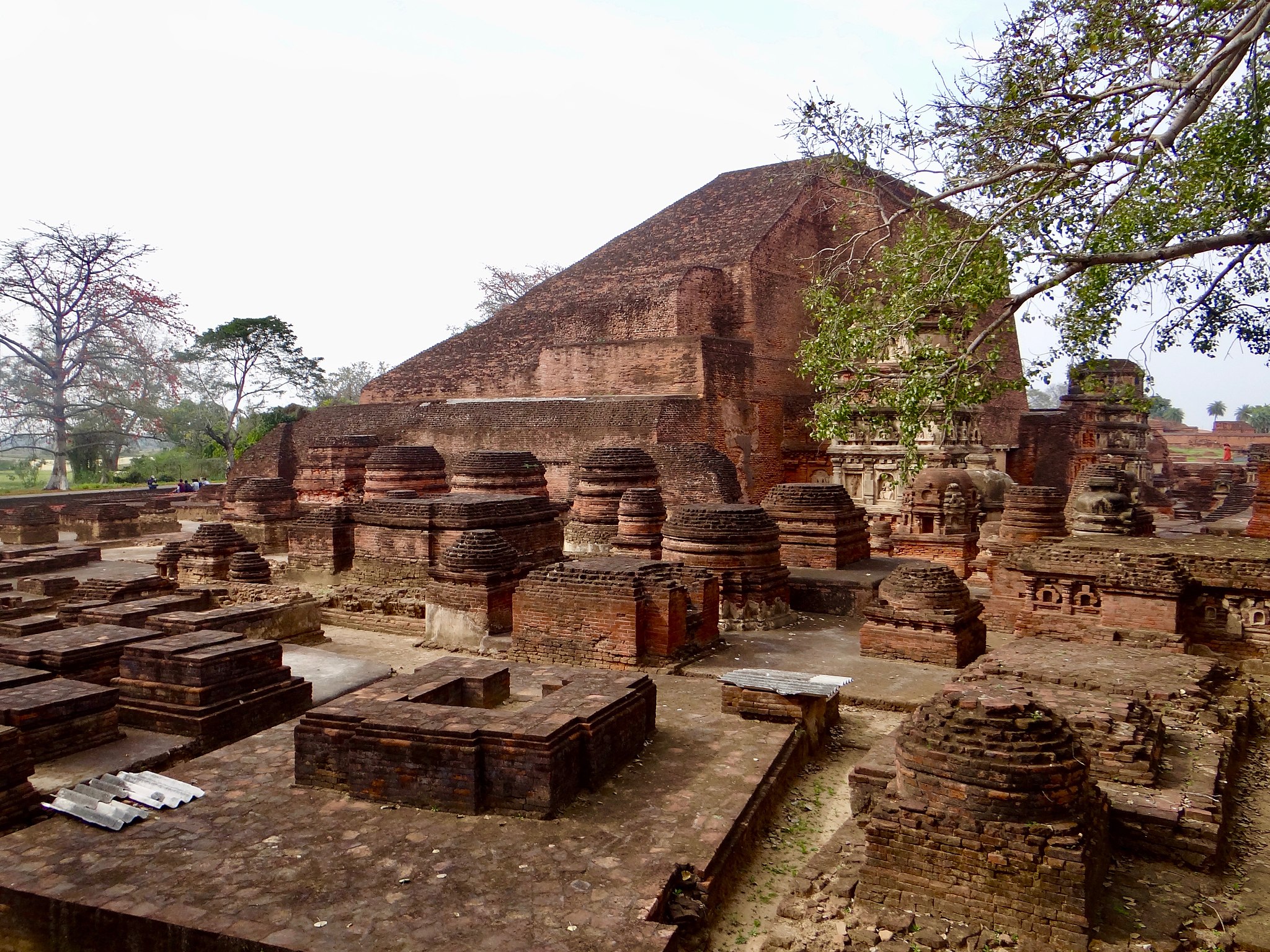
Saartha is a tale of a Brahmana sent on a mission by his king under the pretext of finding more about the various trade caravan routes with a Saartha (caravan). The protagonist Naga-Bhatta is the first person narrator for the entire book. The novel is primarily a journey of self realization of Naga-Bhatta – dealing with a varied range of emotions from anger, infidelity, love to melancholy and despondency. Naga-Bhatta travels from his hometown in Central India to North Indian plains – particularly Mathura, from Mathura to Kannauj and Kannauj to Magadha, Magadha to Mahismati before embarking upon a journey to Arab ruled Multan before coming back to Mathura. Though a lot of characters come and go in the novel, the ones who leave a mark as personalities apart from Nagabhatta are Pratihara Senapati JaySingh and actress and Yogini Chandrika. Other than that, the author also brings the real life historic personalities to life in fantastic and powerful manner. – Mandana Misra, Kumarila Bhatta, Bharati Devi (Misra) and epoch changing Adi-Shankaracharya. Apart from that, the author deals with the intellectual fights – especially between Sramanas (especially Bauddhas) and the followers of the Vaidika Dharma (Vedic Hindus). Bhyrappa manages critical about aspects of both the traditions even though the narration is that of a Vaidika Brahmana.

The storytelling is top notch and visually perfect. The dialogues are extremely effective and powerful. But where the author excels like in Parva is bringing to life a real world from a time long gone. What is more – he manages to do it with the Zeitgeist of the story in mind – not our own. The author doesn’t want to be politically correct or use his zeitgeist as a lens to observe the events of the tale. As the narration is that of a moderately patriarchal 8th century Brahmana, he doesn’t try to bring up the hypocrisy of his position – wherein the protagonist has no qualms about his (attempted) infidelity while he cannot digest his wife’s betrayal so much that it derails his life – filing him up with despondency and emptiness. Its in moments like these that the brilliance of the author comes through.

Throughout the narrative we are come across various spiritual paths available to the thinkers and philosophers in Ancient India – namely the Karma Kanda focused Vaidika Mimansa path, the Mahayana Bauddha path, the Yoga path, the Tantrik path, and finally Shankara’s Advaita. How the Naga-Bhatta grabbles with these paths and how he finds his Karma at the end is essentially the story of novel, Alchemist like tale with huge dollops of sophisticated philosophy and realism. What is fascinating about this book is that unlike Parva (Mahabharat) this book deals with and uses supernatural powers not just as sidenotes but for important parts of the story arc. Also the author’s grasp over Sanskrit is just spectacular, and like in Parva he has created couplets here and there as per the plot demand.


the Polemic and the Philosophy: (Spoilers ahead)

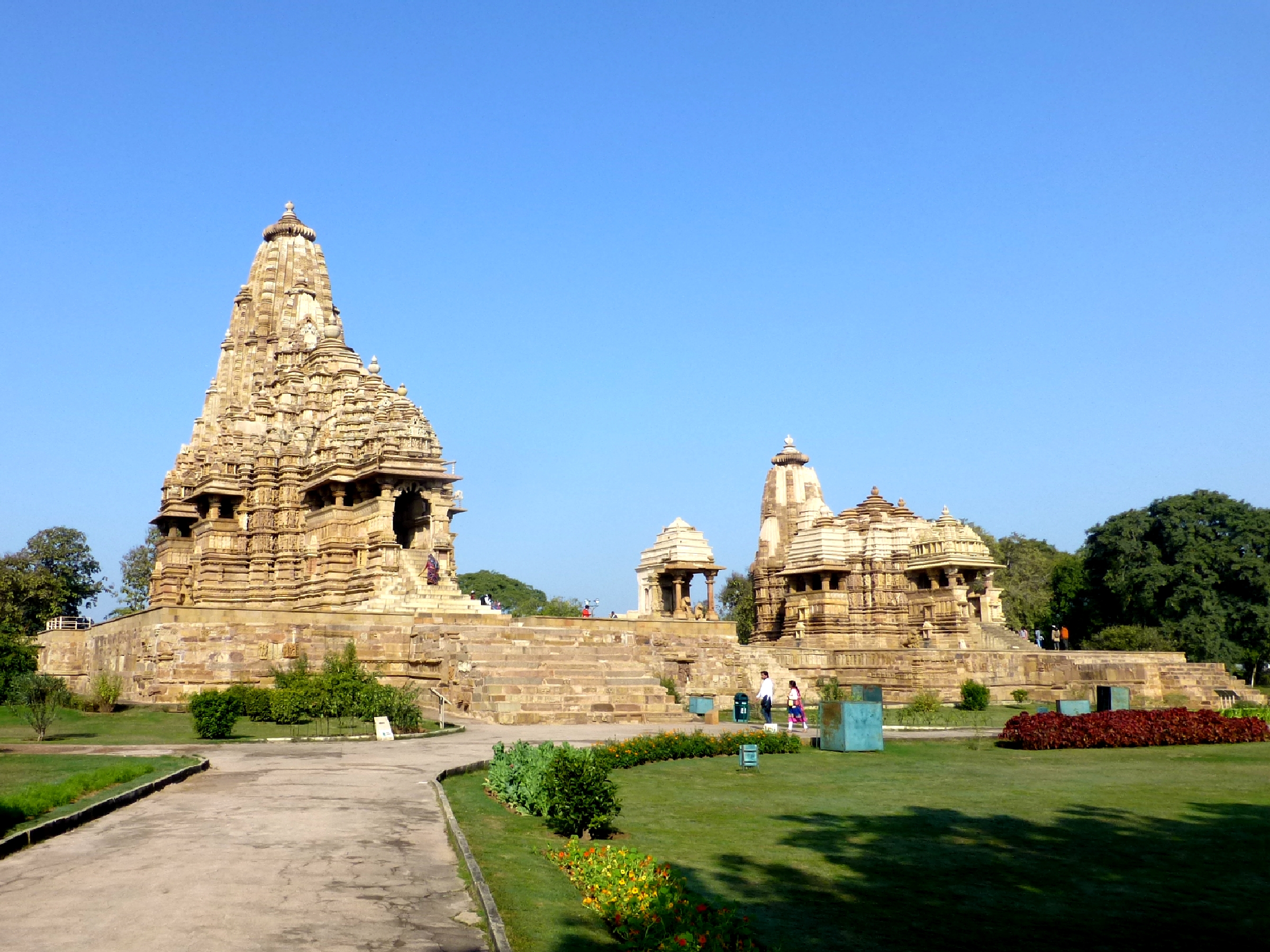
While the story of Saartha works on various levels, I doubt if that was the main purpose of the book. The author uses the character arc of Naga-Bhatta around which the tapestry of 8th Century India is painted, and its this tapestry that works more than the story. In the beginning we are introduced to the conflicts and divergences between Vaidika and Bauddha traditions, while noting the important changes which were occurring in the Bauddha tradition during this time. Some scholars have pointed to these changes (adopting of Puranic deities and tales) which made the Bauddha traditions loose its differentiating USP. The portrayal of Drama as a means of spread of devotional traditions of Rama and Krishna is fantastic. The mechanisms of Yoga and especially Tantra are very well explored. The flirtation of Naga-Bhatta with Buddhism, his abandoning of Vaidika traditions and coming back are not only explained convincingly, but readers also given a peak into the potential origins of the Maithuna images (erotic coupling images) which adorn the Khajurao temples.

The first climax of the book – based on the hagiography of Shankara- deals with the encounter of Adi-Shankara with the Guru of Naga-Bhatta – Mandana Misra, and though Mandana Misra is said to lose that encounter personally as I reader I couldn’t follow the logic of it. Similarly the peek into the life of Kumarila Bhatta – the Mimansika who is said to have defeated the Buddhists before Shankara left me unsatisfied. However one has to note that maybe that was the desire of the author, who clearly seems to favor the Vaidika Mimansikas (minus some orthodoxy).

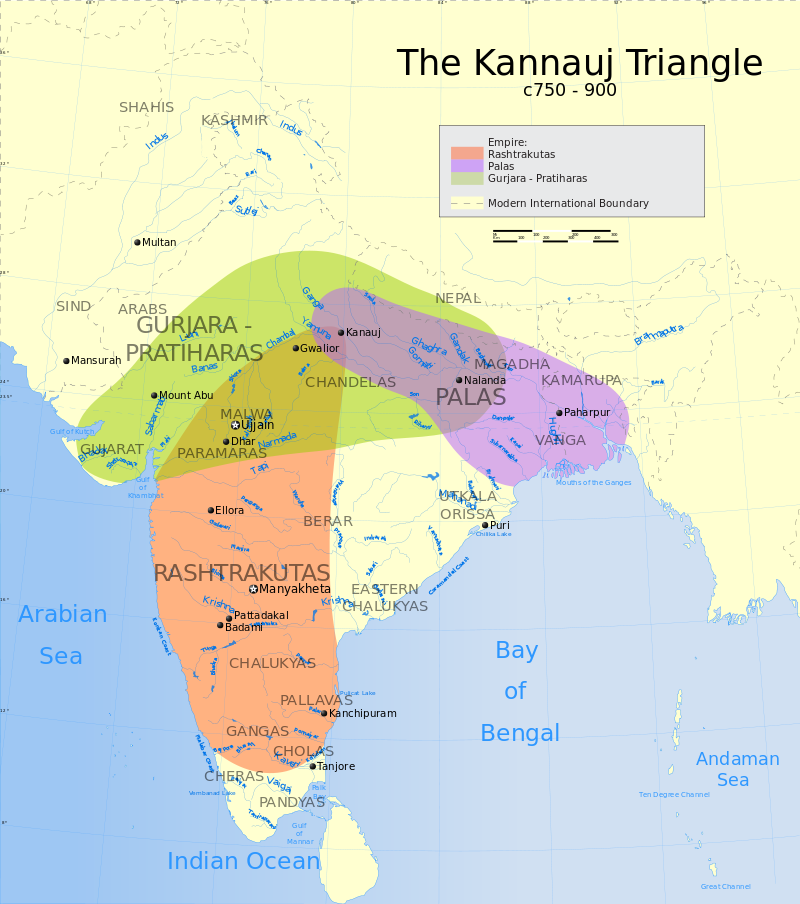
The final climax of the book is about the confrontation with Islam. This part felt slightly caricaturish but still captured some of the salient reasons for Islamic incursions into the subcontinent. The tripartite struggle of Palas, Prathirahas and Rashtrakutas, the Hindu insularity and naivety & superstition and various other reasons come forth during the climax. The book ends on a very sour note, but that wasn’t surprising, as Bhyrappa is no bollywood screenwriter (who make Padvawat and Panipat appear as victories of Hindus (maybe even Prithviraj)).


Incidentally the History podcast Brownpundits have been producing was covering the same time period which Saartha covers. I would highly recommend the book to anyone interested in history, philosophy or even self discovery – Saartha works very well on all these fronts.

Personally as an agnostic I have wondered why have I never been attracted to the philosophy of Buddha whereas I have always been attracted by the philosophies’ Vaidika and Puranic Dharma. Bhyarappa was able to give me the answer in one sentence “Can you imagine Buddha saying what Krishna says (on Kurukshetra) ?”
Episode 11: Palas, Prathiharas and early Islamic invasions

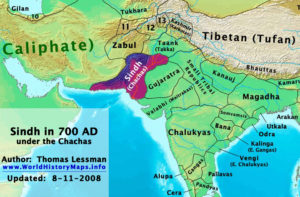
Tripartite struggle between the Palas, the Rashtrakutas and the Pratiharas

Another Browncast is up. You can listen on LibsynAppleSpotify, and Stitcher (and a variety of other platforms). Probably the easiest way to keep up the podcast since we don’t have a regular schedule is to subscribe to one of the links above!

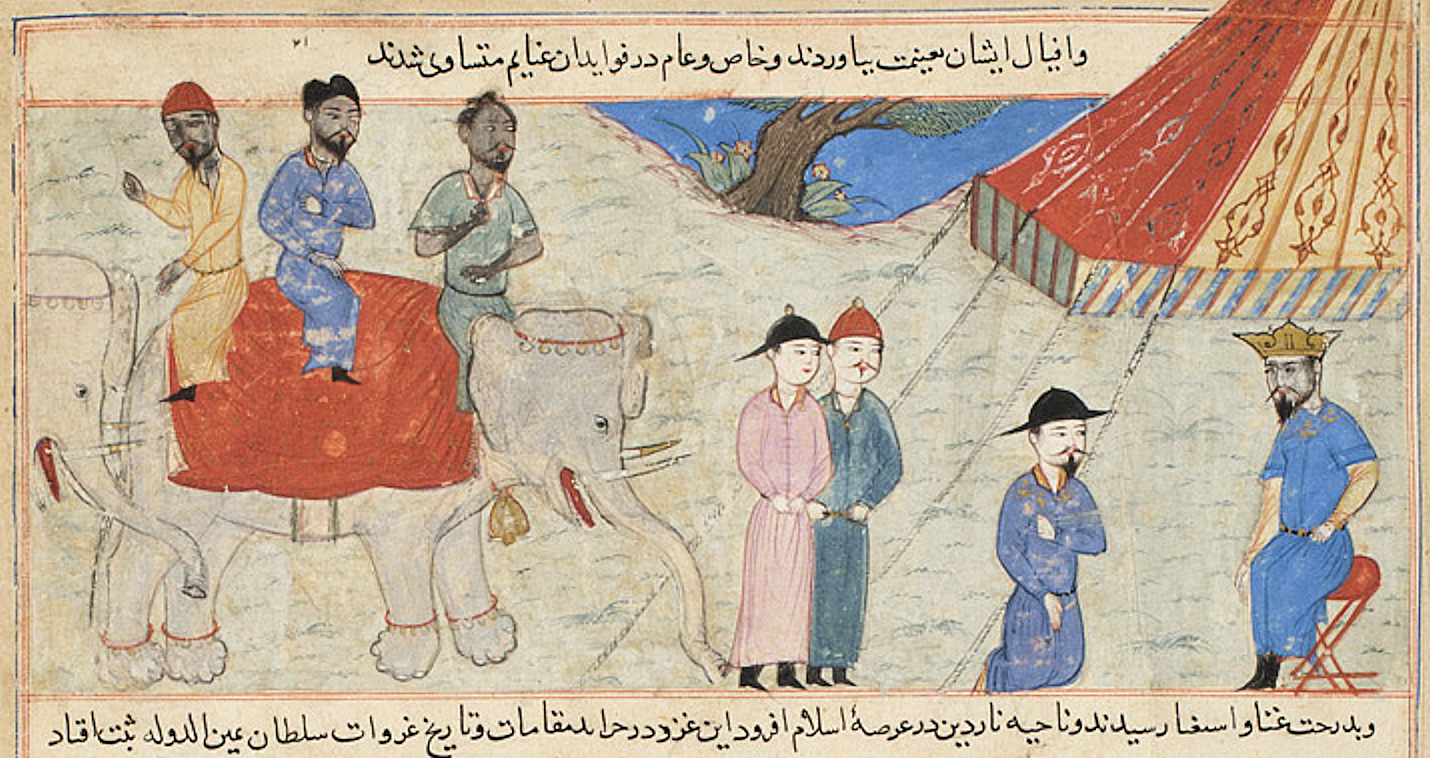
By Print from 1425 CE, AfghanistanPhotographer: Worchester Museum – Worchester Museum

In this episode Maneesh and Gaurav chat with Jay and Omar Ali and they discuss North Indian politics and power struggles for a vast period from 700 CE to 1200 CE. We touch upon the origins of the Imperial Pratiharas and Palas and discuss the tripartrite struggle for domination of Kannauj between the 3 great kingdoms of Indian subcontinent while a storm brewed up in the west. We also talk about the earlier Arab invasions of Sindh and Punjab and the later Turkic invasions by the Ghaznavids and Ghurids which laid the foundation of Islamicate rule in India.

By Hiroki Ogawa, CC BY 3.0,

We will cover the Cultural changes of this period in another episode.

Another Map of the era

www.thomaslessman.com/History/ or www.WorldHistoryMaps.info


Some Links to stuff discussed in this episode:

Al Beruni, Kitab ul Hind https://www.academia.edu/45077160/Al_birunis_Kitab_Ul_hind

Al Baladhuri: Early Islamic Conquests. https://www.researchgate.net/publication/338318331_Arab_Conquests_and_Early_Islamic_Historiography_The_Futuh_al-Buldan_of_al-Baladhuri


Asad Durrani Views on Imran Khan

Asad Durrani is an ex-ISI chief (who famously said that the children killed in APS were collateral damage in our (necessary) double game in Afghanistan). This is his commentary on the Imran Khan phenomenon. I am posting it here to give people a window into the mind of  the less jihadi and somewhat higher IQ Paknationalist generals..


Of Monsters And Genies

By Lt. Gen (r) Asad Durrani

The Pakistan Army – we may like or lament – does have a unique status in the Country’s polity. As an institution, it has known its limitations in politics, but every now and then, we get a junta that crosses the redline in the naïve belief that the state was created by the Almighty to serve as a lab, and the khaki leadership had divine sanction to experiment to its heart’s content. One catalyst that all these scientists found useful was a civilian façade to cover their flanks and to do the heavy lifting. In vernacular this exercise is called political engineering – and it has bombed always and every time. Nevertheless, true to his DNA, the man on the horseback would rather follow a warrior King, Bruce of Scotland, famously inspired by a spider to try and try again; rather than Einstein, the best of the innovators, who warned against repeating the same recipe and expecting a different outcome.

In the summers of 2018, I was in-and-out of GHQ for a number of unsavoury reasons. But like all the earlier calamities, this one too turned out to be entirely to my benefit. Suspecting that the incumbent brass, like some of its predecessors, was looking for a frontman in Mufti, I pleaded with an important aide of the Engineer-in-Chief to step back since it had never worked in the past. His response left me speechless: “sir we’re going to clean up the country”. I will get hold of him one of these days to convey my compliments—yes it has been swept clean but not exactly the way the men at the helm had in mind. Imran Khan did not turn out to be the broom they hoped he would be.

There is a long list of personal observations and empirical data to show that the man was a megalomaniac – more importantly someone who was seeking a camouflaged parachute to land on the throne. Many a military leader had refused to bite the bait, but four years ago the conman broke through. Whatever happened thereafter is recent history, but an odd development must have taken even his detractors by surprise: IK has won over a good number of fans; educated but impervious to all logic and reason. Most of its members used to vilify him when he was in power, but after his ouster, remorsefully ruminate about the bad old days.

Imran’s credentials for the country’s premiership were built upon two arguments. He brought the 1992 cricket world cup to Pakistan, but one conveniently forgot that he had a great team, whom Imran ignored to thank in his victory speech. And yes, he did raise funds for the cancer hospital in Lahore, for which he was generously helped by Nusrat Fateh Ali Khan, an iconic artist of international fame, who performed pro bono on a global circuit. After he passed away, Imran bragged that it was he who had introduced the Great Maestro to the world.

As if falling short on some important leadership criteria – taking blame in case of failure and sharing credit in success– was not bad enough, IK invented a disingenuous rule: to be a leader one should be able go back on one’s commitment; and he remained unflinchingly loyal to this devious principle. Worse still, he was spectacularly consistent on non-delivery in all fields of public good. Combating corruption was his leitmotif. Under his watch, Pakistan fell further on the scale. On some fanciful issues too, his record was perfect. No one asked him for an NRO (relief for any misdeeds), but he kept reiterating that he would not give any. He didn’t catch a single thief, but persisted with his resolve not to let anyone escape.

It was thus no surprise when he said “absolutely not” when asked if Pakistan might provide any military bases to the US to resume bombing Afghanistan – even though no one ever demanded them. Answering hypothetical questions was never a good idea but it was still more convenient than addressing the more substantial ones. True to his character, he pampered himself by claiming that he was such a great threat to the American designs that the sole-superpower was hell bent to see his back. Changing regimes is a favourite pastime of the Blob, but it never reveals its nefarious designs through diplomatic channels – which are essentially to posture and not to transmit a policy.

But where IK actually outdid himself was when he expressed his displeasure with the Army for going into the neutral gear, and postulating that only the animals would sit on the fence. Wrong, all the subhuman species are in fact more passionately committed than the mankind. The real cause for his disappointment with the uniformed clan was that after launching him into the corridors of power, it did not jump when he whistled. And then he completely exposed his perfidy by blaming the courts for keeping a round the clock vigil when his party was blatantly violating the constitution.

Indeed, the assemblies should not be dissolved when they’re in business. President Ghulam Ishaq Khan was asked why he was not responding to Benazir Bhutto’s request to call the National Assembly to session! Since he had already decided to sack the government and send the assemblies packing, he was not going to do so when the country’s highest forum was conducting affairs of the state. Dissolving it when a no-confidence motion had been tabled would have been an act of profanity. And therefore, one understood why the PTI wanted the courts to remain in limbo.

But none of the above would make any dent in his loyal following that believes they have found a Messiah and is prepared to follow him to the bottom of the abyss. Look how in unison they’re clamoring for fresh elections – an option they considered absurd only a few months back.

Hardly anyone can predict the outcome of elections in Pakistan. Based on the best available assessment Yahya Khan agreed to hold them in 1970. He had been assured that a hung parliament, which would let the military strongman continue ruling the roost, was the most likely outcome. The result was that he was left with no country to rule. In the elections of 1988, the agencies forecast went wrong in all respects except for the end count. In the present environment if the results would depend upon the size of the crowd on the street or the number not on Twitter but did turn out to vote, I have no idea. But the demand for early elections does serve one purpose – it deprives the successor government the time to stem the rot.
I
n the meantime, there is an urgent need to address a more serious problem.

Military’s installed regimes are often described as a hybrid between the uniform and the civvies. The first recorded case, even though in fictional form, of a cross breed was the Frankenstein’s Monster. It devoured its creator*. Understandably, IK like many of his predecessors is now raring to consume his Godfather. The problem this time around is however a tad more serious. Because of the spell of insanity, he has cast, IK was more like a genie that has come out of the bottle. Anyone knows how to put him back!

*The famous Urdu poet, Pandit Brij Narayan Chakbast had warned us against tinkering with the laws of nature:

zindagī kyā hai anāsir meñ zuhūr-e-tartīb maut kyā hai inhīñ ajzā kā pareshāñ honā (Life is about order in the elements – when they go haywire, we die)

Browncast: Subcontinent and Movies

Another Browncast is up. You can listen on LibsynAppleSpotify, and Stitcher (and a variety of other platforms). Probably the easiest way to keep up the podcast since we don’t have a regular schedule is to subscribe to one of the links above!

Omar Ali and Maneesh Taneja have a free-flowing conversation with Gaurav about movies in the Indian subcontinent in the 20th century

Please leave your movie suggestions in comments. A few links about the movies we discussed and recommended below

Super Deluxe – Official Trailer | Yuvan | Vijay Sethupathi, Fahadh Faasil, Samantha, Ramya Krishnan – YouTube

Sairat I A Narrative of Contrast – YouTube

“Aarambh [Full Song]” | Gulaal | K K Menon & Mahi Gill – YouTube

Ashi Hi Banwa Banwi | Comedy Marathi Movie | Dhammal Entertainment Movie – YouTube

Kalyug | Shyam Benegal | 50 Films I Love | Film Companion – YouTube

Panchayat – Official Trailer | New Series 2020 | TVF | Amazon Prime Video – YouTube

Badhaai Do Official Trailer | Rajkummar R, Bhumi P | Harshavardhan Kulkarni | In Cinemas 11th Feb – YouTube

Johnny Gaddaar Official Movie Trailer | Neil Nitin Mukesh,Dharmendra – YouTube

Jaane Bhi Do Yaaron – A Kundan Shah Film – YouTube

Episode 10: North India – before and after Harsha


Another Browncast is up. You can listen on LibsynAppleSpotify, and Stitcher (and a variety of other platforms). Probably the easiest way to keep up the podcast since we don’t have a regular schedule is to subscribe to one of the links above!

The history podcast returns to North India. Gaurav and Jay are in conversation with Maneesh about the changes in the North Indian landscape before and after the times of Harsha – generally considered as the last Emperor of “Ancient India”. We touch upon political splintering that followed the fall of the imperial Guptas, the political Game of thrones that followed, the Kumbha Mela and the decline of trade. 玄奘  (Xuanzang) and Banabhatta make appearances as prolific storytellers along with the stories of contested Urban decay and decline of Buddhism in the Indian heartland.

References for the episode:

A Comprehensive History of India – Vol III
The History and Culture of the Indian People: Volume 3. The Classical Age
Imagining the Urban – Sanskrit and the City in Early India by Shonaleeka Kaul
Urban Decay in India (c. 300-c. 1000) by Ram Sharan Sharma
Upinder Singh – Ancient India.
Upinder Singh – Political violence in Ancient India
Upinder Singh – Culture of Contradictions.
Romila Thapar – Ancient History
Romila Thapar – Past before us
RS Sharma- India’s Ancient Past

Live History India (Paid + unpaid)

PODCASTS:
The History of India Podcast – Kit Patrick
Echoes of India Podcast – Aniruddha Kanasetti

https://www.youtube.com/JayVardhanSingh


Episode 9: South India from 500-1100 AD


Another Browncast is up. You can listen on LibsynAppleSpotify, and Stitcher (and a variety of other platforms). Probably the easiest way to keep up the podcast since we don’t have a regular schedule is to subscribe to one of the links above!

The history podcast returns to South India. Shrikanth and Mukunda are in conversation with Maneesh, on all things South of Vindhyas from 500-1000 AD. We talk about Chalukyas, Pallavas, Rashtrakutas, Cholas and more. The episode covers the political and cultural history of the period in great detail.  A pivotal figure in sub-continents history- Shankaracharya makes and appearance. As do some of the landmark temples and king’s whose legacy survives to this day.

@shrikanth_krish        @raghman36          @maneesht

Sources and References:


  1. A History of South India – KA Nilakanta Sastri
  2. South Indian Inscriptions – Archeological survey of India
  3. Studies in Chola history and administration – KA Nilakanta Sastri
  4. Introduction to Madhaviya Shankara Vijaya – Swami Tapasyananda of RK Mission
  5. The Dancing Siva in Early South Indian Art – Douglas Barrett (paper)
  6. Pallavas and Chalukyas – Coopetition in Stone – Gurpreet Chopra and Bharath
  7. Nalayira Divya Prabandham : https://ramanuja.org/sv/prabandham/prabandham.html
  8. Essay on Advaita Vedanta of Shankara : https://iep.utm.edu/advaita-vedanta/
  9. Essay on Ramanuja and Vishishtadvaita : https://iep.utm.edu/ramanuja/


Book Review: Shrayana Bhattacharya’s Desperately Seeking Shah Rukh-India’s Lonely Young Women and the Search for Intimacy and Independence.

India’s complexity is a perennial source of inspiration for commentary, columns and books.

Shrayana Bhattacharya, a World Bank economist, joins the list of authors who have tried to explain India with their books.

The book is about contemporary Indian women.

Ms. Bhattacharya, who trained in development economics at Delhi and Harvard university, uses her years of experience in primary research, to bring us her own, and stories of women from a cross-section of society.

The cornerstone of these stories is Shah Rukh Khan, one of India’s most famous movie stars.

In a career spanning over three decades, Mr. Khan has built, through his cinema and his off-screen presence, an image of an ‘industry outsider’ who dominates the Hindi film industry with the dint of his hard work and sincerity.

His choice of unconventional roles for a leading man, in the early part of his career, and his off-screen image of a loving husband and family man stand him apart.

This is in contrast with the usual tropes of a male Hindi movies star , the good guy who charms his way to audiences’ heart on screen and whose umpteen romantic dalliances they read in the press.

Khan’s popularity, in the Hindi heartland and amongst the diaspora, is the string Bhattacharya uses to stich tales of gender disparity and loneliness.

We get a ringside view, Bhattacharya takes us through her own and lives of five other women, as they struggle with lack of income opportunities, denial of agency and grapple with every day challenges of living in India, exaggerated by their gender.

What holds these women together is their love for Khan’s cinema and in turn Khan himself.

When they need joy, inspiration in their lives and an escape from every day struggles, the women seek Khan’s onscreen roles and his offscreen persona.

The pictures that Bhattacharya paints, are colored by facts.

The protagonists of her stories come alive, unlike in Khan’s movies, as she vividly explains their lives with a sharp eye for detail.

When giving context to their struggles, she backs her submissions with reams of hard data.

Annexures include a table that captures share of dialogues for women in some of Khan’s movies.

She gives the women who shared their stories and their unbound love for Khan with her, their own voice.

The writing is not rhetorical flourishes with clichés thrown in. That bane of most commentary on India. The book engages.

Even for those who live in India and see the every day reality, the book is thought provoking. The passage where she describes the transactional nature of relationships is worth a chapter of its own.

Where the book misses out is on exploring the other impact of Khan’s filmography.

Barring notable exceptions, Khan’s work since his seminal hit Dilwale Dulhaniya Le Jayenge, has comprised of Yash Raj school of saccharin cinema.

Movies where characters are super rich, beautiful with ‘love’ as the only thing missing in their lives.

It’s the kind of cinema that’s as far from the everyday India as cinema can get.

Khan and his cinema have done their bit in building the hegemony of ‘How much money do I make? How do I look?’ lifestyle.

The characters in her book struggle with these questions too.

Khan’s role in shaping a consumerist, trying to ‘fit in’/ ‘cool’ individual persona is left unexplored.

I found Khan’s portrayal as an all-India star an over-played hand. Khan’s as much a pan India phenomenon as Dal Makhani, the ubiquitous North Indian delicacy, is a pan India delight. The cinema crazy south Indian states have temples of their movie stars and Khan is not in one of them.

As she writes on the state of affairs, Bhattacharya skips the raging phenomenon sweeping urban India. The Dating app. Where the society has failed markets have stepped in. Technology is helping even the scales for women. The progress is slow and it does not include the majority but it’s a start.

India is a large complex place with everyday challenges being met head on by a young and an energetic populace.

Bhattacharay’s book captures some of these challenges and the forces taking them on, impeccably.

Anybody trying to get a sense of the churn going through India and its society will be well served by this book.

One hopes her fellow commentators will be inspired by her lucid writing and her love for data.


Episode 8: The Guptas and Classical Age of India

© Asitjain / Wikimedia CommonsAnother Browncast is up. You can listen on LibsynAppleSpotify, and Stitcher (and a variety of other platforms). Probably the easiest way to keep up the podcast since we don’t have a regular schedule is to subscribe to one of the links above!

In this episode of the History series, we return to North India and talk about the Age of the Guptas. We touch upon the military genius of Samudragupta and various Gupta emperors, the emergence of Classical Hinduism and various forms of Art, Music, Science which consolidated during this era. The speakers of the episode are Gaurav Lele and Jay Vardhan and the discussion is moderated by Maneesh.

@jayvtweets  @maneesht @gaurav_lele

Links to the previous podcasts: Episode 1Episode 2Episode 3 

Episode 4:  Episode 5: Episode 6 Episode 7

Supplementary blogpost : Legacy of the Gupta Age – Brown Pundits

Sources and References:
Books and Blogs
 Upinder Singh – Ancient India.
 Upinder Singh – Political violence in Ancient India.
 Upinder Singh – Culture of Contradictions.
 Romila Thapar – Ancient History
 RS Sharma- India’s Ancient Past
 Gupta Vakataka Age RC Majumdar

 Live History India (Paid + unpaid)
 Early Hinduism — the epic stratification | by Gaurav Lele | Medium

PODCASTS:
 The History of India Podcast – Kit Patrick
 Echoes of India Podcast – Aniruddha Kanasetti

https://www.youtube.com/JayVardhanSingh

Brown Pundits