A few pieces I’ve been reading this week:
-
The Lies America Tells Itself About the Middle East: (Foreign Affairs) – On how U.S. narratives obscure its own role in the region.
-
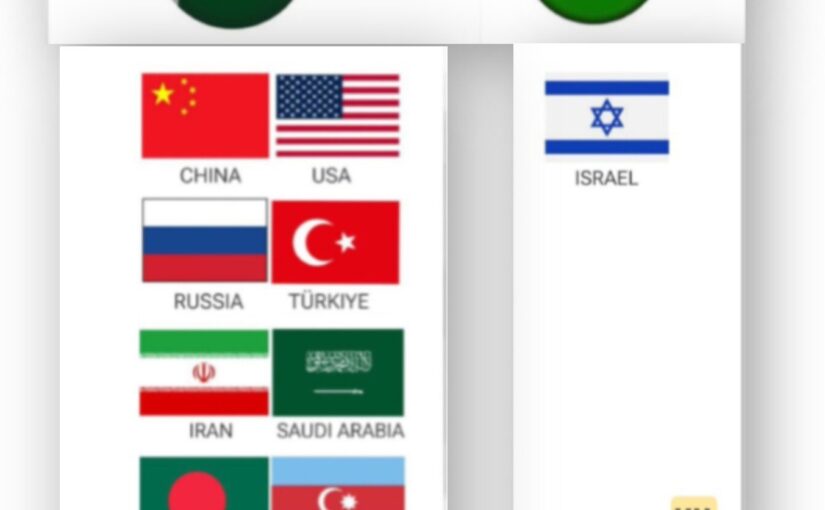
Don’t Overestimate the Autocratic Alliance: (Foreign Affairs) – A counterpoint: authoritarian states may not be as cohesive as advertised.
-
The Four Humours: Our 2,500-Year-Old Mania for Personality Types: (BBC Future) – Why these frameworks endure and what that says about how societies interpret character.
-
Can We Hear God? (Bahá’í Teachings) – A reflection on divine communication and perception.
- The Dawn of the Post-Literate Society: (James Marriott, Substack) – On how screens and AI are reshaping reading and writing itself. Thanks Kabir for the suggestion.
Reflections
On the Ummah: Muslims have often failed to concede ground in internal debates, which has left them politically boxed in. One reform across all denominations would be to return directly to the Quran as the primary authority. That alone would dissolve many cultural accretions, halal (animals should be stunned before slaughter), hijab (a Sassanian trait), and other practices, into something more adaptive.
And here’s a more speculative question: if the “Satanic Verses” were reconsidered if Al-Lat, Al-Uzzah, and Al-Manat were understood as sacred divinities at the threshold of the Lote Tree, would that make Islam more fluid, especially for minority-majority dynamics?
On Kabir: I’m not moderating him out, but readers should be aware that he frames everything through Muslim-rights activism. Engage, but don’t get gaslit into endless provocations. Everyone is entitled to their nationalisms — but they can’t claim liberalism at the same time. That tension makes it worth examining how plurality is treated within the Hindu fold itself. Dharma, unlike the Abrahamic Faiths, tends to all for multiple truths co-existing with each other (Buddhism and indigenous East Asian religions).
👉 Over to you. I’m retreating from heavy moderation — I see BP’s strength in letting the commentariat lead. Biases are fine. Gratuitous abuse is not.

“In March 1998 the Indian PM Gujral, told … “Pakistan was not capable of making atomic bombs.” he had been convinced by Indian Intelligence and Dr Raja Raman, the head of Indian Atomic Energy Commission, who had publicly claimed that nuclear weapon were beyond Pakistan’s reach.”