Another BP Podcast is up. You can listen on Libsyn, iTunes, Spotify, and Stitcher. Probably the easiest way to keep up the podcast since we don’t have a regular schedule is to subscribe at one of the links above.
You can also support the podcast as a patron. The primary benefit now is that you get the podcasts considerably earlier than everyone else. I am toying with the idea of doing a patron Youtube Livestream chat, if people are interested, in the next few weeks.
Would appreciate more positive reviews!
This episode is a conversation with Leighton Woodhouse of the Extremely Offline podcast. We talked about the Left, identity politics, and the future of American politics and 2020.
I am taking a more front & center role on this weblog proceeding forward. Moderate/inspection of comments will become stricter. I suspect some of you will be banned because you post worthless comments. Also, I am seriously thinking about installing a plugin that caps word-length on comments.
Since this weblog gets about 10 times more traffic than it did a few years ago, it seems the right time to tighten the screws a bit.
* The affect, style, and mannerism is very familiar to me. It reminds me of Muslim and Christian Creationist public speakers, who exhibit an air and manner of incredible confidence to audiences who want what they have on offer. Validation. Confirmation.
* The citations of the scholarly literature indicate that the theories of are based on some provisional work…but notice the shift from provisionality to refutation and vindication in the presentation. Just because it is in peer-reviewed journals does not mean it is true.
* Civilization comes from India is the conclusion. The above speaker is sophisticated and intelligent, but the ultimate rub is the same as Indocentric fabulists of the past.
In the past few years, genetic evidence on human differences has become more obvious. The reaction, in the West, is to declare even more strongly that no differences exist, or even could exist. Westerners and Indians are probably very similar, at least the activist sorts that consider these sorts of issues. In the near future, a substantial amount of ancient DNA will be published in India which will resolve current questions to all those approaching it with an open mind. But the ideologues will become even more strident and marshal greater and greater numbers of irrelevant citations.
Another BP Podcast is up. You can listen on Libsyn, iTunes, Spotify, and Stitcher. Probably the easiest way to keep up the podcast since we don’t have a regular schedule is to subscribe at one of the links above.
You can also support the podcast as a patron. The primary benefit now is that you get the podcasts considerably earlier than everyone else. I am toying with the idea of doing a patron Youtube Livestream chat, if people are interested, in the next few weeks.
Would appreciate more positive reviews!
On this episode, I talked to Suhag Shulka. I appreciate the readers who provided questions since honestly, I didn’t have strong priors. Suhag is a good talker, and I don’t have much personal experience with Hinduism (I’ve never been in a Hindu temple, and the only Hindu religious I’ve seen in real life was at the party of a family friend when I was six and a side room was devoted to prayer and such).
I know that some people have strong opinions on the HAF…my own suspicion after talking to Suhag is that it is in some ways a less political Hindu variant of AIPAC. On the American scene, Hindus are firmly within the Democratic party and the center to Left. This is clear in terms of politicians, but also when you look at survey data as well. But in terms of international affairs, these sorts of alignments are not as clear, and that seems to be where HAF gets in trouble with “social justice” types.
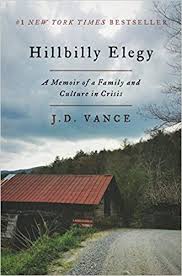
One of the strange admissions I will make is that I have not read Hillbilly Elegy: A Memoir of a Family and Culture in Crisis. This is J. D. Vance’s book describing the various social and cultural forces which maintain deep pockets of poverty and dysfunction across much of greater Appalachia. Vance, though a Yale-educated lawyer, is from this region, and of the deprived class.
I say strange because I happen to be cited in the book. Vance has told me that some of my writing on the historical origins of the Scots-Irish made him aware that he was not just a white American, that he had a very particular ethnicity in the broader Anglo-American context. The fact is that Vance’s politics are broadly consonant with mine, and I tend to be wary of reading books where I suspect I will agree with the overall message. I don’t find it useful to simply reiterate my own opinions, as I already hold them.
With all that said, I recently saw on Twitter that a literal Communist academic accused Vance of promoting the white genocide meme because he wrote about replacement level fertility among Americans. Just like an inquisitor sees witches behind every corner, American Leftists see a fascist and a racist everywhere they look. But that’s not the interesting point.
Vance responded that he had a mixed-race son.
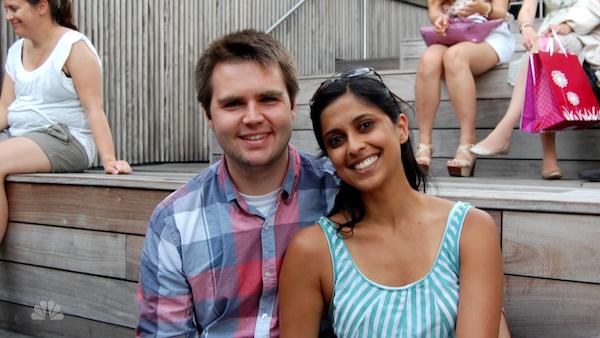
I am not a specialist on J. D. Vance, so this was news to me. I didn’t know anything about his personal life. A little Google yielded the fact that Vance is married to an Indian American, a law school classmate. And, a little more research quickly yields the fact that she is from a much more privileged class background than J. D. Vance (most Americans would be!). In fact, judging by the community that she grew up in, it is highly unlikely that her family was not upper-middle-class (OK, it was easy to look up her parents and their professions, they are doing very well).
The question I pose here is that as the children of Mr. and Mrs. Vance grow up, will they perceive that they obtain privilege from their white father? Is J. D. Vance more privileged than his wife? A plain reading would probably result in the admission that this is ludicrous. The Vance children will grow up with a paternal lineage defined by hardscrabble lives, with the squandering of opportunities. In contrast, their maternal family will be descended from successful professionals. Immigrants who sunk roots in San Diego.
There is a lot of talk today about “intersectionality.” Usually, I don’t find that that is in good faith. But let’s take the intersecting parameters of the backgrounds of the Vances into account. Who is more privileged? I suppose it depends on how you define “privilege,” but my own personal take is that in fact, J. D. Vance’s wife is more privileged by background than he is, despite her visible nonwhiteness (which no doubt does result in some discrimination).
In the years before the Civil War, popular racial supremacism arose in the American South to engender solidarity of identity for whites, from the poor masses to the rich planter elite. It was the solidarity of the “aristocracy of the skin.” This explicit racial caste system was such that the poorest white was above the status of the most accomplished black. The way in which we talk about race and class in much of American discourse seems to default back to this idea.
Many of my white academic friends (not all!) from working-class or poor backgrounds believe that because of their class status, they now have the same privilege as other white people. That the past is the past. That is, white people can move up and down the class hierarchy, and yet retain the skin privilege. History does not shadow them in the way that it does the dusky folk.
White people are magic.
As the 21st-century progresses I think some of us, of all races, need to move beyond this way of thinking. Many South Asian academics I know personally who come from privileged backgrounds speak of themselves as a subaltern and marginal people. But there’s nothing subaltern and marginal about their lives. Empirically I think the “white people are magic” thesis is just wrong. They bleed just like the rest of us.
I did mention to V that I was shocked that I had only learnt about this story (and that too from a Pakistani not Persian Baha’i).
She immediately replied that’s because he was “a black man Zach.” While I’m proud of this story, which frankly is more impressive than any temple built by our institutions, I’m also ashamed of the endemic and silent racism within the community.
It is always interesting to me that in our avowedly “non-racist” (and non-sexist faith) it’s always Persian & White Men (and their Spouses) who become the Superstars of the Faith.
So it is interesting that while I’m busy with my one-man crusade online to Persianise Pakistan (restoring our High Culture is a difficult but worthwhile task) I’m fighting a very different battle to find moral equity within our Persianate Faith.
Back in the 2000s, when blogging was a thing, I was at a party and someone mentioned offhand that I had a blog. Someone else blurted out, “Oh, me too!” We left it at that. But a friend asked me why I didn’t let on that my blog got hundreds of thousands of visitors per month, or that millions of people had read me over the years. The point is that there were people who had blogs, and other people who had blogs.
I was reminded of that by this piece in Have We Hit Peak Podcast?. I first heard about podcasting in the middle of the 2000s. I started listening to podcasts around 2008 or so, on my old iPod shuffle. It wasn’t until 2016 that I actually started contributing to my own podcast (on genetics and evolution).
About ten months later we started the Browncast. I’ve now done 67 podcasts for The Insight. I’ve been on the majority of the 50+ podcasts for the Browncast.
So let me quote from The New York Times piece:
But six episodes in, when neither Casper mattresses nor MeUndies had come knocking, the friends quit. Today, Ms. Mandriota says the same D.I.Y. spirit that made having a podcast “alluring” is precisely what doomed the project. “You can talk about the trees outside as much as you want, but if you’re not going to serve listeners and do it in a way that’s engaging, your chances of going viral are low,” she said, calling her show “the most makeshift podcast, with mediocre advice.”
Another BP Podcast is up. You can listen on Libsyn, iTunes, Spotify, and Stitcher. Probably the easiest way to keep up the podcast since we don’t have a regular schedule is to subscribe at one of the links above.
You can also support the podcast as a patron. The primary benefit now is that you get the podcasts considerably earlier than everyone else. I am toying with the idea of doing a patron Youtube Livestream chat, if people are interested, in the next few weeks.
Would appreciate more positive reviews!
On this episode, I talk to Josiah Neeley and Doug McCoullough. Hosts of the center-Right Urbane Cowboys podcast, they have had Reihan Salam, Avik Roy, Ramesh Ponnuru, and myself, as guests. They do the “brown representation” well, in other words.
Most we talk about the French-Amhari wars. All of us stake somewhat different positions on this conflict within modern conservatism and try to hash out a path to the future.f

 Another BP Podcast is up. You can listen on Libsyn, iTunes, Spotify, and Stitcher. Probably the easiest way to keep up the podcast since we don’t have a regular schedule is to subscribe at one of the links above.