India’s sugar was bitter, until her first female scientist made it sweet

The Untold Story of E.K. Janaki Ammal

via X

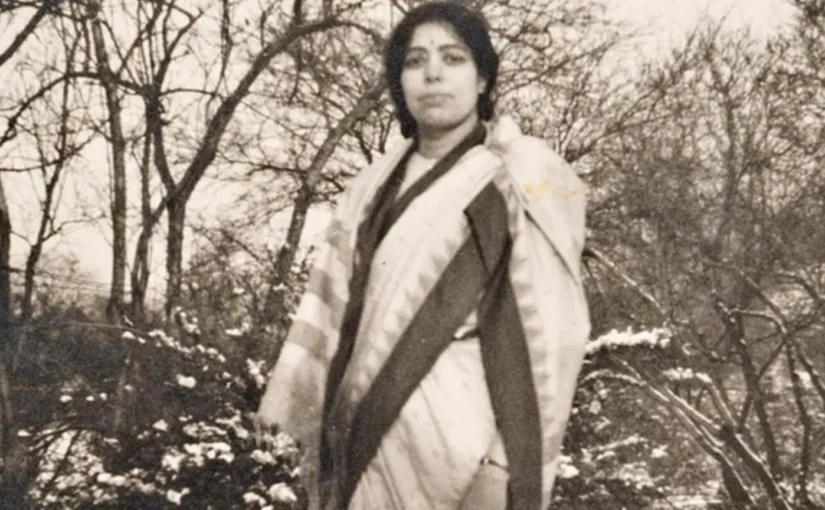
She was born in 1897 in Tellicherry, Kerala, the daughter of a high court sub-judge and one of nineteen children in a large, liberal household called Edam. Her family belonged to the Thiyya community, considered “socially backward” under the Hindu caste system. But within Edam, caste meant little. There was music, a sprawling library, a cultivated garden, and a quiet expectation of excellence.

Her sisters married. She did not. Instead, Janaki Ammal chose plants.

She trained first at Queen Mary’s and Presidency Colleges in Madras, then left colonial India in 1924 on a Barbour Scholarship to the University of Michigan, where she would become the first Indian woman to earn a doctorate in botanical science. She lived in an all-women’s dorm, smuggled a squirrel in her sari for company, and worked under renowned botanist Harley Harris Bartlett.

She returned to India and joined the Sugarcane Breeding Station in Coimbatore, where she changed the course of Indian agriculture. The country’s native sugarcane was hardy but lacked sweetness; imported varieties were sweeter but weak. Janaki crossbred both into something stronger, higher-yielding, and perfectly suited for Indian soil.

The sugar in Indian chai owes its taste to her. Continue reading India’s sugar was bitter, until her first female scientist made it sweet
Science in Ancient India (aka “Hindu Science”)


A couple of days ago i saw a tweet from @theliverdr on twitter that made fun of some recent initiative to add Ayurvedic medicine to the medical school curriculum. I don’t know what they will teach and how useful it will be in practice (as a boomer of Pakistani origin my first thought is that expectations should be low, at least initially), but I thought the summary dismissal of the entire corpus of knowledge is also unscientific and tweeted out the tweets pasted above.

My point was not so much about what the Indian medical system will actually end up teaching. It was more a philosophical point that we should not dismiss the products of an ancient and sophisticated culture summarily; there is likely to be real knowledge that is captured in it, but the framework is very different (and “pre-scientific”) and will need “translation”. As an example I mentioned Ida, Pingala and Sukhmun Naadis, channels in which energy supposedly flows along our spine. Modern science recognizes no such channels, but that does not mean that the lore built up around this theory is all valueless. Methods to manipulate these channels can still work even if the channels do not exist, but even beyond that we know less than is advertised, and it is conceivable that we will discover elements in biology that we will then recognize as being the modern (and presumably far more scientific) equivalents of whatever observations and theories the ancients had along these lines. But having tweeted this out, I also know that I know very little about Ayurveda, my thoughts were just on “general principles”. So I asked a few friends if they had a good article introducing ayurveda or ancient Indian science in general.

Lo and behold, I was sent a large document that has been written by a blogger who goes by the name “Manasataramgini“. Acharya ji (since he is anonymous, this title will have to do) is a Hindu nationalist who blogs at manasataramgini.wordpress.com and many of whose writings will no doubt be grounds for cancellation in left-liberal circles, but he is also a very serious and competent scientist, and an intellectual with very deep knowledge of Sanskrit and ancient Indian lore. It is a 51 page document, but it seems to me that this is worth posting on the internet. People can draw their own conclusions 🙂

A review of Hindu Science

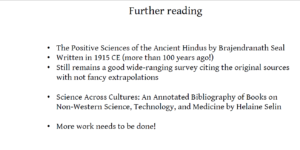
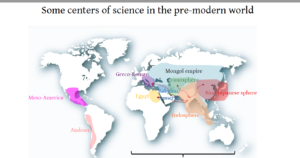
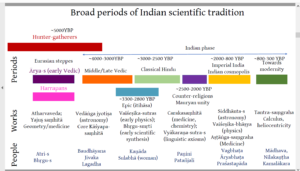
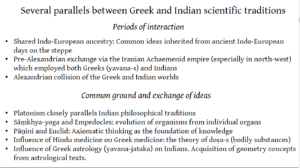
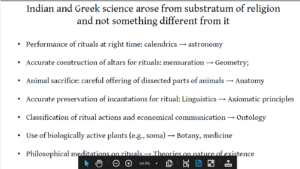
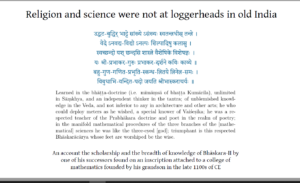
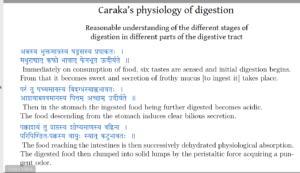
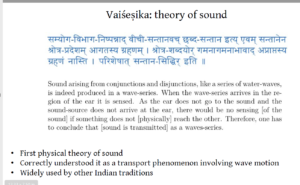
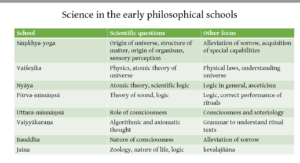
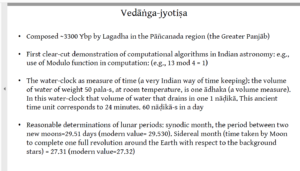
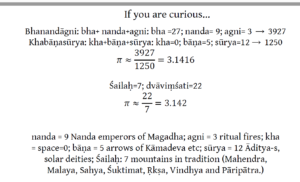
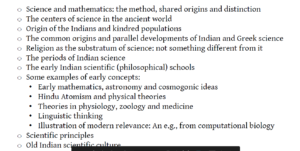
The entire document is at the above link. I am posting a couple of excerpts from the intro and the text as screenshots, but it is really easier to read at the above link (but since I know how lazy I am when reading blog posts, I am posting some screenshots.. note that similar early scientific speculations by the Greeks are treated as “the beginning of science”).


Brown Pundits