This is a rebuttal to X.T.M’s recent post on “civilization states” . The longer essay can be read here
In this context, Shashi Tharoor’s essay “Civilization States Are Profoundly Illiberal” is well-worth reading in full. Tharoor is a centrist Indian and can be said to articulate the Congress Party’s position on this topic.
Civilizational State vs. Nation-State
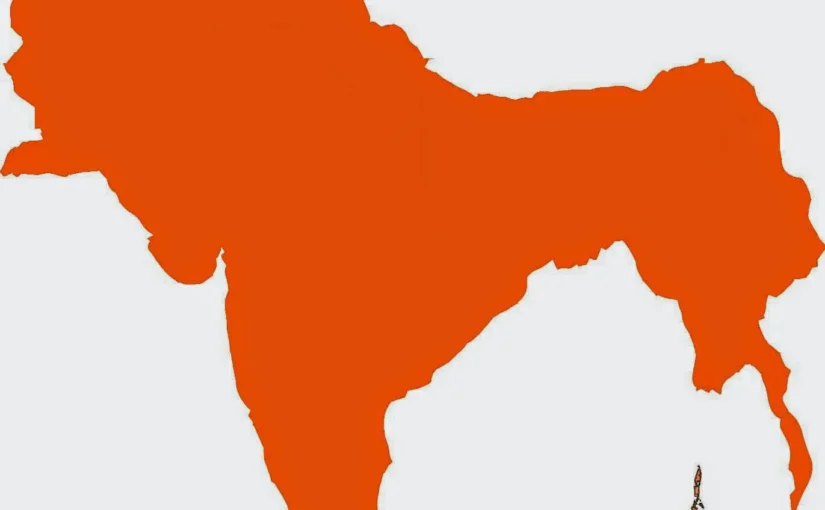
Google defines “Civilizational state” as one that “defines itself and its identity based on a unique and encompassing civilization, rather than solely on shared ethnicity, language or governance”. Google goes on to note that “ the differing worldviews and values associated with civilizational states could potentially lead to tensions and conflicts with other nations or blocs”. In India’s case, defining itself as a “civilizational state” certainly leads to tensions with Pakistan (and perhaps to a growing extent with Bangladesh).
I believe that this “civilizational state” conception is a belief of the Hindu Right. I agree with the Indian left that the Republic of India is a nation-state that was created on August 15, 1947–exactly at the same moment that Pakistan was created. British India was not a nation-state but a colony. Upon decolonization, parts of the colony went their own way. Continue reading On “Civilization States” vs. Nation-States