
A sequel to “Arab Fathers are not fabrications (entirely)“
The previous post answered BB. The comment thread produced an objection from Q, who concedes the cultural point and grants that Sayyid status mattered, then argues that Y-DNA is unreliable because Central Asian Sufism accepted matrilineal Sayyid descent and that South Asian Sayyids are 95 per cent autosomally local in any case. BB and Q essentially reach the same conclusion by different routes.
The mother’s status
Hinduism and Christianity both carry the mother’s status as load-bearing. Varna purity is bilineal, and the maternal line is policed: pratiloma unions, where a lower-status man fathers a child on a higher-status woman, are catastrophic in Manusmriti. The Christian veneration on the Virgin runs the same logic by inversion. A story of “foreign father, local mother” collapses status in both systems, so it gets erased. Brahmin origin narratives almost never claim foreign paternity.
Islam does not police the maternal line the same way. The line is the father’s, and a slave concubine’s son inherits paternal status undiluted. The eleventh Imam was the son of a Nubian concubine. The Abbasid caliphs from the mid-period onward were almost all sons of Turkic, Greek, Berber, or Slavic mothers. Classical fiqh weighs maternal lineage in kafa’ah and in some legitimacy disputes, but that is stratification, not pollution metaphysics.
The same asymmetry produced two radically different slavery histories. In the Atlantic system, partus sequitur ventrem fixed the child to the mother’s status; the descendants of African slaves remained enslaved and congealed into a marked descendant class. In the Islamic system, the child of an African concubine inherited his father’s status as a free Muslim; the descendants assimilated into the general population over generations. The genetics ratify the divergence: Sub-Saharan ancestry is diffused across Arabian, Iranian, and Turkish populations rather than concentrated in a separated descendant community.
Hence the asymmetric record. Mappilas, the Hadhrami diaspora, the Swahili coast all preserve foreign paternal lineage, and the Y-DNA converges with the claim. Arab nasab tradition demands at least ten generations of fathers in living recall.
Shia and Sunni Sayyids
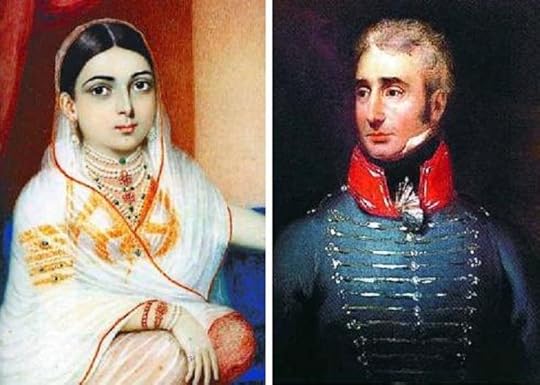
The claim depends on treating South Asian Muslims as a single block. They are not one block. The genetic record is a gradient, and on that gradient several specific populations carry foreign ancestry that exceeds what local conversion alone would produce. Most South Asian Muslims are autosomally close to their Hindu neighbours. That is the modal story. It is not the only story.
The NorthWestern Muslims
Working strongest to softest.
Pashtuns. Y-DNA from Pashtun samples differentiates them from Punjabi and Sindhi neighbours. Elevated R1a-Z93 patterns with Central Asian distributions, alongside meaningful J2 and G. The autosomal work under Reich and Narasimhan places northwest Pakistani populations at a higher Steppe MLBA fraction and closer to Iran-related reference groups than most South Asian samples. The signal is layered, not pure, but it is not reducible to local conversion.
Continue reading Arab Fathers are not fabrications (entirely)