
Please keep the other posts on topic. Use this for talking about whatever you want to talk about.
The survey now has 160 responses. Below the fold I’ve summarized the results.
Please keep the other posts on topic. Use this for talking about whatever you want to talk about.
The survey now has 160 responses. Below the fold I’ve summarized the results.
“I am human, and I think nothing human is alien to me.”
-Terrence
One of the strange things is the comments on this weblog make it seem like many more of the readers are South Asian than is really case (or care about the India-Pakistan conflict). I wish more of you would speak. I’m brown, but I speak on Chinese history. It’s my history too. In a cosmopolitan post-national world the global chattering class should consider Terrence’s insights and be less bashful.
Whenever I’m with a group of Asians I’m usually among the taller bracket (5’9). In Britain I’m tall for an Asian, tallish for a Persian and decent in comparison for white height.
However at last night’s Bollywood dance (I was a bit rusty but I managed to keep up – we did the routine for Kar Gayi chull) virtually everyone was an undergrad (I imagined it would be the Desi postgrads).
What immediately struck me was that I was shorter than a fair few of them. I’m imagining that this generation of British Asians (born in the 90’s) are far more Westernised in their diet and upbringing, than their parents and grandparents. Continue reading British Asians getting (much) taller?
I really don’t know what to make of some of the contentions in Zach’s post below, What’s wrong with fetishizing white men? (also, posting videos which Hindi means I have no idea specifically what is going on in the video) Some of this is probably due to differences between the UK and the USA. But there are some statistics from the 2010 USA Census.
The website Asian Nation has tabulated the outmarriage rates by generation (foreign-born vs. US-raised) and various Asian American ethnicities. You can see the results below as I’ve repackaged them to focus on inmarriage of various subgroups, stratified by sex.
Some notes
1) “Asian Indian” only includes people who are Indian nationals or whose ancestors were from the Republic of India. It excludes other South Asian nationalities (I am not “Asian Indian” for example). But since other South Asian nationalities are a very small number in the USA I think that’s fine.
2) The statistics are generated from subsamples of the Census. I would be a bit cautious on outmarriage rates for groups like Asian Indians and Koreans where in 2010 the number of those born or raised in the USA was still rather small compared to the foreign-born/raised population. One reason Indian Americans showed extremely low outmarriage rates in the early 2000 Census results is that there was a massive swell of immigration in the Clinton era from Indians, so the foreign-born immigrants overwhelmed the signal.
3) Both the Japanese and Chinese have multi-generational communities in the United States. There are large numbers of highly assimilated Japanese and Chinese Americans whose roots in East Asia are as far back as their grandparents, or even earlier. I think it is noticeable that there is sex balance here.
4) I know a lot of you like bullshitting. I will be doing other things for a while so not monitoring comments much. But if I come back and have to see 1,0000-word personal thoughts which are factless and emotional I will just delete them, even if you are a long-time commenter.
Continue reading Statistics on Asian American interracial marriage statistics
IndThings writes an interesting comment:
I would be careful of trying to ride this tiger however, lest Desis/Muslims end up like East-Asian men. Completely forced out of the sexual market-place by white-men basically, as what may have once been an earnest attempt at disenfranchising misogynistic Asian-male attitudes, has turned into a shameless fetish for white-men for no other reason than they are white.
One of the interesting things about asking people whether they would come on this blog’s podcast is that they often say “I don’t know if I’d be that interesting to the audience….” More specifically, there isn’t always a South Asian “hook” to some of the episodes.
But the name of the podcast is “Brown Pundits” because this podcast was started by a few brown guys. Not because we discuss purely “brown” things.
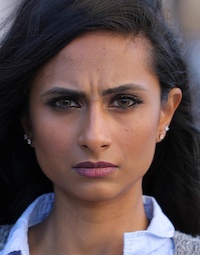 One of the most interesting things I have experienced over the past 15 years or so interacting with young Indian Americans, usually of Hindu background, is the disjunction between the scripts that they are inculcated with in their education in broader society, and the quite nationalistic/parochial perspectives that are imparted to them by their parents.
You can say many things about me, but there isn’t much of a disjunction in what I will say you to privately about controversial topics and what I will say in public about controversial topics (the main skeptics of this view are some Hindu nationalists and Zionists, who are convinced that I’m an Islamic supremacist sleeper agent).
So, I when I began to spend some time around Indian Americans one of the peculiar things I was a bit surprised by his how different their extremely social justice Left external presentation could be from what they might say privately over some drinks, or if they perceived you to be an intimate acquaintance. Since my views on Islam were well known many of them felt quite free to openly state their privately skeptical views on the religion of Islam and the practices of Muslims, which reflected what their parents had told them, while in public these people might still denounce Islamophobia. People who would criticize caste privilege in public forums might still be privately smugly proud of their family’s caste background. And, the same people who might perceive American patriotism as to be jingoistic and declasse would express Indian nationalism that they had absorbed with their mother’s milk in private in the crassest of terms.
But there does come a time when you leave your parents’ home, and their influence. And I don’t interact much with Indian Americans on a day to day basis, but I do wonder if many progressive Indian Americans are bringing their two aspects into alignment, and shedding their private chauvinistic reflexes?
An analogy here might be young American Jews, who until recently were quite liberal in the American context, but might align with more ethnonationalist views in relation to Israel (even if they supported the Left parties in Israel, those parties are still more nationalistic than similar parties in the United States). Today the two views are coming into coherence, as most younger American Jews who are not orthodox are starting to distance themselves from Israel.
 An admission: I have no idea what half of Zach’s posts are about. More clearly, they’re written in English, but there are so many references to Indian/South Asian pop-culture and drop-ins of Hindi-Urdu words that I have no idea what he’s talking about. It might as well be Greek. Often after 30 minutes of Google, I get it, but it’s pretty funny because technically we’re both English-speaking brown people living in Anglo countries.
There are different kinds of brown people. Some of them are well talked about. For example, ABCD vs. “FOB” culture. But it’s way more subtle and diverse than that.
For example, I have a friend who grew up in Canada, who is from a South Indian Brahmin background. But, it turns out that the only Indian language she knows is Hindi, because of the people she grew up with. I am not good with languages. I have primitive fluency with Bengali, though I can’t read it, and absolutely no firsthand knowledge of Hindi or Urdu. A lot of Diasporic South Asians though drop-in in Hindi-Urdu words into their speech and a lot of us have no idea what you are talking about (I share this reaction with a lot of people of South Indian background raised in the USA, who don’t know Hindi).
Zach is a “Third Culture” person in a traditional sense. I really am not…my parents left Bangladesh in 1980, and did not raise me among many Bengalis or even South Asian people. Better to describe me as American culture + an accent/perspective of something very different.
 Another BP Podcast is up. You can listen on Libsyn, iTunes, Spotify, and Stitcher. Probably the easiest way to keep up the podcast since we don’t have a regular schedule is to subscribe at one of the links above.
You can also support the podcast as a patron (the primary benefit now is that you get the podcasts considerably earlier than everyone else…). Would appreciate more positive reviews.
Today I talk to Zaid Jilani, who runs the Extremely Offline podcast, among other things.
We talk about his current project, trying to bring people with different views together, as well as where his own views came from. Zaid also dished a little dirt on Ezra Klein and Matt Yglesias, and talked about growing up in the “Dirty South” (OK, he didn’t say it was the “Dirty South”, but it was the sort of rural South). Finally, we talked a fair amount about Democratic party politics and primaries, a topic which Zaid has a lot of knowledge of.
 Another BP Podcast is up. You can listen on Libsyn, iTunes, Spotify, and Stitcher. Probably the easiest way to keep up the podcast since we don’t have a regular schedule is to subscribe at one of the links above.
You can also support the podcast as a patron (the primary benefit now is that you get the podcasts considerably earlier than everyone else…). Would appreciate more positive reviews.
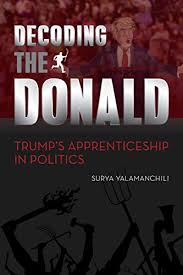
Today we talk to Surya Yalamanchili, the author of Decoding The Donald: Trump’s Apprenticeship in Politics, a contestant on The Apprentice, 2010 Democratic candidate for Congress, and a successful entrepreneur. We talk about Indian politics, American politics, colorism in the South Asian community, as well as growing up in the 70s to 90s as a brown Amerian.
We try to explore in detail the polarized political landscape of the USA today, he from the center-Left, and me from the center-Right.