Pakistan and the Act of Union

A Cold Comparison, Not a Romantic One

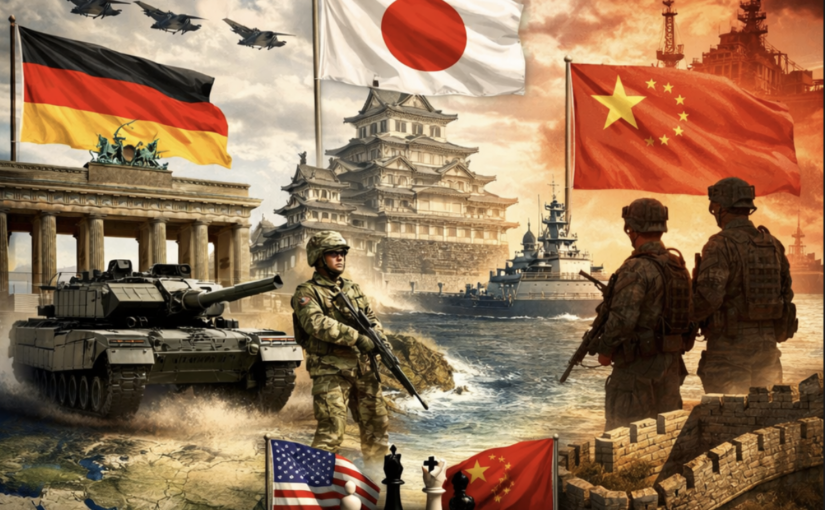
There is only one historical analogy worth using when discussing Pakistan “rejoining” India: the Act of Union of 1707 between Scotland and England. Not Rome and Greece. Not Yugoslavia. Not German reunification. And certainly not civilizational nostalgia. The reason is simple. The 1707 Union was not about love, memory, or reconciliation. It was about bankruptcy, security, elite survival, and managed loss of sovereignty without humiliation. That is the only way such a union could ever happen.

Union Is an Elite Exit, Not a Popular Dream

Scotland did not join England because it felt British. It joined because it was broke. The Darien Scheme collapsed. The Scottish state was insolvent. The elite faced personal ruin. England controlled capital, markets, and trade. The Act of Union absorbed Scottish debt, protected elite property, preserved law and church, dissolved sovereignty while preserving status. The public opposed it. It passed anyway. Unions are not plebiscites. They are elite exits under pressure.

Pakistan’s Position Is Structurally Similar

Pakistan today is not Scotland in 1707. But the resemblance is close enough to matter. Pakistan is chronically indebted, permanently IMF-dependent, over-militarised by design, economically capped by scale and FX limits. It is run by elites whose lives are already offshore, Like Scotland, the state is failing faster than rents can be extracted, sovereignty has become expensive, security dominates fiscal policy and there is no credible independent growth path. This is not ideology. It is arithmetic.

Why India Is England in This Analogy Continue reading Pakistan and the Act of Union

Pakistan, a young state but an old nation

no one is born a Bahá’í; even those who are “Bahá’ízadeh” (those born to Bahá’í homes) must first affirm their belief at fifteen and confirm it at 21

Dawn Posting

Most of my writing these days happens either at the dead of night, bleeding into the Dawn. This is when the world is quiet enough to hear one’s thoughts.

I’ve asked the Editors to lean into their moderation. But I’ve also emphasized that a copy of the moderated comments should be preserved in their original form; so that, if there’s an appeal or a misreading, I can assess it personally. My instinct has always been to under-moderate. I would rather allow something unpleasant to be said than suppress something vital.

That said, miscommunication is inevitable in a forum like ours. I recently had my own moment of misunderstanding with Indosaurus. But in many ways, that’s exactly what makes Brown Pundits an exciting space. We are not a hive mind. We’re a broad church; Anglican in temperament, not Catholic in control. Communion, not command.

The Commentariat Continue reading Pakistan, a young state but an old nation

Brown Pundits