This is a near zero likelihood of happening but never say never.
This is a near zero likelihood of happening but never say never.
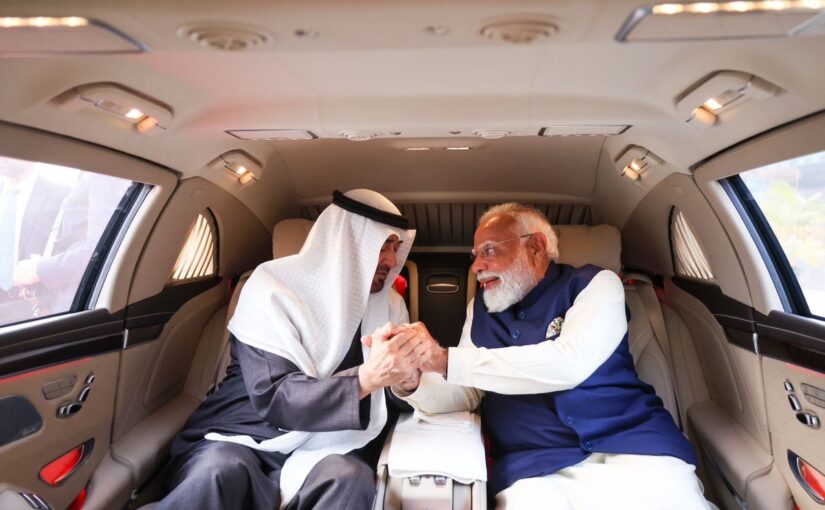
A popular thread this week argues that a two-hour stopover in Delhi, by MBZ, proves that India has replaced Pakistan as the Gulf’s preferred partner, and more than that, has become the gateway to the entire non-Western axis. The imagery is cinematic: land, sign, leave; a Pakistan deal collapses days later; Moscow follows. Read as theatre, it is persuasive. Read as geopolitics, it is misleading. Two hours did not change the map. They revealed it.
Serious agreements are never written on the tarmac. When a head of state spends two hours anywhere, it is precisely because alignment already exists. The documents are negotiated months in advance. The ceremony is optional. Speed signals confidence, not conversion. The absence of banquets is not contempt; it is efficiency.
India is valuable to the Gulf because it is large, stable, demographically young, and not ideologically intrusive. It offers scale without sermons. That makes it an excellent partner. It does not make it a hub through which all other alignments must pass.
Continue reading Two Hours in Delhi, and the Myth of Sudden Alignment
Iran cannot be analysed using the same political categories as Pakistan or most modern states. The difference is not whether a regime is monarchical, clerical, or military. It is the age of the civilisation being governed. Pakistan is a young state. Its borders, institutions, and political language were assembled in the twentieth century. In such states, power fills a vacuum directly.
Power in Young States, Authority in Old Ones
A military dictatorship governs by force, hierarchy, and command. Its legitimacy is procedural and immediate: order, security, survival. This form works where political memory is thin and inherited meaning is limited. Pakistan’s army did not overthrow an old order. It stepped into an empty one. Iran is structured differently. It is a civilisational state that has existed in recognisable form for roughly three thousand years. Power there has never been exercised through force alone. Authority has always been tied to ideas that predate any single regime.
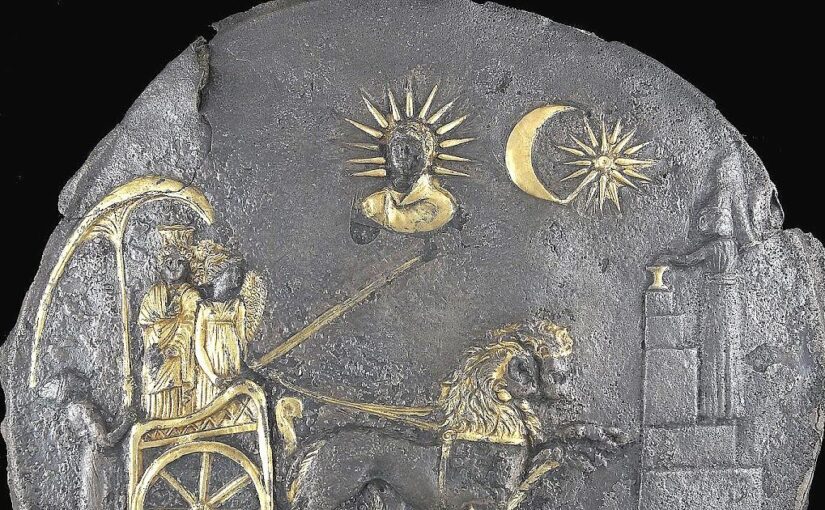
Monarchy as Civilisation, Not Administration Continue reading Iran and Pakistan Are Not the Same Kind of State
So a new edition of the T20 WC is coming up and it is already embroiled in some controversy. Bangladesh refused to play in India and ICC had them replaced with Scotland.
Cue the usual voices from Pakistan – “BCCICC”, “India’s money is ruining cricket” blah blah.
But it led me to ponder something – Pakistan itself has a huge population of 250 million + and it isn’t that “much” poorer than India. India’s GDP pci is $3050 while Pakistan’s is $1710 (around 1.8x) . Similarly India’s GDP is $4.51 trillion while Pak is $410.5 billion (around 11x).
So the other numbers should be in the same ratio right?
Here is where the difference comes
Revenue of cricket boards
BCCI – INR 20686 crore
PCB – INR 458 crore
That is around 45x
T20 leagues media rights
IPL – $6.2 billion for four years
PSL – $24 million for two years
That is around 130x (normalized on a per year basis)
And if you look at other stuff these huge ratios persist
Cars sold annually
India – 4.1 million
Pakistan – 200,000
Forex reserves
India – $710 billion
Pakistan – $21 billion
Stock exchange market caps
BSE – $5 trillion
PSE – $65 billion
Why do you think that is?
My theory is because the Pakistan military is stronger than the 1/10 ratio, it kind of effects everything else which leads to these lop sided ratios.
Give your thoughts in the comments below.
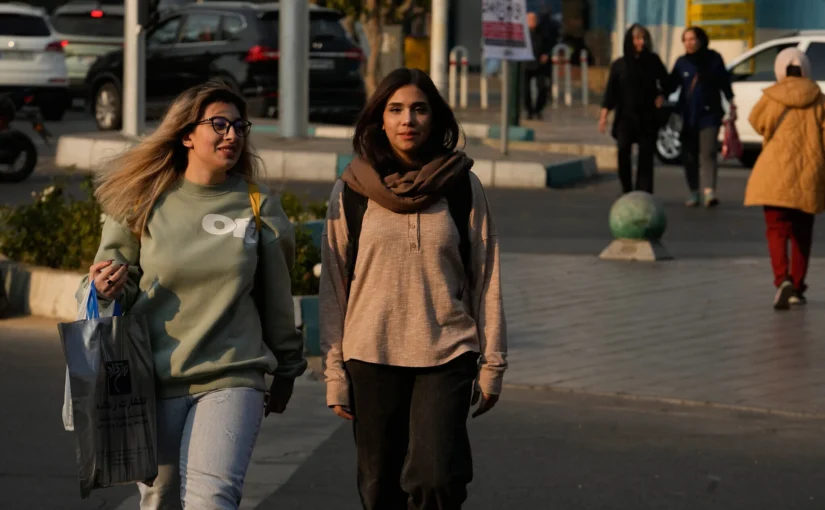
I was not reading reports. I was speaking to Iran. After weeks of silence, the internet briefly opened. Voices percolated through. What they described was not protest energy. It was systemic strain.
The figures circulating privately are severe. Tens of thousands dead, according to some accounts. Whether the numbers are precise is less important than where the pressure is concentrated. This is not confined to Tehran or large cities. It is acute in smaller towns and provincial centres.
The big urban areas remain relatively stable. It often is. But towns in the North and across the interior are absorbing the worst of the economic collapse. Inflation there is not political language. It is daily arithmetic.
This marks a shift. The Islamic Republic rested on a broad social base: provincial populations, lower-income groups, and religious constituencies. That base is now under strain. Discontent is no longer segmented. It is shared. Continue reading Listening to Iran
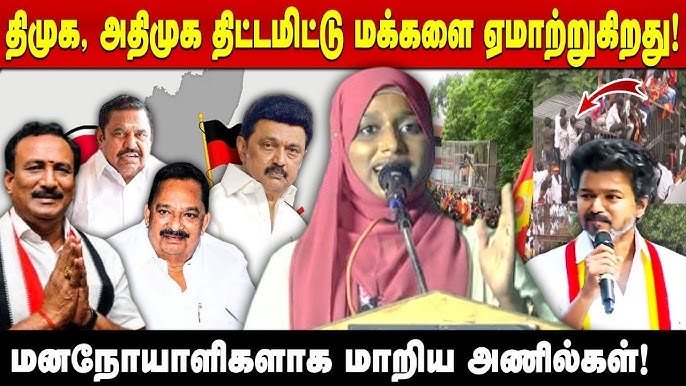
Sbarr sent a simple reel: a female Tamil Muslim politiciann in Ranipet, near Vellore, waving an LTTE flag during an election campaign. What followed was not simple at all. The reaction treated the image as an ideological provocation rather than a local political act. Why is a Muslim woman waving a Tamil separatist symbol? What does this say about loyalty, religion, or the nation?
Islam in South India did not arrive through conquest. It arrived through trade. Arab merchants settled along the Malabar and Coromandel coasts centuries before the Delhi Sultanate existed. They married locally, learned the language, adopted food, dress, and social habits, and became Tamil, Malayali, or Konkani Muslims. Religion changed. Civilisation did not.
This is why South Indian Islam does not behave like a foreign layer imposed on a hostile society. It is woven into the local fabric. Tamil Muslims are Tamil first in language, culture, and political instinct. Their solidarities are shaped by region before theology. This is not syncretism as rebellion. It is indigeneity as habit.
Tamil identity in Tamil Nadu routinely transcends religion. I was reminded of this years ago in Chennai, asking my dentist, who was Christian,about her name. Like many South Indian Christians, it was a mix of Hindu and Christian forms. I asked whether they were also Tamil. She looked at me as if the question made no sense. Of course she was Tamil, “very Tamil.”
That response explains more than a thousand editorials.
In Tamil Nadu, religion is real but it is not totalising. Tamilness is older, deeper, and more organising. This applies to Hindus, Christians, and Muslims alike. Political expression follows that logic. A Tamil Muslim expressing Tamil nationalist sentiment is not a contradiction. It is normal.
This is what happens when South India is constantly interpreted through North Indian assumptions. Islam is assumed to be oppositional. Symbols are assumed to be exclusive. Politics is assumed to be communal by default. None of this holds in the Tamil world.
Tamil lands occupy a distinct face of Indian civilisation. Fully part of India, yet unmistakably their own. Deeply Indian, yet not reducible to Gangetic history or North Indian templates. This is not fragmentation. It is civilisational strength.
India has always had multiple faces. The Tamil one is maritime, linguistic, ancient, and self-assured. It absorbed religions without surrendering itself to them. That is why its Muslims do not behave like guests. They behave like natives.
The reel was never the problem. The inability to see India’s southernmost face was.
Link to the entire report.
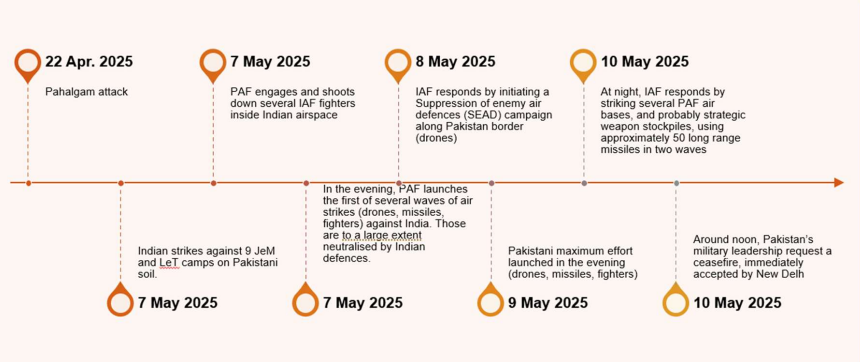
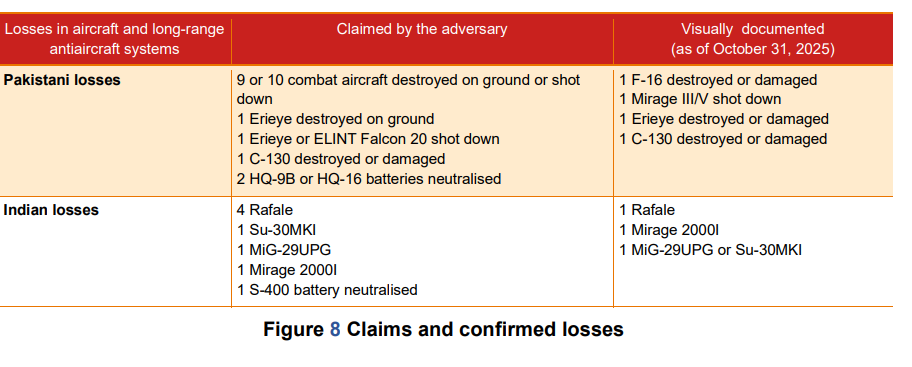
Nevertheless, sufficient elements appear to indicate that, by the morning of 10 May 2025, the Indian Air Force had succeeded in achieving air superiority over a significant portion of Pakistan’s airspace. This in turn enabled it to continue long-range strikes against enemy infrastructure at will, at least for as long as it retained sufficient stocks of munitions such as BrahMos or SCALP-EG. At the same time, the Pakistan Air Force had lost the ability to repeat the operations it had conducted so successfully on 7 May 2025, owing to the loss of its forward air-surveillance radars and the threat posed by S-400 systems to its AWACS standoff weapons delivery platforms, while its own strikes conducted between 7 and
10 May 2025 had been largely thwarted by Indian defences.
Meanwhile, Islamabad demonstrated its manifest superiority in strategic communication, which notably benefitted from support within Chinese, and to some extent Western, information spheres. The destruction of one or more Rafales, for example, effectively masked the defeat of the adversary air force, which had reportedly suffered at least equivalent losses but had also proven incapable of defending its most important air bases or of delivering comparable, documented strikes against its adversary.
Operation Sindoor marked a significant evolution in Indian counter-terrorism doctrine, which now equates a terrorist attack to an act of war warranting a decisive response. It also eliminates the distinction between terrorist groups and their state sponsors, with the latter automatically becoming legitimate targets in the event of a renewed attack. Finally, it reaffirms New Delhi’s resolve, in such a case, not to be deterred by Islamabad’s nuclear arsenal. The potential for escalation on the Indian subcontinent therefore remains higher than ever, while developments since 1999 have constantly illustrated the stability/instability paradox
TL;DR take:
IAF won in air and the land after sustaining initial losses whereas PAF won in the media (which is not as trivial as it sounds).
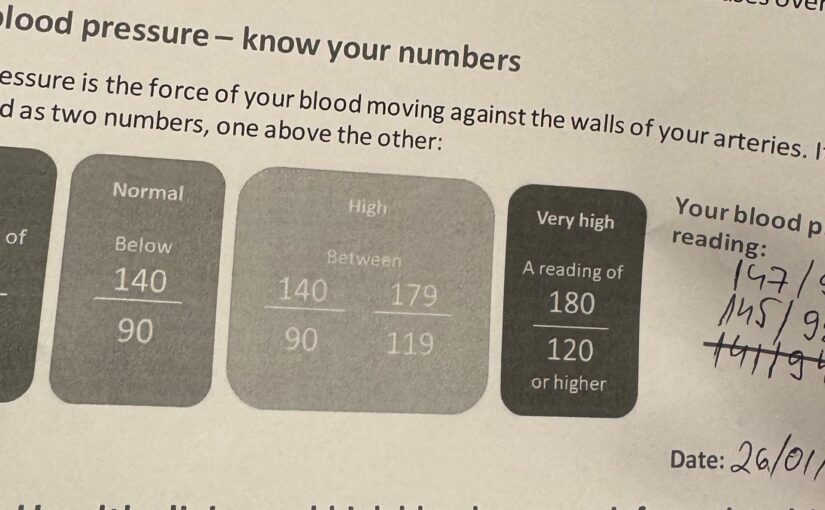
I am forty-one. Five foot ten. Around ninety kilos. My blood pressure is borderline high. My resting heart rate is higher than it should be. A nosebleed and a sustained pulse over 100 were enough to tell me something was off.
Ordinarily, I do my health checks in India each January. Apart from high cholesterol, things usually come back fine. During the pandemic I was very fit. Even as recently as October, I was training regularly and moving well. This is not a story of collapse. It is a story of drift.
My baseline habits are solid. I do not drink. I do not smoke. I eat cleanly and avoid excess sugar and carbohydrates. I carry weight well, but weight is still weight. At forty-one, the body compensates more slowly. Margins narrow.
Borderline Is a Signal
This happened on an ordinary Cambridge street. Dr. V and I ran into acquaintances, who in turn had friends (from medical school; a grandmother & granddaughter) visiting from Australia. Polite introductions. Small talk. The weather. Then, inevitably, India.
One of the women mentioned that her husband was “half Indian.” She smiled and added that he had told her she would definitely not like India. This was offered casually, as if it were neutral information, not an insult delivered in front of two Indians.
Trying to keep the exchange courteous, I mentioned Sri Lanka; not as a deflection, but as a bellwether. Our mutual acquaintances had already mentioned enjoying seeing my birthday pictures from there so I thought it a natural segue.
It is often how people test their appetite for the subcontinent: more contained, more legible, still culturally rich. If one enjoys that, India follows naturally; if not, India can feel overwhelming. This was not a provocation. Yet the suggestion was met with laughter, as though I had committed a social error. It was after this, not before, that the tone hardened and the remark about her granddaughter emerged, delivered with surprising persistence, as if the earlier politeness had licensed open disdain.
Continue reading Why It Is Still Acceptable to Insult India
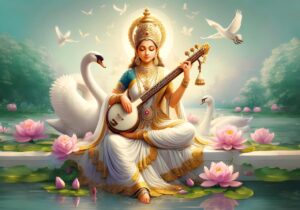
This post was inspired by an earlier post of X.T.M where he mentioned that this question generates a lot of traffic for BP.
If we consider the literal definition of Paganism, the question becomes quite simple. Historically, the term “Paganism” was not used to describe religious beliefs prior to the 20th century. It first emerged in the context of Early Christianity, serving as a pejorative for the folk religions still practiced in the rural regions of the Roman Empire. By this definition, it’s clear that Hinduism does not fit the label of Pagan.
However, in contemporary usage, many Neo-pagans view Paganism as a neutral descriptive term, applicable to all cultures that are philosophically incompatible with the three Abrahamic faiths. The question whether Hinduism can be considered Pagan in this broader sense is not so simple since most Hindus assert belief in a singular God or multiple manifestations of one God (30 percent and 60 percent, according to PEW surveys).
To start answering this question, we need to pinpoint the philosophical foundation of Hinduism. Thankfully, this isn’t too complicated, as several Vedic verses touch on this theme (e.g. Brihadaranyaka 4.4.18 and 4.4.22), all leading to the same conclusion. These verses indicate that the essence of all spiritual paths in ancient India revolves around Adhyatma (the doctrine of enlightened self). The central concept of Adhyatma is Atman—an ancient, observer consciousness believed to be deeply embedded within each of us. The ultimate aim is to attain Moksha, i.e. to awaken and realize this concealed enlightened self. Now, if we were to bring the God of Abraham and Atman together on a talk show, asking them to explain their doctrines to the audience, it might go like this:
God : I am the all powerful God.
Atman : I am your peaceful inner self.
God : I am the true creator of everything that you perceive.
Atman : I am the true experiencer of all that you perceive.
God : Submit to me unconditionally and obey all my commands.
Atman : Become one with me and be liberated.
God : If you are loyal to me I will take to heaven after you die.
Atman : Whenever you see yourself as me, the Earth looks like heaven.
God : Initiate force against others if they oppose your faith.
Atman : Mix with others if they oppose initiation of force.
Even in these highly simplified versions one can clearly see that the Atman doctrine is Pagan if we apply the more inclusive definition of Paganism. It can also be viewed as a branch of Pantheism. In Adhyatma the analogue of impersonal supreme God is Brahman, the entire universe seen from an enlightened perspective. Since experiencing Brahman is same as experiencing one’s Atman, many experience oriented spiritual traditions use them as interchangeable terms. So when Hindus talk about one God, the are referring to the impersonal God, not the God of Abraham.