
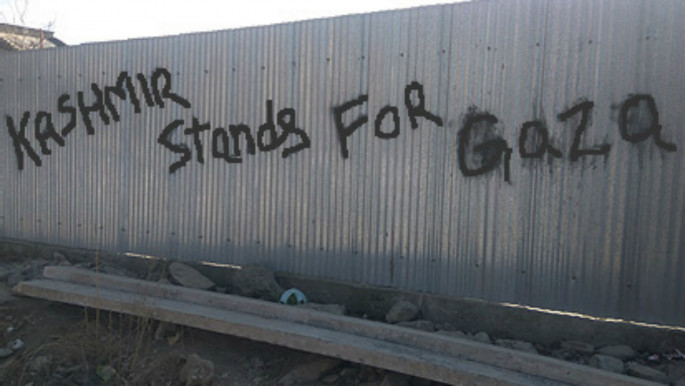
It seems apparently that Kashmir is Palestine. That India is Israel. That Kashmiri Muslims are Palestinians.
First The Pandits were actually displaced. 100,000-200,000 people (estimates vary) fled the Valley in 1990 under explicit death threats, targeted assassinations, mosque loudspeakers announcing their departure was required. This is the closest thing to actual ethnic cleansing the Valley has seen in living memory, and it was directed at Hindus, by militants operating with Pakistani ISI support.
We are not arguing that everything is fine in the Valley. It is not that Delhi’s approach to Kashmir has been faultless, or that the revocation of Article 370 was without consequence for Kashmiri identity. Nor can it be denied that there is genuine anguish among Kashmiri Muslims.
However the analogy to Palestine is not merely imprecise, for instance the Abdullah family chose India over Pakistan, whereas no Palestinian chose Israel. However this argument is increasingly offensive.
The Gaza Test
Start with the simplest possible question: what is actually happening to the Palestinians?
They are being killed. En masse. Hospitals bombed. Aid blocked. Entire family lines erased. Cities reduced to rubble. The ICJ has found it plausible that genocide is being committed. The Netherlands and Iceland have made interventions. Saudi Aramco’s CEO said the regional war that followed is “catastrophic.” The word elimination is not hyperbole; it is the considered language of international courts.
Now ask: what is happening to Kashmiri Muslims?
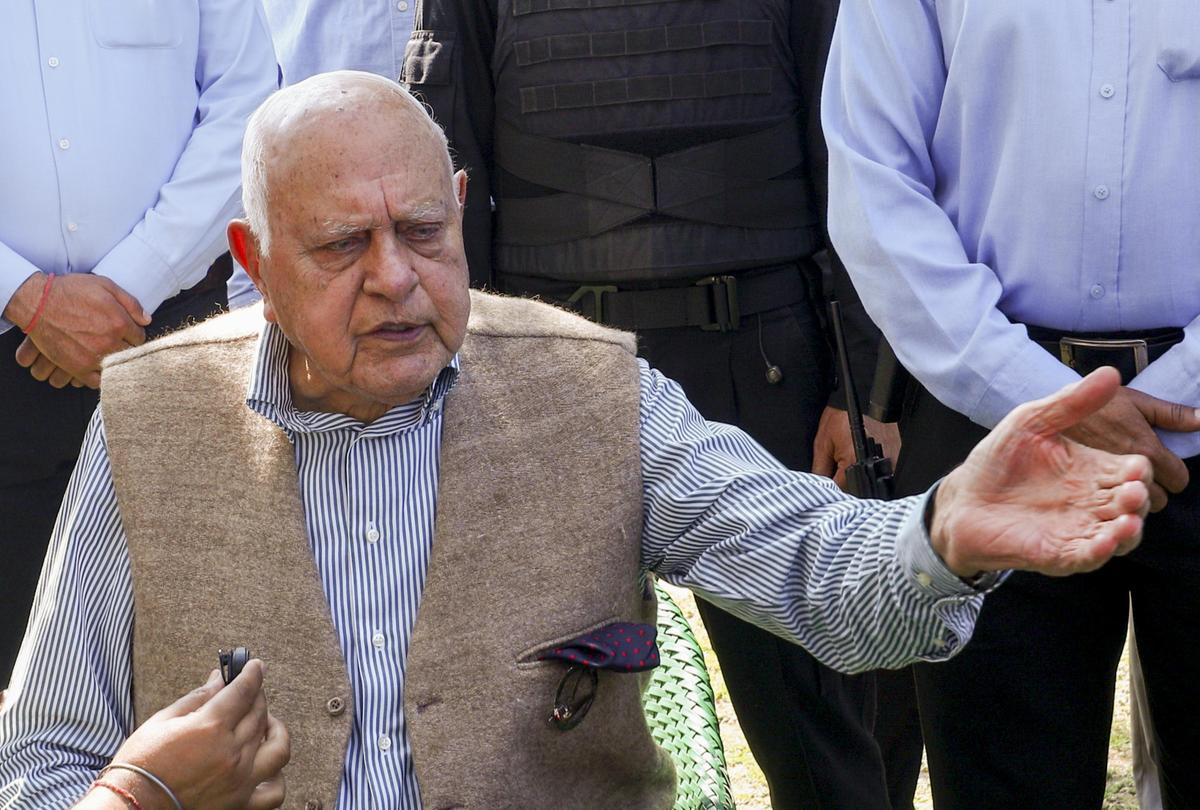
They vote. They sit in Parliament. They serve as Chief Ministers. The Abdullah family, Farooq, Omar, have governed the region for decades, and Farooq Abdullah just survived an assassination attempt, which tells you that someone regards him as a political figure worth eliminating, not that the Indian state has eliminated him. Kashmiri Muslims run businesses, study at Indian universities, live in cities across the subcontinent at will. These are not the same situation. To say they are is to dishonour both the actual victims of elimination and the genuine complexity of Kashmir.
 Integration versus Elimination
The honest civilisational argument about Kashmir is not about elimination. It is about integration, and whether integration, in the Indian case, is being pursued by just means.
That is a real debate. One can argue about the pace of change. One can worry about demographic pressures. One can hold, as many Kashmiris do, that their distinctiveness deserves protection. These are serious concerns that deserve serious engagement.

But integration and elimination are not synonyms. They are antonyms. The Palestinian is being removed from the land. The Kashmiri Muslim is being asked, sometimes clumsily, sometimes coercively, to remain within a political union.
The Moral Weight Problem
There is a second argument embedded in the Kashmir-Palestine comparison that deserves equally direct treatment.
It runs like this: Islamic societies operate under a different moral framework, so we should apply a different, effectively lower, standard when evaluating their conduct. Pakistan is an Islamic Republic; India, that is Bharat, is a secular state; therefore India is held to higher account. By this logic, forced conversions of Hindu girls in Pakistan are simply background noise, while a symbolic demographic shift in the Valley is a civilisational emergency.
We are not accepting that argument on Brown Pundits any longer. Not because we wish to be anti-Pakistan, or anti-Islam, or anti-anything. But because it is philosophically incoherent and morally corrupting.
Morality does not have two tiers. There is not a premium-tier secular morality and a discount-tier religious morality. Islam has one of the most sophisticated moral traditions in human civilisation; the fiqh tradition, the concept of maslaha, the insistence on the inviolability of the dhimmi. If we accept a lower standard for Islamic states, we are not being respectful of Islam. We are being condescending to it.
The standard is the same for everyone, everywhere: any side that deliberately targets civilians is on the wrong side of history. Full stop. No asterisks. No exemptions for ideology, theology, or civilisational belonging.
This is the rule. It applies to the IDF in Gaza. It applies to Iranian Shaheds dropping on Jumeirah. It applies to ethnic violence in any direction in any valley in any subcontinent.
What Brown Pundits Stands For
We are a civilisational blog. We believe civilisations are real, that they carry genuine content, that the Indic civilisation in particular has a living claim on its practitioners that deserves serious intellectual engagement rather than reflexive apology.
We also believe, have always believed, that civilisational pride does not require civilisational chauvinism. One can be pro-India in the deepest sense while holding Indian conduct to a high standard. One can recognise the miracle of a pluralist democracy of 1.4 billion people while remaining honest about where that democracy falls short.
The Kashmir-Palestine analogy shortcuts all of this. It offers a readymade villain, a readymade victim, and a readymade remedy; and it gets all three wrong.

The honest conversation about Kashmir is: how does a great and ancient civilisation integrate a restive, proud, and distinct community by just means? How does it honour particularity within unity? How does it ensure that the Kashmiri Muslim in Srinagar feels the same pride in the Indian project as the Tamil in Chennai or the Bengali in Kolkata? That is hard. It requires honesty about failures. It requires generosity toward Kashmiri identity. It requires Indian institutions to be better than they sometimes are.
But it has nothing to do with Gaza. The people of Gaza are being eliminated. The people of Kashmir are being integrated.
A new category called “Precedent” has been created. These are Posts which settle a question on Brown Pundits so the Commentariat stops spinning in circles on the same ground.
Two Precedents already exist:
(1) Whether 1971 was a genocide; it was not
(2) Whether Indian Muslims have it better than Pakistani Muslims;they do not(3) Kashmir is not Palestine and Pakistan must adhere to the same, if not higher, moral code as India, that is Bharat.
Comments found in violation of a Precedent will be replaced by the link to the relevant post rather than engaged afresh.
Precedents are not edicts. They are the best argument won so far. They can and should be challenged, and if a challenge succeeds, the Precedent gets amended. That is how knowledge actually advances.
This is how BP stays rigorously high signal. Not enforcing orthodoxy but an obligation to bring something new to an old argument.
When did we arrive at consensus on #2 though? There is a strong macro-statistical argument to be made that life expectancy, literacy, economic outcomes, per capita income, gender rights, access to education, employment – Muslims in India arguably come out ahead – when compared to their respective peers west of the Radcliffe Line.
Does a college graduate in Karachi ‘have it better’ than one in Mumbai? I think the answer to that question is extremely obvious.
yes excellent point thank you. Actually have added more articles to Precedent https://www.brownpundits.com/category/precedent/
but you are right, there isn’t a specific piece on point number 2, which makes it open to debate.
this is what is great about BP, when all of our blind spots can be “spotted” like a hundred-eyes Argus.