Legacy of the Gupta Age

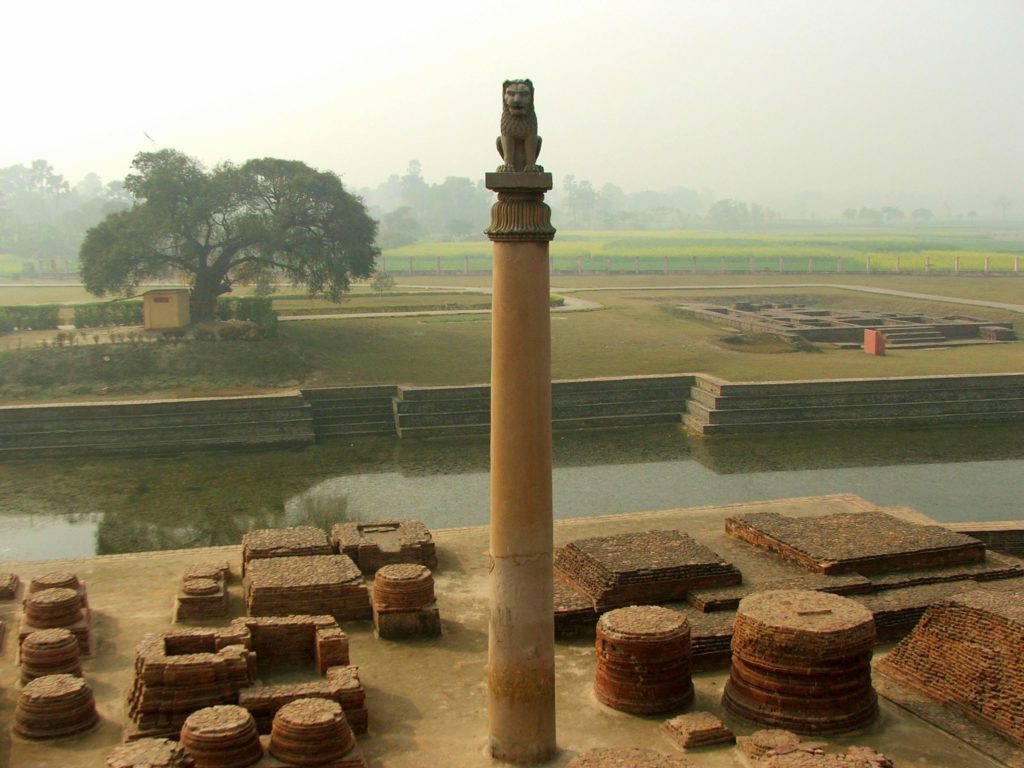
© Asitjain / Wikimedia Commons

The rule of the imperial Guptas is generally considered as a Golden Age or Classical Age of Indian history. Generally arguments for “Golden Age” are rife with retrospective imposition or wishful thinking, but still nonetheless the Gupta Age still deserves to be recognized as an age of immense consequence.

Rome fell in the 5th century, a topic on which whole hundreds of careers have prospered over the centuries. On the other hand, the Imperial Guptas – their rise, their fall and their legacy all remain somewhat uncertain but that may be down to Indian history in general. While Rome as a empire existed from before common era, the rise of the Guptas was a much later event. But there would be some interesting parallels in which these two empires. Rome began becoming increasingly Christian during the 4–5 centuries CE. Guptas who were devoted to Bhagvata sect are also seen as the Great Hindu rulers of the subcontinent. One of the major reasons of the fall of Imperial Rome were the series of events triggered by invasions of violent Huns led by Attila the Hun. Similarly the Hunas who invaded subcontinent are said to be distantly related to the Europeans Huns (only distantly) — but essentially nomadic cavalrymen invaded both these empires and fall of these giant empires is in large part attributed to these Central Asian “Barbarians”/ Mlenchhas.

If we assume (as is the case according to most scholars) — that Indian armies were mainly infantry supplemented by elephantry and cavalry — the tactics used by Skandagupta and later indian rulers to defeat these Hunas must have been fascinating — interesting pop culture parallel would be the Dothraki versus the unsullied.
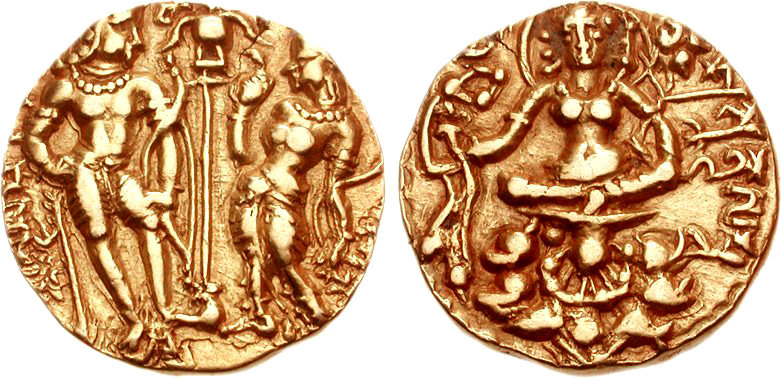
Classical Numismatic Group, Inc. http://www.cngcoins.com, CC BY-SA 2

Integration of Classical Hinduism:

Hinduism as we define it today became something clearly recognizable during this time. One interesting way to look at Hinduism is using the metaphor Rajiv Malhotra uses — about Indra’s net — in terms of Software Hinduism is a open architecture software based on the Vedic traditions where different Apps and programs can be installed as long as they are compatible with open architecture. If we are to explain using that analogy — then the various Sampradayas and local deities cults slowly got integrated into the Vedic architecture. The devotional cults of Vishnu and Shiv and Devi clearly had some Vedic as well as non Vedic antecedents . The Bhagvata cult from North India may have had its origins in the Vedic period around the Vrishni Hero Krishna Devakiputra & others like Samkarshana, but by the time of Guptas the Bhagvata sect become something very different. The Puranas which were composed around these times played a key role in the linking of these various cults and deities into a somewhat coherent (yet extremely contradictory) mythology.

Apart from Vaisnava sect — various traditions of Shakta, Saivism and Tantra were also becoming popular. According to most scholars — Saivism was more popular at this time than Vaisnavism. Apart from the imperial Guptas, most other rulers of the time were devotees of Shiv. Whereas the Vaishnava traditions were more synchronized with Vedic traditions, some local, Tantra and Saiva traditions were not accepted in the mainstream Vedic religion. There are many stories of initial conflict of such local cults with Vedic traditions while these cults were slowly integrated into the Shrauta Vedic traditions. (Something I have touched previously in this piece – Hindu Integration: Brahmanas and Gramadevatas – Brown Pundits). The mechanisms of this integration are varied and complex — some deities become avatars of Vishnu — some become children of Shiv and some are added into the complex narratives of the Puranas. Kumārasaáčƒbhavam by Kalisada is also a fine example of the storytelling employed by composers while weaving this complex mesh of Hinduism.
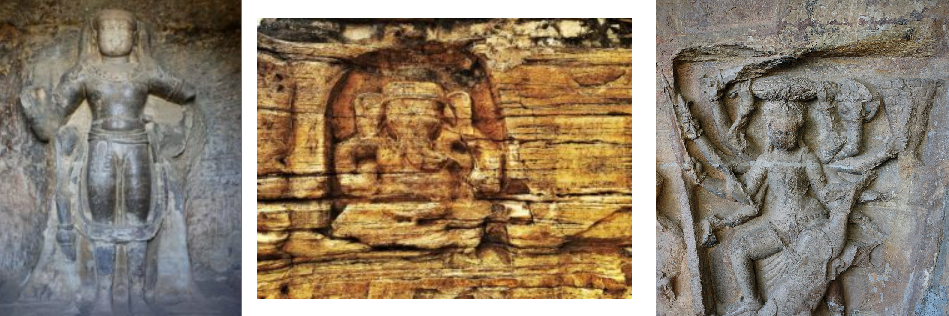
Photo Dharma from Sadao, Thailand, CC BY 2.0

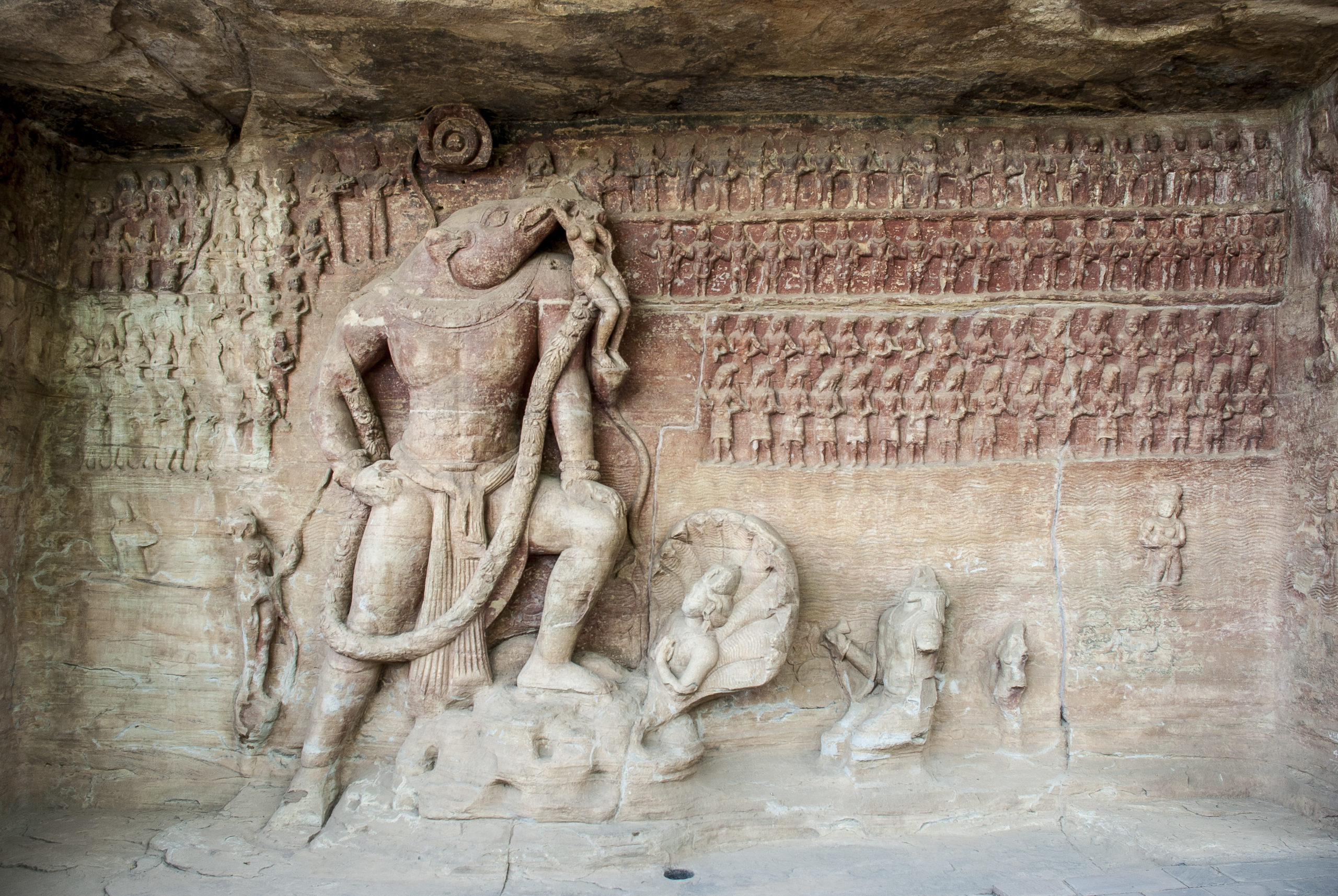
Devi also becomes increasingly interwoven with other deities — as illustrated by the tale of Mahisasur Mardini from the Puranas. The Udaygiri cave complex is a fantastic example of one of the earliest manifestations of such rich stories and motifs and their interplay — Vishnu as Varaha, Shiv Mukhalingam, Mahisasur mardini, Skanda, Ganesh etc.

In a way traditions based on Vedic Yajna based practices which are more transactional began giving way to more devotional forms of worship. These include grand temples, Teertha Kshetras and Shakti Peeth. Small temples may have existed before — we cannot be sure as archeological record is sparse; but during these times ruler began to patronize rich temples complexes — like the Udaygiri caves, Pravareshwara temple complex – which were mediated by Brahamanas practicing Vedic traditions but focus began shifting on the devotional aspects on faith.

One of the interesting foreign accounts we have of this time is that of Fa-hien — a Buddhist monk from China — who writes about a somewhat Golden age — where crime and punishments are low and people are wealthy, where vegetarianism is a norm and people even abstain from garlic and onions. The important thing to glean out of this is the fact that practices like Vegetarianism were becoming widespread around these times — something that has been linked heavily with Vaisnavism as well as Sramana traditions — especially Jainism. This era was also the time when the Mahabodhi temple, Nalanda university were constructed, so Buddhism was also in fashion as was Jainism — though Jainism seems to be more dominant in the west and south.
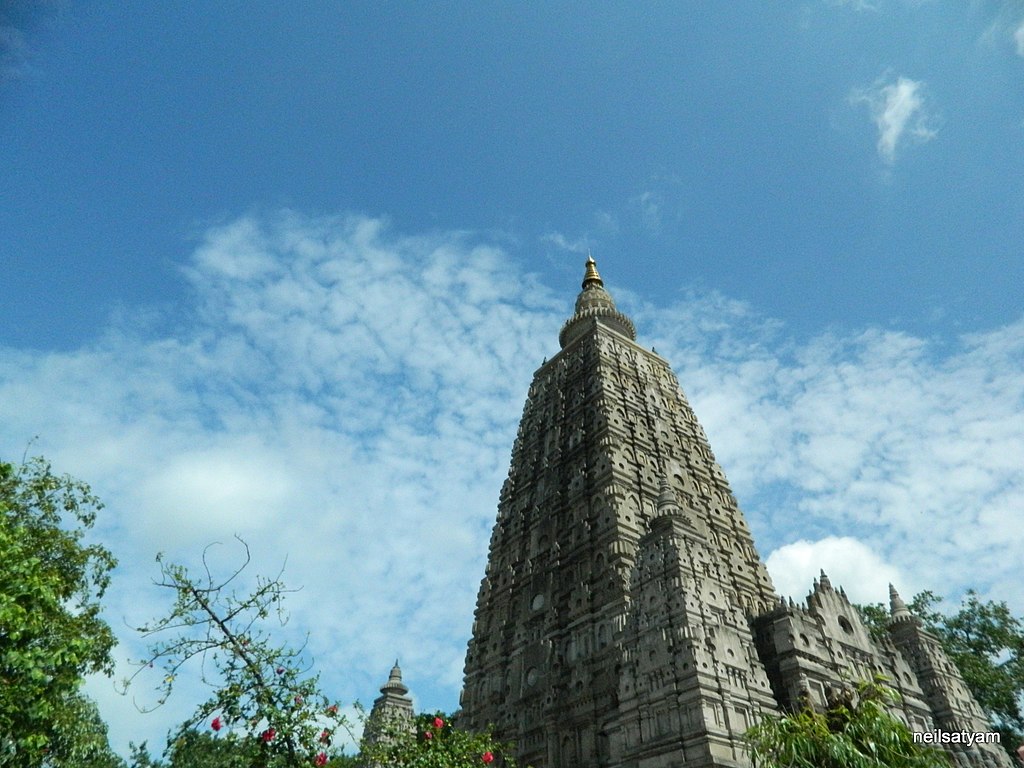
BodhGaya : Attribution: Neil Satyam

Architecture and Art:

The oldest Hindu temples clearly go back to pre Gupta times but the recognizable Hindu temple forms also took shape during these times. Early temples used to be short constructions made of mainly wood — around 10–10 feet square. Temples with their distinctive “Shikhar” began becoming constructed around this time.

In Cave architecture , apart from the Udaygiri and Elephanta caves (which are not firmly dated) — cave architecture seems to have been predominantly Buddhist — as attested in the fantastic Ajanta caves. Even though some of the early caves of Ajanta cave complex go back to the Satavahanas — like the Karla and Bhaja caves, the more spectacular cave art — both paintings and sculpture goes back to the age of the Golden age of the Vakatakas  – around the end of 5th century.

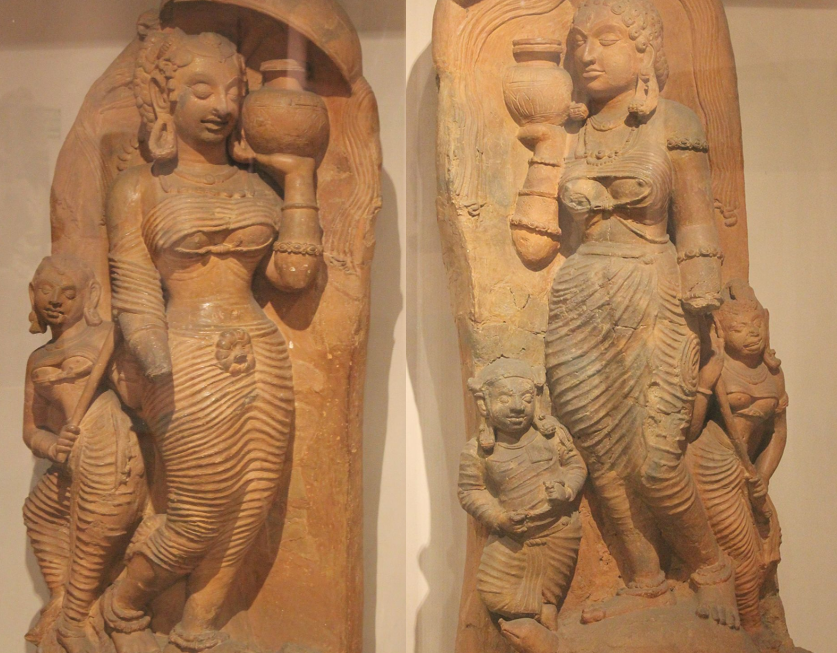
In the times of the Kusanas the art form known as Gandhara sculptor developed (with influence from Greeks), during the Gupta period, the Mathura & Sarnath schools continued to innovate to new heights. The Sarnath Buddhas are considered as one of the greatest art produced in India. Among some other famous sculptures of this times are the terracotta of personified Yamuna and Ganga from Ahhichattra . Yamuna-Ganga figures along with the royal standard Garuda denote the Gupta and their patronage as the Gupta originated from the region of Prayaag.
The Natyasastra which is dated to the first and second centuries CE also deserves a mention while talking about the classical age of India. One of the central concepts of Natyasastra is Rasa — Rasa is what the audience is supposed to feel as an effect of the performance. Rasas and not emotions but they map on to emotions — like Shringara Rasa with love, Vira Rasa with energy — Rasa is not the feeling or emotion but Reaction— which i have to say is a very sophisticated way of looking at it. Audience was not supposed to be a passive observer, but a highly trained and sophisticated participant in the process of Drama. The Natyasastra also prescribes that death, love making, bathing, eating should never be shown on stage and dramas should always end on a positive note — unlike famous Greek tragedies.

Fa-hien also talks about buildings which acted as hospitals existing in north India. The Sushruta Samhita which probably goes back to the late Vedic or early Mahajanpada period, but the Caraka samhita which has many layers was probably work in progress till the Gupta era. The Bower manuscript which is dated to 5–6th century CE gives a fascinating peek into the developments of Ayurveda. It refers to passages from or commentaries on the Caraka Samhita. The text also refers to Sushruta as the one who originally got this knowledge from the king of Kashi.

Legacy of invaders, Indian Kingship and religions:
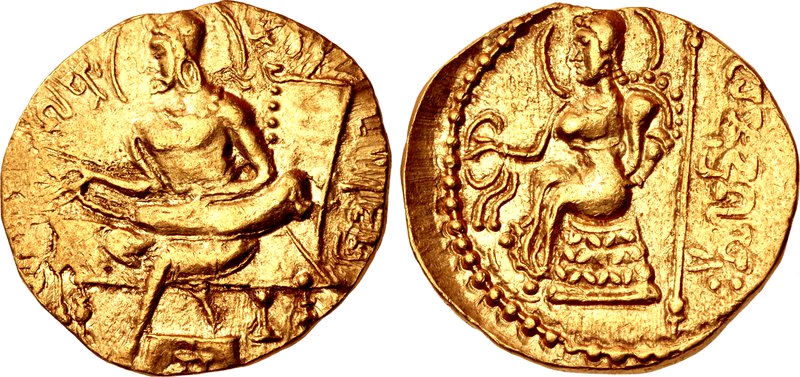
Coins of Samudragupta

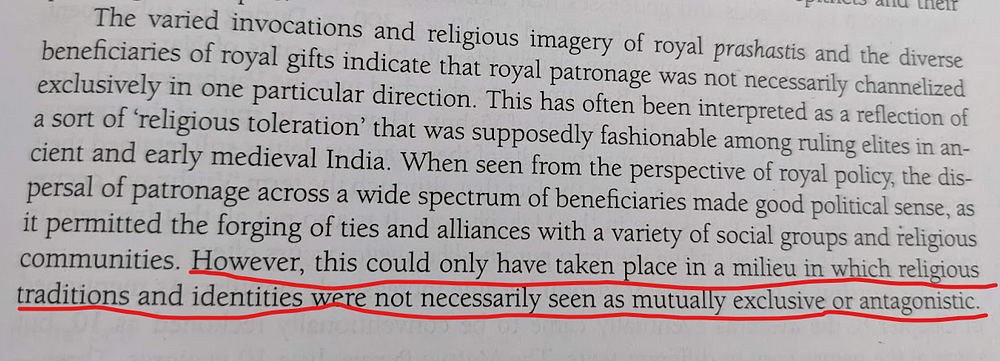
By and large Indian kings right from the times of Bimbisara, rarely persecuted religions sects even if they were personally devoted to some competing sect. This made good pragmatic political sense — this is the argument made by a section of scholars while looking back at these policies of religious pluralism. Many of the ruling elites after the times of the Mauryas like Hunas during this age — were “foreigners”/ Mlencchas — like most steppe warriors of these Hunas must have mostly practiced some form of Iranic religion like the earlier Sakas and Kusanas or Shamanism like the later Mongols. But inspite of what we noted earlier — about Mihirakula being among the few ancient Indian rulers to resort to religious (anti religious) zealotry — the Hunas went native quite soon. These streams of invaders who came to shape the subcontinent from the time of the Buddha to the fall of Gupta empire — Persians, Macedonians, Bactrian Greeks, Sakas, Kusanas, Hunas — we find that all these identities melted into the Melting pot of India. Indian religions — especially Hinduism and Buddhism in large part absorbed, reshaped and restyled the faith systems of the invaders. From between a few generations to few centuries all these invaders “went native” — so in a way what became Classical Hinduism was shaped by these invaders. This integration of the “invaders” would stop in the coming centuries.

Here is a quote from Upinder Singh — History of ancient and earlier medieval india.
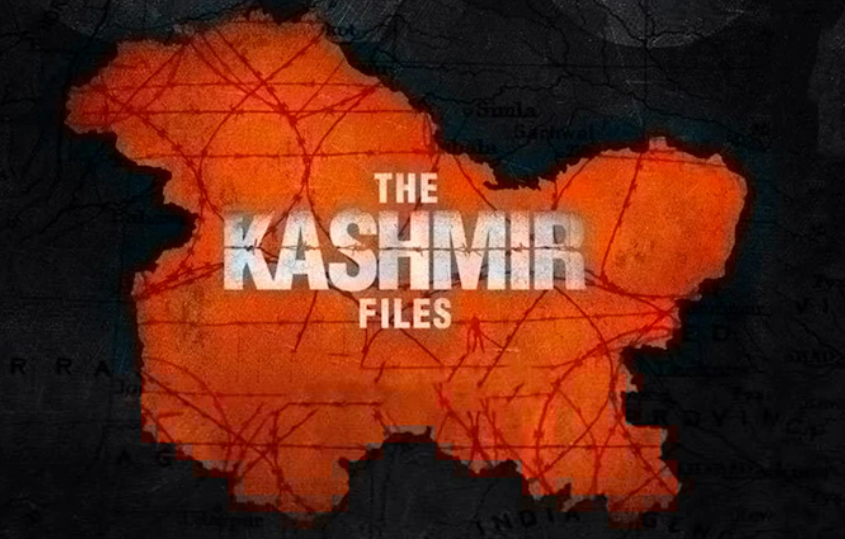
Kashmir Files : Short Review

Short Review
#KashmirFiles – forgive my typos and terseness – i posted this in a hurry
 
I was pleasantly surprised by how effective the movie was in conveying what it started out doing. I had a very low bar after Tashkent files. Some would take umbrage to the Loud direction at times. Personally I think that was vivek agnihotri’s choice and overall the Loudness has the desired effect. Having seen more gory scenes in Visual medium and read more graphic details about Kashmir Pandit I did think the violence was NOT overdone though Loud at times. Rather some of the more ghastly things documented were not shown. RAPE which was common and effective tool used by Kashmiri Islamists to scare Pandits wasnt depicted in the movie. Anupam kher shines, among his finest performances. I even liked Mithun’s role. Darshan Kumar also pulled through on a tough role (though with glitches).
Overall acting is just above average – especially by actors in crucial moments in the film which somehow let me down – especially during the final monologue. It could’ve packed more punch with a flawless monologue like that of Kay Kay from Gulaal but it didn’t. 
As a result I didnt get emotional watching the movie (except maybe the Biscuit scene by Anupam Kher) while I had shed some tears while reading Pandita’s moving memoir. To the readers, I would still recommend Pandita’s book over this movie but this movie will reach places which a book could never do. Book Review: Our moon has blood clots | by Gaurav Lele | Medium
Sad that a fine mind like Pandita has not *yet talked about the impact of the film (probably due to history with the director).
 
But most importantly the movie does what only a movie can (not books or newspapers or even podcasts). So it’s a very necessary counter weight movie especially in company of Haider and Mission Kashmir. The criticism I had watching was the absence of positive Kashmiri Muslim characters who helped Pandits risking their lives (though the final monologue makes that point along with many other nuances). Personally I think that’s not fair depiction but award winner “Haider” didn’t have a single positive Pro India character – all Kashmiris who were pro India were corrupt – so maybe judging Kashmir files with that level of harshness itself isn’t fair.
In that space #KashmirFiles corrects a lot of narrative around the Kashmir in general in Pop culture and also tells the stories of the Kashmiri Hindus with focus solely on their plight.
 
There are some errors and unbelievable plot points. The characters (5 dinner table characters) appear half baked and under acted at times. In many places multiple character arcs are fused into a single character which leaves things undercooked.
I also felt the #Article370 part is overplayed and made simplistic and dumbed down. That part almost feels like propaganda for current BJP government. Ofcourse it’s part of story so that’s fine in a story. #KashmirFiles
Personally I felt the multiple Amarnath killings should have also been part of the film – whose aim was to further prevent any attempts to lay claim to Hindu legacy of Kashmir. But @vivekagnihotri can’t get it all inside the movie.
JNU is naturally shown caricaturish – but frankly I care far more about Kashmiri Muslim caricature than JNU caricature. Also don’t think the bright minds of Azadi in JNU would be seed any space in one monologue :). But maybe that was wishful thinking by director. The use of CAA protest fame song – Hum Dekhenge is at times not loud but effective nonetheless.
 
In summary the movie shifts the Pop Culture pendulum on Kashmir to its end powerfully (probably overcompensates a bit), but is no means is it a complete film – its a message meant primarily to highlight the plight of the Kashmiri Hindu community. But it does so (with exception of the final monologue) making a caricature of Kashmiri Muslims as either fanatics or cowards when there have been documented instances of Kashmiri Muslims risking their lives for India in general and Pandits in particular. But that is what you get when the only person willing to voice this issue honestly is Vivek Agnihotri – when Bollywood in 30 years came up with ZERO films on this tragedy and what they managed at last was the PC and poorly made Shikara. In that context you have to not only live with Kashmir Files but somewhat embrace its core message.
 
Kashmir files uses a lot of Hindu imagery and symbolism – sometimes subtly sometimes overtly. I felt the use of Shiv makeup Anupam Kher was deliberate – especially in the light of retrospective offense taken by newly aware(woke?) Hindus about the Shiv scene from PK. 
#KashmirFiles has started a conversation and hopefully later entries in the debate will add more nuance which is missing in the movie.

Posing as a South Asia expert: Brahminical patriarchy edition


This research article will be submitted in the new journal Intersectional Gender and South Asian studies. Dedicated to VisionIAS - especially Smriti Shah

Roots of divergence between Bangladesh and the rest of South Asia


South Asia in general has been a diverse place demographically as well as geographically. Unlike the myth of ancient civilization conjured up by well-meaning anti-colonialists in the 19th and 20th centuries, South Asia neither had a coherent identity nor a dominant mass religion. It only became a political unit after the forceful amalgamation of different polities under the Colonial British Raj. Since getting independence, Bangladesh has diverged a great deal not only from former West Pakistan but also from India. Not only in economical terms but also in terms of women empowerment. Unlike most democracies, Bangladesh has been governed by women for a significant duration of time since its independence.

What explains this divergence? Especially between North Western South Asia and North Central South Asia on one side and Eastern Central South Asia, Western Central South Asia and South Eastern South Asia on other ? Continue reading Posing as a South Asia expert: Brahminical patriarchy edition

History of India Series: Episode 5 – The Magadh Era: From Bimbisara to Ashoka

CC BY-SA 2.5 Bpilgrim (talk · contribs) - Own work
CC BY-SA 2.5 Bpilgrim (talk · contribs) – Own work

The History podcast passes through the Magadh era. Mukunda Raghavan and Gaurav Lele talk to us about the sub-continent at the end of the Vedic age and take us all the way to the ruler whose symbols are part of the Modern Indian Republics mythology. Alexander and Vishnugupta Chankaya make an appearance and we speculate on the first recorded caesarean birth.

@raghman36 @gaurav_lele @maneesht

Sources and References:
Books and Blogs
 Upinder Singh – Ancient India.
 Upinder Singh – Political violence in Ancient India.
 Upinder Singh – Culture of Contradictions.
 Romila Thapar – Ancient History
 RS Sharma- India’s Ancient Past
 Javarava’s Raves:  (Blogposts publications etc)
 Greater Magadha – Johannes Brockhorst
 Live History India (Paid + unpaid)
 Early Hinduism — the epic stratification | by Gaurav Lele | Medium
 Free Web Sites – Buddhism – LibGuides at Michigan State University Libraries (msu.edu)
 Excerpts from  : King, Governance, and Law in Ancient India: Kautilya & Arthasastra
PODCASTS:
 The History of India Podcast – Kit Patrick
 Echoes of India Podcast – Aniruddha Kanasetti

Browncast: Indic explorer on Hinduism, Dharma, etc

Image

Another Browncast is up. You can listen on Libsyn, Apple, Spotify, and Stitcher (and a variety of other platforms). Probably the easiest way to keep up the podcast since we don’t have a regular schedule is to subscribe to one of the links above!

In conversation with Indic explorer, Mukunda and Omar discuss a lot of things related to all things “Indic” . Items include how to define Hinduism, why it does not get the respect it deserves and why its most ardent fans may need to “up their game”.. .

Indic (who prefers to remain anonymous for now) can be found on Twitter at @theindicexplor1

Brownpundits is on YOUTUBE

Brownpundits have come on Youtube.

Currently, i have only uploaded History series podcasts on Youtube, but hopefully in the coming days we can upload some vodcasts and some popular podcasts on too

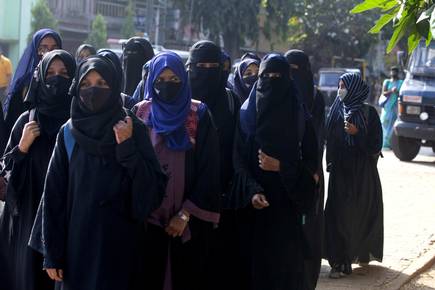
Browncast : Karnataka hijab issue


Another BP Podcast is up. You can listen on Libsyn, Apple, Spotify, and Stitcher (and a variety of other platforms). Probably the easiest way to keep up the podcast since we don’t have a regular schedule is to subscribe to one of the links above!

Karnataka hijab issue

This discussion has a lot of digressions and tangential issues but it is a discussion worth having. Leaving aside the Hijab controversy, how India is represented (or more misrepresented) in global media (arguably of both sides) is something Indians have to confront. Maybe that’s a separate podcast why India and Hindutva which is certainly moderate when compared to polities of the subcontinent get such a bad rep. I would lay the blame more on the Indian origin interlocuters than any foreign design (though that bias is undeniable).

I would even go on to add that the Western world, in general, hasn’t treated most non-Western countries as sovereign nation-states. I guess if sovereignty is treated as sacrosanct by people of Indian origin, inspite of personal biases some semblance of balance would be maintained in the “India” discourse

The Lavanya suicide and journalistic priorities

THIS IS A RANT

Just finished reading a longish piece on the suicide of the girl named Lavanya in The News Minute – Link 

Its a longish article – which doesnt try to get to the bottom of the death but makes the priorities of the author clear in ascending order

  1. Investigate how BJP/VHP/RSS have a network in TN and want to grow it using cases like Lavanya.
  2. How Christians believe in “forgiveness” virtue
  3. Periyar Ambedkar Anna statues.
  4. What really happened to Lavanya

Of course no one would deny that Sangh parivar would try to catch on to whatever it can to gain ground in the Dravidian bastion of Tamil Nadu. Isnt that what people who want power do ? Or is it just a ticket to politics for Jignesh Mevanis of the world and not for Muthuvel Ariyalur ?

Had it been simply a case of ignoring the incident – as many in TN seem to be doing it is a different thing altogether. However what is clear reading the article is the concerns of the writer are with the potential of this being used as a flank for expansion of Hindutva in the Tamil lands not the death of a poor girl (by whatever reasons).

An example of author’s words

Now, with the Madras High Court showing no confidence in the Tamil Nadu police and ordering a CBI probe into the suicide, the BJP seems to have managed to sneak one past the ruling dispensation in a state where Hindutva has traditionally been outshouted by the Dravidian ideology.

The paragraph titled “A consistent campaign against Christian evangelism” has a section that reads  follows

Aronkumar argued that “only god can dispense justice” and said he has no regrets about forgiving Muthuvel and Sekhar. “After us, they also attacked a group of young evangelists in a village. Then they attacked an elderly Christian lady who was helping terminally ill patients in the government hospital in Ariyalur,” he said. “But all of us forgave Sekhar and Muthuvel. That is the Christian way.”

While the piece ends with some absurd takes on statues, it doesn’t try to even address what may have happened to the poor girl.

Only thing missing the TNM piece is the Brahmanical Patriarchy angle.


Its not the Hindutva movement or their arguments that have worked on me bringing up my Saffron side every now and then – its the gems of journalism and opinions like these that try pushing me on the Saffron side. Krishna save the Indian journalism.

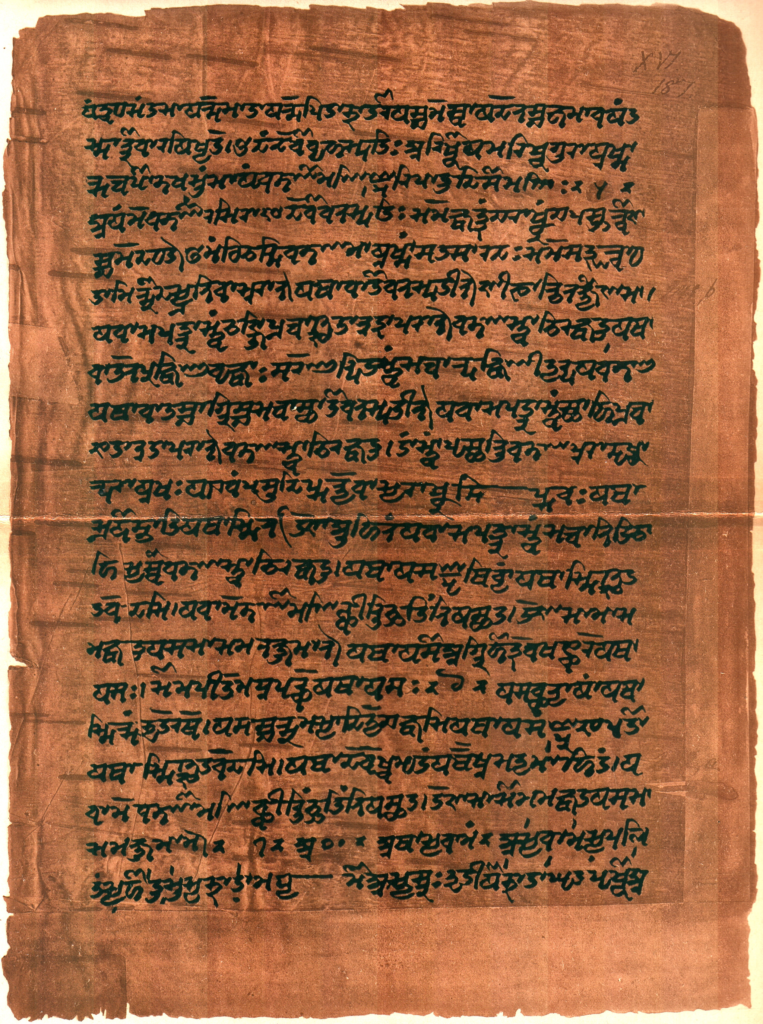
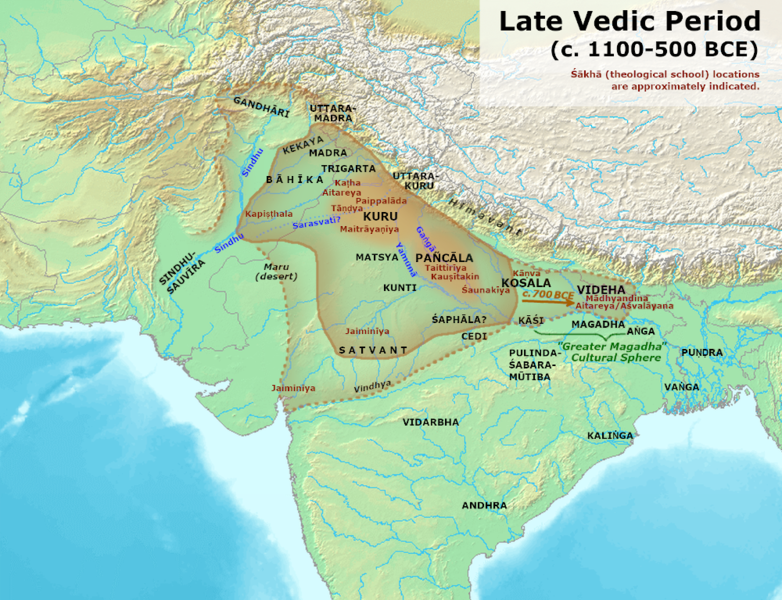
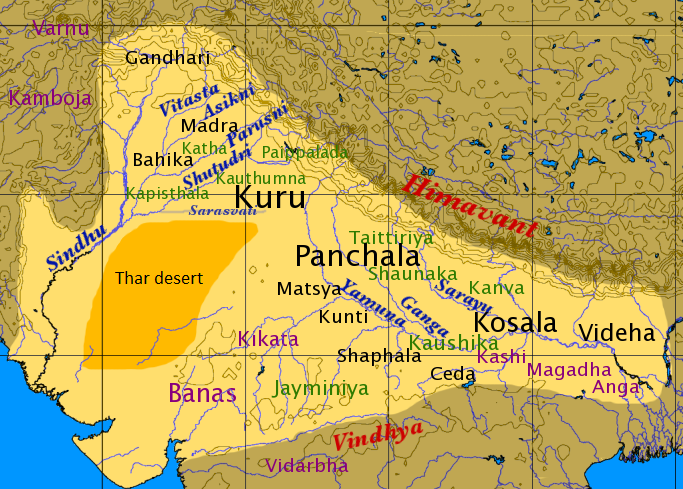
History of India Series: Episode 4 – The Vedic Age


The History Podcast reaches the Vedic age. Our speakers talk about its origins, its literature, its culture, and the legacy of the Vedic Age. Varna system makes an appearance as does Pythagoras Theorem. Amongother things, our speakers talk of Vedic recitation techniques and different layers of Vedic literature. Maneesh Taneja in conversation with Shrikanth Krishnamachry and Gaurav Lele. @maneesht @shrikanth_krish @gaurav_lele

You can listen on Libsyn, Apple, Spotify, and Stitcher (and a variety of other platforms). Probably the easiest way to keep up the podcast since we don’t have a regular schedule is to subscribe to one of the links above!

Links to the previous podcasts: Episode 1; Episode 2; Episode 3

Episode 4: The Vedic Age

References:

History of Ancient India – Upinder Singh

R Sharma Ancient India

Romila Thapar – Early India

Live History India – LHI Circle (Paywalled)

Frits Staal -;

1. Discovering the Vedas :
2. On the meaninglessness of ritual
Michael Witzel –

On Kuru state and Early Sanskritization 
On Vedic religion
On the localization of Vedic texts :
Manasataramgini :
Numeric analysis of certain aspects of Rig Veda
On the Vedanta – Nastika interface (relevant to the discussion we had on vegetarianism)
On guide to Vaidika svaras
On the rise of sectarianism in a Vedic context
On Mandalas of RV and authorship
On Spitzer Manuscript

Vedic Source texts: https://vedicheritage.gov.in/

On Traditional vaidIka education :
Interview with Mani Dravida Sastrigal (in Sanskrit)
Lectures in Hindi by Mani Dravida Sastrigal
Lectures in Tamil by Mani Dravida Sastrigal

List of Veda Pathashalas: https://sanskritdocuments.org/doc_veda/vedapathashala.html

GhanapAtha recitation illustration
FE Pargiter on the Puranic historical tradition

The Joy of Discovering Synchronisms-Part 1

Browncast: Both sides of the Aryan debate

Another BP Podcast is up. You can listen on Libsyn, Apple, Spotify, and Stitcher (and a variety of other platforms). Probably the easiest way to keep up the podcast since we don’t have a regular schedule is to subscribe to one of the links above!

This episode was a spin-off of the history of India series we are creating. As we touched on the OIT/AIT debate in the IVC episode we thought maybe we should bring both sides of the debate on a common good faith platform and have a debate. In this episode, we have Kushal Mehra of the Carvaka, Kartik Mohan, Razib Khan, Mukunda, and me discussing the Aryan question. It was a good discussion though I doubt if it will be a great podcast to listen – but it is what it is.

As episode notes – I have written a blogpost putting my position on record – something which I wasn’t able to do well in the podcast due to a variety of reasons.

A big thanks to Kushal Mehra and Kartik Mohan for the podcast.

Both sides of the Aryan debate

Brown Pundits