Thomas Blom Hansen, Qurban Ali & Harsh Mander on the RSS’s role in communal violence

Note: Whoever keeps deleting this post must know that I will keep re-posting it.   Non-interference in other people’s threads is a sacred principle on BP. 

In this episode of Saffron Siege, the anthropologist Thomas Blom Hansen and journalist Qurban Ali join Harsh Mander to examine how the RSS has triggered, enabled and executed riots, targeted communal attacks and other forms of communal violence in India over the 100 years of its existence. Qurban Ali who has reported on many of these incidents on the ground documents how many commissions have found the RSS culpable in riots dating back to Sholapur in 1967. Hansen talks about how violence is a central thesis of the RSS not only as a physical act but as a state of mind.


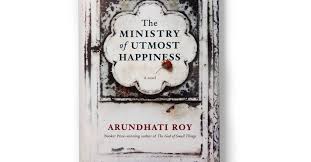
The Ministry of Utmost Happiness: A Look into the Underbelly of Modern India

[Note:  I have absolutely no issue with Sairav moderating his posts the way he sees fit–this is the right of all BP authors.  However, he doesn’t have the right to cast aspersions on other authors. Comments from others that I’ve “faked my degrees” are also ridiculous.  I frankly have no interest in interacting with Sairav so you all are free to discuss among yourselves. Similarly, I will be deleting any comments Sairav makes on my posts.]

From my Substack:

This review originally appeared on The South Asian Idea in June 2017. 

Ever since The God of Small Things was published to great acclaim in 1997, Arundhati Roy’s fans have been eagerly awaiting her next novel. It was a long wait—two decades—as Roy transitioned from being a novelist to being an activist and a non-fiction writer. Now, the wait has finally ended with the publication of The Ministry of Utmost Happiness.

The novel focuses on several characters, most of whom are outcasts from the new rising India. They include a hijra named Anjum, a Kashmiri separatist (or freedom fighter) named Musa and Tilottama, the Malayali woman who loves him. Over the course of the novel, these disparate characters encounter one another and their stories intersect, sometimes in surprising ways.

Much of the novel is set in the Kashmir Valley during the 1990s—at the height of the insurgency against the Indian state—viewed by many Kashmiris as an occupying force. Musa’s wife and daughter are killed in crossfire between the Indian Army and Kashmiri militants. Tilo herself is harshly interrogated by the Indian Army and is only let go because of her connections to an old college friend, who is high up in the Intelligence Bureau. In this section of the novel, Roy evocatively describes the brutality of life in Kashmir and the impact it has on those on both sides of the ideological struggle.

Those who have followed Roy’s non-fiction will find many resonances in this novel. Asides from the Kashmir conflict, the plot touches on rising Hindutva, the Maoist struggle in the forests of central India, and Dalit assertion against upper-caste violence. One consequence of such a large canvas is a certain fracturing of the narrative. For example, when the narrative moves to Kashmir, Anjum has to be abandoned in Delhi. Although Roy convincingly brings the characters together at the end, there is a sense of disconnect while reading the story. Continue reading The Ministry of Utmost Happiness: A Look into the Underbelly of Modern India

Why Do BJP and Narendra Modi Keep Winning? Why Do Congress and Rahul Gandhi Keep Losing?

Why do BJP and Narendra Modi keep winning? Why do Congress and Rahul Gandhi keep losing?: Yogendra Yadav, National Convenor, Bharat Jodo Abhiyan, a former political analyst & psephologist, answers in an interview to Karan Thapar

Also adding this video (in Hindi):

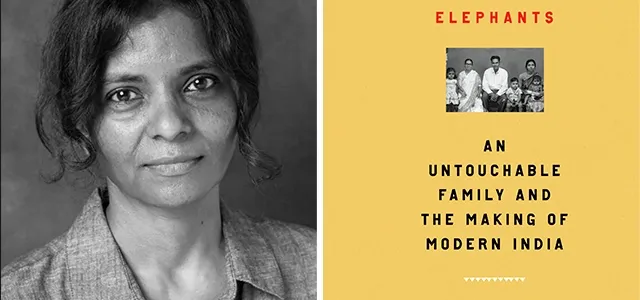
Ants Among Elephants: A Portrait of Untouchability in India

Since we are discussing caste, this post from my Substack seems relevant. This review was originally published on “The South Asian Idea” in January 2018. 

One of the frequent topics of debate among those interested in South Asia is the caste system and whether it is unique to Hinduism or features in other South Asian religions as well. Hindu society has traditionally been divided into four castes (or varnas): Brahmins (priests), Kshatriyas (rulers, administrators and warriors), Vaishyas (merchants and tradesmen), and Shudras (artisans, farmers and laboring classes). A fifth group consists of those who do not fit into this hierarchy at all and are considered “untouchable”. What separates caste from other systems of social stratification are the aspects of purity and ascribed status. Upper-castes consider lower castes to be “impure” and have rigid rules about the kind of social interaction they can have with them. For example, upper castes will not accept food from those of a lower caste, while lower castes will accept food from those above them. Caste status is also ascribed at birth and has nothing to do with an individual’s achievements. A Brahmin peasant remains a Brahmin while an “untouchable” engineer is still an “untouchable”. This system persists in India today, though the government does provide affirmative action in order to uplift members of “backward” castes.

Coming from a Pakistani background, I was not familiar with the operation of the caste system in daily life. Though Pakistan is a highly socially stratified society, this system has no religious sanction. In Islam, all believers are considered equal in the eyes of Allah. Unlike in India, where until recently, “untouchables” could not go into several temples, all social classes pray together in the same mosques. This fact is highlighted in one of the famous couplets from Allama Iqbal’s poem “Shikwa” (the complaint) which states: “Ek hi saf mein khare ho gaye Mahmood-o-Ayaz/ Na koi banda raha aur na koi banda nawaz” (Mahmood the king and slave Ayaz, in line as equals stood arrayed/ The lord was no more lord to slave: while both to the One Master prayed). At least in religious terms, one Muslim is not better than any other, no matter what his social status. Of course, this does not mean that social stratification ceases to exist. To this day, rich Pakistani families have separate utensils in their homes which are to be used by the servants. Punjabi Christians who engage in janitorial work are still known as “chuhras”, a derogatory reference to their pre-conversion caste status as “untouchables”. However, unlike the Hindu caste system, social class in Pakistan is not based on ascribed status. If someone from a low socio-economic background attains an education and a well-paying job, he or she will no longer be treated as belonging to their previous socioeconomic group. This is a major difference from India, where one’s caste remains salient, no matter one’s economic status.

A first hand account of caste in India is given in Sujatha Gidla’s recent book “Ants Among Elephants: An Untouchable Family and the Making of Modern India”. Gidla was born into an “untouchable” family in the southern Indian state of Andra Pradesh. Through the story of her ancestors, she presents a portrait of India from the end of British rule to the 1990s. It is particularly interesting to note that while her family is Christian (a religion in which there is technically no caste), they are still considered “untouchable” in Hindu society. Gidla writes: “Christians, untouchables—it came to the same thing. All Christians in India were untouchables, as far as I knew (though only a small minority of all untouchables are Christian.) I knew no Christian who did not turn servile in the presence of a Hindu. I knew no Hindu who did not look right through a Christian man standing in front of him as if he did not exist. I accepted this. No questions asked” (Gidla 5). Caste is so pervasive in India that it applies even to those groups whose religions formally believe in equality. Continue reading Ants Among Elephants: A Portrait of Untouchability in India

Bangladesh’s ousted PM Hasina sentenced to death for students crackdown

Note: BP really needs a Bangladeshi contributor so we can get some analysis of other South Asian countries rather than interminable back and forth about India and Pakistan  

From DAWN:

A Bangladesh court sentenced ousted Prime Minister Sheikh Hasina to death on Monday, concluding a months-long trial that found her guilty of ordering a deadly crackdown on a student-led uprising last year.

The ruling comes months ahead of parliamentary elections expected to be held in early February.

Hasina’s Awami League party has been barred from contesting and it is feared that Monday’s verdict could stoke fresh unrest ahead of the vote.

The International Crimes Tribunal, Bangladesh’s domestic war crimes court located in the capital Dhaka, delivered the guilty verdict amid tight security and in Hasina’s absence after she fled to India in August 2024.

Personally, I have mixed feelings about this. Sheikh Hasina was a dictator (and arguably an Indian puppet) so I’m not particularly fond of her. She does need to pay for her crimes.  However, I don’t believe in the death penalty.  This step seems to be an extremely problematic one for Bangladesh.


Criminal castes, religious conversion, and the idea of India ft. Nusrat F. Jafri

A clear look at how the criminal caste label continues to shape social life, how conversion becomes a route to dignity, and how these shifts speak to the larger idea of India. Nusrat F Jafri, author of In This Land We Call Home, joins to discuss the history, identity, and ground realities that still define the present.


The India of my dreams is yet to be seen: Dil Se with Kapil Sibal

Dil Se with Kapil Sibal, hosted by Kapil Sibal, presents its landmark 100th episode, reflecting on India’s economic journey and the challenges ahead. In this special edition, Kapil Sibal engages in a deep, insightful conversation with two distinguished guests — Shri Yashwant Sinha, former Finance and External Affairs Minister, and Shri P. Chidambaram, former Finance and Home Minister. Together, they discuss India’s economic direction, the credibility of government data, the global power–economy relationship, and the urgent reforms needed for India to truly become a Viksit Bharat. 


Karan Thapar’s Interview with Ajai Sahni about Red Fort Bombing

A very insightful interview. I obviously don’t agree with some of Ajai Sahni’s analysis of Pakistan. His fears about an Islamist takeover of Bangladesh also seem overblown.

However, he does make the important point that the Indian government is reluctant to blame Pakistan for the Red Fort attack because that would box them into resuming “Operation Sindoor”.  “Operation Sindoor” obviously didn’t go well for them the first time (contrary to the bluster of right-wing Indians on BP). Sahni notes that the only  countries that accepted India’s narrative without reservation were Israel and the Taliban.  Pakistan, meanwhile, is currently friends with both the US and China.

Karan Thapar asked him about the suicide attack in Islamabad on Tuesday and his reaction to the Pakistani government blaming India. Sahni replied that the default in India is to blame Pakistan while the default in Pakistan is to blame India.  Neither side’s domestic audience requires evidence.  However, in this case, the Indian government doesn’t want to blame Pakistan because that would require them to declare war on Pakistan (as per their own “new normal” from May) and such a declaration would have consequences.


“Killing the Constitution”

Note: Indians on BP have repeatedly called DAWN Pakistani government propaganda. This is completely incorrect. DAWN is one of the most progressive newspapers in Pakistan.  For example, in recent days, the newspaper has been taking a very strong line against the proposed 27th constitutional amendment (already passed by the senate and likely to be passed by the National Assembly in the next few days). 

Zahid Hussain in DAWN:

While the 26th Amendment had shaken the very foundation of the trichotomy of power, the 27th has virtually murdered the Constitution. The last rites were being performed in haste under the watch of ‘Big Brother’. It is perhaps, the darkest moment in our unenviable constitutional history.

It has been more of a puppet show — one after another, the lawmakers rose to defend the amendments that they are likely not to have been consulted on. Other members just shouted ‘aye’ when the vote was called perhaps without even reading the draft of the law provided to them at the session. They just had to follow the party line.

And:

There is indeed no denial about the PPP’s struggle for democracy in the past. But the current leadership has betrayed that legacy. Bilawal Bhutto-Zardari has justified the changes in the Constitution particularly the establishment of a separate constitutional court saying it was a part of the Charter of Democracy signed by the PPP and PML-N in 2006. But his argument about the court is completely out of context. Moreover, there is much more in the charter related to the establishment of civilian supremacy and the Constitution. The 27th amendment totally negates the charter and will lead to authoritarianism. History will judge the current leadership in a completely different way from the past leadership.

A big question is whether the Supreme Court will now act to protect the Constitution and whatever little autonomy the judiciary has been left with after it accepted the 26th Amendment. Sadly, the amendment has also weakened the unity of the federation.


Brown Pundits