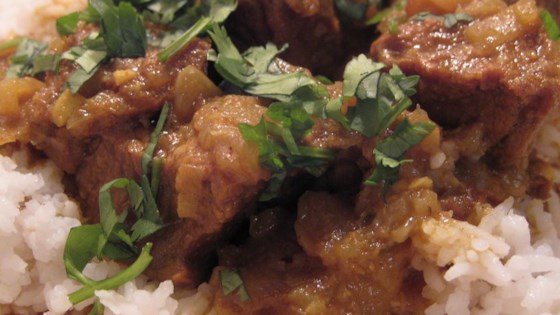
Maacher Jhol!


Think Indians Are Mostly Non-Vegetarian, Or Only ‘Upper Castes’ Are Otherwise? This Menu Smriti Will Change Your Views:

In fact, if we discount the smaller states (Northeast excluding Assam and Goa) and consider the rest, we are left with only three provinces across the country where the meat-eating percentage on a weekly basis is in excess of 80 per cent – West Bengal, Assam and Kerala.

It seems possible that the higher fraction of meat-eaters in UP vs. the other major northwestern states is probably largely the function of the higher fraction of Muslims.

Food!


A commenter below mentioned offhand how they didn’t like beef. Myself, I love beef. And growing up beef curry was something we ate a lot. Since we were Bengali we ate more fish and shrimp of course. I had assumed that among Muslims in the Indian subcontinent this would be common, least outside of Hindu-majority areas. But when I hit Google it seems “Bangladeshi beef curry” is one of the top hits.

Our of curiosity, is beef curry not eaten much among Muslims in Pakistan?

This brings me some confusion, and makes me wonder what else I don’t know. What’s the most curious or interesting aspect of regional Indian cuisine? For example, Lisa M. claims that a lot of classic Bengali food is actually from Odisha (chefs from that state went to work in Bengal).

Probably the strangest thing about Bengali food, aside from the copious usage of mustard oil, is many of us really love dried fish (shutki).

When you have a hammer everything is a nail

A Racist Attack Shows How Whiteness Evolves
An assault at a New Jersey high school football game had an unexpected cast of characters
:

Two 17-year-old boys accused of harassing four African-American middle schoolgirls — using racial slurs and urinating on one of the victims — are facing charges including bias intimidation and lewdness.

The incident, which took place during an Oct. 18 high school football game in the New Jersey suburb of Lawrence Township and was partly captured on a video that circulated on social media, involves a cast of characters that has given some observers pause: Police say the boys are of Indian descent.

While it’s tempting to see the reported ethnicity of the boys suspected in the assault as complicating the story and raising questions about whether the assault should be thought of as racist, I look at it through a different lens. Instead of asking what the boys’ reported racial identity tells us about the nature of the attack, we should see the boys as enacting American whiteness through anti-black assault in a very traditional way. In doing so, the assailants are demonstrating how race is a social construct that people make through their actions. They show race in the making, and show how race is something we perform, not just something we are in our blood or in the color of our skin.

I want to emphasize the “complicating” aspect. Many American intellectuals don’t want to complicate an already tragic story, in black and white. Those of us of “Asian American” origin complicate that story (as do people of Latino background), so we are co-opted into the preexistent story that already exists. We are subalterns in a black and white story.

So these boys are brown kids in “whiteface”, to serve a particular narrative.

But, I believe literally every one of the South Asian readers of The New York Times that read this knows very well that anti-black racism is not something learned in the United States of America by Indians, Pakistanis, Bangladeshis, etc.

The shadow of the crescent

Obviously I have not had much time to write on my blogs recently. But I thought I would pass on a casual judgement I have come to in regards to Indians, and particularly Hindus. Their mentality is powerfully shaped by the Other.

This is true of modern Muslims as well obviously. As Bernard Lewis would famously assert, the victory of the West over Islam in geopolitics in the 19th-century induced a psychic trauma which Muslims are still reacting to. Postcolonialism suggests that this is the condition of all non-Western societies. They can be only understood in their reaction to the West.

In general, I think postcolonialism is not helpful. Obviously, there is some truth in the framework, but most people don’t have a “thick” understanding of history, so they simply use Theory to invent “facts.”

But, it is clearly the case that modern Indian, and Hindu, Weltanschauung, whether “secularist” or “Hindutva” or something altogether different, is hard to understand without colonialism. But it is not simply Western colonialism. It is also Islamic colonialism and conquest.

The peculiar and curious aspect of modern Indian/Hindu mentality then is the double-colonial layer. That is, the long-term sublimation of the Indian civilization under the temporal rule of Other civilizations. One could assert that China was ruled by Manchus for 250 years before its quasi-colonization. But this analogy is clearly weak because the later Manchus became so thoroughly Sinicized that Manchus as an independent ethnicity have disappeared in modern China (Manchus today are those who have descent from Manchus, not those who practice a non-Han culture).

Basically, it’s always modern complicated in India…

Browncast Episode 70, Urbane Cowboys on the Right

Another BP Podcast is up. You can listen on LibsyniTunesSpotify,  and Stitcher. Probably the easiest way to keep up the podcast since we don’t have a regular schedule is to subscribe at one of the links above.

You can also support the podcast as a patron. The primary benefit now is that you get the podcasts considerably earlier than everyone else.

Would appreciate more positive reviews! It’s been a really really long time that we’ve been on 30 iTunes positive reviews. I notice that Alton Brown’s Browncast has 30 reviews on Stitcher alone! Help make us the biggest browncast there is!

This week I (Razib) talk to Josiah & Doug of The Urbane Cowboys about the American Right. We hit impeachment, Syria, and The Dispatch.

If you enjoy the Browncast, I do recommend The Urbane Cowboys!

Commentary on Adi Shankara

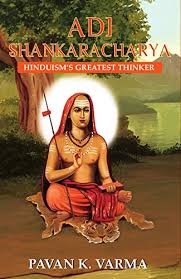
It seems Adi Shankaracharya: Hinduism’s Greatest Thinker is now $0.99 on Kindle, so I got a copy. From what little I know the subhead is warranted, so understanding Adi Shankara goes a long way to understanding elite Hinduism.

On the other hand, I have a dim view of most religious philosophy personally. But, it is important that people take such thinking seriously, as understanding it is a part of understanding humanity. For example, I can acknowledge that Thomas Aquinas was a brilliant thinker, while at the same time thinking his mind was wasted.

Brown Pundits