
In this episode of The Kashmir Notebook, Gowhar Geelani is in conversation with Professor Noor Ahmed Baba, a noted political scientist and IR expert, to explore the historical, cultural, and political connections between Kashmir and Iran. Why is Kashmir often referred to as “Iran-e-Saghir” (Little Iran)? What explains the strong emotional response in Kashmir to the ongoing conflict in West Asia? Professor Baba traces these connections back nearly 5,000 years—through ancient migrations, Central Asian linkages, the influence of the Sassanid Empire, and the gradual spread of Islam shaped by Persian cultural traditions. The conversation also moves to the present geopolitical moment. As tensions escalate in West Asia, Professor Baba analyses the implications of the Iran conflict for global power structures, the Strait of Hormuz and energy security, and the shifting balance from a unipolar to a multipolar world. He reflects on the roles of the United States, Israel, China, and Russia, and discusses what these changes could mean for South Asia, particularly India and Pakistan.
Category: Kabir
Iran: The Illusion of a Peace Deal| John Mearsheimer and Stephen Walt
Professors John Mearsheimer and Stephen Walt explain why U.S. and Iranian demands are fundamentally irreconcilable — and why this crisis is far from over. Instead of bringing Tehran to terms, Washington now finds itself further from a diplomatic settlement than it was in May 2025. Iran has played a weak hand with discipline and patience. The United States, by contrast, risks stumbling into another major strategic failure in the Middle East. At the core of the impasse is a basic reality: both sides are demanding the impossible. Washington insists on the full dismantling of Iran’s nuclear and missile capabilities, while Tehran seeks sanctions relief, reparations, and long-term security guarantees. Neither side is prepared to yield. The result is not a pathway to peace, but a deepening stalemate — with escalation, not resolution, the more likely outcome.
John Mearsheimer & Trita Parsi: U.S.-Israeli War on Iran: Risks of Wider Conflict
Full urgent discussion with Prof. John Mearsheimer and Dr. Trita Parsi on the escalating U.S.-Israeli aggression against Iran, drivers of the conflict, the dangers of regime change, Iran’s responses, and the real risk of a wider regional war. Organized by the Community Alliance for Peace and Justice.
Note: Trita Parsi now has a Substack
Implications of the Escalating U.S.-Iran Conflict
A very important interview with Vali Nasr–one of the world’s foremost experts on Iran
March 3, 2026 — Asia Society Policy Institute (ASPI) hosts a rapid-response conversation following the recent and significant escalation in the U.S.-Iran conflict. Join Asia Society Trustees Vali Nasr, Majid Khadduri Professor of International Affairs and Middle East Studies at Johns Hopkins University School of Advanced International Studies (SAIS); and Hamid Biglari, Partner at RedBird Capital Partners, Executive Chairman of RedBird X (RedBird’s AI business), and Chairman of Financial Services, as they assess the strategic, political, and economic implications of this unfolding crisis.
Why is Pakistan suddenly central to US-Iran diplomacy?
Note: As always, I do not tolerate anti-Pakistan comments on my threads. If you don’t respect the red lines, your comments will be summarily deleted. The usual suspects (they know who they are) have been completely banned from commenting on my posts. Don’t antagonize me.
By Anwar Iqbal in DAWN:
According to these reports, Pakistan’s military and civilian leadership has been in direct contact with senior US officials, including President Donald Trump, conveying Islamabad’s willingness to facilitate dialogue and reduce tensions.
Some accounts suggest that Pakistan has even indicated readiness to host talks in Islamabad if the parties are prepared to explore diplomatic channels.
Vali Nasr, a prominent Washington-based scholar, argues that any Pakistani diplomatic initiative is unlikely to occur in isolation from Saudi Arabia:
“Pakistan will only step up if it has Saudi backing — and prodding. Riyadh is likely very much in the picture,” he wrote in a post on X.
And:
Pakistan’s value as a potential intermediary also stems from its parallel access to Tehran and Washington — a rare combination in the current geopolitical climate.
Analyst Michael Kugelman makes this point clearly: “Pakistan is far from being an unlikely US-Iran mediator. Many high-level Pak-Iran meetings over last year. The US administration is very fond of Pakistan. Trump has said (Field Marshal Asim) Munir knows Iran better than most. Also worth noting that Pakistan represents Iran’s diplomatic interests in the US.”
Update: Pakistan stands ‘ready, honored’ to host US-Iran talks, says PM Shehbaz
Sexual Pleasure as Thought: Erotics in Pre-modern South Asia
As a change from war and geopolitics, I came across this presentation by Shubham Arora, a PhD candidate at the University of British Columbia and a Harold Coward India Research Fellow at the University of Victoria.
In this talk, Shubham Arora introduces a long and often misunderstood intellectual tradition from South Asia devoted to thinking about pleasure. Beginning with the world-renowned Kāmasūtra and continuing into the modern period, this tradition did far more than describe sexual practices. It treated pleasure as a subject worthy of reflection, analysis, and debate. Like other fields of knowledge in premodern South Asia—such as law, medicine, or aesthetics—these works developed ways of classifying desire, discussing relationships, and reflecting on how pleasure fits into a well-lived life. The authors of these texts were asking questions about intimacy, emotion, social roles, and human fulfillment. Yet in modern times, these texts, especially the Kāmasūtra, have often been reduced to exotic curiosities. Shaped by colonial fantasies and later commercial reinventions, they have been marketed globally as manuals of sexual practices, while at the same time facing censorship and controversy within South Asia itself. By revisiting these works in their historical context, this talk offers an as-yet unexplored perspective: understanding erotics as a thoughtful and evolving tradition concerned with how principles, possibilities, and practices of pleasure changed.
Is Iran winning the war| UnHerd
While the usual suspects on BP are busy with their anti-Pakistan comments, the Iran war continues–which is far more important globally than Pakistan/India back and forth is.
The inordinate focus on Pakistan on this forum is quite something and deserves a deeper psychological explanation.
UnHerd’s Freddie Sayers speaks with Professor of Political Science at the University of Chicago, Robert Pape, to discuss the high-stakes ‘escalation trap’ unfolding between the United States and Iran – breaking down the tactical successes and failures of the US military campaign and analysing how Iran is leveraging its geographical position and control of the Strait of Hormuz through low-cost drone and missile harassment. As Professor Pape draws comparisons to the Vietnam War and 1973 oil crisis, has the Trump administration lost control of the conflict’s trajectory, and are we moving toward a dangerous ground power dilemma that threatens the global economy and the stability of the Western alliance?
India and Iran
Some relevant links regarding India’s stance on the Iran war:
1) “Why India Supports the war on Iran” by Azad Essa
For context: Azad Essa is the author of Hostile Homelands: The New Alliance Between India and Israel (Pluto Press 2023)
2)”Shivshankar Menon Says India’s Silence on Iran War, Khamenei Killing ‘Inexplicable’, ‘Diminishes Us'”
Belated Holi 2026 Thread
Since what seems like World War 3 broke out a week ago, the fact that Holi was this past Wednesday (March 4) completely slipped my mind. I’m surprised that no one else on BP mentioned it either.
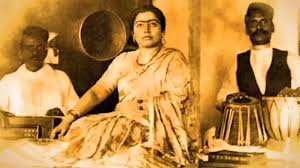
I just want to briefly share this recording of Gauhar Jaan singing “Mere Huzraat ne Madeene mein manayi Holi” (My Prophet played Holi in Medina). This is an example of the syncretic culture of Hindustani music. A Muslim artist (born Armenian Christian) singing a composition that references the Prophet of God celebrating a Hindu festival. This is the syncretic culture that has sadly been lost on both sides of the Radcliffe Line.
There is an excellent book on Gauhar Jaan titled My Name is Gauhar Jaan! (2010) by Vikram Sampath.
After the jump, there is another beautiful composition sung by Venkatesh Kumar. This is a thumri in Raga Mishra Kafi entitled “Aaj Khelo Shyam Sang Hori” (Let’s Play Holi with Shayam (Krishna) today” Continue reading Belated Holi 2026 Thread
On “Civilization States” vs. Nation-States
This is a rebuttal to X.T.M’s recent post on “civilization states” . The longer essay can be read here
In this context, Shashi Tharoor’s essay “Civilization States Are Profoundly Illiberal” is well-worth reading in full. Tharoor is a centrist Indian and can be said to articulate the Congress Party’s position on this topic.
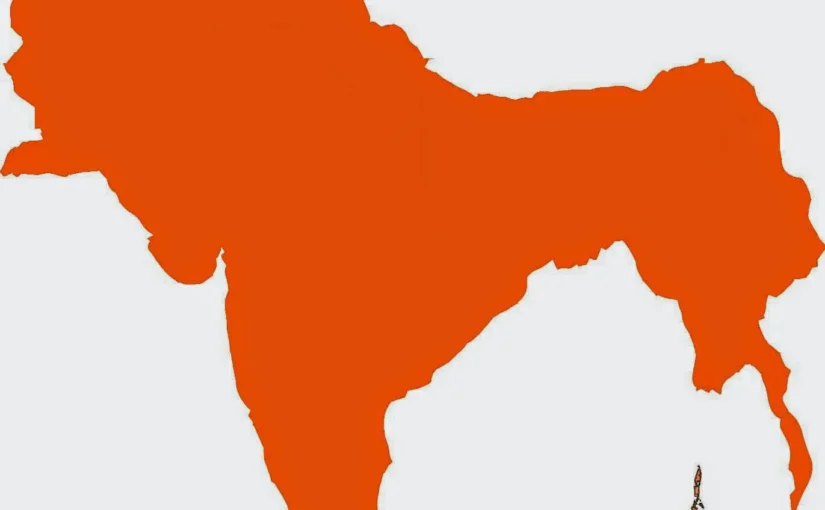
Civilizational State vs. Nation-State
Google defines “Civilizational state” as one that “defines itself and its identity based on a unique and encompassing civilization, rather than solely on shared ethnicity, language or governance”. Google goes on to note that “ the differing worldviews and values associated with civilizational states could potentially lead to tensions and conflicts with other nations or blocs”. In India’s case, defining itself as a “civilizational state” certainly leads to tensions with Pakistan (and perhaps to a growing extent with Bangladesh).
I believe that this “civilizational state” conception is a belief of the Hindu Right. I agree with the Indian left that the Republic of India is a nation-state that was created on August 15, 1947–exactly at the same moment that Pakistan was created. British India was not a nation-state but a colony. Upon decolonization, parts of the colony went their own way. Continue reading On “Civilization States” vs. Nation-States