Update: The pieces (had to break into two) are ready to go. Part 1 today and part 2 tomorrow. I commissioned some simple maps and created an infographic. Since these will be “paid” (you have to subscribe), I’ll post the infographic for people here:
One of my earliest memories of my childhood is watching the Mahābhārat with my dad. After we dropped my mom off for her night shift at the factory, we would return home, and a black rectangle filled with film would catapult me into a confusingly wondrous world. From the magical arrows whizzing through battlefields to the terrifying image of Time, the narrator of the epic, transposed across a cosmic abyss, I was glued to a story I couldn’t truly grasp but loved at the same time. I could barely understand what the characters were saying (I spoke Gujarati at home, not the hyper Sanskritized Hindi in the serial) and was too young to read the English subtitles fast enough. I would constantly interrupt my dad, many times to his annoyance, but he would still lovingly explain these stories that would make an imprint on me for the rest of my life.
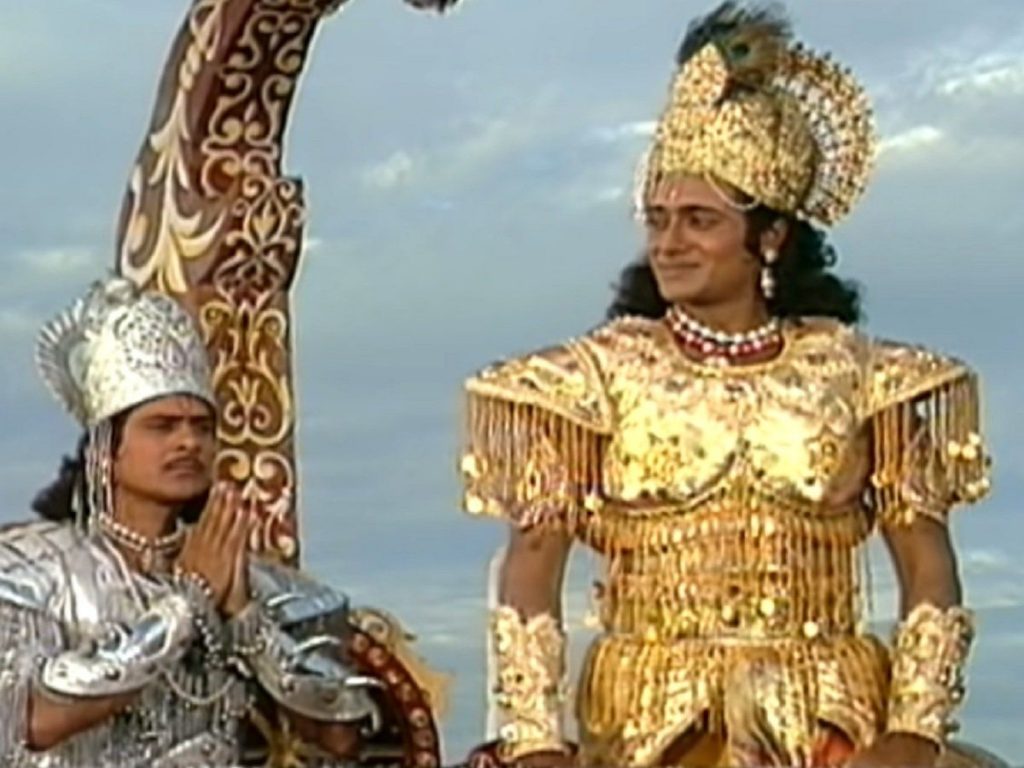
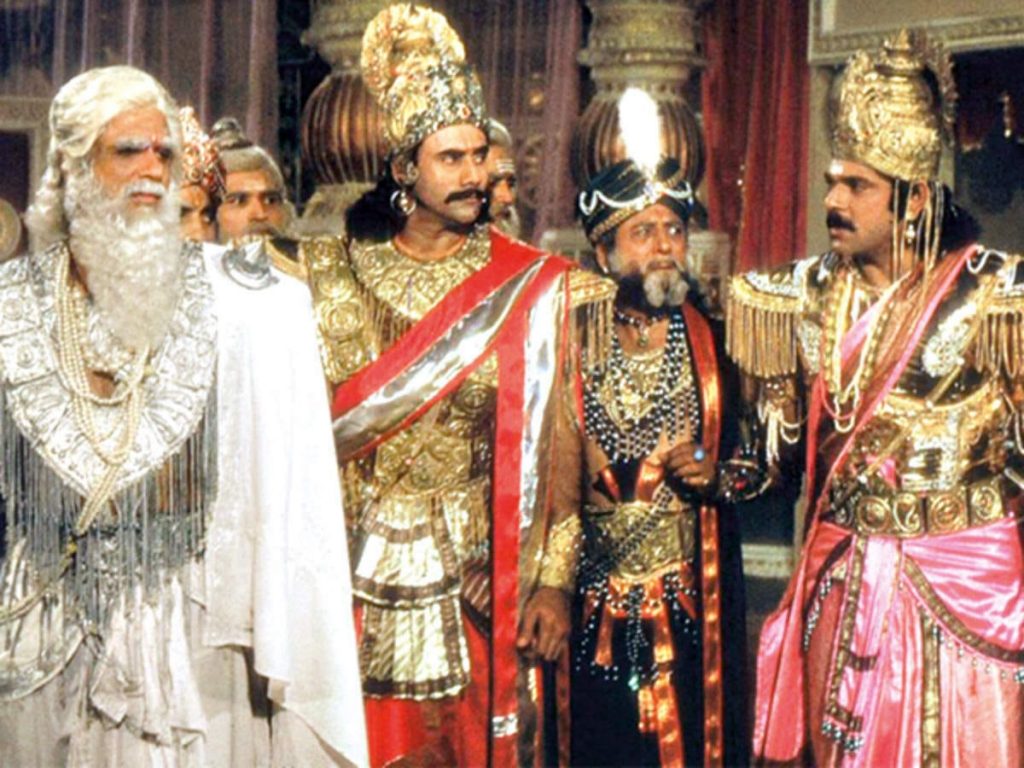
STILLS FROM BR CHOPRA’S LEGENDARY MAHABHARAT SERIAL.
As my life passed, I would see so many of the stories from the Mahābhārat play out in my life and in the world around me. The blind love of a long-gone Dhritarāshtra came alive with my parents, who showed me love, despite my bad behavior, my failures, and my unending ingratitude, one of my greatest flaws. Their love was uncompromisingly unequivocal, and I was an unworthy Duryodhan. I saw the struggles and rise of “low-born” Karna with my own family, as we grew from a family who couldn’t even afford to spare money to buy a popsicle from the ice cream truck that taunted me every day as it passed by my house to slavishly building a motel business in the middle of nowhere to selling it and owning a nice single-family “American Dream” home with many fewer worries than we grew up with. And perhaps most importantly, I saw the devotion or bhakti of Rādhā through my family’s Hindu faith and regular attendance to our local temple – a tradition that grounded us through tough times and brought a sense of community, fellow “gopis” perhaps to share our lives and love with.
Those evenings watching the words of Vyāsa transform into images will forever be special to me. For those nights would fuel the dreams of my days as I grew up connected to a timeless culture and values. And they would doubly serve me when I learned of the nightmarish state of my fellow Hindu diaspora with regards to their views on Hinduism and Hindus.
In The Battlefield
To find the answer to the titular question, I did a bit of “field reporting” one weekend with my fellow Hindu-American friends starting off with a simple question:
Why do you stand up for Black, Hispanic, and Muslim people for the injustices they face, but not for Hindus?
The most common responses were along the lines of:
“What injustices faced by Hindus are you talking about?”
“I honestly don’t know what type of issues we face, besides normal ‘brown’ discrimination here.”
“I’ve never seen any from the media I consume” A general theme of genuine innocent unawareness was what I saw.
So I prodded further and mentioned the atrocities Hindus face in Pakistan, Bangladesh, and even parts of India. Yet Still, the answer was “I literally never heard this before.”
Then came a visible sense of discomfort, and I know why. My question then silently morphed to “Why don’t you stand up for your own people” in their minds. I didn’t need to spell it out, but it turned into those very cutting words – why don’t you stand up for your own…
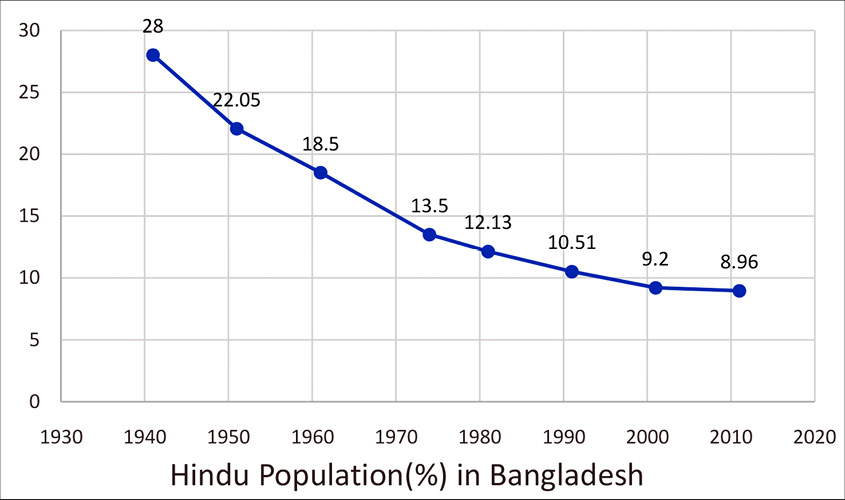
Bangladeshi Population Statistics – 1971 Contained A Civil War Where The Pakistani Military Is Said To Have Conducted A Genocide Targeting Bangladeshi Hindus
The rapes, the forcible conversions, the killings, the discrimination, the demographic collapse all signaling horrors that didn’t have any similar magnitude of rivals in India. The initial response was denial or wishing away the numbers I gave them: “Oh how do you know all that happened to them?!” “Maybe they converted willingly!”
I kept unpacking this. I ask them, “why do you think this way?” Note – I tried to avoid a confrontational tone as much as possible, just neutral questioning so as to not pry open any vitriolic reaction. They talked about their parents’ hysteria over Pakistan, their WhatsApp forward fueled hatred, etc… I tried to explain to them that the equivalence wasn’t there. That the magnitude of what happens to Hindu minorities in Pakistan and Bangladesh is much worse presently and historically than what happens to non-Hindu minorities in India.
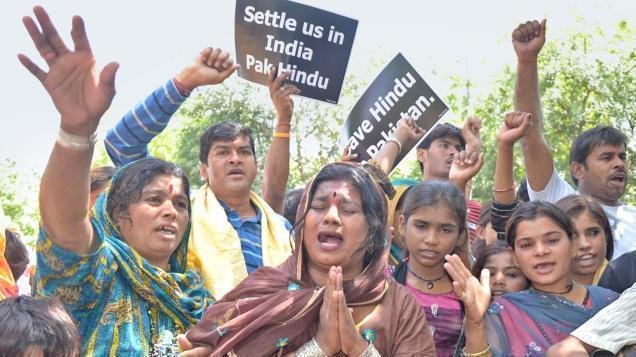
Pakistani Hindus Begging For Refuge To Immigrate To India.
But they just weren’t having it.
“I don’t believe you. India is just as bad”
Now, India is of course not perfect, now or historically. But it is a work in progress. It is diversity in action in a way very few countries (The United States and Brazil are the only ones that come to mind) can compete with. India is pluralism, both its virtues and flaws.
By this point, we linked up with a few other friends and the conversation dropped. But let’s continue this theme with a few other independent observations and anecdotes.
Misinformation Warfare
Modi equals Trump – this fantastically false idea is an atomic bomb on one’s perception of India. A very simple notion that has a number of externalities. Hindu-Americans are fairly “woke” from my personal experience, and Indian-Americans heavily lean Democrat. Standard diatribes against “45” are common when talking politics with my Hindu-American friends. I don’t really care as I don’t support him, but the Trump Derangement Syndrome (TDS) gets tiring after a while.
Policy-wise (you know, the actual actionable impact that changes people’s lives and futures), Modi has done more socialism in one term than Bernie Sanders will ever do in his lifetime. The comparison fails at almost every metric:
Modi has enacted a litany of “socialist” measures and welfare schemes including:
Swacch Bharat – an initiative to rid India of open defecation by building toilets as well as raising menstrual health awareness for women.
Ayushman Bharat – Extending healthcare to India’s poorest 500 million people and continuously expanding.
Ujjwala Yojana – Providing 60+ million poor households with free liquid petroleum gas connections that are safer and more healthy than traditional wood-fired methods.
Jal Jeevan Mission – Along with a frenetic infrastructure push to integrate India’s rural and poor, an integral piece has been Jal Jeevan, where households are connected to give every Indian rural household a tap water connection by 2024; luckily something that is well on its way to being achieved.
A massive push for renewable energy as India integrates solar energy at an unseen scale amongst the world in order to meet international climate goals and combat local pollution.
Right Wing, Left Wing, “nationalism”, “conservative” and other meaningless labels are even more irrelevant when thrown into the ocean of Indian politics. They sink into nothingness. They’re pointless.
But to many Hindu-Americans, “Right-Wing”, “Nationalist”, “conservative” are terms that immediately make them see red, and “RACIST” pops into their mind in big white letters. I don’t care about your 14 syllable ideology. People see things through simple lenses. It doesn’t matter what Modi and Trump actually do to a lot of people; it matters how they are characterized.
Fuck your nuance. Damn it to hell.
Hassan Minhaj told me what I need to know in a 12-minute 37-second segment on a now-canceled Netflix show. I trust the consistently wrong coverage of the New York Times – yes the same one that complained why more Indian people aren’t dying of coronavirus. Additionally, it’s quite clear that “South Asian” organizations in the US have explicitly blacked out mentioning these atrocities as it would hurt their respective lobbies.
With community organizations, media, and celebrities silent – how can Hindu-Americans be aware?
I can’t judge others’ religiosity, but from what I’ve anecdotally seen. Hinduism is many times a more aesthetic/background thing than practice for Hindu-Americans. Sometimes it seems samosa and chicken tikka masala have more weight in their culture than pujas and scripture. Now token ritual involvement happens every time Diwali rolls around, but to me, Hindu-Americans really just aren’t “self-aware.” Funny as Hinduism places so much emphasis on self-discovery and reflection.
Another thing – explicit politics is pretty far removed at American Hindu temples versus other diaspora places of worship. Political rhetoric that’s common at other religious places isn’t a mainstay in mandirs; and honestly, I am glad this is the case. Religion to me is more about immediate community and individual practice rather than political machinations across the Atlantic. I’ve seen firsthand how the ugliness of politics warps American religious communities where identity realpolitik replaces spirituality for many of these “religious adherents.” Where insulting the “Other” is more important than praising the Omniscient.
Ideally, religion would be separate from politics. But we can’t deny a battlefield once we’re on it. Hopefully, temples stay out of the fray of such rhetoric, but Hindu-Americans outside of it strengthen.
So in conclusion, the answer to the question:
1. Genuine unawareness of Hindu injustices driven by media, community, and political organizational blackout. 2. Right-wing and left-wing notions don’t translate well across Indian and American politics. Many Hindu-Americans see red once “right-wing” is mentioned. 3. Religion and politics don’t mix at Hindu temples unlike other religions.
The Craven
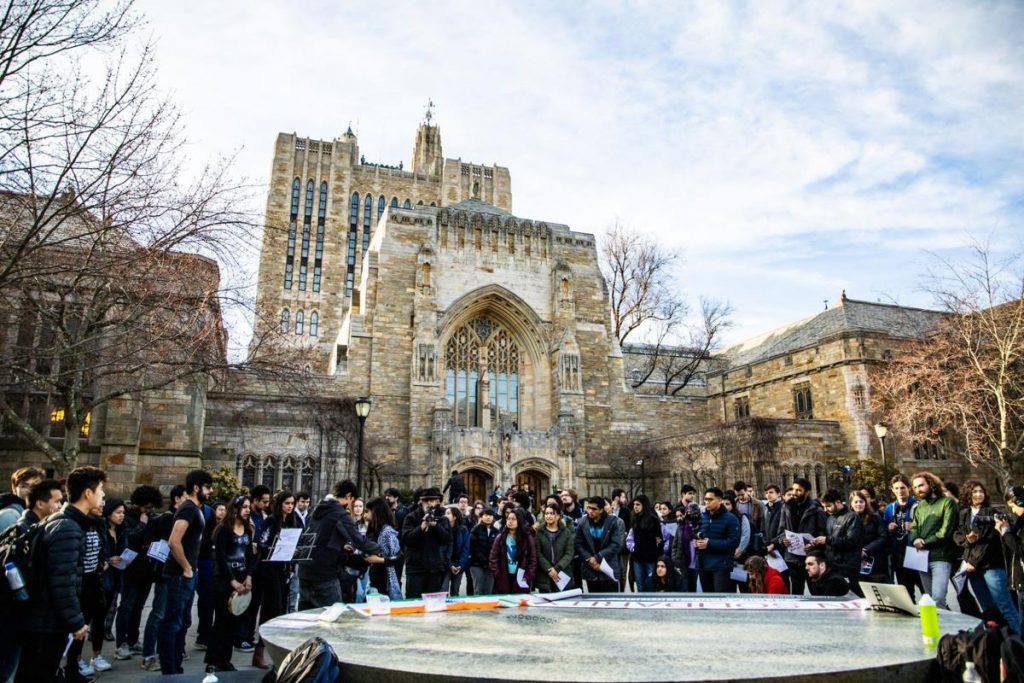
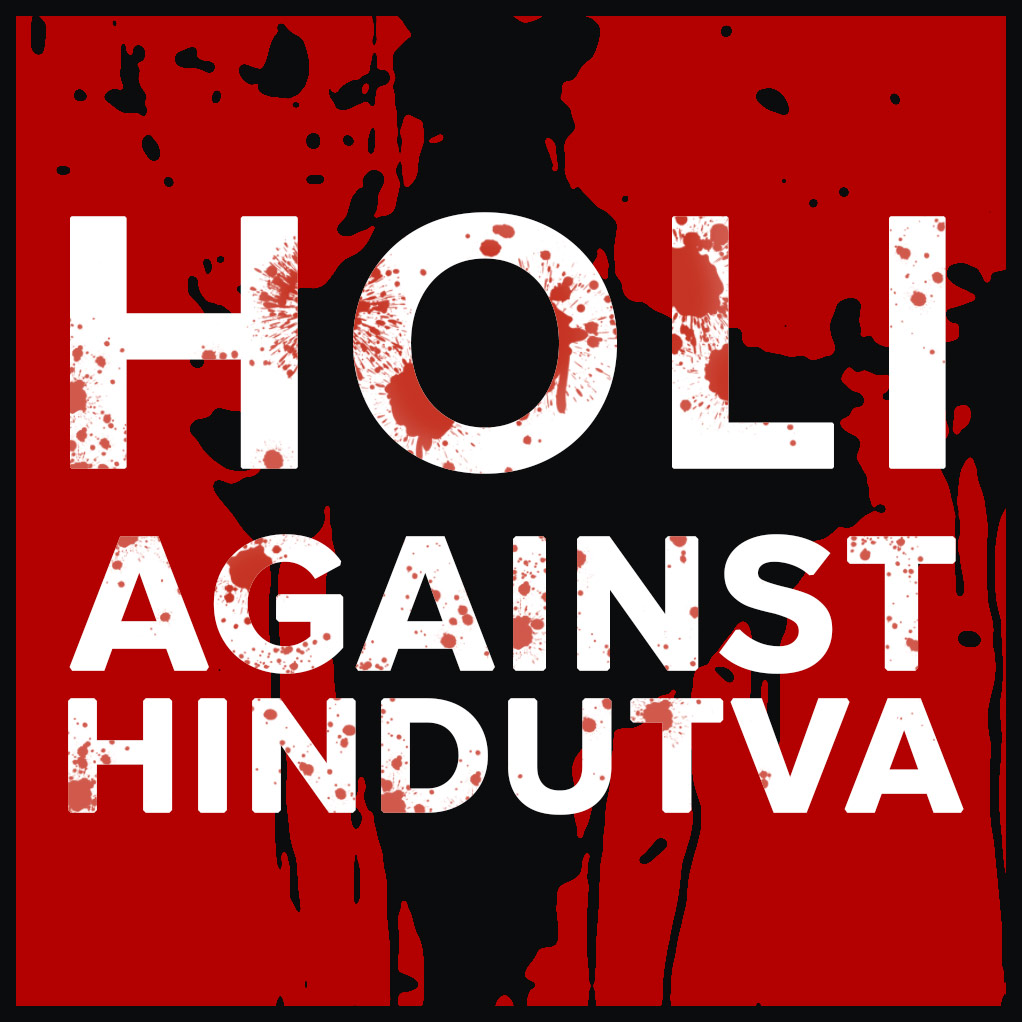
A SELECT GROUP OF BIGOTED YALE STUDENTS AND “SOUTH ASIAN” ORGANIZATIONS VIOLATED THE SANCTITY OF A HINDU HOLIDAY WITH POLITICS AND PREJUDICE
Now while we’ve answered our query, I want to add an addendum to a vile specimen I’ve seen recently amongst the diaspora. Aping their equally contemptible cousins back in the subcontinent, this emergence of Indian-Americans who speak in the poisonous tongues of India’s elites is now slowly seeping into mainstream American culture.
They seek to transplant American history and dynamics onto India just as blindly as India’s elites have over the decades. Equating Hinduism itself to white supremacy and fascism and defining it solely by casteism are standard affairs for this type. They have no ingenuity in their discourse. The blueprint of their commentary is amateur oppression Olympics. Their foundations are self-loathing. Their walls are an echo-chamber blocked off by the soulless skyscrapers of coastal elites on one side and the great blue filter of social media on the other. Their roofs are paid for by verbal prostitution. Their material is so common, yet they have a profound disdain for commoners. They are copy + paste. Many are essentially white progressives with a sprinkling of turmeric and cumin for empty color and scant flavor.
They are from South Asia, not the Indian Subcontinent. Their culture can be summed up into samosas, chicken tikka masala, a few “South Asian” outfits, and henna. Depth is an allergy to them so their roots are forever undiscovered but much-maligned. They will go out of their way to pin every misfortune and misery inflicted upon other minorities as purely due to economics or European imperialism, but will not hesitate to blame the downfalls of India solely on Hinduism and its indigenous culture. On the off chance that they navigate blame to the British, they will remain mum on the equally or even worse atrocities of the Mughals and their hate-filled predecessors. Their silence screams at the scars and ruins of their ancestors’ temples, all to preserve this mythic “solidarity” amongst fellow “South Asians.”
Essentially, they care about what India looks like, not what it is. They seek approval at any cost. But either way and in the end, why should they expose their necks in courage when they can swallow their pride, forever remaining craven?
Massive migrations from Steppes to Bronze Age India was indeed a myth. We have gathered Ancient DNA evidence now. The findings will be out next year. Thanks to the great efforts of scientists from India, USA, UK and others. Warm Greetings for upcoming 2021!
Lots of questions about this tweet. I like Niraj Rai and Gyaneshwer Chaubey personally. But, I’m pretty skeptical of how people are interpreting this. My own views are pretty straightforward, and outlined in my post the “Aryan Integration Theory”.
I believe that about 14% of the total ancestry in South Asia derives from the Central Asian steppe ~3,500 years ago. These people derive from a “reflux” migration from Central Europe of a Corded Ware related people (“Battle Axe Culture”).* The fraction is higher in Pakistan, 20-30%. Much lower in southern India, ~5% or so (excepting Brahmins). Whenever this is a “massive migration” is up to you to interpret.
I do think they brought R1a and lots of aspects of Indian culture, such as Indo-European language. On the other hand, most of the ancestry and a lot of the culture was “indigenous.” The Indic culture we see in the Iron Age is clearly a synthesis, which was present even in the Vedic corpus.
Also, in the annals of self-promotion, I had some free posts on my Substack before Christmas:
* Something I point out to people is that this assumes that the steppe people arrived from Khorasan unmixed. If the Indo-Aryans who arrived in the Punjabs already mixed with Iranian peoples in their sojourn then the fraction is an underestimate, though I doubt it is 2-fold.
Brown Pundit emeritus Zach pointed out on Twitter that BP launched at the end of 2010. A lot has changed. At BP and the world.
There is actually MySQL table data with archives back to 2010. I should resurrect those at some point.
A lot has changed in the last 10 years. The biggest thing is the size of the brown faction on the internet is now huge. About as many Indians read this website as Americans.
We’re going to have Glenn Loury on on this Sunday’s Browncast. It was a fun conversation. Already up for patrons, and I also cross-posted to my Substack, because I think it’s such an interesting conversation.
Loury is one of the most important public intellectuals alive today. He speaks for many, many, people. Many people in science who are not on the far Left follow his work closely because he knocks down the shibboleths of preference falsification. If you can, I recommend anyone to be a patron of the Glenn Show.
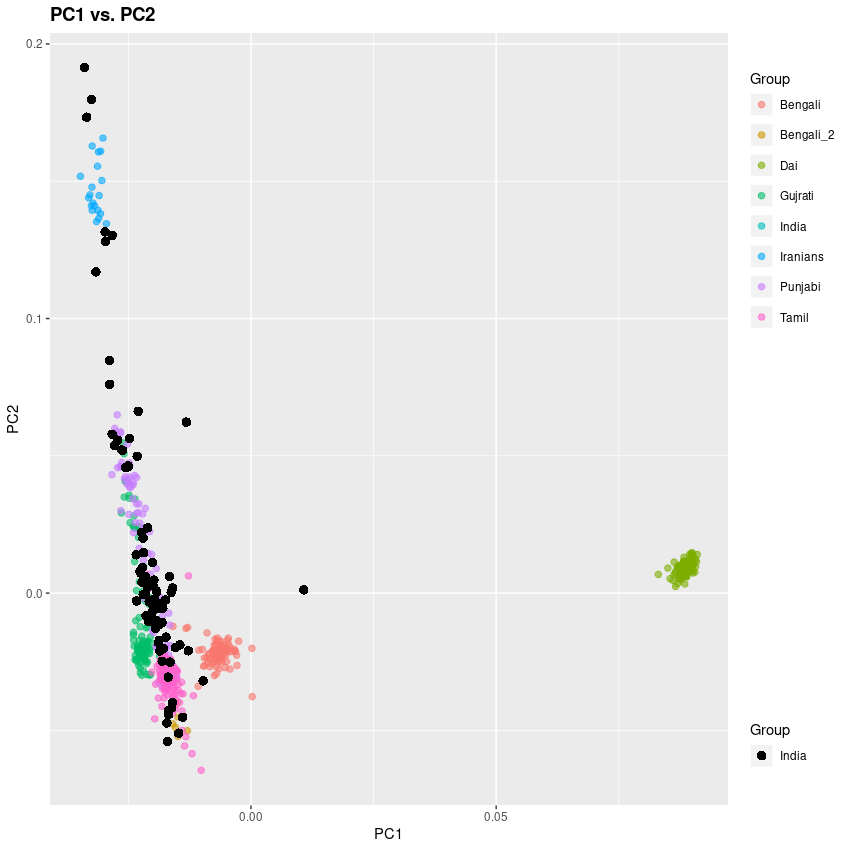
I have a bunch of samples of people who say their four grandparents were born in India from DTC companies. I plotted them on 1000 Genomes with a focus on India. No Southern Dalits in the same for sure.
What is the difference between introspection and self-hatred? Introspection brings reflection, intention, and evolution. Self-hatred brings rumination, doubt, and rot. One is essential, the other is extinction.
Engagement of either shift one’s fate. From the roots of mentality grow branches of thought, blooming into flowers of action and eventually the fruits of result. Nowhere is this more clear than the night and day of the Indian elite.
The ancient elites of India wrote eternal tomes of meditation that built the bedrock of a civilization that has seen the best and worst of humanity, outlasting every peer and power. Their art and literature emanated confidence, beauty, and advancement. While sure of themselves, they had no qualms integrating new ideas from abroad or from home. Diversity was strength, and challenge was opportunity.
Their descendants today are devolution incarnate – Kali Yuga realized. An unending anguish for the approval of outsiders, self-flagellating of even the most innocent of traditions, and an obsessive compulsion for mediocrity are the trickle-down that these elites have given Indians since independence.
While trivial bashing of them is enjoyable, I want to get to the meat of their minds as well as what these minds have yielded.
What causes the exceptional self-loathing of these elites? The mania of knee-bending and the need to constantly look outwards for validation? The ability to be stupendously arrogant towards their birthright to rule yet despise their roots? Continue reading The Self-Hating Prophecy of Indian Elites
I’ve posted a podcast with Karol Karpinski for patrons. Karol was stationed in Dhaka with the World Bank, and we talk about his experiences (which includes unfortunate proximity to the outbreak of ISIS-related violence in Bangladesh).
Remember the Brown Pundits reddit channel. It’s starting to finally take off. The link is always at the top-right.
I’m on the road now, so this is prescheduled. Hope Americans had a good Thanksgiving.
For those who are asking, I’m keeping the Patreon because I allocate it to Brown Pundits related costs (hosting podcasts, recording software, etc.). I will be cross-posting some, but not all, podcasts from my paid Substack.

 Lots of questions about this tweet. I like Niraj Rai and Gyaneshwer Chaubey personally. But, I’m pretty skeptical of how people are interpreting this. My own views are pretty straightforward, and outlined in my post the
  Brown Pundit emeritus Zach pointed out on Twitter that BP launched at the end of 2010. A lot has changed. At BP and the world.