Open Thread – 08/08/2020 – Brown Pundits

I’m traveling with my family a lot this week. Please stay under the control, because if you get out of control I’ll be more kludgey in my response than usual.

Also, to be frank, I would appreciate it if every thread doesn’t devolve into arguments between guys you can imagine whacking off to physical anthropology image plates illustrating racial types from National Geographic in 1930. As they’d say in 1930, everyone beyond Calais is a wog.

Hindu conversions to Islam in Pakistan

Since many of you are innumerate, I first want to make it clear that Sindh province is 10% Hindu. These Hindus are concentrated mostly in rural areas. As you likely know most elite Sindhi Hindus no longer live in Pakistan. These are poor and relatively powerless people.

This story makes a lot of sense in that context, Poor and Desperate, Pakistani Hindus Accept Islam to Get By:

The mass ceremony was the latest in what is a growing number of such conversions to Pakistan’s majority Muslim faith in recent years — although precise data is scarce. Some of these conversions are voluntary, some not.

News outlets in India, Pakistan’s majority-Hindu neighbor and archrival, were quick to denounce the conversions as forced. But what is happening is more subtle. Desperation, religious and political leaders on both sides of the debate say, has often been the driving force behind their change of religion.

Treated as second-class citizens, the Hindus of Pakistan are often systemically discriminated against in every walk of life — housing, jobs, access to government welfare. While minorities have long been drawn to convert in order to join the majority and escape discrimination and sectarian violence, Hindu community leaders say that the recent uptick in conversions has also been motivated by newfound economic pressures.

As someone who has read a great deal about religious dynamics, this is not subtle, but a very typical. Contrary to some claims, very few conversions to Islam were “forced” in a physical sense. Rather, historically, individuals converted out of self-interest or desperation. Often there were whole communities who make this choice.

A second issue is that there are attempts to present a symmetry between what is happening in India and Pakistan. This story illustrates how no such symmetry exists. Muslims in India are obviously at a disadvantage, but their situation is not analogous to Pakistani religious minorities.

Part of the story here is obviously about the treatment of religious minorities under Islam, which was not out of the ordinary in 1000 A.D., but 1,000 years later is anomalous, insofar as low-grade persecution is common. But it is also a story about the lack of Hindu solidarity with these people who were literally “left behind” as the Lohannas decamped for Mumbai.

Belief and Reclamation

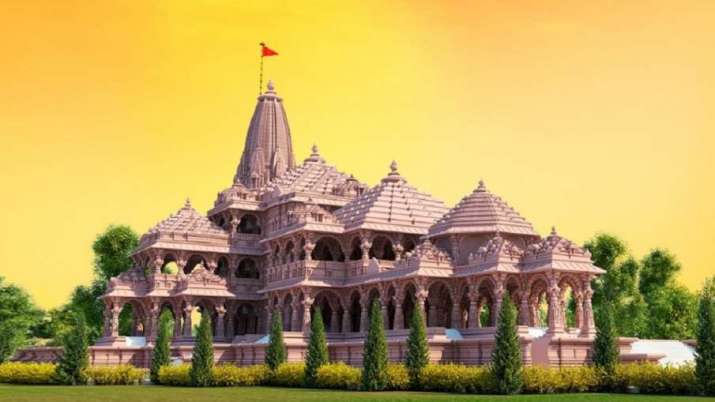
For eons, ascetics and wanderers would journey to the sacred snow-clad Himalayas to test the fires of their belief. Where the skies met the earth and the heavens met the material world, humans met enlightenment; and their discoveries would cascade down the subcontinent. These beliefs would be ossified by ritual and rite, and a culture would engulf the land between the great Himalayas and an endless ocean – India, that is Bhārata.

And it is this legendary journey from the foothills of the Himalayas to the tip of the subcontinent that a civilizational epic takes place – the Rāmāyana. On August 5th, 2020, the ancient song of Valmiki will echo in the villages, in the cities, in the deserts, the fields, the jungles, the mountains, the waters, and especially in the minds of those who believe. A civilization will enact its long-awaited reclamation.

Continue reading Belief and Reclamation

Open Thread – 08/01/2020 – Brown Pundits

I think when we started the Brown Pundits Browncast we planned a ~1 time a week affair. As it happens it’s not that regular. The Browncast will be gone for 3 weeks, and then come back every other day for a week. Really you should subscribe at one of the options (just click the link in the strip above the latest podcast).

If you want to hear the podcasts early, please become a Patron. I do post them early. Sometimes hours. Sometimes days. Now and then weeks. And on an occasion here and there months. There is also a podcast you can’t hear unless you are a patron since the person interviewed was up for a government position, and they thought it would be best to remove all public opinions for the moment.

The open threads are getting super long, and I will try some non-WP option at some point. Also something with a killfile. I’m pretty relaxed on censorship with the open threads…but at some point, the nastiness is going to turn people off.

I am frustrated by the historical ignorance of many readers of this weblog and “India” Twitter. So a question, if there are three history books someone should read on the West, India, and China, what would they be? I have plenty of suggestions but I’m wondering what the reader would say.

I’m not going to post a separate show notes episode for Kushal Mehra and myself talking about caste, but it’s up.

Caste – bred to the bone!

Kushal Mehra and I had a discussion on the Brown Pundits podcast about caste. I will post for Patrons today and push it live tomorrow. I want to review a few things from my perspective on this issue related to what we talked about.

– The paper The promise of disease gene discovery in South Asia highlights a fact: jati has a very strong genetic reality. The stylized fact is that caste endogamy has been strong across southern Asia for 1,500 years. Genetically you can have two castes in the same village in Andhra Pradesh who are as distinct as people from Finland and Sicily.

Additionally, jati is not arbitrary. Brahmins across India may not be closely related, but they tend to have more “Ancestral North Indian” than their non-Brahmin neighbors, on average (true everywhere except for the Northwest of the subcontinent).

– Kushal asked if jati varna was an ESS. I have suggested that caste fragmentation made it harder for non-Indians to take over and assimilate Indian society. But, it is not the only ESS.
– The main contrast I give is to China. People who can read classical Chinese (which was the norm in the early 20th century) can still read oracle bones from the Shang dynasty 3,400 years ago. This is a civilization with continuity and integrity.

The Chinese are a population that has managed to absorb other groups and do it without caste endogamy. Rather, like Europeans, Chinese genetic variation is a function of geography, not class/caste. In fact, the Chinese never developed a blood nobility like Europe. The basis of Chinese civilization has unapologetically been the peasantry.

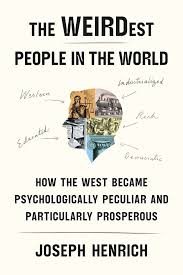
– In The WEIRDest People in the World Harvard’s Joe Henrich makes the argument that the Western Christian Church’s destruction of extended family networks led to the rise of the West. I won’t recapitulate the argument which I’ve outlined elsewhere. But the idea is rather persuasive.

It seems that the hostility and skepticism toward caste from some on the “Hindu Right” really has to do with Indian nationalism. Jati varna was a reasonable institution in a pre-modern context, but it doesn’t take a genius to understand that national cohesion is reduced when people view themselves as members of a “community” first and foremost, and not a nation-state.

From the traditionalist side, the idea that jati varna is a great functional system is really not the point. Let’s be frank: people are invested in their particular traditions and their purity. The rest is commentary.

Book Review: The Quetta Experience: A Study of Attitudes and Values Within the Pakistan Army by David O Smith

From Dr Hamid Hussain

Book Review – The Quetta Experience: A Study of Attitudes and Values Within the Pakistan Army by David O Smith

 Hamid Hussain

David Smith’s book The Quetta Experience is a groundbreaking and unique study of Pakistan army’s prestigious Command & Staff College that trains army officers for higher ranks. This book is based on interviews of American army officers who attended Command and Staff College at Quetta in Pakistan. Foreign Area Officers (FAO) of US army spent a year at Staff College.

Colonel David Smith is well qualified to embark on this kind of project.  He attended Staff College Quetta in 1982 and has remained in contact with large number of senior officers of Pakistan army.  In view of his extensive contacts in Pakistan army, he has been a Pakistan hand at Pentagon and Defence Intelligence Agency (DIA) for over two decades. Continue reading Book Review: The Quetta Experience: A Study of Attitudes and Values Within the Pakistan Army by David O Smith

Book Review: Dominion, by Tom Holland

Tom Holland started off writing vampire novels but moved on to non-fiction and has since written an excellent history of the Persian invasion of Greece, several books about the Romans, one about Islam and one about the slow rise of Christian Europe that started around 1000 AD ; in retrospect at least, all his non-fiction books have had a hint of Christian Western European apologetics (some of it is probably well deserved reaction to the excesses of contemporary wokeness) but this book makes it explicit. Dominion is well written and well researched and he does make a lot of effort to include the nasty bits of Christian history, but in the end it IS a work of Christian apologetics, albeit from a modern liberal angle. Tom Holland’s basic thesis is that almost the entire set of “humanist” values modern liberals take for granted (universal human equality and dignity, separation of church and state, care for the weaker sections of society, suspicion of power, privilege and wealth, condemnation of slavery, cruelty and oppression, valorization of the weak and downtrodden, etc) is purely Christian in origin. No other civilization or culture had these values (or at least, foregrounded them in quite the same way as Christianity). For example, while some thinkers have always been unhappy with slavery,  the abolition of slavery was a Christian effort through and through. True, the slave owners had their own Biblical justification for slavery, but those who opposed them did so on the basis of their Christian beliefs, and they won the argument.

Holland also insists that the most viciously anti-Christian progressive thinkers of the post-enlightenment era also turn out be using Christian values to attack Christianity. When Marx cries out against the oppression of the proletariat or Lennon sings “all you need is love”, they are really being more Christian than most Christians. Since Nietszche thought something similar (that liberalism is “Christianity without Christ”), he gets a lot of positive play in this book, which is a bit ironic, since he also regarded Christianity as something of a disease.

Continue reading Book Review: Dominion, by Tom Holland

Open Thread – 07/25/2020 – Brown Pundits

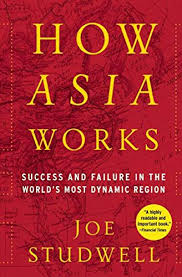
So How Asia Works is very discounted on Kindle in the USA. If you haven’t read it, I recommend it.

In light of the increased comment activity on this weblog, I ask commenters to shy away from too many stupid comments. If you think you may say something stupid, please be cautious, because I may just delete it. My role as a moderator is basically to periodically engage in some ‘natural selection’ and apply some pressure. This is not something that is up for debate.

There is no schedule for the podcasts, but another will be dropping within the next few hours, and more stuff is going to be recorded tomorrow, and I just recorded something today on foreign policy with Richard Hanania.

What do we call the Ancient Ancestral North Indians?

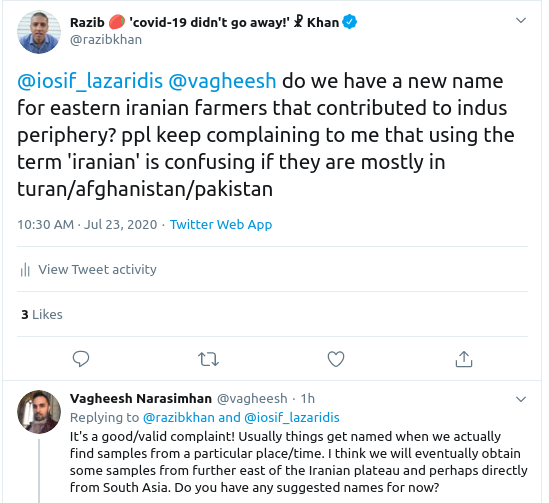
Commenters on this weblog have expressed dissatisfaction with the nomenclature of the “eastern Iranian farmers” who were the dominant genetic contributors to the Indus Valley People. The author of The formation of human populations in South and Central Asia agrees that this is a problem.

To review: the dominant ancestry component, called Iranian-related or eastern Iranian farmer, has two components. About 5-10% is related to “West Siberian Hunter-Gatherers”, who mostly descend from “Ancient North Eurasian” Paleo-Siberian groups (this group contributed ancestry to eastern European hunter-gatherers and Native Americans). The remainder of the ancestry is related to farming populations that are termed “Iranian” from samples in the Zagros in the early Holocene. But the genetics indicates that the separation of the Indian ancestry component dates to before farming, probably between 10-15,000 years ago. Without ancient DNA that is older, we can’t be sure of its geographic range, but it is reasonable to infer that this was an eastern expansion of hunter-gatherers out of the Zagros (seeing as how the WSHG ancestry is not found in the west, and the broader Iranian farmer clade seems to form a clade with Anatolian farmers and Levantine farmers).

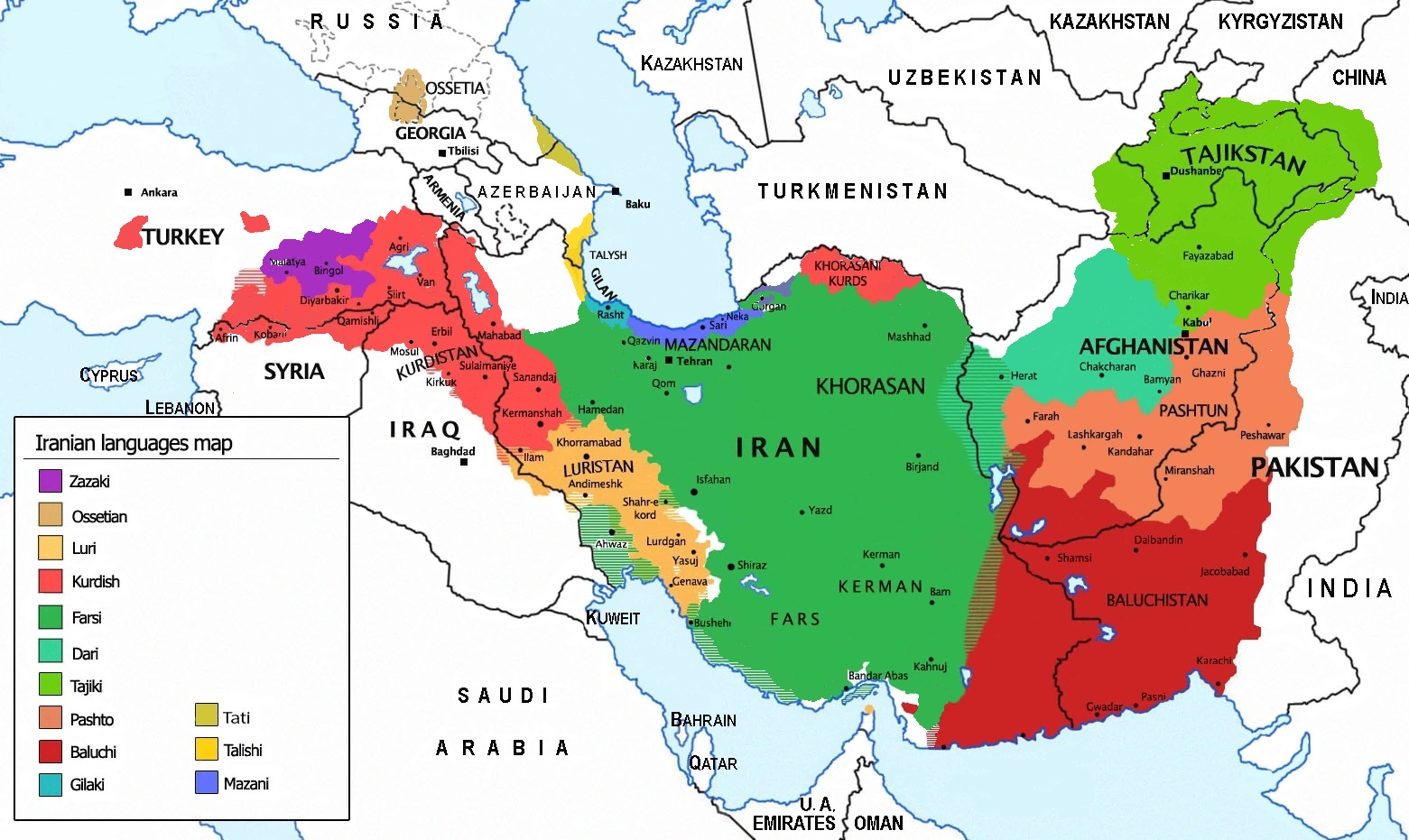
But obviously the use of the term “Iranian” confuses with the nation-state of Iran.  This has come up when I use terms like “Iranian-speaking people,” and people get confused because they don’t assume that I’m talking about people who live in Russia (Ossetes), or ancient people who flourished in Xinjiang and Ukraine.

Historically modern Iran was called “Persia”, and Iran was actually more of an archaic civilizational term. But in the 20th-century the Pahlavi’s resurrected this ancient term for the nation-state, so here we are.

The question this: what is a better term for the “Iranian-related farmers”? I have often used the awkward “NW South Asia”, since it seems plausible this group was present in modern-day Pakistan by the early Holocene, and probably earlier. Thoughts?

I’m basically asking for terms and why you think those terms are good. I may adopt a term in the comments for usage on my blogs.

Note: We can’t call them “Ancient Ancestral North Indians” (AANI) since the ANI turn out to be a compound of Indus Periphery and Steppe.

Brown Pundits