Afghan Conundrum II

From Dr Hamid Hussain. As usual, he gives sensible advice, but it is not going to be heeded. On this issue, I think Major Amin is right, there will be a civil war, Pakistan will take sides, PTM will not be reconciled and will instead be further demonized, things will not get better.
I also hope I am wrong. (Omar Ali)

Dr Hamid Hussain’s post follows:

One can only highlight signposts of a complex issue. Following is one such exercise.

Hamid

Pakistan’s Afghan Conundrum

Hamid Hussain

“On earth, it’s hard and heaven is far away”.  Afghan proverb.

 Afghanistan is going through another transition with many uncertainties causing hope and fear.  Pakistan has a long history of involvement in Afghan affairs.  President Donald Trump tweeted on 08 October 2020 that all American troops will be home from Afghanistan by Christmas. This surprised everyone in Washington and Pentagon, State Department and Central Intelligence Agency (CIA) officials were scratching their heads and contemplating how one single tweet has undermined the bargaining position of United States.  This also sent shock waves in General Head Quarters (GHQ) of Pakistan army.  Prime Minister Imran Khan government is not even pretending to have any role in Afghan affairs and has handed the Afghan file to the army.  Imran Khan wrote an op-ed piece for Washington Post pleading Americans not to leave Afghanistan in haste for Pakistan fears it will face all the negative fallout. 

There will be review of Afghan policy with the arrival of new administration in Washington in January 2021. However, domestic issues will suck all the oxygen and it is not likely that new administration will be able to spend significant economic, military and political capital on a side show in Afghanistan. President Trump is now the wild card before President elect Joe Biden takes oath on 20 January 2021.  He can order complete withdrawal of American troops by the end of the year that can make any course correction for new administration very difficult. Pakistan’s hope is that new administration keeps current level of forces and economic lifeline to Afghan government until meaningful progress is made on intra-negotiations front. Continue reading Afghan Conundrum II
Correlating ancestral legends with Genetic data

I stumbled upon an interesting project to collect data on the Y-haplogroup from a section of the Indian population (brAhmaNas), and correlate it with the claims of descent from certain ancient sages by brahmins today.

Link to read up more –

I personally find it to be an intriguing idea. And worth investigating.

Some notes for the uninitiated on Gotra / Pravara

  1. A significant chunk of the Indian population has a Gotra record.
  2. Technically your Gotra records your male line of descent, though the individual after whom the Gotra is named need not necessarily be the earliest male ancestor of yours that you know of.
  3. Gotras are likelier to indicate a specific line of descent in the case of brahmins, where the Gotra/pravara record is more carefully preserved than among the rest of the Indo-Aryan population
  4. Pravaras are a set of 3 or 5 individuals – typically sages who feature in your male line of descent. These individuals may precede the sage mentioned in your Gotra, or succeed him.

Correlating Gotra information with Y-haplogroup data may give insights on whether there exist striking similarities between brahmins who share a certain Gotra.

An example of how Gotra / Pravaras look like –

My Gotra is vādoola. Legend has it that he was likely a sage in the late Vedic period, who cannot be located accurately. He has certain texts of the late Vedic tradition including a Shrauta sutra to his credit.

My Pravara is Bhārgava / vītahavya / savetasa : Among these three, BhRgu is actually not my biological ancestor. The latter two are. Vītahavya was actually a king of the Heiheya dynasty who turned “brahmin” when he was residing in the Ashrama of sage Bhrigu.  So this particular clan that descends from vītahavya are Kshatriya-converts to Brahmin-hood, to put it crudely. Likely this legend dates to the middle Vedic period (1000 BCE) , or maybe earlier.

In this particular case, the Gotra RSi (vādoola) is actually a descendant of Vītahavya. So the gotra is not named after the earliest male ancestor that we know of.

Individuals belonging to this somewhat rare gotra are found largely in Tamil Nadu and Andhra today. Not elsewhere. It would be curious to see if the Y-chromosome data provides any commonalities among those who share this gotra.

Post-script : None of this should be seen as any kind of “supremacist” exercise. It is just one way of possibly validating traditional claims (which may be bogus for all you know) , though it is not likely to yield a conclusive narrative.

Open Thread, 11/14/2020 – Brown Pundits

I don’t know anything about Diwali, but Happy Holdidays! (I found out that it was Diwali this weekend from Twitter and the comments here).
A new podcast on the election results with Josiah Neeley and Richard Hanania. We get kind of spicey by the end, as I make fun of Richard making fun of Peter Turchin, and make a huge prediction about Hunter Biden’s future.

“The Buddhist Age”

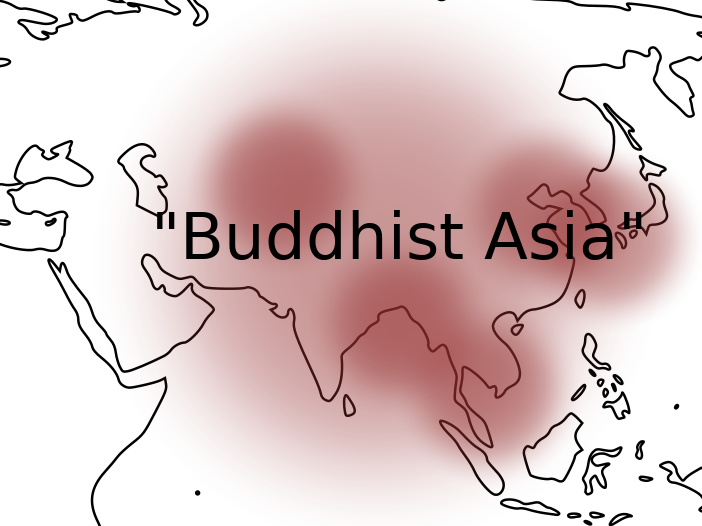
Civilizational affinities in 700 AD

I made an offhand comment on Twitter that I thought might be worth amplifying and elaborating. You can argue that to a great extent the period between 250 AD and 750 AD can be thought of as the “Buddhist Age” in Asia. The year 750 AD is easy as a cut off point, as the battle of Talas in 751 symbolizes the recession of Tang Chinese influence in Turanian Central Asia, and the inexorable advance of the Muslim Arabs. The year 250 is more vague, but it post-dates the collapse of the Han dynasty, and starts to see the ascension of Buddhism as a Chinese religion par excellence, rather than a marginal Indian cult.

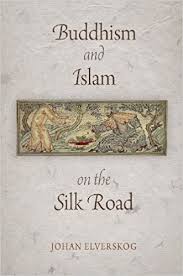
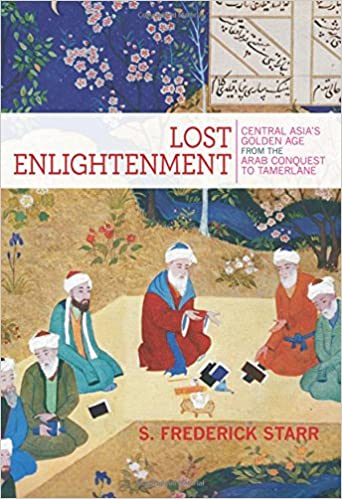
Let’s focus on the year 700. What’s going on? First, let’s acknowledge that Buddhism is in serious decline across the Indian subcontinent, though there are local pockets of strength, with a late Indian summer to come with the Pala Empire of Bengal in 750. Second, it was under threat across its East Iranian heartland. It is often forgotten that Buddhism and Zoroastrianism competed toe-to-toe as the religion of the elites across the East Iranian world, from modern-day Afghanistan to Khorasan and deep into Transoxiana. The book Buddhism and Islam on the Silk Road documents this interplay. Lost Enlightenment as well as Christopher I Beckwith’s book argues from the strong role of Turanian Buddhism in shaping Abbassid era Islam (e.g., viharas as models for madrassas and Turanian Buddhist textual culture as the seedbed for hadith).

in Japan Buddhism was taking root, while in Korea and much of China it was the dominant religion in 700 AD. Buddhism also had a thin, but detectable, impact across Southeast Asia, along with Indic culture more generally. Tibet was not as clearly associated with Buddhism in 700, but the religion had already been introduced and was making a cultural impact.

What does this have to do with “Brown Pundits”? Buddhism is the dominant vehicle of clear and obvious Indian cultural influence in the world. It is, arguably, the earliest of the great missionary religions to exist today. Though Buddhism never took root in the West, it was clearly known and a presence in the eastern Mediterranean during the Roman period in cosmopolitan ports such as Alexandria. Though Indian numerals are extremely consequential, they are a more bit-sized cultural element, which has been detached from their Indian matrix. In contrast, Buddha’s Indian origin is well known, and the influence of Buddhism is probably responsible for legends that are hard to explain such as the Indian princess who married into the Korean royal line and gave rise to a modern day Korean clan.

Browncast – Saagar Enjeti: An Indian-American Right Populist

Another BP Podcast is up. You can listen on LibsynAppleSpotify,  and Stitcher (and a variety of other platforms). Probably the easiest way to keep up the podcast since we don’t have a regular schedule is to subscribe to one of the links above!

You can also support the podcast as a patron. The primary benefit now is that you get the podcasts considerably earlier than everyone else. This website isn’t about shaking the cup, but I have noticed that the number of patrons plateaued a long time ago.

This episode features Mukunda and Akshar talking to Saagar Enjeti, co-host of Rising on The Hill and host of The Realignment Podcast. We talk about Saagar’s come up and his political journey as we delve into the US election results, right populism, and an Indian-American’s place in all this.

Putting the Arnab storm in perspective

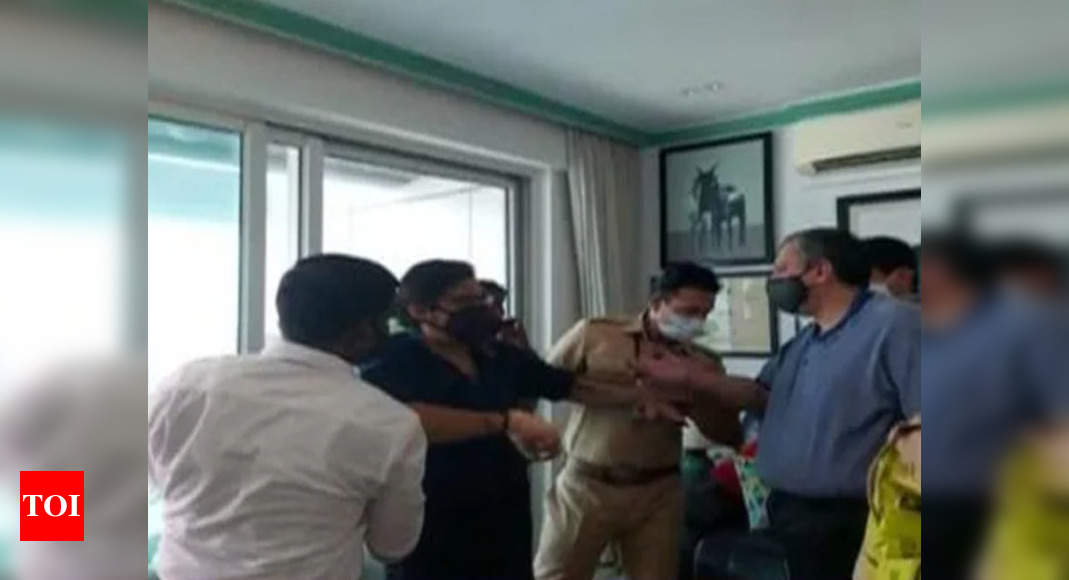
Yesterday morning Republic TV Host – Arnab Goswami was arrested in the early hours of the morning for a two-year-old suicide case. The arrest and especially the nature of his arrest created a mini storm on Twitter, with Hindutva twitter making it a FOE issue and a reflection “fascist” nature of Maharashtra government and some sections of Liberals seeing this arrest as Karma.

I would highly recommend Shekhar Gupta’s Cut The Clutter on this topic

Some of the criticism of Karma on Arnab appears fair if you look at the way Rhea Chakravarty was hounded by Arnab and journalists on his side of the political spectrum with Arnab as the ringleader. But it’s the Optics of the arrest and high handedness of the Maharashtra government (using encounter specialists for the arrest) needs to be called out. This comes a week or two after the arrest of Sameer Thakkar for “objectionable” tweets about Uddhav Thackeray and his son. That issue created some outrage on social media but nothing compared to the Arnab issue. Personally, I find such arbitrary arrests (Sameer Thakkar) that have been known to happen in India very frequently, more troubling than the arrest of Arnab Goswami. The arrest of Arnab is surprising due to his stature and popularity and not due to the arbitrariness of his arrest (which is actually banal in India).

Within hours the BJP big guns jumped into the fray with condemnations from Smriti Irani to S Jaishankar. Even comparisons of Emergency were made by Devendra Fadanvis. However one must point out that Hindutva twitter was unhappy with BJP’s response. They wanted a more violent defense of Arnab by BJP (what that would entail is best left to the imagination). However, hypocritically though not surprisingly – the same establishment is silent on the arrests of journalists, which have happened regularly for actually doing their job (in all states including a lot of BJP governed states). Hathras was a prime example where some arrests were made by UP police (the exhaustive list would be too damning). Similarly, the famous arrests of so-called “Urban Naxals” – especially Sudha Bharadwaj, are followed by their detainment for over 2 years without any solid proof coming up in the due process comes to mind. Recently, Dhaval Patel from Gujarat was arrested because he wrote a piece alleging Gujarat CM being replaced because of poor handling of the Covid crisis. He was released on bail after an order from the court. I can go on and on and keep on pointing cases of significantly worse handling of journalists by all states under all governments in India. Uttar Pradesh under Yogi is particularly harsh when it comes to handling journalists but no state passes the basic smell test when it comes to protecting freedom of expression.

Taking it to a next level, there are routine deaths of journalists when they report lesser-known criminals and politicians. The Sand Mafia, the Mining Mafia, the other lesser and greater known criminals (and politicians) are famous for threatening, killing, and killing entire families of journalists. I would like some documentation with trends of murders and mysterious deaths of journalists in India over the last 70 years (couldn’t find any on a cursory search).

My aim here is to not indulge in whataboutery but to put the Arnab arrest in perspective. It’s not an extraordinary event in itself, just it grabs so much space (even in NYT) because it is Arnab – the TRP king and apparent favorite of the BJP Regime. Press freedom in India has a long long way to go, but using this particular case to make that point is not a great idea. Where this case may affect a change(or escalation) is the interplay of journalism (or media) and politics in the future. Politically this moment might turn out to be a significant yardstick for future abuse of state power for politics. Shekhar Gupta alludes to it in the video, this may be a slippery slope leading to an escalation in vendetta politics across the country. The central government under BJP has till now troubled NDTV (with Tax fraud etc), the Wire, and all the usual suspects for 6 years now. But in no case was the action OPTICALLY as drastic as the arrest of Arnab. Maybe such drastic optics are where we are leading, whenever someone raises the level it’s fair to expect others to follow. With more and more public figures getting partisan (Kangana Ranaut, Bajaj, etc) could one expect politicians to attack them too? As was the case with Kangana? Probably. But that doesn’t bode well for either the debate or the partisanship.

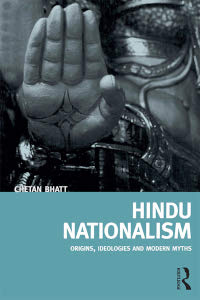
Reducing Hindu nationalism to the Enemy

Politico has a silly piece up, How Hindu Nationalism Could Shape the Election. The silliness is in the title: Hindu nationalism will not shape the election. No one in the USA knows what it is. No one in the USA cares. But headlines need to justify the “deep-dives.”

The author clearly had a preconceived conclusion, and it’s pretty much a paint-by-numbers article in that light. There is zero chance that any Indian Amerian journalist will write a sympathetic portrait of Hindu nationalism, and develop a “strange new respect.” The conclusion is baked into the cake.

With that said, why do many Indian Americans get so angry at these sorts of pieces? I would appreciate comments (unhinged and somewhat concise please, I know many of you are going “bug-eye” over this piece, so calm down).

First, this quote jumps out: “Savarkar made clear that he saw Nazi Germany’s treatment of Jews as a model for dealing with India’s Muslims.” Any mention of Nazi Germany in a Western context as an analogy is poisonous. It’s like having an expensive multi-course meal at the French Laundry, and then they tell you there’s a touch of feces in one of the items. The totality of what you’re eating no longer matters, you are not going to eat even a little bit of shit. Any mention of Nazis is going to ruin and color the whole thing. You know what the audience will take away, and you know what the writer intends.

But that brings us to the point that from a liberal perspective there were many unpleasant things associated with early Hindu nationalist ideology, and Hindutva-identified people have been associated with atrocities for decades, from Godse down to leaders in the Gujarat riots. Isn’t this fair?

I think the problem here is that the same journalists who would reject the reduction of Islam to Sayyid Qutb or shrug off the relevance of the Nazi sympathies of the Mufti of Jerusalem have no problem engaging in reductionism in relation to Hindu nationalism and Hinduism. Basically, many Indians see that Islam and Muslims are treated with generosity, and not judged by their lowest moments, while the converse is true for Hindus and Hinduism. Muhammad, the notional founder of Islam, engaged in sex slavery. This is just a fact. But Muslims are not judged by Muhammad’s illiberality, while Hindus are judged by illiberal interpretations of Manusmriti. Why? (some scholars and politicians in the Gulf have used sex slavery as a justification for the tolerance of Russian sex workers, so it’s a live issue)

For reasons that are only partly clear over the last few decades, the global Left and the West’s intelligentsia has taken a default philo-Islamic stance. Modi’s India can be depicted in very negative terms, while there is benign neglect of persistent and massive human rights abuses in Pakistan. The differing standards obviously enrage many Hindus, but the deeper question is why. Is this a “bottom-up” process, or, are there larger institutions that have made particular decisions? Remember, most Westerners are very vague about Hinduism, and have never seen the word “Hindutva.” These journalists and publications are shaping first impressions. Where are their marching orders coming from?

The same people who would decry demands that Rashida Tlaib denounce her own kith and kin as guilt by association are demanding that Preston Kulkarni do exactly that. Where do these double-standards come from?

In the future, I expect we’ll see more “think pieces” and “investigations” of American Hindus and Hinduism which sheds light on dark developments in this subculture. Meanwhile, there will be benign neglect of the illiberalities among American Muslims and Islam. The media’s attention and energy are finite, and they are quite selective about what they devote their focus to. Focus is clarifying, because it tells you what they care about, and what their motives are.

Open Thread – 10/31/2020 – Brown Pundits

So I started a Subreddit. You can start your own threads there. Eventually, that might make the “open threads” redundant (they are not scaling well with ~400 comments per week).

I’ve posted a few podcasts on the Patreon. One is a new podcast from Richard Hanania, where he takes a skeptical stance toward France in relation to the late unpleasantness. But several are from the Substack I’m starting shortly (probably next week). Probably won’t be posting those in the future.

Why do Muslims React More to France Than to China?

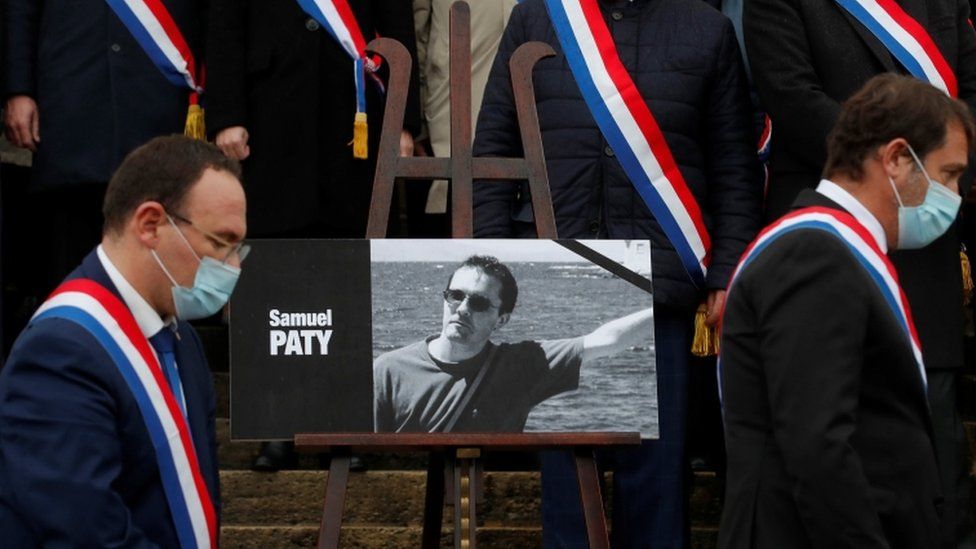
The last few days have seen two separate terrorist incidents in France, both involving Muslim youth (both refugees, not French-born Muslims) beheading (or trying to behead) French civilians because of perceived outrage over blasphemy. In the first shocking incident a teacher named Samuel Paty tried to do what good teachers do; he was teaching about freedom of expression and wanted to show the cartoons that led to the murderous assaults on the satirical magazine Charlie Hebdo. He told his Muslim students that if they felt uncomfortable seeing those cartoons, they could step outside the class. There is no indication that he himself said anything that could be construed as an attack on the prophet. But the very fact that he showed the famous cartoons in his class was enough to rile up at least one of the Muslim student’s parents, who started to outrage on social media, which led a Chechen youth named Abdullah to travel a 100 km, find the teacher by paying his students to point him out and then beheaded him on a public road before being shot dead himself.

France teacher attack: Seven charged over Samuel Paty's killing - BBC News

If this was not bad enough, today another “refugee” (this one from Tunisia) went on a stabbing/beheading spree at the basilica of Notre Dame in Nice and killed 2 women and a 55 year old sexton. Another person, this time in Saudi Arabia, stabbed a guard at the French consulate before being arrested. At the same time there have been massive protests in Bangladesh, a mock beheading at a girl’s school in Pakistan, official protests from Pakistan and Turkey and boycotts of French products all across the Muslim world. Continue reading Why do Muslims React More to France Than to China?

Brown Pundits