On “The Haraam Bit”: Free Speech, Trolling, and Our Red Lines

This post titled “The ‘haraam’ bit” sparked pushback both on the site and in our internal chat. This note sets out the problem, our editorial responsibility (as X.T.M I have overwritten this post), and what this means for BP.

1. What happened

An anonymous author (Bombay Badshah who has used a number of pseudonyms) posted a list of Pakistani-origin porn performers and highlighted a scene where a British Pakistani actress jokes about “haraam” and foreskin. He framed it as an “interesting observation.” The issue was not that he mentioned porn. It was how he used it.

2. Why the post was unacceptable Continue reading On “The Haraam Bit”: Free Speech, Trolling, and Our Red Lines

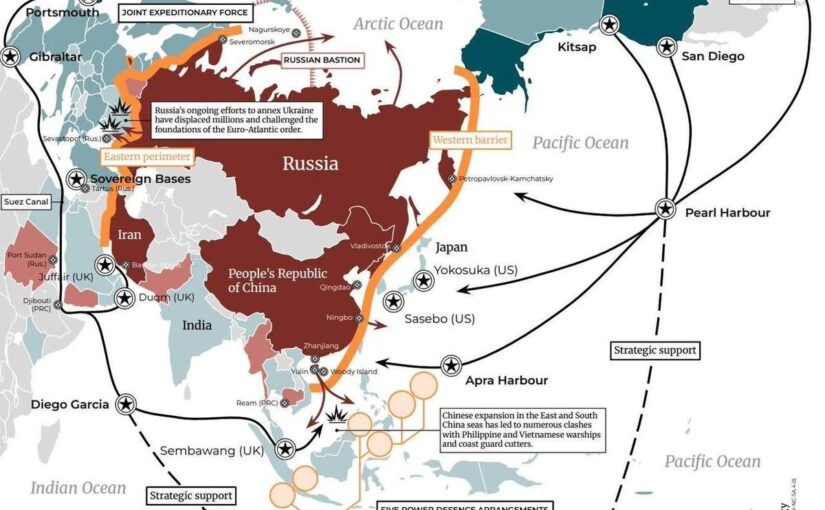
Raja Mohan on Indian Foreign Policy and the Rebalancing of Asia

In this episode of Asia Inside Out, Rorry Daniels, Managing Director of the Asia Society Policy Institute (ASPI), speaks with Raja Mohan, ASPI Non-Resident Distinguished Fellow and author of the forthcoming India and the Rebalancing of Asia. Daniels and Mohan discuss India’s relationship China, the U.S., and Russia; regional headwinds impacting New Delhi; and India’s strategic vision for its role in a changing Asia.

Aasiya–Translation from the Urdu

Here is an excerpt from another story from Bilal Hassan Minto’s Model Town:

There are people who might have felt the neighborhood was against Apa Sughra  just like that, without a reason. They could have wondered how anyone could be against a woman so devout that she had fired her cleaning lady Alice on a matter of principle when she found her drinking water from glasses reserved for Apa Sughra’s Muslim household. A woman so righteous that she had summarily dismissed Susan because her husband supplied alcohol to a Muslim. But such people who question our hatred of Apa Sughra are ignorant of the facts.

We had not always been against her. When she rented the house next door, Ammi sent her both meals that first day because her kitchen wouldn’t be ready. So obviously, we hadn’t hated her from the very beginning. Quite apart from all the terrible things we found out later, what she did to her own daughter Pari, soon after moving to our neighborhood, was enough for us  to condemn her, vilify her, and treat her with hostility. Pari was not at all to blame for the incident. Whoever heard of it said “What did the poor girl do wrong?” Naveed Bhai had been really angry and said Apa Sughra needed to be taught a lesson but Ammi strictly forbade him, saying there was no need to mess with that witch. It’s a different matter that I suspected Naveed Bhai didn’t have any way to do anything to Apa Sughra even if Ammi hadn’t said so. I thought he was just boasting.

Ever since Apa Sughra began living in our neighborhood we had noticed she didn’t allow her twin daughters, Fari and Pari, out of the house at all. Meeting us was out of the question; they weren’t even allowed to play with the neighborhood girls. We always thought the poor things were locked in the house after school. What did they do all day? Did they play with each other or was that not allowed either? And if they were so constrained, why did Apa Sughra even send them to school? Why was she educating them? Continue reading Aasiya–Translation from the Urdu

Why India’s National Calendar Needs Urgent Correction

India’s national holidays should reflect its civilisation. They do not. Five Abrahamic festivals sit at the centre of the calendar, while most indigenous ones sit on an “optional” list. This is a distortion, not pluralism.

National holidays are public signals. They show what a country holds to be central. When non-indigenous festivals are guaranteed space and indigenous ones are not, the state sends a clear message: it is unsure of its own foundations.

This was a mistake made at independence. India had full freedom to shape its symbols. Instead of anchoring the calendar in its own tradition, the new state tried to avoid offence. That caution hardened into policy, even though no society builds confidence by sidelining itself. Continue reading Why India’s National Calendar Needs Urgent Correction

Why 2014 happened in 2014

I just read a comment by Kabir about how 2014 changed Nehru’s India drastically ( I do not agree but that’s not for now). But this poses another question.

As XTM’s post pointed out/alluded Hindutva was inevitable and the natural outcome of Pakistan. But why did it take 67 years of Hindutva to assert itself.

In my mind the answer is pretty straightforward and two fold.

1. Gandhi’s murder at hands of a Hindutvavadi.

2. Sluggish economical growth of the socialist era (also called wrongly the Hindu rate of growth).

I would love to hear comments on the question posed above.

Why 2014 happened in 2014?

Why Zia, Munir, Ayub, and Even Modi, Are Jinnah’s Children

The heirs of Jinnah are not liberal Pakistani nationalists or English-speaking Karachi elites.

His true heirs are:

  • Zia-ul-Haq
  • Asim Munir and the modern Pakistan Army
  • Ayub Khan
  • And Narendra Modi

This is not provocation. It is structural observation.


I. Jinnah Created a Logic That Outlived His Liberal Aesthetics Continue reading Why Zia, Munir, Ayub, and Even Modi, Are Jinnah’s Children

Doctor Walter (Translation from Urdu)

During the pandemic, I experimented with translating Bilal Hassan Minto’s Model Town (Sanjh 2015)—a collection of Urdu short stories told from the perspective of a preadolescent boy growing up in Lahore’s Model Town neighborhood during the late 1970s (at the beginning of General Zia’s Martial Law). This was my first attempt at translation so I’m not sure how successful it was but I did learn a lot from the attempt.

The story I’m sharing here is called “Dr Walter”. One of the main themes of the story is the discrimination faced by minorities in Pakistan (in this case Christians).

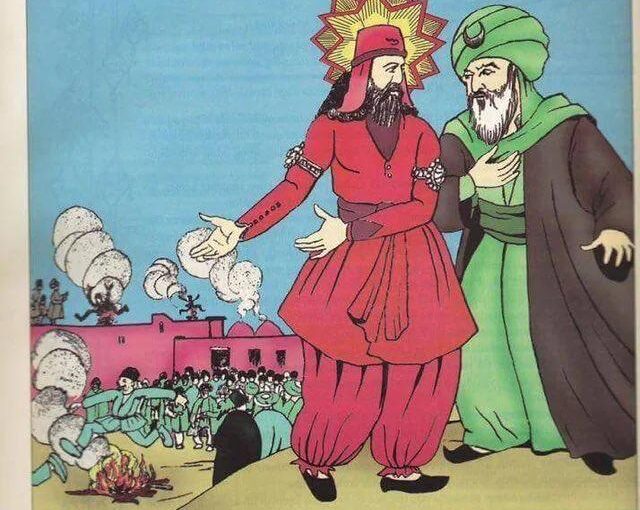
When the Walters’ house was going up, we — Talat, Aqib, Qamar, Mazhar and I — hung around the construction site in the evenings and romped on the sand and gravel piles. At the time, most houses in Model Town had been built by Hindus before the Partition and abandoned when they fled in disorder to India so that some Muslim, trying to take over their houses, or for no reason at all, wouldn’t behead them or sprinkle oil on them and set them on fire or stab them in the stomach with a sharp knife. This precipitous departure left many unclaimed plots on which new houses were built from time to time. When construction of the Walters’ house began near us, a minor frisson of excitement entered our slow-moving lives.

Horsing around, boring tunnels in the sandpiles, Mazhar had asked a laborer:

“Whose house is this?”

“Sai,” he had said, meaning “Isai.” Christians. People who follow Jesus Christ as first among the Prophets of God, just as the Jews consider Moses. Well, what someone believes or not and why are mysterious and dangerous things about which I can’t say anything, but even before the laborer told us, we had a sense that these people were of some other religion because several signs suggested they weren’t our sort.

At this time, the obnoxious General Zia had not descended on our country like a curse and new revelations about our religion, Islam, hadn’t begun to mushroom. No one in their wildest dreams could have imagined that prayers would become mandatory in offices or that women wouldn’t be able to appear on television without covering their heads, or that punishments would be meted out to people seen eating or drinking during Ramzan. And, more surprising than all these, that every day, before the entire country, news on TV would be delivered in Arabic. All this was about to happen, just some days after the Walters built their house near us. Continue reading Doctor Walter (Translation from Urdu)

Nehru, Privilege, and the Missed Settlement of 1947

Kabir’s defence of Nehru as the moral compass of the Indian republic reveals something deeper than nostalgia for secularism. It exposes how much of India’s founding moment was shaped by a single man whose class background insulated him from the material and psychological stakes of Partition; stakes that Gandhi, Jinnah, Bose, Ambedkar, and even Savarkar understood far more viscerally.

Nehru was unique among the major players of his era. He was the only one born into national leadership, the only one who inherited a political position, and the only one whose life had been marked not by struggle but by access. While others were shaped by jail, exile, poverty, or ideological intensity, Nehru was shaped by privilege, and privilege has its own blind spots.

This matters because 1947 was not a moment for abstract idealism. It was a moment for negotiation between communities whose elites no longer trusted one another. On that task, Nehru was the least prepared of the principal actors.


I. Nehru’s Privilege Was a Constraint, Not a Qualification

Continue reading Nehru, Privilege, and the Missed Settlement of 1947

The Unfinished Contract II: Citizenship, Partition, and the Questions Liberalism Won’t Ask

A far-right senator, Pauline Hansen, recently walked into the Australian Senate wearing a burqa. Muslim MPs (one of whom wearing a hijab) angrily called it racist, bigoted, Islamophobic. They were right. But they also dodged the underlying question: What does citizenship mean when communities fracture along religious lines?

The same evasion dominates debates about Indian Muslims after 1947. One camp says: “They stayed, they’re citizens, case closed.” The other mutters about loyalty tests and fifth columns. Both positions are intellectually lazy. Neither grapples with what Partition actually did to the social contract.

This isn’t about defending bigotry. It’s about refusing to let bigots monopolize legitimate questions.

I. The Contract That Never Closed Continue reading The Unfinished Contract II: Citizenship, Partition, and the Questions Liberalism Won’t Ask

Brown Pundits