
There was a comment below about who the readers are of this weblog. One thing that is clear is that people who comment are not necessarily representative.
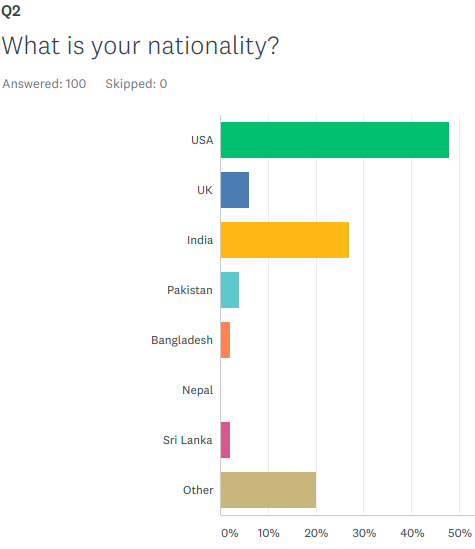
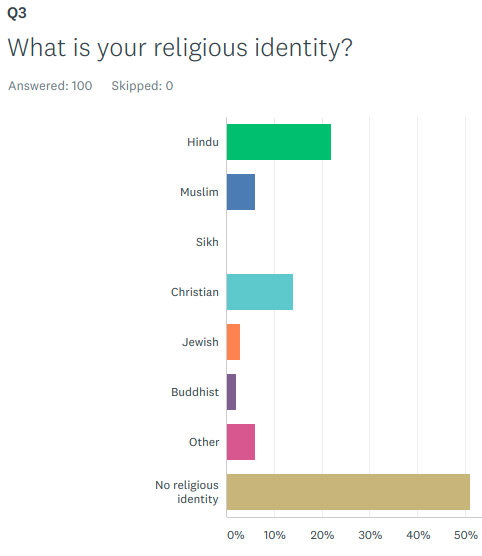
There was a comment below about who the readers are of this weblog. One thing that is clear is that people who comment are not necessarily representative.
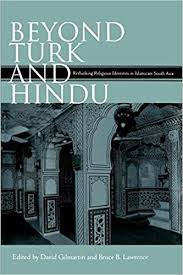 On my other weblog I have a post, On The Instrumental Uses Of Arabic Science, which reflects on the role that the idea of science, the Islamic world, and cultural myopia, play in our deployment of particular historical facts and dynamics. That is, an idea, a concept, does not exist on an island but is embedded in a cultural environment. Several different contexts.
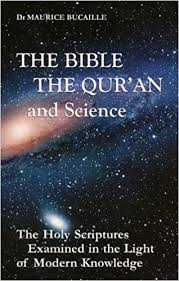 My father is a professional scientist, and a Muslim who lives in the West. In our house there was always a copy of The Bible, the Qu’ran and Science: The Holy Scriptures Examined in the Light of Modern Knowledge. To those not convinced about the beliefs of Islam, as I never was, it was not a convincing book. But it played a particular role in my father’s life of the mind as both a Muslim and a scientist. Its arguments were less important in their detail than that a French scientist had written a book showing that Islam and science were compatible and that in fact, the Koran had prefigured scientific truths.
 The intellectual achievements of medieval Islam, particularly the phase focused around the House of Wisdom, are a real thing in and of themselves. But more often they exist as tools for the implicit or explicit agendas of particular peoples with ends which are separate and distinct from an understanding of the past on its own terms.
 For many Muslims, this period defines what Islam could have been. Should have been. More traditionalist Muslims will have a relatively understated take, and perhaps attribute the passing of this period due to external forces (e.g., the collapse of central authority by the end of the 9th century). More progressive Muslims will make a bolder claim, that Islam, that Muslims, made the wrong decisions internally (al-Ghazali often emerges as a villain).
 A modernist, perhaps Whiggish, take would be that the 9th century of Islam was a “false dawn.” Illustrative of the acidic power of rationality, but an instance when it receded in the face of faith (the Mutazilites often become heroes in these tales). A more multiculturalist and contemporary progressive Western take would likely emphasize that Islamic cultural production was just as ingenious as that of the West, and its diminishment was due to the suffocating effect of colonialism.
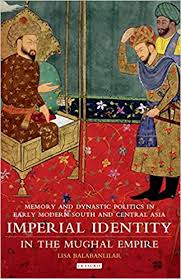
 But there are even more exotic takes one could propose. The shift from the Umayyads in Damascus to the Abbasids in Baghdad was a shift of the Islamic world from the west to the east. The prominence of Iranian culture during the latter period was palpable. The Caliph al-Mamun was half Iranian, and almost moved the capital of the Abbasids to Merv in Khorasan. The Barmakid family were ethnically Iranian, but also originally hereditary Buddhists. The historian of Central Asia, Christopher Beckwith, has alluded to an “Indian period” of Islamic civilization when the influence from Dharmic religion and Indian culture was strong. For example, Beckwith and others have argued that the madrassa system derives from that of Central Asian viharas.
 But ultimately this post and this blog is not about Classical Islamic civilization and history. Rather, I want to pivot to the discussion of Islam and India.
This blog now gets in the range of the same amount of traffic as my other weblog. But a major difference is the source of traffic. About two times as many visitors to this weblog come from the USA as India. So Americans are dominant. But, on my other weblog, 15 times as many visitors come from the USA as India. Additionally, since this is a group weblog, I’m pretty liberal about comments, and so this weblog receives between 10 to 100 times as many comments as my other weblog. Obviously, since most people in the world are stupid, many of the comments are stupid. I try to ignore that.
 Rather, let me focus on the “hot-button” issue of Islam and India, and how it impacts people here. In the comments of this weblog. Let’s divide the comment(ers) into two stylized camps. Or actually, one person and another camp. The person is commenter Kabir, who has taken it upon himself to defend the honor of Indo-Islamic civilization. On the face of it, that’s not a major problem, but he tends to take extreme offense and demand linguistic and topical policing that’s frankly rather obnoxious (this tendency extends beyond Islam, as he is a living personification of Syme). He’s a bully without the whip. Kabir is somewhat annoying, but I can honestly always just delete his comments. He’s one person.
There are few things that trigger me more into blood-pumping fury than when somebody claims how superior South Asian culture is in respecting women and blah blah family values. By South Asia, I mean India, Pakistan and Bangladesh. I do not want to take space venting my fury here because I primarily want to post the following Guardian article. However, I must write a few lines.
These words need not be said because they are generally well understood by all knowledgable people. South Asia has the world’s worst reputation of treating women. It has worst reputation of violence to women, disrespect to women, sexual objectification of women and just every-day, every hour awkward behaavior to women. It has such bad reputation that whenever a foreign girl, white, black, East Asian, latina, expresses interest in visiting South Asia, all South Asian friends immediately discourage her. Female stewards in international flights specially watch out for South Asian men for perverted behavior. And so on and on. In sum, South Asia has the shittiest culture for women. We can debate till cows come home whether Islam, Hinduism, Muslim occupation, British colonialism etc are to blame for this but there is no escaping what it is now.
Finally South Asia is home to the world’s largest industry of making utterly fake paens, hommages to women. Cue a Karan Zohar movie theme.
Study indicates early marriage, male violence and patriarchal culture are to blame
Nearly two in every five women in the world who kill themselves are Indian, according to a Lancet study published this week that says the country’s suicides rates constitute a public health crisis.
The rate of Indian women who die by suicide has fallen since 1990, but not as fast as elsewhere in the world, and now represents 36.6% of global female suicide deaths, the report in the UK medical journal found.
Indian women who died by suicide were more likely to be married, to be from more developed states and, by a large margin, aged below 35.
“It shows girls in India are in serious trouble,” said Poonam Muttreja, the executive director of the Population Foundation of India, a public health group.
She and other specialists blamed the trend on early marriage – one-fifth of Indian women still marry before the age of 15 – along with male violence against women and other symptoms of a deeply entrenched patriarchal culture.
The suicide rate among Indian women was three times higher than what might be predicted for a country with similar geography and socio-economic indicators, the researchers said.
“Our social norms are very regressive,” Muttreja said. “In the village, a girl is called her father’s daughter, then she is her husband’s wife, and when she has a son, she is her son’s mother.”
Muttreja said research carried out by her organisation had shown that 62% of surveyed women believed it was legitimate for their husbands to beat them.
The researchers speculated the link between suicide and marriage was due to the burdens of youth motherhood, the low social status afforded to wives in some households, the lack of financial independence and exposure to domestic violence.
“The disproportionately high suicide deaths in India are a public health crisis,” the authors, who are mostly affiliated with Indian public health research groups, said.
Around one in four men in the world who die by suicide are Indian, roughly the same proportion as in 1990, the study said.
Suicide was also the leading cause of death for young people of both genders but was worse for women.
The study noted that suicide had recently been decriminalised, so there was a possibility the true rate could be even higher but hidden by families and doctors for fear of stigma or police interference.
https://www.facebook.com/shahmirahsanullah/videos/323169345109741/
After the counter-revolution the majority of Iranians have decided that they have had enough with Islam and want to return to their Zoroastrian roots. After the neo-Zoroastrians (they prefer to be called noZis) wrest back control, one of their first shock findings is that the birthplace of Zoroaster happens to be under the Naqsh-e Jahan square in Isfahan.
The noZis tear down the square and leave the rubble while they decide what to do with the site. In the interim all the medieval Muslim sites, which form the bulk of the architectural legacy of Iran, are benignly (or rather callously) neglected in favour of Persepolis (which is garishly rebuilt in what the noZis think was Darius’s court) and other “reconstructed” Sassanian/Achamenian sites (many mosques have been discovered to have been built on top of fire temples).
Ferdowsi is the only Muslim poet truly privileged in noZi Iran but even the Shahnameh is under threat because it’s written in the “alien Arabic script” and not in the purer Pahlavi script (in fact some noZis argue that there should be a switch to the more “Aryan” Latin alphabet). At any rate the majority of Iranians are back to being officially illiterate.
Modern Persian is deemed to have far too many Arabic words and so the more rustic Dari of Yazd is chosen as a base language. Considering that this Dari was spoken by insular villagers the last millennium; it’s deemed that Avestan is the only acceptable source language. Reality turns out to be a bit different; Old Persian in the Arabic script remains the dominant language of arts, calligraphy and culture while New Dari in Pahlavi becomes totally dependent on Anglo-French borrowings to become a complete language.
In the interim any Islamic poet, scientist or historian (even if Persian/Iranian) is sort of cast as the “other” and a scramble/obsession begins to discover ancient Persia’s scientific & aesthetic contributions. Some of Iran’s finest minds have been able to prove that ice cream in fact originated in Yazd.
Furthermore thousands and thousands of online noZis descend on the web to foam and obsess about Iran’s Muslim neighbours and to complain about Iran’s preferential treatment of her Muslim minority (they still maintain their own separate laws to the chagrin of the noZis).
They are also fuming at Eastern Iran’s still heavily Muslim region decision to secede into a new Khorasani state with Mashad & Herat as the capital. Iranian nationalists draw maps of Greater Iran that prominently figure Khorasan and constantly remind the Khorasanis that their Islamic identity is a myth and in fact they were Zoroastrians just a few generations back.
https://www.facebook.com/dailygoalcast/videos/469060460269933/
I came across the above video on facebook and I couldn’t stop listening to it. While what Guru Dandapani was saying made eminent sense I just had this tingling feeling that he resembled someone from my childhood. I finally clocked who it was, Dhalsim from Street Fighter 2 Nintendo. I remember we used to call him Dharasalama or something like that.
Apparently Dhalsim is one of the most stereotyped character in video gaming history (he had muscular build with an emaciated body🙂 but it’s interest how art & life begin to mirror one another once again.
In the series, he is a yogi, a husband, a father, and a pacifist who goes against his beliefs by entering the World Warrior tournament to raise money for his village.
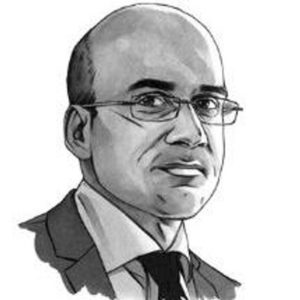
Professor Atif Mian is a prominent Pakistani-American economist and a professor of economics at Princeton university. 2 weeks ago he was nominated to be a member of Imran Khan’s “Economic Advisory Council” (a think tank of sorts that is supposed to generate ideas for the new PTI government; it is not at all clear what influence, if any, this group will have in real life). This set off a controversy in Pakistan because Atif Mian is an Ahmedi and Ahmedis are widely reviled as heretics, apostates and traitors in Pakistan. After an initial attempt to defend his appointment (including the obligatory Jinnah quote and reference to the fact that an Ahmedi, Sir Zafrullah, was one of Jinnah’s closest advisers and Pakistan’s first foreign minister) the Imran Khan government backed down and asked him to leave the council.
Since then his defenders (mostly liberals who believe religion should play no role in such appointments and experts should be judged on their professional skills and not their religion) and opponents (Islamists, PTI-type Islamist-lite folks who believe Ahmedis in particular should not be appointed to any important position because they are fake Muslims and potential traitors, etc etc) have been arguing about this case on social media. This post is an attempt to provide background and clarify some of the issues raised by both sides.. (some of the background material was published earlier in a post I wrote in 2012 for 3quarksdaily.com)
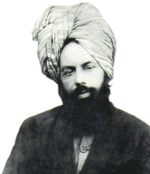
The Ahmediya movement was started in Punjab in 19th century British India, by Mirza Ghulam Ahmed of Qadiyan. He seems to have been a quiet, religious loner who brooded about the challenges faced by his faith and his people. The decisive military and economic superiority of Western civilization over the Islamicate world had produced a variety of efforts at reform and revitalization. They ranged from the Wahabi-influenced puritanical Jihadism of Syed Ahmed Barelvi (who led an extremely fanatical jihadist movement in what is now Khyber Pakhtunkhwah, until he was defeated by superior Sikh firepower and a reaction to his extreme views among the local Muslims) to the anglophile reformism of Sir Syed Ahmed Khan (founder of Aligarh Muslim University). Mirza Ghulam Ahmed’s response was to start a movement of religious revival that was built around his own charismatic claims. Though he contradicted some mainstream Islamist claims about the finality of prophet-hood and the absolute necessity of military Jihad (military jihad as a Muslim duty is now so widely downplayed that it is hard for Westerners and even Westernized Muslims to figure out why his claim was considered so controversial). His movement was socially conservative and even puritanical and he vigorously defended Islam, especially against Christian missionaries and Hindu critics. He found some support among modestly educated middle class Punjabi Muslims (including Islamist icon Allama Mohammed Iqbal, who either flirted with joining the movement or actually joined for a few years, depending on what version you believe). As his movement (and his claims regarding his own status as prophet or messiah) grew, it also drew orthodox opposition, especially from the dominant Sufi-oriented Barelvi Sunni sect. Ironically this branch of local Islam enjoyed some American (and world media) attention as “moderate and tolerant Muslims” in contrast to their Deobandi/Wahhabi brethren in the aftermath of 9-11 (though this attempt to fight Wahabi/Deobandi fire with Sufi-Barelvi water seems to have run into some trouble recently).
This increasingly vocal opposition (complete with fatwas from Mecca declaring the Ahmedis as apostates liable to the death penalty if they did not repent) led to a sharper separation between Ahmedis and other Muslim sects, but the Ahmedis themselves always claimed to be Muslims and made efforts to remain fully engaged in “Muslim causes”. In their own view they were reforming and purifying Islam, not opposing it, so they had a legitimate interest in the cause of oppressed Muslims everywhere (e.g. they took a leading role in supporting Kashmiri Muslims against their Dogra-Hindu ruler). Some Ahmedis played a very prominent role in the Pakistan movement, including Sir Zafrullah Khan, who wrote a Pakistan proposal for the viceroy in Feb 1940 and shared it with Jinnah before the Muslim League passed its Lahore resolution in March 1940. He remained one of Jinnah’s closest associates and was the first foreign minister of Pakistan and Jinnah’s representative on the boundary commission that divided India) and others held prominent positions in the new state and fought for it with distinction (most famously, General Akhtar Malik in the 1965 war with India). It is likely that neither they, nor the relatively Westernized leadership of the Muslim league had a clear idea of what lay in store for them in Pakistan. Even more ironically, the Ahmedis themselves aggressively pursued “blasphemers” (e.g. Pandit Lekh Ram in Punjab in 1897). It is hard to read this Ahmedi polemic against Lekh Ram without thinking about where the Ahmedis themselves now lie in relation to the blasphemy meme. Continue reading Ahmedis and Pakistan. Some background..
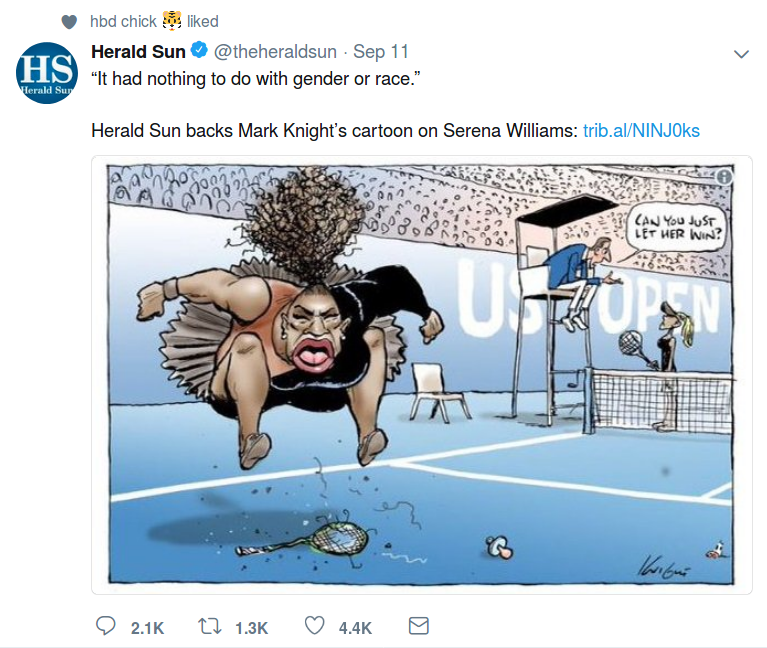
I’m disgusted with this; it’s classic Coloniser to undermine coloured Champions like Serena.
It shows what the cartoonist George Knight really thinks of Serena. The racist & sexist muppet also drew Naomi Osaka as a blonde when she’s anything but!
Having a stale, pale male cartoonist defend a stale, pale male umpire is probably “peak privilege.”
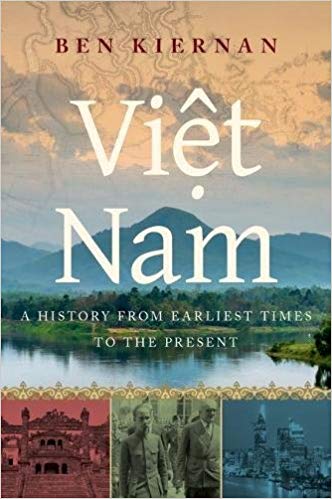 I’m reading Ben Keirnan’s Viet Nam: A History from Earliest Times to the Present. I picked it up mostly because over half the book does not consist of the history of the Vietnam War (a major failing I’ve noticed with books which are histories of Vietnam, as opposed to histories of Vietnamese-American relations).
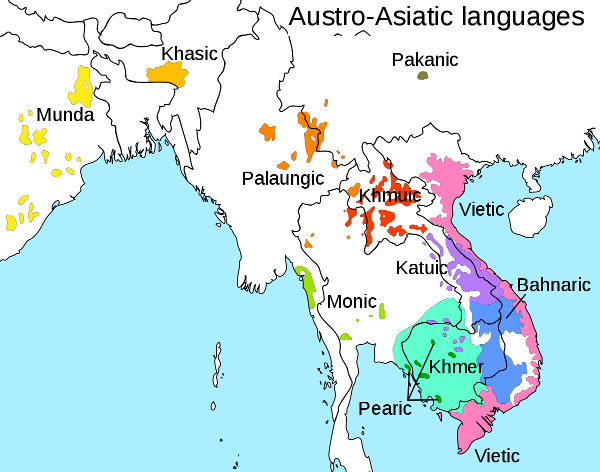
The section on Austro-Asiatic languages (Vietnamese is one) has something of relevance to the “Munda question”. But before that, let me review a few things.
Until very recently many historians and prehistorians of India have suggested that the Munda people, who speak very distinctive dialects related to the Austro-Asiatic languages of Southeast Asia, are the primal people. That is, they are the aboriginals. The original adivasis.
I do not believe that this case is tenable. Because I am a geneticist, I make this judgment on genetic grounds. Chaubey et al., Population Genetic Structure in Indian Austroasiatic Speakers: The Role of Landscape Barriers and Sex-Specific Admixture, reveals what we know about the genome-wide patterns in the Munda.
1) They are highly enriched for East Asian ancestry compared to other South Asians.
2) Many Munda males carry a haplogroup, O-K18 (once O2a), that is very common in Southeast Asia, especially Austro-Asiatic groups. Additionally, it is more diverse in Southeast Asia. The Munda O-K18 branch seems to be a side shoot from the broader Southeast Asian tree.
3) The Munda mtDNA, defining the maternal line, is uniformly South Asian. This is in contrast to the situation with Bengalis, who have East Asia Y and mtDNA. This indicates that the Munda migration was heavily male-mediated.
4) The Munda carry mutations in genes that are associated with recent selective sweeps in East Asians (e.g., on the EDAR locus). Though this may be a parallelism, it’s unlikely. Rather, it is through shared common descent that this occurs.
The Genomic Formation of South and Central Asia has a graph which shows population relationships and gene flow that illustrates important aspects of the Munda ethnogenesis (Juang below):
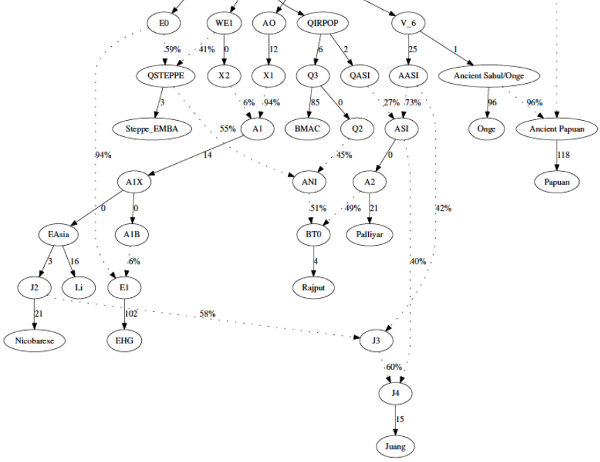
AASI in this model = Ancient Ancestral South Indians. These are very distantly related to Andaman Islanders, Australo-Melanesian Southeast Asians, and more distantly to eastern Eurasians generally. They are likely aboriginal people to South Asia, with no West Eurasian ancestry.
The model above indicates that an East Asian (Austro-Asiatic) population encountered an AASI population and produced a daughter population. Then, that daughter population mixed with an ASI population, ASI being an old and stable mix of West Eurasian Iranian farmer (~25%) and AASI (75%).
This means two things for the Munda. First, they are very AASI enriched. This is obvious in any analysis. And, their West Eurasian ancestry is almost all Iranian farmer and not steppe. This is totally not surprising either. Using more naive model-based clustering Munda samples always seem to lack the components which are most easily adduced to be Indo-Aryan. They have very low frequencies of Y haplogroup R1a1a-Z93.
Let’s take a step back now. The fact that the Austro-Asiatic males arrived when there were unmixed AASI indicates that this was somewhat early. There are no unmixed AASI on the Indian subcontinent today. When we reach the Iron Age, by 500 BCE it is clear that Indo-Aryan society had pushed at least to Bihar. This component would bring steppe ancestry, as well as mixing into any remnant AASI.
So when could the Austro-Asiatics have arrived at the earliest? Two papers with extensive ancient DNA, Ancient genomes document multiple
waves of migratin in Southeast Asian prehistory and The prehistoric peopling of Southeast Asia give us a good sense. It seems that the expansion of Austro-Asiatic farmers dates to about 4,000 years ago. That is when the transition seems to occur in northern Vietnam.
One thing that is also evident: the East Asian gene flow into the Munda seems to come from northern Austro-Asiatic groups in Thailand, not the southern branch which resulted in the people of the Nicobar Islands and was eventually submerged by Austronesians. On a final note, a site in northern Burma yielded an individual who was clearly Tibeto-Burman, and not Austro-Asiatic, 3,000 years ago. So even at that date mainland Southeast Asia was heterogeneous.
But, considering that there is no evidence of Tibeto-Burman ancestry Munda, whose Austro-Asiatic ancestry seems to have come through Burma through a mainland route (as opposed to up from maritime Southeast Asia), I think one should push the date of their arrival before 1000 BCE. With the expansion of farming in mainland Southeast Asia at around ~4,000 years ago, that puts the arrival of a distinctive Munda culture in South Asia to between 2000BCE and 1000 BCE. It is entirely reasonable that during this period there were unmixed AASI in eastern South Asia, though the admixture graph may also be picking up assimilation Austro-Melanesian ancestry in southern China/Southeast Asia.
This is where Viet Nam: A History from Earliest Times to the Present comes in: the author suggests that the early Austro-Asiatic farmers were dry-land rice farmers who occupied uplands. The reason being that reconstructed Austro-Asiatic common words for rice culture is indicative of dry-land practices, with later wet-rice terminology often being borrowings from Tai and Austronesians.
I don’t know enough Indian archaeology and agricultural history to comment further, but, a visual inspection of where Munda are concentrated does suggest upland farming….