Hinduphobia Exists, But Pakistan Was Not Born from It

I was riffling through the comments and my jaw dropped when Kabir claimed Hinduphobia doesn’t exist. It struck me as both historically and emotionally tone-deaf. I didn’t respond at the time, but I’ve been reflecting on it since.

Let me say upfront: Hinduphobia does exist. It may not always manifest in overt violence or systemic persecution (at least not today, and not in most places globally), but it does appear in more insidious, ideological forms; especially in academic and diasporic discourse.

Take, for instance, the backlash against H1B visa recipients. Much of that criticism is coded; targeting upper-caste Indians, especially Hindus, who are the primary beneficiaries of this brain-drain dynamic. It’s not just about class or meritocracy; there’s an unspoken discomfort with their presence and success, often couched in progressive rhetoric.

On the intellectual front, academics like Audrey Truschke and others within the left-liberal Western consensus have regularly challenged or dismissed Hindu identity altogether; reducing it to political nationalism or caste oppression. This refusal to acknowledge Hinduism as a living, plural, and spiritual tradition creates an environment where Hindu self-articulation is delegitimized. That too is a form of Hinduphobia.

Now, is this Hinduphobia the same as the systemic anti-Muslim, anti-Black, or anti-immigrant hatred we see elsewhere? No. Hinduphobia today is more dismissive than violent, more erasure than exclusion, but it is real and it needs to be acknowledged.

Pakistan Was Not Born from Hinduphobia Continue reading Hinduphobia Exists, But Pakistan Was Not Born from It
GST reform – go big Modiji, let the bizmen breathe

This post is published on behalf of Yajnavalkya – Medium

————————————————————————————-

A GST terror story

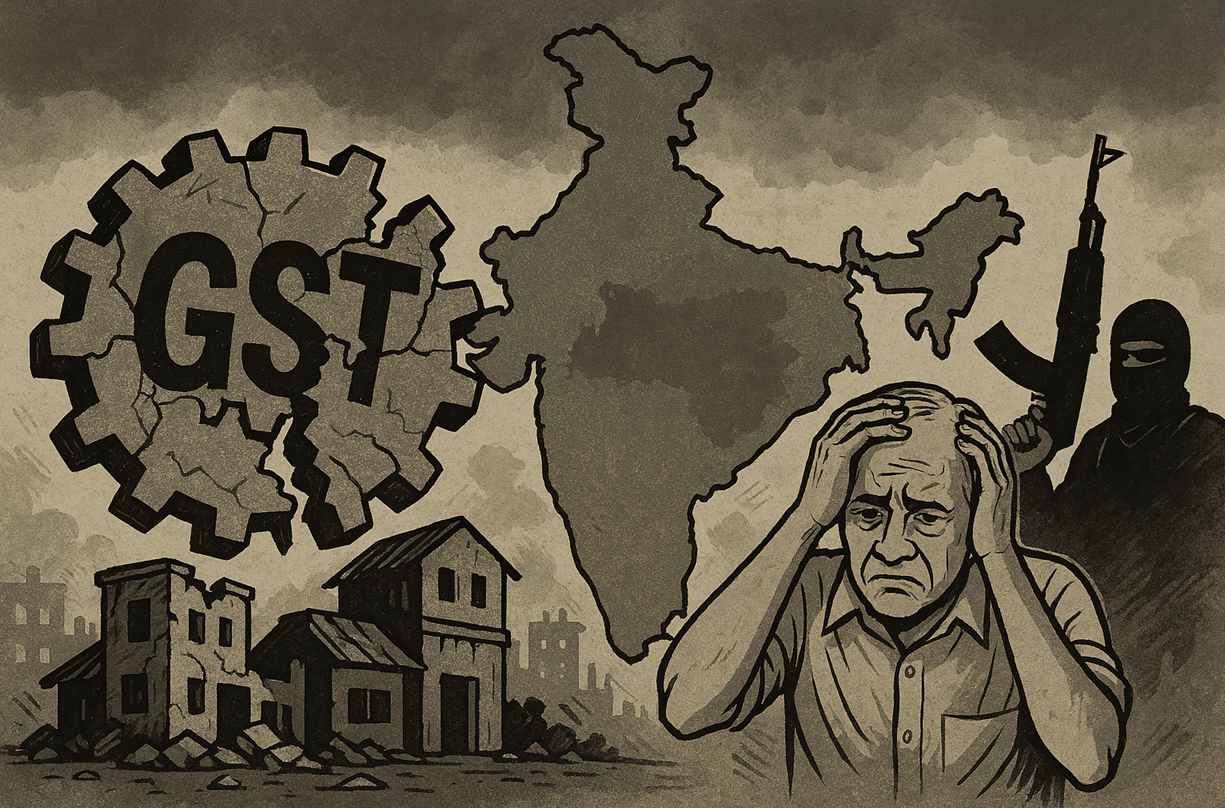
Modi has announced during his Independence Day speech that he would be going for sweeping reforms of GST by Diwali. The central piece of the reform would be reducing the number of rates from 4 to 2. A lot of people – both experts and non-experts – have been advocating a single/dual rate regime as a magic bullet for the GST mess.

But is it? Let me start by narrating a GST horror story. Some GST basics first: GST is a value-added tax. Assuming a product has 10% tax, Manufacturer A sells the product to wholesaler B for Rs. 1000 (pre-tax). B pays A Rs.1000 + Rs. 100. B then sells the goods to Retailer C for Rs. 1050 (pre-tax) and C pays B Rs. 1050+Rs. 105. Now since B has already paid Rs. 100 as tax to A, he is required to deposit only Rs.5 to the exchequer. The Rs.100 that he paid the manufacturer is termed as ‘Input Tax Credit’ or ITC.

There are some elaborate ways of defrauding the system of taxes involving ITC which is also facilitated by loopholes in the tax filing process – discussing that would require a 5000-word post, so I will desist. But for those interested, you can read up about bill trading. One of the ways in which the system combats this menace which potentially causes trillions in tax losses, is Rule 86-A, which empowers the taxman to block ITC of any businessman if he has “reasonable cause” to believe that the ITC was fraudulently availed.

Ok, now on to the story. A few months back, a bunch of businessmen operating in the steel sector in my city – including one of my personal acquaintances – were slapped with notices under this rule, blocking ITC aggregating to Rs.60 million, for transactions related to the period 2021 to 2024. The stated reason – Supplier X from whom these people had purchased goods (and taken ITC credit) was declared to be “non-existent” and hence all those purchase transactions were fake. But here is the thing – the supplier was very much “existing” during the said period. There was concrete evidence of the same – power bills for the factory running into tens of millions, his GST filings, company annual returns, income tax returns and so on. The supplier had closed down his business in early 2025, not in small part due to the pain of GST terror and compliance burden. The panicked recipients of the notices went to meet the taxman, taking along the supplier and with all the aforementioned evidence. The taxman was unmoved. So next they moved to the court but the latter dismissed the petition asking them to exhaust the appeals process via the department first. Before filing an appeal, 20% of the blocked ITC needs to be deposited. The legal costs in this case would have added another couple of million Rupees. Having figured out that legal process was not worth the effort, the group sent a message to the taxman requesting a deal. Initial demand-Rs.12 million. After lots of hard bargaining, it was finally settled for Rs.8 million.. Continue reading GST reform – go big Modiji, let the bizmen breathe

Come Fly with me to Far Bombay

I. Bombay: Between Beauty and Brutality
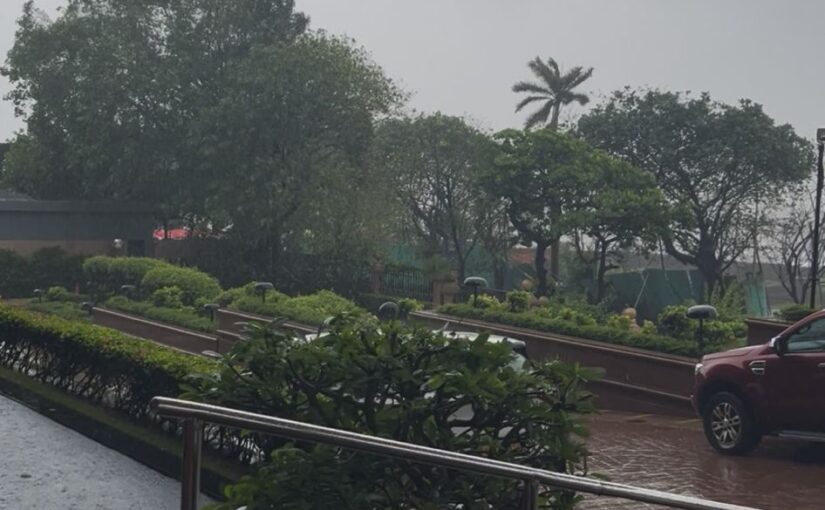
I’m writing from Bombay, where the monsoon floods are overwhelming; visually and viscerally. The rain hammers the city with a kind of sublime fury. From certain vantage points, it’s breathtaking. But it’s also undeniably brutal for those without scenic surroundings or structural shelter. It’s a reminder that Indian beauty is often doubled with burden.

II. Burden Burst: The Commentariat Awakens
Lately on Brown Pundits, I’ve noticed a revival. Old voices returning, new ones emerging, and many ideas worth engaging. But some themes have worn thin; for instance I’m in broad agreement with Indosaurus & I don’t want to waste too much breath on Audrey Truschke. And frankly, Aurangzeb is not a hill I want to die on. In fact, perhaps one of the key misreadings by Muslims in the subcontinent was turning every ideological disagreement into a hill to die on. Maybe it began with QeA-Jinnah and the Great Allama but it ossified into a pattern. Everything became a matter of principle, rather than pragmatism.

III. Concession Is Not Compromise
Compromise is seen as weakness, but I’m more interested in the capacity to concede especially when history clearly shows you’re wrong. The Mughals installed a two-tier system, subordinating Hindus and even native Muslims. Contrast that with the Suri dynasty, particularly Sher Shah Suri, who in just two decades built the Grand Trunk Road and reshaped governance without the alienation that marked the Mughals. If Hindutva attacked the Suri legacy, I’d call it pure bigotry. Sher Shah ruled with the land, not over it. Continue reading Come Fly with me to Far Bombay

Open Thread: Rasam, Stray Dogs, and the Battle Over India’s Story

Life in Chennai has been calm. For breakfast I have rasam. It is a superfood: light, hot, and full of spice. Indian food is the only cuisine where I could be vegetarian. I know Persians who try. I feel sorry for them. No meat, no masala, no spice. There is only so much hummus one can eat.

But calm at the table contrasts with what I read in the news. The Delhi order to remove stray dogs is disturbing. I cannot look at the pictures of the removals.

Across the Trans-Wagah line, another current runs. The Pakistan Cricket Board may change its revenue-sharing with players. A small story, yet it speaks of a larger one: Pakistan may gain small tactical wins by tying its path as the flexible adversary to India. But for the top ten percent of its economy, the block is clear. They cannot flow into India’s success. They remain tied to Western patrons.

Meanwhile, old arguments are stirred again. Audrey Truschke has been active with fresh claims on Aurangzeb. The same week, Kabir wrote that Western philosophy outweighs Dharmic wisdom, and that Greek thought shaped Buddhism (I can’t remember if it was him). I wonder who first wrote this propaganda. It is damaging, and it lingers.

India’s stories stretch from the taste of rasam to the fate of stray dogs, from cricket boards to Aurangzeb’s ghost, from Kabir to the Greeks. Each is part of the same struggle: who owns the narrative of Bharat, and how it is told.

Links:

To the Dutch, a German Shepherd holds more worth: https://www.instagram.com/reel/DNYEoQForz2/?igsh=MTVrZW1kZW94NHdieQ==

Serial Killing at a Famous Karnataka Temple: https://youtube.com/shorts/YexL_ASaGqE?si=mQ-Kdj6jSMzNPrAx

Could be Social Media Frenzy: https://www.thehindu.com/news/national/karnataka/dharmasthala-burial-case-political-temperature-soars-as-no-major-recovery-after-digging-17-spots/article69937387.ece

Not one Football: https://youtube.com/shorts/DR8SFCTCaoQ?si=tut2ymQB3EcDHTY6

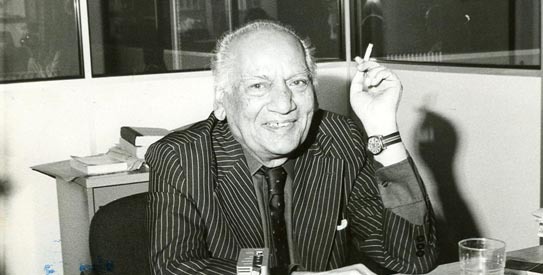
Faiz, Subh-e-Azadi, and Pakistan’s 78th Birthday:

Today (well, technically yesterday, since it’s past 12) is Pakistan’s Independence Day. I personally felt no extraordinary zeal or zest for the land of the pure. Is it my lack of patriotism (sun), my anxiety about belonging (moon), or rising sedition? (Please pardon my astrological metaphors; recently learned from a friend.)

I never—of course, I am exaggerating; that’s what poets do anyway—felt much for my own birthday. Perhaps I am still unable to grasp the importance (or the dread and brevity) of the flow of time.

If time is creativity unfolded, I don’t feel progress. If it is a movie playing with no rewind, I still lack the desire to go back.

Continue reading Faiz, Subh-e-Azadi, and Pakistan’s 78th Birthday:

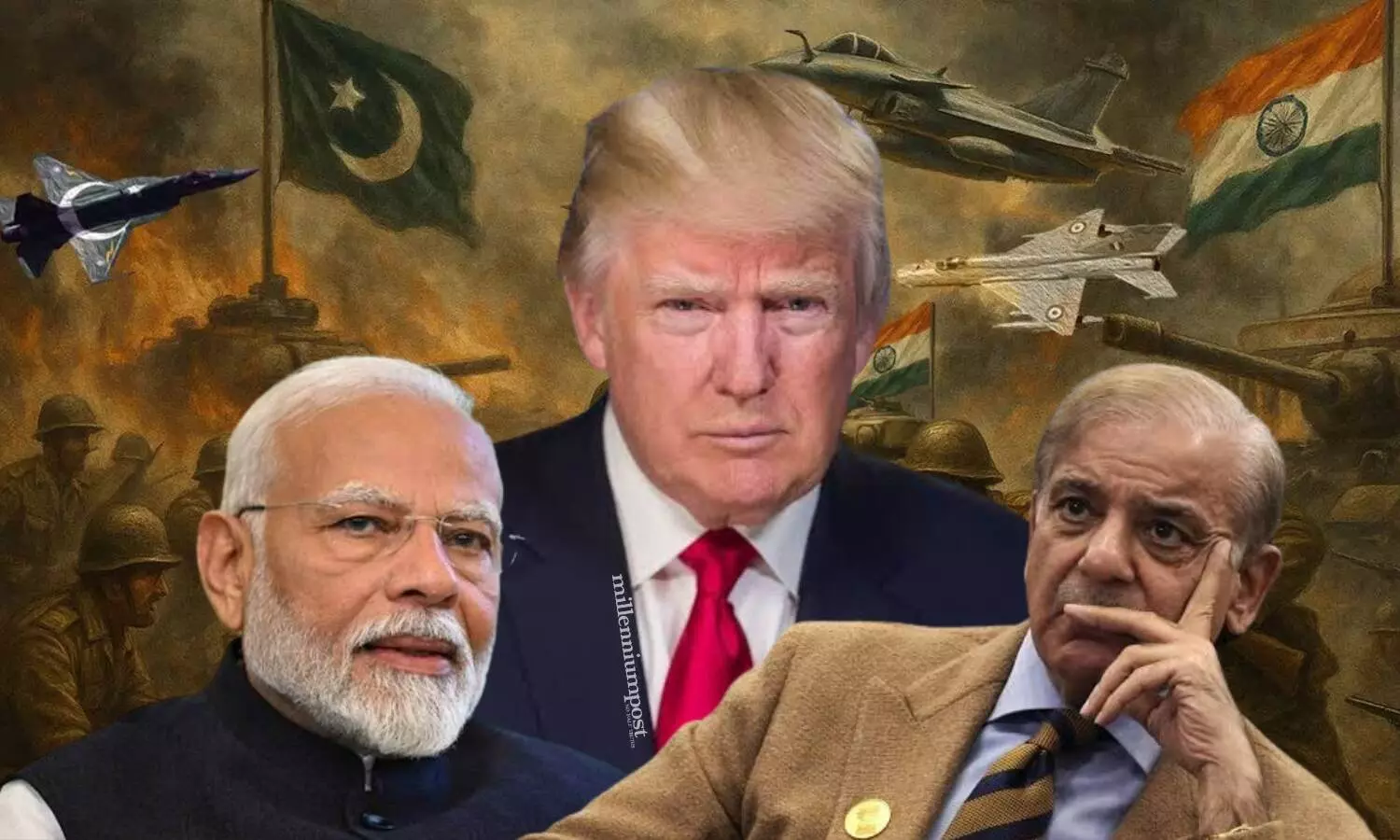
USA, India, Pakistan.. an eternal prickly braid

Trump makes U-turn, says 2 leaders of India-Pak 'decided' to stop conflict

Since the 1990s, Western powers (aka the USA and it’s vassals) have been building up a relationship with India that paints India as a fellow liberal Democracy (and a possible future partner against the new enemy bloc led by China). Beyond these propagandistic talking points, there is supposed to be real convergence on some big things: Demographics, slowly laid economic foundations and baseline cultural strengths combine to make India a rising economy; At a time when birth rates are below replacement in the first world, there is going to be no bigger source of labor or talent. If businesses have to “derisk” from china, they have southeast Asia and India as the natural targets. If other Asian countries are to resist total Chinese hegemony, there is no way to do that without Indian help. And so on.

Throughout this period there have been many prickly issues between the partners (eg a recurring complaint from India that the West supports Pakistan, which sends terrorists into India; on the other hand there is a recurring Pakistani complaint that the USA does not pay enough and (especially in the last decade) is too willing to accept India as the regional hegemon; and well justified complaints from everyone that India is too protectionist) but the public diplomacy has remained positive and feelgood for the most part. All that started to change somewhere in May 2025 and it has been rapidly downhill in the last one month as Trump has publicly attacked India for being protectionist, accused it of being a dead economy, and completely ignored Indian “sensitivities” about Pakistan.

Until now, Indian officialdom has tried to stay sober and avoid inflammatory responses, but they have also resisted the choice (already taken as the path of least resistance by UK, EU and Japan) of massaging Donald’s massive ego and nominating him for some Nobel prizes to get past any personal hurdles. But of course India’s social media army has no such hesitation and on that front the bonhomie of the last few years has completely evaporated, with Indian nationalists and White Nationalists (let us not be coy and recognize that MAGA is a White nationalist movement at heart) going at it hammer and tongs.

So what is going on? and why? and what happens next? I have no inside information, so I am perfectly placed to make some general comments and then ask better informed people to tell me why I am wrong. Here goes: Continue reading USA, India, Pakistan.. an eternal prickly braid

Meltdown Bhāṣya: Verse 1.1.1 (Part 1.1)

This post is a continuation of my Introduction to Accelerationism. The goal of this project is to explore Accelerationist Philosophy (with an emphasis on the work of Nick Land) and explain it from a Hindu perspective with an exegetical and comparative focus on the Vedas, Itihāsas, and Tantras, among other traditional Hindu texts.

Technocapital Singularity & A Brief History of Capitalism, Commoditization & Production, and Primordial Desire

Originally Published: January 26, 2025

[1].[1].[1] The story goes like this: Earth is captured by a technocapital singularity as renaissance rationalitization and oceanic navigation lock into commoditization take-off.

“Machinic desire can seem a little inhuman, as it rips up political cultures, deletes traditions, dissolves subjectivities, and hacks through security apparatuses, tracking a soulless tropism to zero control. This is because what appears to humanity as the history of capitalism is an invasion from the future by an artificial intelligent space that must assemble itself entirely from its enemy’s resources. Digitocommodification is the index of a cyberpositively escalating technovirus, of the planetary technocapital singularity: a self-organizing insidious traumatism, virtually guiding the entire biological desiring-complex towards post-carbon replicator usurpation.”— Machinic Desire (Land, 1993)

Continue reading Meltdown Bhāṣya: Verse 1.1.1 (Part 1.1)

Review: Desertion by Abdulrazak Gurnah

From my Substack: 

When Abdulrazak Gurnah won the Nobel Prize for Literature in 2021, he was comparatively little-known. I must confess that I had never heard of him. This is despite the fact that I am an ardent fan of English literature and am also deeply interested in issues of colonialism. I have read most of the fiction concerned with British colonialism in South Asia including Rushdie’s Midnight’s Children, Scott’s The Raj Quartet and Forster’s A Passage to India. Perhaps part of the reason that I was not familiar with Gurnah’s work was that I have not focused much on Africa as a region (except for North Africa, which can be said to be more of an extension of the Arab world than the African continent proper). However, even within the domain of African fiction, Gurnah is an author that is unfamiliar to most readers. For example, school curricula in the US often include Chinua Achebe’s Things Fall Apart and Alan Paton’s Cry, the Beloved Country. I very much doubt that any curricula so far has included Gurnah’s works. Hopefully, that will change now that he has received the Nobel Prize.

Gurnah is a British citizen of Zanzibari origin. He grew up at a time when Zanzibar was a British protectorate separate from the colony of Tanganyika. After both colonies achieved independence, a revolution overthrew the Arab elite in Zanzibar and the region later merged with Tanganyika to form Tanzania. Gurnah had left to study in the UK before this revolution broke out and he describes himself as a refugee. He completed his Phd in Literature and served as a Professor at the University of Kent, from which he recently retired. His academic work deals with postcolonial literature, including that of Rushdie. Continue reading Review: Desertion by Abdulrazak Gurnah

Browncast: Trump, Tariffs, Hurt Feelings, and India..

Another Browncast is up. You can listen on LibsynAppleSpotify, and Stitcher (and a variety of other platforms). Probably the easiest way to keep up the podcast since we don’t have a regular schedule is to subscribe to one of the links above!

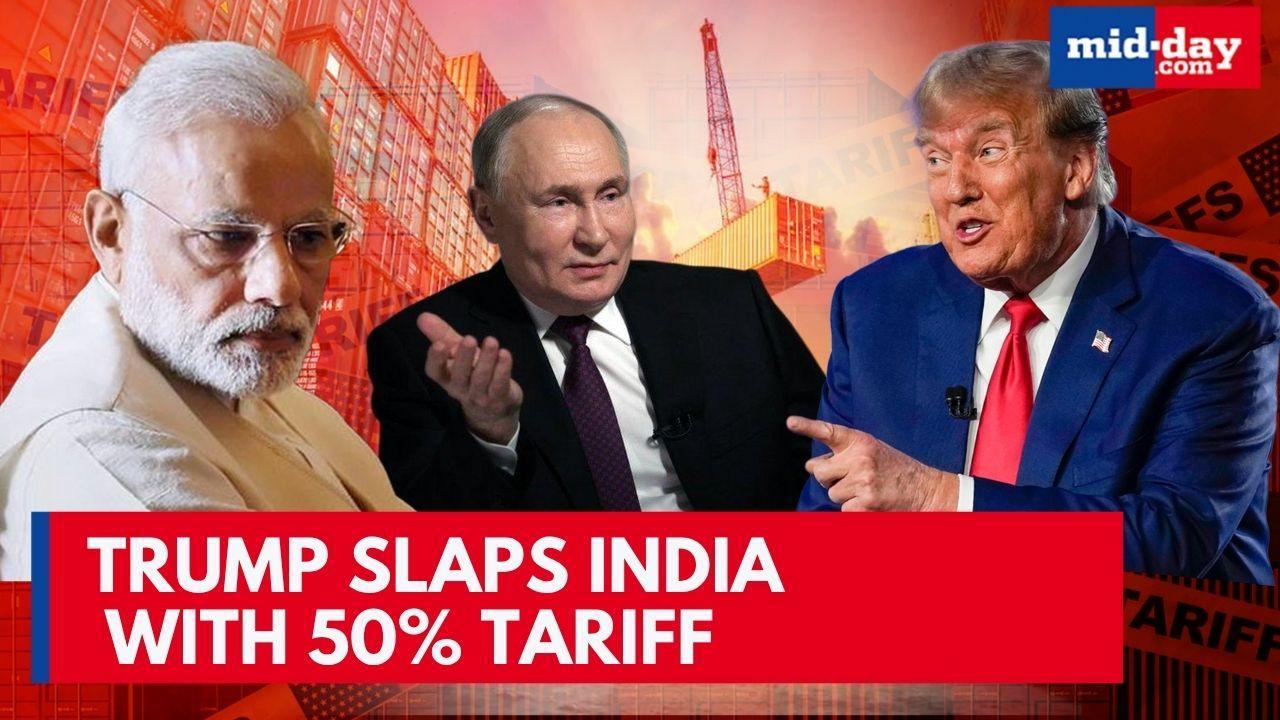
In this episode I talk to Kushal Mehra (Host of the Carvaka podcast) and regular Brownpundit Amey Chaugle about the tariff kerfuffle… the public (and on Trump’s side, frequently intemperate) war of words between the USA and India that is partly about India’s protectionist tariff regime but maybe mostly about other things (such as Donald’s ego and his desire to get that Nobel Peace Prize)..
Dig in and add your comments. We too don’t know exactly why this is going on and where it will end..  🙂

Trump Imposes Total 50% Tariff On Indian Goods, India Hits Back

Brown Pundits