I’ve been following the usual commentary, the BP quadrant: Indosauras, Nivedita, Kabir. And I read Kabir’s offhand remark that the Ramayana “didn’t resonate” the way the Iliad or Odyssey did. That casual dismissal is telling.
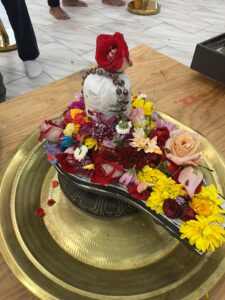
The Ramayana is not just literature, it is scripture, memory, and civilization encoded in verse. It has shaped the moral and cultural landscape of over a billion people for millennia. To compare it, then downplay it and to do so so glibly reveals less about the text and more about one’s own civilizational estrangement.
Let’s be honest: that kind of language would never be used for the Quran or Islamic texts. And the fact that it is used for Hindu epics by brown intellectuals raised in the shadows of colonial categories says everything about how deeply colonized the Pakistani mind remains. Pakistan is, in truth, an Urdufied Punjab insufficiently imagined, a fragment that lost its civilizational compass in the act of imagining itself apart. The fact that the Ramayan being Pakistani heritage is such a novelty speaks volumes.
Today I sat at Stratford Westfield, eating Dubai Hot Chocolate ice cream, and the man next to me clearly Pakistani asked me, in Urdu, “if I was in the queue?” His wife spoke Punjabi-inflected Urdu. It struck me how London has become the real unifying Punjab. Ten percent of Britain is now Desi. And outside of the subcontinent, the fractures of 1947 heal in ways that remain impossible back home.
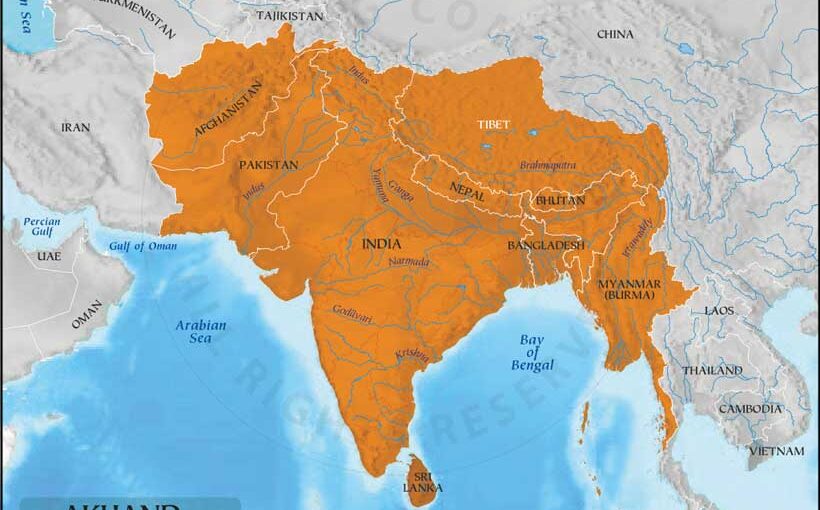
We speak of South Asia. But the term is bureaucratic; no one identifies with it. India is real. Bharat is civilizational. Aryavarta stretches from the Hindu Kush to the Indian Ocean — just as France is the Hexagon, Bharat is the Triangle. Partition clipped its wings, but its soul remains intact.
And look at the reality today: Indian Muslims are thriving in the mainstream. The title song of the upcoming film Sarai — written, composed, and directed by three Muslims: Ishaq, Fahim, and Arsalan. The leading lyricist is Javed Akhtar. This is a country that refused bitterness. A country whose largest minority chose Partition, and yet was never cast out, a unique precedent and testament the pluralism of Dharma.
Bharat needs no validation. It doesn’t need the approval of its neighbours or the heirs of partitioned imagination. It only needs to walk — and it is flying. Toward its own authenticity, on its own terms. And the world is watching.
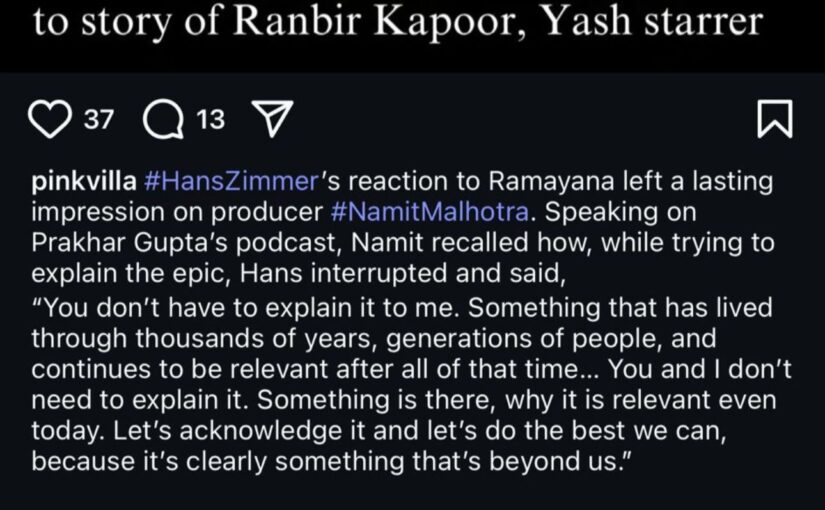
When producer Namit Malhotra began explaining the Ramayana to Hans Zimmer, the legendary composer cut him off:
“You don’t have to explain it to me. Something that has lasted thousands of years clearly has meaning. Let’s just do our best. It’s beyond us.”
Malhotra took this as reverence. In fact, it was erasure.
No serious Western artist would score The Ten Commandments or Schindler’s List without knowing the story. Imagine a composer saying, “Don’t explain the Illiad to me, it’s beyond me.” They’d be fired. But when it comes to Indian epics? The bar is subterranean. That’s not reverence.
That’s: I’m Western, I’m famous, I’m here for the cheque; not the history. The tragedy isn’t Zimmer’s line. It’s Malhotra’s awe. A Westerner shrugs off our most sacred text, and we call it wisdom. That’s not cultural pride. That’s civilizational confusion. It’s a pattern. Many elite Indians are fluent in the language of Islamic grievance; but tone-deaf to Western condescension.
Divide and rule still works:
Hindus thank the British for “freeing” them from Muslim rule
Muslims thank the British for “protecting” them from Hindu majoritarianism
Meanwhile, the West shrugs at our stories and we applaud.
On July 14, I wrote about Ta’arof ; the millennia-old Persian art of flattery, refusal, and ritualised courtesy. It’s often misunderstood in the West as “saying no three times,” but it’s really about emotional high-context negotiation, reading the room before the room speaks.
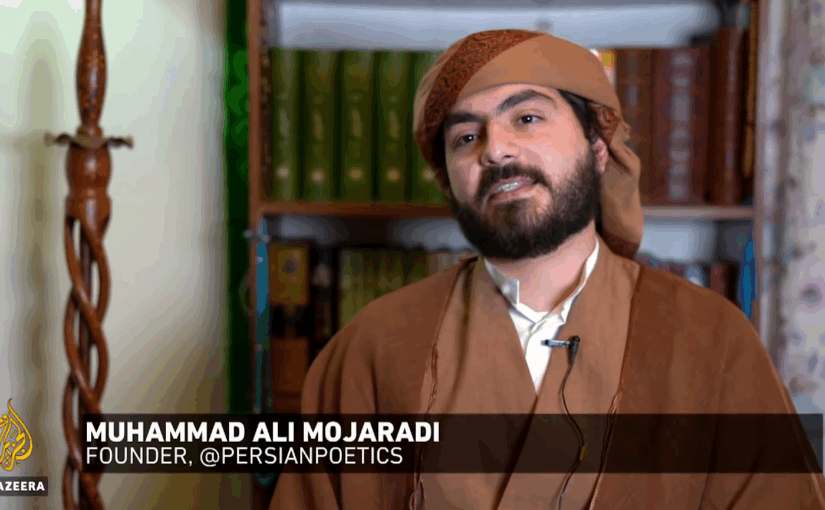
The next day, on July 15, Sharghzadeh posted a powerful video, calling it Iranian Diaspora Fatigue. A searing takedown of the Iranian Diaspora’s toxic racial insecurities, internalised Islamophobia, misogyny masked as modernity, and cultural denialism. He’s mostly right.
What he calls fatigue, I’d call poisoned flattery turned inward. Because Tehranglos are no longer performing Ta’arof to honour guests or elders. They’re doing it to whiteness itself. Hoping if they refuse our own identity long enough, maybe the West will say: “Yes, come in.”
That’s not assimilation. That’s exhaustion. And the worst part? Even the racism feels borrowed; against Arabs, against Afghans, against Iranians back home. It’s not even Iranian. This isn’t just about cringe TikToks or awkward panel guests. It’s about who gets to narrate Persian culture. And what gets flattened when tradition becomes product. I was stunned when Zachary Newman — one of the most prominent Persian-Jewish American chefs — endorsed Netanyahu’s strikes on Iran. That moment crystallised something.
Sharghzadeh and I are saying the same thing: Persian culture is being gentrified by its own children. What survives isn’t tradition. It’s content. It’s vibes. If Iran is an unreadable poem, diaspora is turning it into a slogan. If Iran is lived, diaspora is increasingly just captioned. And they wonder why they’re tired. Is the Persian diaspora preserving a culture, or just performing it for the algorithm?
As I board my flight back to the UK after a brief but productive trip, I find myself reflecting on a language that continues to haunt and inspire me: Urdu.
It is a tongue caught between paradoxes. The language of courtesans and qawwals, of sacred supplication and sly seduction. It carries within it the scent of jasmine and blood, of Delhi’s dusk and Lahore’s lingering grief.
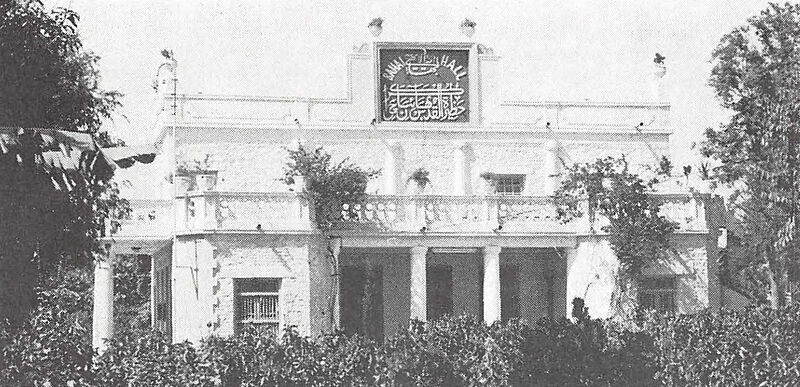
The Beloved Guardian of the Baha’i Faith once noted that while most Baha’i texts should be translated from English, Urdu alone is trusted for direct translation from Persian and Arabic. That proximity, that spiritual siblinghood with Persian, the language of kings, and Arabic, the language of God, renders Urdu magical.
Sanskrit, of course, is the language of gods, but Urdu, its stepdaughter of sorts, captures the longing of poet to partisan.
There’s a reason the Bahá’í prayer I share below is so piercing in Urdu. So here, before I cross back into another timezone, I offer this prayer—without commentary, without translation. Just Urdu, as it was meant to be heard.
And I wonder: perhaps this is what Pakistan truly is—a project in transcending the local. Not rooted in soil, but in sentiment. A place where Punjabis, Pathans, and Muhajirs are asked to shed skin and commune in Urdu. Where Pakistaniyat, for all its fractures, has succeeded in producing a common idiom: of piety, pride, and pain. Continue reading Pakistaniat & Urdu from Qasim to Quaid
I recently saw a cringeworthy clip of Rainn Wilson, yes thatRainn Wilson, earnestly trying to explain Ta’arof (while not even being able to pronounce Tahdig). The famed Iranian art of polite refusal was reduced, predictably, to the idea of “saying no three times.” A charming simplification, perhaps, but a misleading one.
The Ritual of Misunderstanding
Ta’arof is a millennia-old Persian artform; rooted perhaps as far back as the Achaemenid Empire. It is centered on flattery, politeness, and ritualised courtesy and is not merely etiquette; it is the performance and ritualisation of it.
Because Tarof isn’t about numerical formulae. It’s not just “no means yes after the third try.” It’s not a knock-knock joke.
Onunchi, Ta’arof, and High-Context Societies
Tarof is best understood as high-context negotiation within deeply hierarchical and emotionally attuned societies; a kind of cultural Onunchi (온눈치), for those familiar with Korean sociolinguistics. It’s the art of reading the room before the room speaks. More than etiquette, Tarof is a performance of dignity through flattery, deferral, and intuition.
And that’s precisely what’s being lost; not just in Rainn’s version, but in the Westernisation of diasporic Persian culture more broadly.
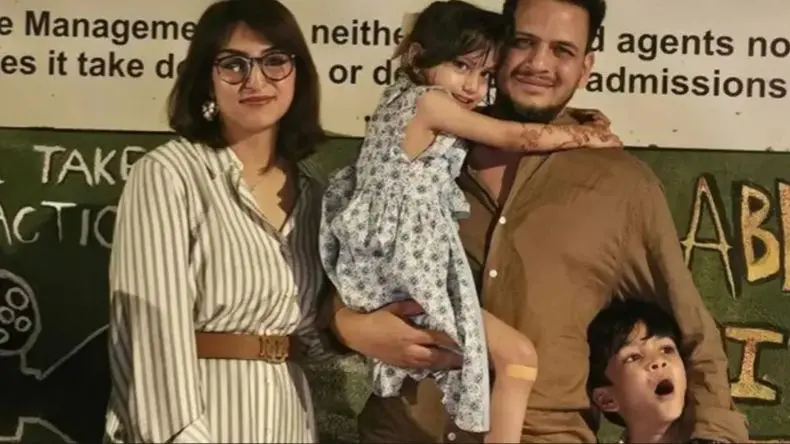
In the aftermath of the extremely tragic plane crash in Ahmedabad (the photo features the late Ali family, may they rest in the Highest Heaven), one tiny detail stood out; not the cause of the disaster (still contested), but who was being heard. Many of the victims’ families interviewed by the BBC were of Muslim origin(it was also during the Eid Holiday break). And while that may seem incidental, it reveals a subtle, recurring pattern in India’s public discourse.
Kabir:I will remind you of the Sachar Committee Report which stated that the condition of Indian Muslims was worse than that of Dalits. This was a report commissioned by the Congress government not by Pakistanis. India has never had a Muslim Prime Minister. I would be willing to bet that this is not going to happen in my lifetime. The Muslim League succeeded in getting the Muslim majority provinces a country of our own. This is a huge achievement.
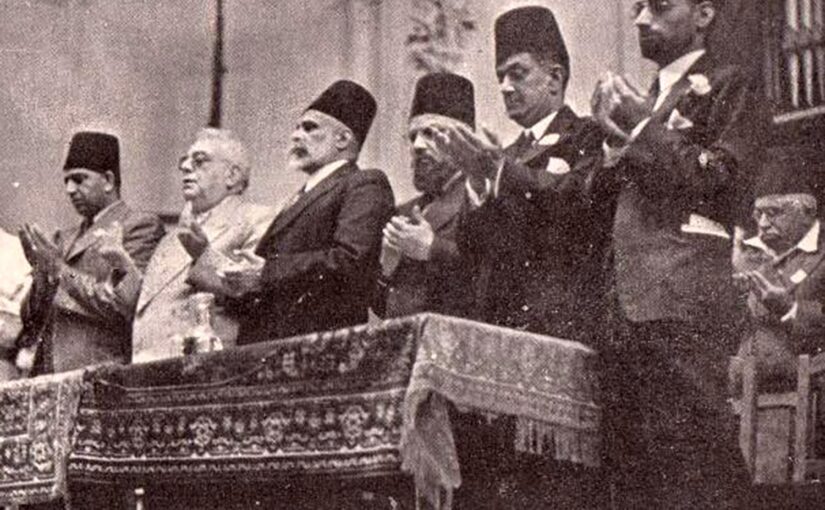
Partition was sold as deliverance. In hindsight, it may have been the most sophisticated act of self-disinheritance in modern Muslim history. A century ago, Muslims on the subcontinent were a political force — deeply embedded, numerically significant, and intellectually diverse. Today, they are divided, disenfranchised, and disoriented. Three nations. No unity. No power. No clear path forward. Let’s take stock:
1. Divided into Three
Pakistan. Bangladesh. India. Three fractured expressions of one civilizational legacy — none of which fully represents or protects the totality of South Asia’s Muslims.
2. No Electorate Leverage
In India, Muslims lost their negotiating bloc overnight. From being a decisive vote in undivided India, they became a permanent minority — politically cautious, rhetorically silenced, and often viewed with suspicion. In Pakistan, Muslim identity became so hegemonic it erased internal plurality. In Bangladesh, it became suspect altogether.
3. Psychological Cleft
Two-thirds of Muslims had to unlearn India. Partition forced them to disown their history. The other third had to choose between being Muslim or becoming more Indian. This psychic wound — of being here, but not quite belonging — has never healed.
4. Urdu: From Bridge to Burden
Urdu, once the cultural glue of the Muslim elite, is now:
Enforced in Pakistan (to the resentment of Sindhis, Baloch, and Pashtuns)
Marginalized in India
Extinct in Bangladesh
A shared language was replaced by suspicion and statecraft.
5. Islam as a Spent Force
Partition Islam was meant to be political. It became performative. There is no robust Muslim political expression in the subcontinent today — only tokenism, sectarianism, or silence. It resembles post-revolution Iran: Islam was not discredited by the West, but by what its stewards did in its name. Partition didn’t solve the “Muslim Question.” It just made it unspeakable — in three different politicised idioms.
In a recent video, a young Punjabi woman, likely Sikh, candidly shares her discomfort upon returning to India after living in Canada (this kind of echoes the Aussie influencer’s comments on chronic Indian inequality). The noise, the pollution, the density. Her frustration is raw, familiar, and deeply sincere.
But beneath her words lies something larger: the aesthetic asymmetry that defines the postcolonial condition. Wide roads, clean air, manicured parks; these are not just amenities. In the global South, they become symbols of escape, status, and salvation. And so, millions migrate. Or aspire to. Not just for jobs, but for dignity. For air that doesn’t burn. For order that doesn’t humiliate. For a feeling of being seen.
And when they do, when they arrive in Canada, the UK, Australia, something subtle happens: they become grateful. Not just for opportunity, but for escape. For the fact that the West “works.” That gratitude then curdles into deference.
They begin to believe that the world outside the West is meant to be chaotic, dirty, loud. That governance is a Western gift. That clean streets and quiet parks are civilizational rather than institutional. This is the gratitude trap; the soft power of asphalt, symmetry, and silence.
And it’s why postcolonial recovery is so difficult. Not because the global South lacks culture or potential, but because its own elites, shaped by extraction, not architecture, rarely build for elegance. Rarely build for pride. Rarely build for joy. What the West exported was not just railways or rule of law. It exported a built environment that still shames us. And until that is understood, until we take seriously the spatial dignity of our cities and the material form of our futures, the colonial spell will remain unbroken.